MindMap Gallery Chapter 8 Music Teaching Model and Teaching Methods
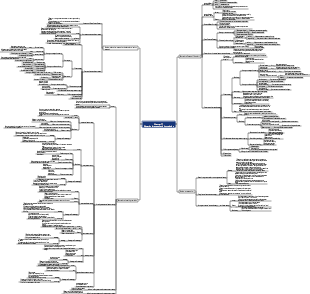
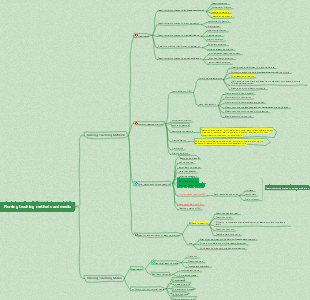
This is a mind map about Chapter 8 Music Teaching Models and Teaching Methods, including the characteristics of music teaching models, the definition of music teaching models, and commonly used music teaching methods in primary and secondary schools.
Edited at 2023-11-15 11:41:40This is a mind map about bacteria, and its main contents include: overview, morphology, types, structure, reproduction, distribution, application, and expansion. The summary is comprehensive and meticulous, suitable as review materials.

This is a mind map about plant asexual reproduction, and its main contents include: concept, spore reproduction, vegetative reproduction, tissue culture, and buds. The summary is comprehensive and meticulous, suitable as review materials.
This is a mind map about the reproductive development of animals, and its main contents include: insects, frogs, birds, sexual reproduction, and asexual reproduction. The summary is comprehensive and meticulous, suitable as review materials.
This is a mind map about bacteria, and its main contents include: overview, morphology, types, structure, reproduction, distribution, application, and expansion. The summary is comprehensive and meticulous, suitable as review materials.
This is a mind map about plant asexual reproduction, and its main contents include: concept, spore reproduction, vegetative reproduction, tissue culture, and buds. The summary is comprehensive and meticulous, suitable as review materials.
This is a mind map about the reproductive development of animals, and its main contents include: insects, frogs, birds, sexual reproduction, and asexual reproduction. The summary is comprehensive and meticulous, suitable as review materials.
Chapter 8 Music Teaching Model and Teaching Methods
Section 1 Music Teaching Model and Classification
1. Characteristics of the teaching model (excellent direct operation of needles)
1||| Superiority
·Optimized modes
2||| intuitiveness
·Teaching models are all-specific, operable, and procedural (teaching ideas & theories)
·The teaching model is - using concise language and symbolic illustrations (to summarize and express the teaching process)
3||| operability
·Can be (learned, demonstrated, imitated, spread)
4||| openness
·The teaching model is constantly (generated, developed and improved)
5||| Targeted
·The teaching model is clearly targeted
·There is no teaching model that is suitable for any teaching process
2. Music teaching models and classifications
(1) Definition of music teaching model:
·Application of teaching model in music teaching;
·Based on a certain basis (combination of music teaching theory & practice) - built to achieve specific teaching purposes
·Relatively stable and concise teaching structure framework; teaching paradigm with operable procedures
(2) Classification of music teaching models
1. Based on the classification theory of educational objectives (classification of music teaching models)
Memorize the implementation conditions & evaluation carefully
(1) Emotional model
To (perceive beauty, experience beauty, understand beauty, express beauty) as the purpose
1||| Participate - experience mode
I. definition
·"Participation": Teachers and students participate in teaching activities as equals - discuss, research and solve problems together
·"Experience": students' direct personal experience - the main form of teaching
II. Operating procedures
i. Emotional arousal - directed excitement
ii. Emotional depth - perception, experience and understanding
iii. Emotional externalization – the creative stage
III. Realization conditions
·Equality between teachers and students - highlighting the dominant position of students
IV. evaluate
i. Give full play to the main role of students
ii. Fully mobilize students' multiple senses and give full play to the role of synesthesia
iii. Give full play to students' enthusiasm and creativity
iv. Conducive to students’ interpersonal skills
v. Conducive to integrating inside and outside the classroom
2||| Situation - Cultivation Mode
I. definition
·Use (language, music, etc.) to create vivid and realistic situations
·Stimulate interest in learning; cultivate personality; improve independence and cooperation spirit
·In a relaxed and happy situation - the ability to feel beauty, appreciate beauty, express beauty, and create beauty
II. Operating procedures
·Create situations - experience situations - summarize and transform
III. Realization conditions
i. Harmonious teacher-student relationship
ii. Teachers are required to have multiple abilities
IV. evaluate
·Cognition & emotion - unified in the same situation
·Taking full advantage of the emotional component of the cognitive process – more effective than pure perception
(2) Behavior pattern
(motor & mental skills) for purpose
1||| Demonstration - imitation mode
I. definition
·Use demonstration as an effective stimulus - eliciting corresponding actions from students
·Through imitation - master skills
II. Operating procedures
·Orientation - participation in practice - independent practice - transfer
III. Realization conditions
·Students should practice on their own
IV. evaluate
·Students perform a large amount of activities and have a prominent main role - teachers play the role of guidance, demonstration and organization
2||| Behavior - Assistive Mode
I. definition
·Instructional media - as an auxiliary means
·Stimulate interest in learning; multi-channel (understand and master) music skills; improve learning efficiency; speed up the process of skill mastery
II. Operating procedures
·Orientation - auxiliary practice - independent practice - transfer
III. Realization conditions
·Teachers - Effective use of modern teaching media
·Students - strong independent learning ability
IV. evaluate
i. Give full play to the role of modern teaching methods
ii. Mobilize students’ multiple senses
iii. Reduce the difficulty of learning skills
iv. Improve learning efficiency
(3) Cognitive model
(Develop students’ intelligence) as the purpose
1||| pass-receive pattern
I. definition
i. Pay attention to the educational nature of education
ii. Pay attention to the connection between old and new knowledge
iii. Pay attention to the systematic nature of knowledge
II. Operating procedures
· Stimulate learning motivation - review old knowledge - teach new knowledge - consolidate application - check and evaluate
III. Realization conditions
·Teachers and students jointly participate in teaching activities - teachers directly control the teaching process/teach according to the development rules of students' cognitive activities
IV. evaluate
·advantage:
i. Enable students to acquire more knowledge within a unit of time
ii. Give full play to the leading role of teachers
·shortcoming:
i. Students learn passively, which is not conducive to students’ initiative
2||| Bootstrap - Discovery Mode
I. definition
·Problem-solving as the center; cultivate students’ independent thinking and creative thinking
II. Operating procedures
·Introduction - exploration - induction - application
III. Realization conditions
·Teachers and students are in a state of collaboration
i. Teacher - good at asking questions, inspiring and guiding students
ii. Students - actively participate in activities and give full play to their subjective initiative
IV. evaluate
·advantage:
·Conducive to the cultivation of students (exploration ability & different thinking)
·Limitations:
·Teachers - must have rich teaching experience
·Students - have a certain knowledge reserve
3||| Self-study - mentoring model
I. definition
·Students focus on self-study; teacher guidance throughout the process
II. Operating procedures
·Orientation-student self-study-discussion and exchange-inspiring guidance-evaluation summary
III. Realization conditions
i. Teachers - correct teaching guiding ideology
ii. Teacher - Design a self-study syllabus with clear requirements & have a set of methods to guide students in self-study
IV. evaluate
·advantage
i. Improve (initiative/subject awareness)
ii. Cultivation of self-learning ability
iii. Conducive to adapting to individual differences among students
·Limitations
·Higher requirements for teachers’ leading role
4||| Explore - create mode
I. definition
·Research and problem-solving focus; independent research ability & creative thinking ability
II. Operating procedures
·Prepare - analyze and explore - create solutions - migrate
III. Realization conditions
·Teachers - provide students with clues, guide students to analyze problems, creatively solve problems, and provide opportunities for independent thinking
·Students—should have a strong sense of exploration
IV. evaluate
i. Enriched (teaching content & teaching format)
ii. Encourage students to pay active attention to musical expression methods
iii. Cultivate students' ability to comprehensively apply knowledge - Promote students' all-round development
2. Music teaching model based on the theoretical perspective of music aesthetics - aesthetic philosophy model
(1), theoretical basis
·(Theoretical views on the relationship between subject and object in music aesthetics) as the basic theoretical basis
(2), teaching ideas
·Core: Promote communication between subject (students) & object (music) through the mediating role of teachers
(3) Functional goals
1||| aesthetic effect target
2||| personality development goals
3||| music learning goals
(4), specific mode
Target difficulty increases step by step
1||| Operation experience mode
I. teaching objectives
i. Gain interest and emotional experience
ii. acquire musical knowledge
iii. Improve (music reflection ability, communication ability, cooperation ability)
II. Applicable content
i. Rhythm, rhythm, clear mood, beautiful melody
ii. The structure is relatively regular, and the depiction and plot are strong.
iii. Small and medium-sized instrumental works/fragments of large-scale works
III. Operating procedures
·Analysis of music & operation preparation - partial operation experience - overall operation experience
Association: Orff instrument playing
IV. main method
i. Listening method
ii. Imitation of expression
iii. scene acting method
iv. improvisational expression
v. symbol-assisted method
Lenovo: Putting numbers on the keys
·I heard that the model field has new assistants
2||| subjective experience model
Use students’ existing experience to solve problems
I. teaching objectives
i. Enhance subject awareness
ii. get emotional experience
iii. Improve musical imagination and understanding
II. Applicable content
·Works related to students (life experience, social experience, learning experience, aesthetic experience)
III. Operating procedures
·Arouse subjective experience - deepen subjective experience - aesthetic evaluation
IV. main method
i. visual transformation method
ii. language conversion method
iii. Explore expression methods
iv. Imitation of expression
v. comparative method
Eyes and mouth are exploring the devil's religion
3||| cultural experience model
I. teaching objectives
i. Improve interest in music aesthetic appreciation
ii. Enhance the experience of (music form & music style)
iii. Enhance understanding of (musical value & musical concept)
II. Applicable content
i. A unique musical variety/form in a certain cultural circle
Association: Mongolian-Khumai
ii. National style, era style, composer style - outstanding music
III. Operating procedures
·Guiding aesthetic expectations—experience cultural characteristics—evaluation
IV. main method
i. Choose a soundtrack
Lenovo: When reading lyrics, play BGM
ii. deduction
iii. comparative method
iv. Imitation of expression
v. Listening method
Choose to perform some operations that are easier to imitate
Section 2 Music Teaching Methods
(1) Definition of music teaching methods
·Pointed to (music curriculum & teaching objectives); Constrained by (music curriculum & teaching content)
·In order to achieve the established teaching tasks - the general term for the ways, methods and means of joint activities between teachers and students
·Including (teachers’ teaching methods & students’ learning methods)
(2) Commonly used music teaching methods in primary and secondary schools
1. Experiential music teaching methods
· Focus on the emotional experience of music and focus on cultivating students’ musical aesthetic taste
1||| music appreciation method
I. definition:
·Teaching method based on appreciation activities, through which students can have positive emotional reflections
II. Issues that should be noted:
i. Pay attention to individual differences among students
ii. Pay attention to emotional sublimation
2||| demonstration method
I. definition:
·Through demonstrations and demonstrations of intuitive teaching aids - let students gain intuitive feelings
II. Operational means
i. Listen and observe the teacher’s demonstration
ii. Use physical objects, models, etc. to demonstrate
3||| Visit method
I. definition:
·Observation and research on (actual objects & phenomena) - methods to directly obtain knowledge/feelings
II. Operational means
i. Be well prepared before visiting
ii. Observe carefully during the visit
iii. Analysis and summary after the visit
2. Practical music teaching methods
· Focus on music practice activities, and cultivate (music skills & music expression ability) through students' personal participation in activities
1||| Practice method
I. definition:
·Because music teaching has technical characteristics, practice is very important in learning music skills.
II. Operating procedures:
i. Teacher demonstration - student practice - teacher guidance
ii. Teachers and students discuss and solve problems together
iii. Circular exercises - reaching and achieving goals
III. Issues that should be noted:
i. with a clear purpose
ii. clear steps
iii. Demonstrate correctly
iv. Various ways
v. Timely feedback
3. Linguistic music teaching methods
· Focus on language transmission - through oral language activities between teachers and students, and students reading written language independently
1||| Teaching method
I. definition:
·Concise and vivid spoken language
·In teaching, it is divided into (narrating, explaining, reading, and giving lectures)
II. Issues that should be noted:
i. Concise language, clear organization, and highlighted key points
ii. Consider students’ ability to accept
2||| conversation method
I. definition:
·Spoken language question and answer; (inspired talk, question and answer talk)
II. Issues that should be noted:
i. Teachers are prepared to ask questions
ii. Consider the difficulty, timing, etc. of asking questions
3||| discussion method
I. definition:
·Use the whole class/group as a unit - discuss and debate around an issue
II. Issues that should be noted:
i. Enable every student to participate in activities
4||| reading guide method
I. definition:
· Under the guidance of teachers; acquire knowledge through reading books
II. Issues that should be noted:
i. form an accurate impression
ii. Introducing books suitable for students’ age groups
(3) Future development trends of music teaching methods
1||| Research Focus—Process Research (Development)
2||| External performance - diversification/integration (development)
3||| Teaching method system - complexity (development)
4||| Teaching methods passively rely on teaching methods - the two actively cooperate (develop)