MindMap Gallery Medical epilepsy classification
This is an article about the classification of medical epilepsy. The key points of epilepsy classification are clear at a glance. It is full of useful information. Interested friends can refer to it!
Edited at 2023-11-16 22:00:21This is a mind map about bacteria, and its main contents include: overview, morphology, types, structure, reproduction, distribution, application, and expansion. The summary is comprehensive and meticulous, suitable as review materials.

This is a mind map about plant asexual reproduction, and its main contents include: concept, spore reproduction, vegetative reproduction, tissue culture, and buds. The summary is comprehensive and meticulous, suitable as review materials.
This is a mind map about the reproductive development of animals, and its main contents include: insects, frogs, birds, sexual reproduction, and asexual reproduction. The summary is comprehensive and meticulous, suitable as review materials.
This is a mind map about bacteria, and its main contents include: overview, morphology, types, structure, reproduction, distribution, application, and expansion. The summary is comprehensive and meticulous, suitable as review materials.
This is a mind map about plant asexual reproduction, and its main contents include: concept, spore reproduction, vegetative reproduction, tissue culture, and buds. The summary is comprehensive and meticulous, suitable as review materials.
This is a mind map about the reproductive development of animals, and its main contents include: insects, frogs, birds, sexual reproduction, and asexual reproduction. The summary is comprehensive and meticulous, suitable as review materials.
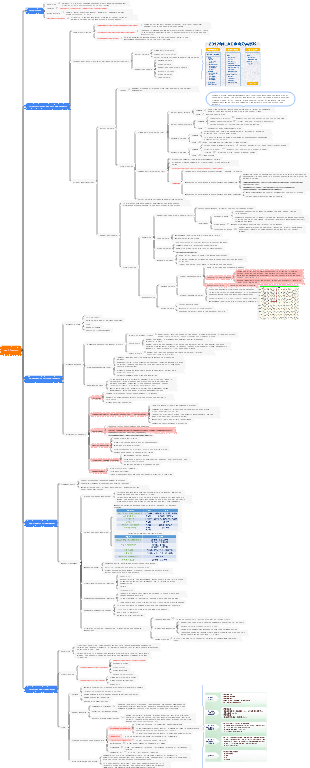
Epilepsy classification
1||| Classification of epileptic seizures
partial paroxysmal seizures
Simple partial seizure-unconscious disorder
partial motor seizure
Jackson's attack: The abnormal movement starts locally and moves along the motor area of the cerebral cortex. The clinical manifestations are extracted from the fingers, wrist, forearm, elbow, shoulder, mouth corner, and face and gradually develop. This is called Jackson's attack.
Patients with severe partial motor seizures may be left with transient (dissolving within half an hour to 36 hours) limb paralysis, called Todd's paralysis.
Rotary seizures, postural seizures, articulatory seizures
partial sensory seizure
Somatosensory, special sensation, dizziness
autonomic seizure
Pale, flushed complexion, polydipsia, etc.
psychotic episode
Memory impairment, delusions, emotional disorders, etc.
Complex partial seizures - temporal lobe epilepsy
disorder of consciousness
Usually confusion, rarely loss of consciousness
Disorders of consciousness and automatisms
The aura begins with abdominal abnormalities lasting 1-3 minutes.
Disorders of consciousness and motor symptoms
Partial seizures followed by generalized seizures
Generalized grand mal seizure - bilateral brain damage, loss of consciousness
Generalized tonic-clonic seizures GTCS
Clinical features
Loss of consciousness, myoclonus following bilateral tonicity
Typical electroencephalogram
The tonic phase begins with a gradually increasing spike-wave rhythm of 10 times/second, and then the frequency continues to decrease and the amplitude continues to increase. During the clonic phase, there are diffuse slow waves with intermittent spikes. In the late period of convulsion, there is obvious electroencephalographic suppression.
installment
cataleptic phase
Continuous contraction of skeletal muscles throughout the body, 10-20S
clonic phase
Alternating muscle twitching, 30-60S
late stage of attack
Brief spasm mainly of facial muscles and masseter, consciousness gradually recovered, 5-15 minutes
tonic seizure
Seen in children with diffuse brain damage, violent falls can be seen, lasting for several to tens of seconds, and the EEG shows explosive polyspike waves.
clonic seizures
Frequent in infants and young children, characterized by repetitive clonic jerks accompanied by loss of consciousness, lasting 1 to several minutes, EEG lacks specificity
atonic seizure
subtopic
absence seizure
typical absence seizure
The onset of the disease in children ends in adolescence, with 5-10 seconds of loss of consciousness and interruption of movement, several attacks a day, and immediate awakening and inability to recall. EEG bilaterally symmetrical 3HZ spike-slow complexes
Atypical absence of concentration
Slower, more common in children with diffuse brain damage. EEG shows 2-2.5HZ spike-slow complex
myoclonic seizures
Rapid, brief electric shock-like muscle contractions that can occur at any age. Typical EEG changes are spiny-slow complexes
2||| Classification of epilepsy or epilepsy syndrome
related to parts
Benign childhood epilepsy BECTS with centro-temporal spikes
Onset between 3 and 13 years old, peaking at 9 to 10 years old; more common in boys, mostly at night, activated by sleep
The attack manifests as a brief motor attack on one side of the face or mouth, often accompanied by somatosensory symptoms, and may be secondary to GTCS; the attack frequency is sparse
EEG background activity is normal, with high amplitude spikes and slow waves in the central-temporal region. Most patients recover spontaneously during adolescence.
Benign childhood epilepsy with paroxysmal discharges in the occipital region
primary reading epilepsy
symptomatic epilepsy
Temporal lobe epilepsy TLE
Onset in childhood and adolescence, 40% have a history of febrile convulsions
Hippocampal amygdala seizures (medial) and lateral temporal lobe epilepsy
Manifestation: simple partial seizure (autonomic, mental, olfactory, auditory symptoms);
Complex partial seizure (digestive automatism)·Duration >1min, inability to recall afterwards·EEG unilateral or bilateral temporal lobe spikes
Frontal lobe epilepsy, parietal lobe epilepsy, occipital lobe epilepsy
Special triggering epilepsy syndrome
Chronic progressive partial persistent epilepticus in children
Comprehensiveness
benign familial neonatal convulsions, benign neonatal convulsions, benign infantile myoclonic epilepsy
childhood absence epilepsy CAE
The peak incidence is between 6 and 7 years old. It is more common in girls. There is an obvious genetic tendency and manifests as frequent absence seizures.
EEG background activity is normal, but bilaterally symmetrical 3Hz spike-slow wave hyperventilation is easily induced
Sodium valproate and lamotrigine have good effects and good prognosis. Most of them recover. A few cases develop GTCS after puberty.
juvenile absence epilepsy
Juvenile myoclonic epilepsy JME
Peak incidence is between 8 and 18 years old
It manifests as clonic twitching of the limbs, which may be combined with GTCS and absence seizures and has photosensitivity.
Good response to anti-epileptic drugs, easy to relapse after stopping the drug
Generalized tonic-clonic epilepsy on awakening