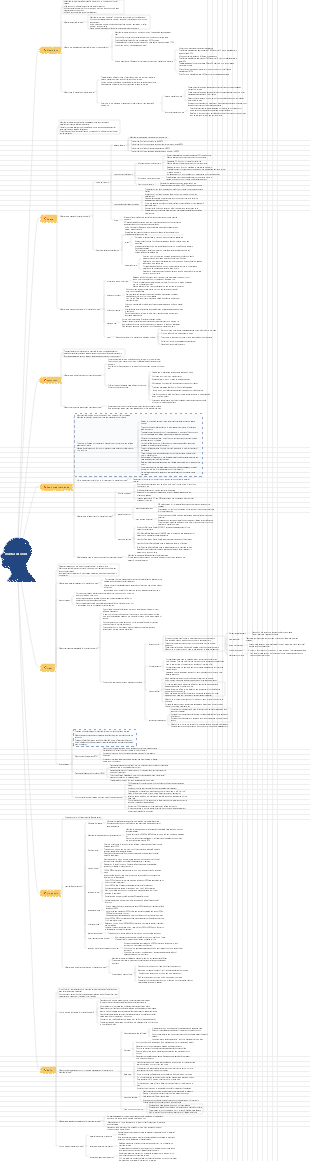
MindMap Gallery Medicine-Mind map of mental disorders caused by epilepsy
This is a mind map about medicine-mental disorders caused by epilepsy, including basic concepts, cause, symptoms, diagnosis, differential diagnosis, Treatment etc.
Edited at 2023-12-02 17:02:55This is a mind map about bacteria, and its main contents include: overview, morphology, types, structure, reproduction, distribution, application, and expansion. The summary is comprehensive and meticulous, suitable as review materials.

This is a mind map about plant asexual reproduction, and its main contents include: concept, spore reproduction, vegetative reproduction, tissue culture, and buds. The summary is comprehensive and meticulous, suitable as review materials.
This is a mind map about the reproductive development of animals, and its main contents include: insects, frogs, birds, sexual reproduction, and asexual reproduction. The summary is comprehensive and meticulous, suitable as review materials.
This is a mind map about bacteria, and its main contents include: overview, morphology, types, structure, reproduction, distribution, application, and expansion. The summary is comprehensive and meticulous, suitable as review materials.
This is a mind map about plant asexual reproduction, and its main contents include: concept, spore reproduction, vegetative reproduction, tissue culture, and buds. The summary is comprehensive and meticulous, suitable as review materials.
This is a mind map about the reproductive development of animals, and its main contents include: insects, frogs, birds, sexual reproduction, and asexual reproduction. The summary is comprehensive and meticulous, suitable as review materials.
Mental disorders caused by epilepsy
basic concept
Mental disorders caused by epilepsy refer to a group of recurrent Mental disorders caused by abnormal brain discharges
episodic psychotic disorder
suddenness
Transience
Recurrent
persistent mental disorder
Cause
genetic factors
Epilepsy is closely related to genetic factors, and the occurrence of mental disorders is also related to genetics.
brain lesions
People with epilepsy have brain abnormalities, such as brain atrophy and brain enlargement. These lesions may lead to abnormalities in neurotransmitters and neuromodulation, leading to psychiatric disorders.
psychosocial factors
The psychosocial functions of patients with epilepsy are affected, such as reduced social status and tense family relationships. These factors may lead to the occurrence of mental disorders.
symptom
Manifestations of mental disorders during attacks
memory impairment
thinking disorder
affective disorder
Perceptual disturbance
automatism
Mental disorders before and after attacks
before attack
Symptoms of dysthymia such as anxiety, tension, irritability, impulsivity, depression, and apathy, or symptoms of autonomic nervous system dysfunction such as flushing and hot flashes over a period of time
after attack
Symptoms such as confusion, disorientation, hallucinations, delusions and excitement
interictal mental disorder
It occurs between two attacks. The patient usually has no unconscious disorder, which lasts for months or years or is difficult to recover.
schizophrenia-like psychosis
Hallucinations, delusions, etc.
personality disorder
Often accompanied by mental retardation, the patient is characterized by viscous thinking and emotional outbursts. The patient is self-centered, argumentative and obsessed with trivial matters, has difficulty in thinking conversion, lacks creativity, and pathological redundancy.
Mental retardation
A small number of epilepsy patients show mental retardation
diagnosis
First, a clear diagnosis of epilepsy must be made. Psychiatric disorders arise on the basis of a diagnosis of epilepsy, the occurrence of which is related to epilepsy. When diagnosing, attention should be paid to clarify the relationship between mental symptoms and epileptic seizures, and to determine whether the mental symptoms appear during the seizure, before and after the seizure, or during the inter-ictal period.
Differential diagnosis
Hysterical mental disorders Both hysterical and epileptic mental disorders may cause sleepwalking, fugue, and hazy state of consciousness. However, hysterical mental disorders generally have obvious mental stimulation factors before the onset, and the degree of consciousness disorder is mild during the onset.
Schizophrenia, catatonic and epileptic catatonic states, schizophrenia, paranoid and chronic schizophreniform epileptic disorders
Patients with affective mental disorders and epilepsy may experience episodic, short-lasting anxiety, fear, disappointment, despair, melancholy or joy, and may also present with periodic dysthymia. The above manifestations need to be differentiated from affective mental disorders.
Narcolepsy can cause loss of consciousness and cataplexy, and can easily be misdiagnosed as epilepsy. It can be differentiated by the tetrad of sudden onset of uncontrollable sleep, sleep paralysis, hypnagogic hallucinations and cataplexy.
Syncope is a short-term overall decrease in cerebral blood flow, instantaneous loss of consciousness and falls caused by ischemia and hypoxia. should be identified
Hypoglycemia: When the blood sugar level is lower than 2mmol/L, local epileptic twitching or tonic seizures of the limbs may occur, accompanied by loss of consciousness.
treat
Mental disorders before and after attacks
Treatment should be adjusted in the type and dose of antiepileptic drugs to control seizures
interictal mental disorders
Same as for non-epileptic patients, but it should be noted that many antipsychotic drugs increase the risk of epileptic seizures, and antipsychotic drugs should be used with caution
Patients with intellectual disabilities and personality changes
Education and management should be strengthened, and rehabilitation measures such as psychological therapy and occupational therapy should be carried out