MindMap Gallery Physiological and ecological mind map of mushrooms
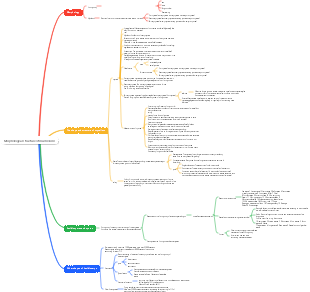
This is a mind map about the physiology and ecology of mushrooms, their nutritional physiology, their growth and reproduction, their ecological distribution, etc.
Edited at 2023-11-15 13:32:20This is a mind map about bacteria, and its main contents include: overview, morphology, types, structure, reproduction, distribution, application, and expansion. The summary is comprehensive and meticulous, suitable as review materials.

This is a mind map about plant asexual reproduction, and its main contents include: concept, spore reproduction, vegetative reproduction, tissue culture, and buds. The summary is comprehensive and meticulous, suitable as review materials.
This is a mind map about the reproductive development of animals, and its main contents include: insects, frogs, birds, sexual reproduction, and asexual reproduction. The summary is comprehensive and meticulous, suitable as review materials.
This is a mind map about bacteria, and its main contents include: overview, morphology, types, structure, reproduction, distribution, application, and expansion. The summary is comprehensive and meticulous, suitable as review materials.
This is a mind map about plant asexual reproduction, and its main contents include: concept, spore reproduction, vegetative reproduction, tissue culture, and buds. The summary is comprehensive and meticulous, suitable as review materials.
This is a mind map about the reproductive development of animals, and its main contents include: insects, frogs, birds, sexual reproduction, and asexual reproduction. The summary is comprehensive and meticulous, suitable as review materials.
Physiology and Ecology of Mushrooms
Nutritional Physiology of Mushrooms
Nutritional source for mushrooms
The process by which mushrooms absorb and utilize nutrients is called nutrition or nutrition.
Substances that can meet the needs of mushrooms to complete various physiological activities are called nutrients
carbon source
Simple: monosaccharides and disaccharides are directly absorbed and utilized
Complex: hydrolysis, absorption and utilization of cellulose, lignin and other extracellular enzymes
Nitrogen source
Inorganic nitrogen (NH4, NO3-) auxiliary carbon source
Organic nitrogen extracellular enzyme degradation, absorption and utilization
The carbon-nitrogen ratio is too small: mycelium is easy to grow and it is difficult to produce mushrooms.
The carbon-nitrogen ratio is too large: slow growth and low yield
Inorganic salt
Macroelements: P S Ca Mg K etc.
Trace elements: Cu Zn Mn B Co, etc.
effect
Participate in cell composition
components or activators of enzymes
adjust
cell permeability
Culture medium, pH, osmotic pressure, etc.
growth factors
type
hormone
Nucleic acids and nucleotides
Vitamins (B complex)
effect
Components or active groups of enzymes
Regulate metabolism and promote growth
water
bound water
Participate in cell composition
free water
basic solvent
metabolic mediators
Regulate cell temperature
Maintain turgor pressure
Nutritional types of mushrooms
Saprophytes: absorb nutrients from nonliving organic matter
Trichophyton
Faecalibacterium faecalis
Geobacteria
Symbiotic bacteria: form interdependent, mutually beneficial relationships with corresponding organisms
A symbiosis formed by the combination of mycorrhizal fungi and the roots of higher plants
Expand the absorption area of the root system and enhance the absorption of water, minerals and The ability to oxygenate organic matter, etc., and secrete vitamins, enzymes and antibiotics
Plants provide carbon sources and energy for fungal growth, which is beneficial to fungal development and fruiting body formation
Parasitic bacteria: live in or on the body of the host and absorb nutrients from living cells. Obligate parasitism: the representative is Asterophora lycoperdoides, which specifically parasitizes on the fruiting bodies of Russula pilosula and produces on the host fruiting bodies. Their own fruiting bodies form the phenomenon of "mushrooms on mushrooms", which is called mushroom parasitic fungus.
Physiological metabolism of mushrooms
Anabolism: During the growth and development of mushrooms, they continuously decompose the substrate and absorb nutrients from it. Transformed into substances required for one's own life activities, such as proteins/enzymes, amino acids, fats, etc. and store energy
Catabolism: Mushrooms rely on the action of enzymes to continuously break down substances in the body and absorb them from the outside world Nutrients, produce various metabolic products, release energy, and excrete carbon dioxide and water
The growth and reproduction of mushrooms
germination of spores
Germination conditions
Adequate moisture
proper nutrition
Temperature Different species have different temperature requirements during germination
The pH is mostly pH 4.5-6.5
plenty of oxygen
growth of mycelium
The growth of mycelium is due to the increase in size and number of hyphae
Mycelium grows in the form of tip elongation and branching. Mycelium can grow indefinitely, and each part has potential growth ability.
growth mechanism
The acrosome (spitzenkorper) has a small ball in the tip area of the hyphae of many fungi that is easy to dye or refract light, and always moves toward the front of the hyphae; it is composed of many vesicles gathered together, surrounded by mesh-like filaments, which can control the acrosome. Movement of bodies within a cell; chitosomes: microvesicles containing fungal cytoplasm
Apical growth: vesicles are transferred from the endoplasmic reticulum to the Golgi apparatus in the form of vesicles; Concentration processing is carried out in the Golgi, and the intracellular vesicles are The plasma reticulum membrane is transformed into a cell-like membrane; Vesicles are released from the Golgi and translocated to the hyphal tip; The vesicle membrane fuses with the cell membrane, and its contents (catalytic enzymes, synthetic enzymes) are released into the cell wall, Leads to the growth of hyphal tips
Branching growth: Branching occurs at a certain distance after the tip. The septal pores are covered by vorunin bodies or sterols and other proteins. White crystals clog, a large number of vesicles gather next to the septum, and a new top emerges from the side wall
growth retardation period
rapid growth period
growth stagnant period
formation of fruiting bodies
①Primordium formation period
Mycelium needs to be mature: vigorous growth, nutrients Only the rich dikaryotic hyphae can form the primordium;
Suitable environmental conditions: nutrients, temperature, humidity degree, illumination, etc.
②Fruit body differentiation stage
The differentiation of the caps requires a certain amount of oxygen. When the CO2 content exceeds 1%, the caps will further develop and differentiate. will be inhibited
Low light will promote the growth of the stipe. For fungi whose main edible part is the stipe, such as Enoki mushrooms, they are often covered with paper bags after fruiting to promote the growth of the stipe.
When the fruiting body grows and differentiates, it not only absorbs nutrients from the mycelium, but also absorbs nutrients from nearby stunted fruiting bodies.
③Fruit body maturity stage
The fruiting body is fully mature, the cap is flattened, and a large number of spores are distributed. After that, it gradually matures, the cap is rolled up, and finally shrinks and dies.
Ecological distribution of mushrooms
Effects of environmental factors on mushrooms
temperature
Suitable temperature: low temperature type 13~18 (20) ℃ Medium temperature type 20~24 ℃ High temperature type 24~30 ℃
During differentiation: no temperature difference stimulation is required: constant-temperature fruiting fungi require temperature difference stimulation: variable-temperature fruiting fungi (temperature difference between day and night is 8~10°C)
humidity
The unique physical and chemical properties of water determine its important role in the life activities of mushrooms; The transformation of matter, the transformation of energy, the transmission of information, the establishment and decline of form They are all inseparable from water; the water content of fresh fruiting bodies is generally 80-95%
pH
pH affects enzyme activity and cell permeability requirements Range: 3.0~8.0 Optimum pH acidic: 5.0~6.5 (more) Alkaline: 7.5 Acidity: 4.0 (Hericium)
Air
mycelial growth phase Fruiting body differentiation stage, slightly lower fruiting body growth stage → high ventilation. Ventilation holes are required to be set in all directions and the air flow must be swirling.
Light
Mycelium Growth: Dark Fruiting body differentiation: scattered light fruiting body growth Majority: 7 points cloudy and 3 points light Light-loving type: 5 points shade and 5 points light Photophobic type: dull or shimmery
biological factors
Beneficial microorganisms: convert the culture medium to provide nutrients for the growth of mushrooms Synthesize essential substances for the growth and development of mushrooms Remove some factors that inhibit the growth and development of mushrooms through metabolism Causes changes in the environment and provides a more suitable growth environment for mushrooms
Habitat conditions for mushrooms
The ecological environment is a common reflection of a variety of ecological factors, such as climate, altitude, vegetation Bedding type, topography, soil type, etc., have an impact on the spatial distribution pattern of mushrooms. Bureau has a direct impact;
Climatic conditions, altitude, vegetation type, topography, soil type
Geographical distribution of mushrooms
According to the characteristics of the horizontal distribution of mushrooms, Li Yu et al. "Chinese Physical Geography" on China's vegetation geographical areas division, the geographical distribution of mushrooms in my country was geographically The regions are divided into Northeast China, North China, Central China, South China, Inner Mongolia, Northwest China region and 7 regions in the Qinghai-Tibet region
Cold temperate deciduous coniferous forest belt mountainous area, temperate zone coniferous-deciduous broad-leaved mixed forest mountainous area, mid-temperate zone grassland mountainous area, warm temperate zone deciduous broad-leaved forest mountainous area, northern subtropical evergreen broad-leaf and deciduous broad-leaved mixed forest, and northern mid-subtropical low mountains Evergreen broad-leaved forest mountainous areas, western evergreen broad-leaved forest mountainous areas in the central subtropical tropics, eastern evergreen broad-leaved forest mountainous areas in the central subtropical tropics, evergreen broad-leaved forest mountainous areas in the south subtropical tropics, tropical monsoon forests, rainforest mountainous areas, northwest arid mountainous areas, Qinghai-Tibet plateau frigid zone