MindMap Gallery Mind map of the morphological structure of mushrooms
This is a mind map about the morphological structure of mushrooms, including morphological structure, the shape and structure of mycelium, basidiocarps and basidiospores, etc.
Edited at 2023-11-15 12:16:21This is a mind map about bacteria, and its main contents include: overview, morphology, types, structure, reproduction, distribution, application, and expansion. The summary is comprehensive and meticulous, suitable as review materials.

This is a mind map about plant asexual reproduction, and its main contents include: concept, spore reproduction, vegetative reproduction, tissue culture, and buds. The summary is comprehensive and meticulous, suitable as review materials.
This is a mind map about the reproductive development of animals, and its main contents include: insects, frogs, birds, sexual reproduction, and asexual reproduction. The summary is comprehensive and meticulous, suitable as review materials.
This is a mind map about bacteria, and its main contents include: overview, morphology, types, structure, reproduction, distribution, application, and expansion. The summary is comprehensive and meticulous, suitable as review materials.
This is a mind map about plant asexual reproduction, and its main contents include: concept, spore reproduction, vegetative reproduction, tissue culture, and buds. The summary is comprehensive and meticulous, suitable as review materials.
This is a mind map about the reproductive development of animals, and its main contents include: insects, frogs, birds, sexual reproduction, and asexual reproduction. The summary is comprehensive and meticulous, suitable as review materials.
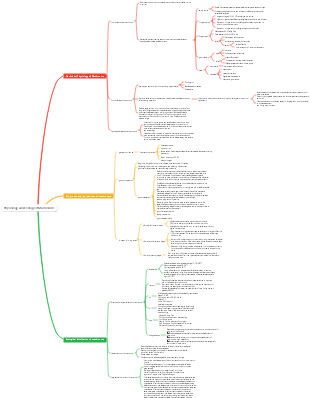
Morphological structure of mushrooms
Morphology
fruiting body
The main function is to produce spores and reproduce offspring
cap
stipe
Fungus holder
Bacteria ring
Mycelium
The main function is to decompose matrix and absorb nutrients
First hyphae (primary hyphae, primary hyphae, monokaryotic hyphae)
Secondary hyphae (secondary hyphae, secondary hyphae, dikaryotic hyphae)
Tertiary hyphae (tertiary hyphae, tertiary hyphae, solid dikaryotic hyphae)
The shape and structure of mycelium
hyphae
Hyphae (hapha): filaments made up of connected tubular cells (generally less than 10 microns in diameter) rice)
Mycelium: A collection of many hyphae.
Extension zone: A cone-shaped structure at the top of the hyphae where the hyphae grow rapidly. Over time, it is an active area where the cell wall increases
Autolysis: the phenomenon in which the senescent hyphal cells of some fungi degrade and disappear on their own.
Anastomosis: The hyphae are in contact with each other, and the cell wall pattern is formed at the contact points. Partially degraded and fused to form a network structure; very common in the mycelium of higher fungi, and in lower fungi It rarely occurs between vegetative hyphae in bacteria.
Classification
parts
intrabasal hyphae
aerial hyphae
Formation process
First hyphae (primary hyphae, primary hyphae, monokaryotic hyphae)
Secondary hyphae (secondary hyphae, secondary hyphae, dikaryotic hyphae)
Tertiary hyphae (tertiary hyphae, tertiary hyphae, solid dikaryotic hyphae)
Primary hyphae: hyphae that have just sprouted from sexual spores are thin, have few branches, grow slowly, and generally cannot form fruiting bodies.
Secondary hyphae: Two primary hyphae are combined to form a strong, branched, fast-growing, physiological Can form fruiting bodies when mature;
Tertiary hyphae: organized (tightly entangled) secondary hyphae (firm hyphae) Such as: fungi, mycorrhizae, sclerotia and hyphae in fruiting bodies
sclerotia
When the fungus grows to a certain stage, the mycelium becomes entangled with each other to form a darker and harder structure, which helps Survive adverse circumstances.
Stroma: Many septate mycelia grow to a certain period of time and produce hyphae aggregates, which expand regularly or irregularly to form a strong mass-like tissue.
Metamorphosis of hyphae
Constricting ring: Predatory fungi hunt for Catches nematodes to obtain nutrients, which are composed of three cells on the hyphal branches a ring
network loops: loops of hyphae A web formed with each mesh secreting a sticky substance; used to catch Food (trap or stick to nematodes and other micro-animals)
Haustorium, haustoria: The hyphae of obligate plant parasites penetrate the cell wall of plants, an enlarged or branched structure that forms within plant cells
Spore germination of appressorium plant pathogenic fungi The enlargement of the tip of the germ tube or hypha formed by the hair can firmly attach to the On the surface of the host, intrusive spikes are produced below and penetrate the host cuticle and surface layer. The cell wall plays the role of attachment and absorption of nutrients. rust fungus
Hypophode: short branches growing from both sides of the hyphae The structure only serves the function of attachment or nutrition and has no invasive function. ectophytic fungi Produced by fungi such as Coaloidales.
Septa: The protoplasm of many filamentous fungi is separated by a diaphragm, formed by inward growth of the cell wall
Septate hapha: The hyphae of most fungi are divided into many intervals by septa. Such as the hyphae of large fungi;
Nonseptate hapha: The hyphae of some fungi have no septa, such as those of lower fungi.
type
Single hole septum: The septum has 1 hole in the middle.
Porous septum: There are many micropores in the middle of the septum.
Compound septum (barrel-hole septum): In the middle of the septum wall, surrounding the central membrane hole, there is a donut-shaped expansion, and both sides are covered with dome-shaped membrane structures (pore caps).
colony
Colony: A round, visible structure formed by hyphae branching out from a certain point. It is a distinctive feature for species identification; the color of the front and back of the colony is inconsistent. Mushroom fungus colonies are generally white and fluffy
Basidiospores and spores
Fruiting body: formed by the intertwining of three hyphae A structure with a certain shape that produces sexual spores
Basidiocarpus: the fruiting body of a basidiomycete fungus;
umbrella-shaped basidiocarps
Basic structure: cap, stipe
Cap shape: 1. Hemispherical; 2. Hat-shaped; 3. Bell-shaped; 4. Fan-shaped or nearly hemispherical 5. Cup-shaped; 6. Flat; 7. Oval; 8. Funnel-shaped; 9. Smooth surface; 10. With hairy strips Pattern; 11. With ring patterns; 12. With massive scales; 13. With pyramidal scales; 14. Scales covered with ciliated clusters; 15. With cracked scales; 16. With short cilia; 17. Edge The edge is cracked and rolled in; 18. The edge is wavy; 19. The edge Rolled; 20. Striped edges
Special structure: bacteria ring, bacteria holder
The single-layer or double-layer annular membrane remaining on the stipe after the inner bacterial curtain is broken.
Stolus: The outer fungus curtain is broken and remains at the base of the fungus stipe. Cup-like, bract-like or ring-like structure
1. Bract-shaped, 2. Sheath-shaped, 3. Bulb-shaped, 4. Cup-shaped, 5. Punch-shaped, 6. Valved, 7. Degeneration of fungus base, 8. Band shape, 9. Several rounds of granular shape
Curtain
Outer curtain: covering the entire larvae membrane of small fruiting body
Inner curtain: cap and stipe connecting membrane between
Ascomycetes: the fruiting bodies of ascomycetes;
Other shapes of basidiocarps
There are currently more than 1,500 genera and more than 23,000 species in Basidiomycota; among them, there are about 8,000 species of mushrooms, accounting for about 1/3;
Ascocarps
The outer coating of the ascus formed by hyphal tissue, and the fruiting body of the ascomycete
type
cleitothecium
ascus perithecium
apothecium
Type of ascus
Ascomycetes reproduce sexually to produce ascomycetes, Ascospores are produced in the ascus
Shape: spherical, ellipsoid, filamentous, lanceolate shape
Ascospore formation
cyst body, cyst filament, cyst filament hook, binucleate division, ascus mother cell, karyogamy (2N), young asthecus Meiosis, mitosis, ascospores (N)
Other Ascomycetes
During sexual reproduction, ascus and ascospores can be produced; More than 32,000 species have been discovered so far, accounting for 1/3 of the known fungi, and mushrooms are only a small part of them.