 Wondershare EdrawMind
MindMap Gallery MA Engineering Management Introduction to Management
- 38
MA Engineering Management Introduction to Management
This is a mind map about the introduction to management of MA Engineering Management, including the introduction to management, the historical evolution of management theory, decision-making, etc.
Edited at 2023-11-08 08:00:20
- bacteria
This is a mind map about bacteria, and its main contents include: overview, morphology, types, structure, reproduction, distribution, application, and expansion. The summary is comprehensive and meticulous, suitable as review materials.
- Plant asexual reproduction
This is a mind map about plant asexual reproduction, and its main contents include: concept, spore reproduction, vegetative reproduction, tissue culture, and buds. The summary is comprehensive and meticulous, suitable as review materials.
- Reproductive development of animals
This is a mind map about the reproductive development of animals, and its main contents include: insects, frogs, birds, sexual reproduction, and asexual reproduction. The summary is comprehensive and meticulous, suitable as review materials.
MA Engineering Management Introduction to Management
- bacteria
This is a mind map about bacteria, and its main contents include: overview, morphology, types, structure, reproduction, distribution, application, and expansion. The summary is comprehensive and meticulous, suitable as review materials.
- Plant asexual reproduction
This is a mind map about plant asexual reproduction, and its main contents include: concept, spore reproduction, vegetative reproduction, tissue culture, and buds. The summary is comprehensive and meticulous, suitable as review materials.
- Reproductive development of animals
This is a mind map about the reproductive development of animals, and its main contents include: insects, frogs, birds, sexual reproduction, and asexual reproduction. The summary is comprehensive and meticulous, suitable as review materials.
- Recommended to you
- Outline


management
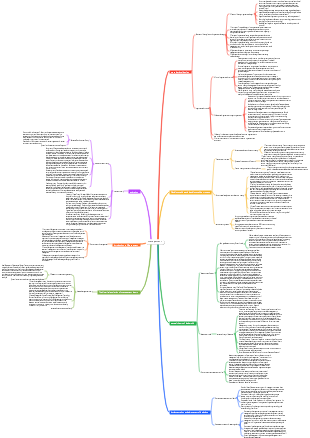
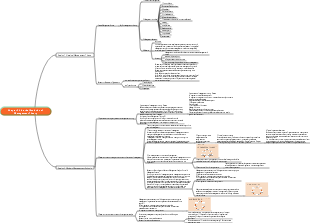
Chapter 1: Introduction to Management
Basic principles of management: humanism, system, efficiency, moderation
People-oriented: Organizational activities are carried out by people, and the fundamental purpose of management is to serve people.
system
Benefits: The pursuit of benefits is the basic rule that all human activities should follow.
Moderation: The organization should neither choose too wide nor too narrow the scope of its business activities; choose neither too large nor too small the scope of management; and should neither completely centralize nor fully distribute power. Absolute dispersion requires finding the most appropriate point between the two extremes, conducting appropriate management, and achieving an appropriate combination.
Global background of management activities: globalization, informatization, marketization
The essence of management: coordinating the behavior of organizational members in activities. The science and artistry of management: management theory and management tools are scientific, while management practice is art.
Basic methods of management: rational analysis and direct judgment
Fundamental Tools of Management: Power and Organizational Culture
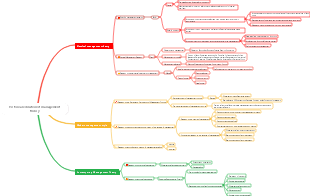
Chapter 2: Historical Evolution of Management Theory
classical management theory
Scientific Management: Taylor
main content
Improve working methods and select and train workers according to the requirements of the job
Improve operating methods to improve work efficiency and make rational use of work hours
Standardization of working environment and working conditions
Select and train workers according to job requirements
Improve distribution methods and implement a differential piece rate wage system
Improve production organization and strengthen enterprise management
Set up a planning department in the enterprise to separate planning functions from execution functions
Implement the functional foreman system
Manage by exception
General management: Fayol
Operations: A series of functions including technology, business, finance, security and accounting. Management is only a part of operations.
The management function itself consists of planning, organization, command, coordination, control, etc.
management principles
Bureaucracy: Weber
Types of power
traditional power
charismatic power
Legal power is a kind of obedience to the rights of a position or status determined by legal decisions. Weber believed that only legal power can become the basis of a bureaucratic organization.
modern management school
Systematic and contingency research on management thinking
A systems view of management thinking (Barnard, USA)
An organization is a collaborative system
Three basic elements of a collaborative system
willingness to collaborate
common goal
communication of information
Functions of managersP56
Contingency View of Management Thinking
There is a functional relationship between management techniques and methods and environmental factors
Decision-making and coordination research on the nature of management
Decision-making research on the nature of management (Simon, USA)
Management is decision-making, and decision-making is implemented throughout the management process
Decision-making process: intelligence activities, design activities, decision-making activities, review activities
Decision criterion: Satisfactory is greater than optimal
Organizing activities: Simon is divided into two categories
Routine activities: programmed decision-making
Non-routine activities: non-programmed decisions
A coordinated study of the nature of management (Henry Mintzberg)
Organizational coordination mechanism
Debugging each other
standardization
direct supervision
Basic components of organizationsP60
basic form of organizational structure
Research on techniques and methods of management analysis/School of Management Science
Alias: Mathematics School of Management/Operations Research School
Based on assumptions P62
contemporary management theory
Decision-making (the core of management)
Decision-making and decision-making process
Decisions and their tasks
Concepts and elements of decision-making
concept
Elements: decision-making subject, decision-making system, decision-making plan, organizational goals, uncertainty situation
Decision making and planning
Relationship: Decision-making provides the basis for the task arrangement of the plan, and the plan provides implementation guarantee for the activities selected by the decision-making and the implementation of the activity plan.
The basic stages of the planning system: planning--analysis--synthesis and communication--action
Decision-making functions and tasks
Function
Organizational level: clear direction
Individual level: stimulating member enthusiasm
Task
External environment perspective: adapting to external changes
An internal perspective on the organization: adapting to the external
Types and Characteristics of Decisions
Classification
Controllable environment: deterministic decision-making, risky decision-making, and uncertain decision-making
Decision-making problems: programmed decision-making, non-programmed decision-making
Decision-making subject: individual, group
feature
Purpose, feasibility, dynamics (environment), integrity, creativity
Decision-making process and influencing factors
Decision-making process model (cyclic process)
Identify problems (crisis problems, non-crisis problems, opportunity problems)--diagnose causes--determine goals--specify alternatives--evaluate, select plans--implement and supervise
Influencing factors: environment, organizational history, decision-maker characteristics, organizational culture
criteria
Improve efficiency: principle of importance, principle of accuracy, principle of flexibility
Uncertain situations: Optimism principle (choose the best result), pessimism principle (minimum loss), equal probability principle (add the income of each row and divide it by the number of pieces, choose the largest number among these rows), minimum regret principle (such as As shown in the figure)
Environmental analysis and rational decision-making
Elements of the organization’s internal and external environment
Environmental classification
General or macro environment (least impact): economic environment, technological environment, social environment, political and legal environment, natural resource environment
Specific or microenvironment (more frequently affecting the organization): customers, suppliers, competitors, regulatory mechanisms, strategic partners
Internal environment of the organization (the most frequent and direct impact on the organization): physical environment, cultural environment
Common methods of environmental analysis
General environmental analysis method (PEST analysis method): political and legal environment, economic environment, social and cultural environment, technological environment
Specific environment analysis method (Porter's five forces model): industry competitors, seller's bargaining power, buyer's bargaining power, potential entrants, substitute products
Comprehensive analysis method of internal and external environment (SWOT analysis method): strengths, weaknesses, opportunities, threats
Analysis methods for environmental changes: script method (scenario analysis method): divided into quantitative script method and qualitative script method
Rational decision-making and irrational decision-making
Rational decision-making (scientific decision-making)
Theoretical basis
The goal of decision-making is to maximize benefits
In view of the shortcomings of classical decision-making theory, Simon et al. proposed to replace "optimization" with "satisfactory" as the decision-making criterion.
Fundamental contents
behavioral decisions
Behavioral Basis for Decision Making
Simon and March divided management theories into two categories:
Robot mode (economic man mode)
This model regards organizational members as production tools-machines. They passively accept orders and perform operations.
motivational model
Organization members perform labor to satisfy personal requirements, motivations and purposes
Decision makers use psychological factors such as learning, memory, and habits as the behavioral basis for decision-making.
Behavioral decision-making representative model
DHS model (Daniel, Hershliever, Subramaniam)
Emphasizing overconfidence and biased self-attribution, attribution bias means that when events are consistent with the decision-maker's actions, the decision-maker attributes them to his or her high ability; when events are inconsistent with the decision-maker's behavior, the decision-maker will It comes down to external interference
HS model (macro, stan)
Focus the research on the mechanism of different actors, rather than the cognitive biases of actors, and divide actors into "message observers" and "momentum traders", who are opposite
Observer: Make predictions based on future value information, completely independent of past prices
Momentum traders: Rely entirely on past prices and forecasts are a simple function of past historical prices
BHS models (Barberis, Huang, Santos)
Intuitive bias, forming some experiences through trial and error
irrational decision making
incremental decision making
The new policy is an extension and development of the past policy, and it is a partial adjustment and modification of the past policy. It is characterized by stability, reliability and gradual development.
Policy coordination decision-making model
View public policy as the product of interest group struggles, and interest groups make decisions based on compromise and understanding.
Leadership collective decision-making model
Believes that policy choices are based on leaders’ excellent organizational and management experience
meritocratic decision-making model
believe that policies made by elites
decision making method
background research methods
Analysis of the nature of decision-making background
Holistic, comprehensive, complex, turbulent
Uncertainty model P97
Determined from two different environmental levels
The first is the degree of environmental change, that is, static-stable and dynamic-unstable levels
The second is the degree of environmental complexity, that is, the simple-complex level
Analysis steps
Activity plan generation and evaluation methods
Generate method
5W2H method, brainstorming method, Delphi method (expert opinion method), forced contact method
Evaluation method
Quantitative and qualitative (eg: one of the pens is quantitative and the pen is qualitative), financial and non-financial, dynamic and static
Select evaluation methods for activity plans
decision tree method
Implementation and adjustment of decisions
Planning to implement decisions
The nature and characteristics of plans
Planning is an important function of management. Characteristics: primacy and universality. Planning is one of the most common tasks that managers participate in.
Types and functions of plans
type
The extent and duration of impact on the business scope of the enterprise
Strategic Plan
Overall goals and strategic program plans
tactical plan
A plan for how exactly the organization’s activities will be run
work plan
Department or individual specific action plan
The length of time interval planned to span
Long-term plan, medium-term plan and short-term plan
Contents related to activities
It is an overall plan that involves many departments and aspects of activities within the organization.
A plan that involves some aspect or aspect within an organization
A plan for a specific topic
effect
It is the basis for managers to direct
It is the standard for managers to implement and control
is a means to reduce future uncertainty
It is a tool to improve efficiency and effectiveness
It is the basis for motivating personnel morale
Planning process and methods
Process: Formulate planning goals, estimate the gap between current situation and goals, predict future situations, formulate plans, implement and summarize plans
method
Rolling planning method (a method of regularly revising future plans) Features: Prepared in sections, near fine and far coarse, adjusted according to plan implementation and environmental changes
The Gantt chart is a commonly used daily work progress chart that can check the actual progress of the work at any point in time.
Processes and methods for advancing plans
Management by objectives (Drucker)
meaning
Meaning: It is a process of scientifically setting goals, implementing goals, conducting assessments and evaluations based on goals, and implementing organizational management tasks. It is a comprehensive management system.
Features
All employees participate in management
Focus on work results rather than work behavior itself
Emphasis on self-control of organizational members
Establish a systematic goal system (top-down, bottom-up goal setting)
type
Fully decomposed goal management (decompose the goal to each member)
Advantages: Improve employee motivation
Disadvantages: reduced cooperation and even competition among employees
Semi-decomposed goal management (decompose goals into departments, workshops, sections and other grassroots organizations)
Advantages: Enhanced cooperation
Disadvantages: Some people are lazy and lazy
process
Goal setting and development stages
Central task: coordinate from top to bottom to set goals for organizations at all levels
Specific work: investigation and research, goal development, responsibilities and authorization
Goal implementation stage
Consulting and guidance, follow-up inspection, coordination and balance (carry out necessary coordination work to balance the development of positions in various departments)
Outcome evaluation stage
Evaluate work, implement rewards and punishments, and summarize experiences and lessons
evaluate
advantage
Let employees know what results are expected of them
Allow managers to help plan work by setting goals and target completion times
Improved communication between superiors and subordinates
Make employees more aware of the organization's goals
Make the evaluation process more fair and reasonable by paying attention to the evaluation of specific performance
Enable employees to understand the status of their work completion, which is directly related to the achievement of organizational goals
shortcoming
During the implementation process, the operation of specific links is difficult
eg: Management by objectives emphasizes the participation of all employees in management. Employees have the right to speak and make suggestions. Of course, employees hope that sales will be lower and they can complete tasks better. As leaders, they hope to set sales higher. In this case, Conflicts arise between superiors and subordinates, making operations difficult
It is easy for managers to emphasize short-term goals, which is not conducive to the completion of long-term goals.
eg: Management by objectives focuses on work results rather than on the process, which itself is risky. For example, an employee uses various means to find customers in order to achieve his goals, but when he has customers, he does not maintain them and does not pay attention to the process. Therefore, it is not conducive to the achievement of long-term goals.
Be aware of the danger of target stagnation. Once you enter the implementation stage of a goal, it is very difficult to change the goal.
eg: The types of goal management are divided into fully decomposed goal management and semi-decomposed goal management, which allocate work tasks to various grassroots departments and individuals. If there is a problem in a certain link, it will affect the overall situation, so it is necessary Pay attention to the danger of goal stagnation. If the goal is to be changed, the entire goal must be changed, so it is very difficult to change the goal.
PDCA cycle (Deming cycle): plan, do, check, improve
Budget management (connotation, type: operation, investment, finance/rigid, flexible, method: zero-based budgeting method)
Decision tracking and adjustment*
organize
organizational design
Tasks and influencing factors of organizational design
Task: Design a clear organizational structure, plan the functions and authorities of each department, determine the scope of activities of functional authorities, staff authorities, and line authorities in the organization, and finally prepare job descriptions
Static organizational structure design: functions, departments, levels
Dynamic combined operation system design: communication system design, management specification design, incentive design
Influencing factors: environment, strategy, technology, scale, organizational development stage
environment
general environment
The general environment refers to the political, economic, social and cultural environment that has an indirect impact on organizational activities
task environment
The task environment refers to the environment directly related to organizational activities, including government, industry associations, partners, suppliers, customers, competitors, etc.
strategy
There are four different stages of strategic development, namely, quantity expansion stage, regional development stage, vertical joint development stage (organizations will naturally expand to other areas based on the development of the same industry) and product diversification stage
technology
Single piece small batch production technology, mass production technology, process production technology
scale
Four aspects: different levels of regulation, different levels of centralization, different levels of complexity, and different personnel structures
organizational development stage
Generation stage (leadership risk), growth stage (fragmentation risk), maturity stage (control risk, managers need to mobilize the enthusiasm of various departments through delegation, but not grant too much power to avoid losing control), decline stage (red tape risk), regeneration stage (risk of talent depletion)
Principles: The principle of consistent goals, the principle of division of labor and collaboration, the principle of effective management span, the principle of equal rights and responsibilities, and the principle of flexible economy (the organizational design needs to maintain a certain degree of flexibility and make timely adjustments to institutions and personnel according to changes in the internal and external environment)
organizational structure
Mechanical organization and organic organization
Mechanical organization: suitable for situations where the external environment is relatively stable
Organic organization: suitable for situations where the external environment is unstable
form
line organization
Features: All positions in the organization are vertically managed from top to bottom
Advantages: Simple setup, clear rights and responsibilities, conducive to the orderly operation of the organization
Disadvantages: low level of professionalism, lack of horizontal communication, high requirements for managers
Scope of application: Small-scale organizations with relatively simple production technology
functional organization
Advantages: High degree of specialization, reducing pressure on managers and helping to reduce management costs
Disadvantages: lack of coordination, unclear responsibilities, not conducive to the cultivation of general managers
line functional organization
Advantages: The combination of unified command and professional management can effectively reduce the burden on managers
Disadvantages: Increased coordination difficulty, damaging subordinates' autonomy, reducing adaptability to the environment, reducing decision-making efficiency, and increasing management costs
divisional organization
Matrix organization (the project team is a temporary organization)
Advantages: High flexibility (the project team is combined and disbanded as the project is developed and ended), clear goals, innovation through heterogeneous combination, smooth communication
Disadvantages: poor stability, multiple leaders, unequal power and responsibilities
Evolutionary trends: flattening, flexibility (two ways, one is to give full play to the role of informal organizations, and the other is to strengthen horizontal communication), borderless, virtualization (e-commerce enterprise organizations, dynamic network virtual organizations, Market chain (the core idea is to introduce the interest adjustment mechanism in the market economy into the enterprise))
organizational integration
Formal and informal organizations (Hawthorne experiment)
formal organization
Three elements: common goal, willingness to collaborate, information communication
Definition: An organic whole composed of two or more people working around a common goal through conscious, material elements, human elements and social elements that are key to the system.
Informal organizations (small groups)
Definition: A collection of individuals that are independent of formal organizational goals, oriented toward interpersonal harmony, irrational behavioral logic, and bound by underlying unwritten regulations.
Differences: different goals, different behavioral logics, different degrees of integration, and different sources of authority
Integration: Pay attention to the role of informal organizations, reduce the negative impact of informal organizations, and avoid goal conflicts by increasing the participation of organizational members in decision-making.
Hierarchical integration
Management span design
span of management is the number of subordinates directly led by the manager
Management level: all levels except the lowest level Organizational level: all levels
Centralization and decentralization in organizational design
Sources and forms of authority: line authority, staff authority, functional authority
Line authority (command): refers to the power of managers to directly lead the work of subordinates
Staff authority (guidance): refers to the staff members in the organization who have certain specific powers
Functional authority (department): line managers delegate some authority to other individuals or functional departments
Centralization and decentralization
Authorization issues in organizational design)
meaning
The subject of decentralization is the organization, and decentralization is the distribution of power in the organizational system.
The subject of authorization is the manager with authority. It is a form in which managers in an organization delegate departmental authority to subordinates or staff, who then perform their duties on their behalf.
Influencing factors
Principles: Principle of Purpose, Principle of Trust, Principle of Consistency of Rights and Responsibilities
Integration of line and staff
RelationshipP156
Direct line contact with staff
Both the line and the staff are managers of the organization and work together to serve the organizational goals.
Advisors provide professional services such as consultation, advice and review to line managers.
Lines and staff are both set up to overcome the limitations of managers.
The roles of line and staff can be switched
The difference between direct line and staff
The reason for the conflict between the direct line and the staff
Unified command affects the role of staff
Straight line's contempt and resistance to staff officers
The staff did not perform their duties
Staff officers overestimate their role
Integration method (carefully treat the setting up of staff, clarify responsibilities and relationships, and grant necessary functional authorities to staff)
Staffing
Staffing tasks, work content and principles
Task
Identifying suitable candidates for organizational positions
Promote the effective performance of organizational structure and functions
How to develop and tap human resources within an organization
Promote the comprehensive and free development of human beings
Work content
Determine the organization’s staffing needs
Select candidates for the organization
Develop and implement personnel training plans according to organizational requirements
in principle
meritocracy
Programming and standardization principles
The principle of choosing people according to the situation (matching the person to the position)
The principle of employing people according to their talents (matching people and positions)
dynamic balance principle
Personnel selection
Factors affecting recruitment (external environmental factors, organizational factors, recruiting officer factors, position factors)
Recruitment sources and recruitment channels
Recruitment sources
high salary strategy Pros: Quickly attract high-quality job seekers Cons: Higher labor costs in the future
Training strategy: Good: It is easy to obtain qualified job seekers with experience requirements. Bad: The cost of training will be higher in the future.
Broad search strategy: Finding the right candidates is too time-consuming
Recruitment channel
Internal recruitment channel
Succession management, employee development, employee recommendation, talent pool, internal job announcement system
External recruitment channel
Recruitment advertisements, campus recruitment, internal employee recommendations, public and private employment service agencies, temporary employment service agencies or labor dispatch agencies, job fairs
lead
control
innovation