MindMap Gallery Plant Physiology-Introduction Mind Map
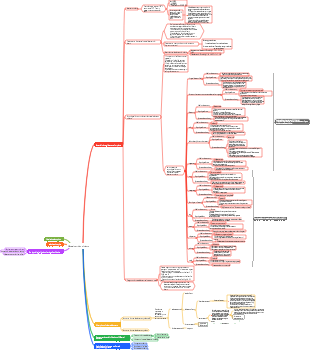
This is a mind map about plant physiology - introduction, including the definition, content and tasks of plant physiology, the emergence and development of plant physiology, etc.
Edited at 2023-11-03 09:13:26This is a mind map about bacteria, and its main contents include: overview, morphology, types, structure, reproduction, distribution, application, and expansion. The summary is comprehensive and meticulous, suitable as review materials.

This is a mind map about plant asexual reproduction, and its main contents include: concept, spore reproduction, vegetative reproduction, tissue culture, and buds. The summary is comprehensive and meticulous, suitable as review materials.
This is a mind map about the reproductive development of animals, and its main contents include: insects, frogs, birds, sexual reproduction, and asexual reproduction. The summary is comprehensive and meticulous, suitable as review materials.
This is a mind map about bacteria, and its main contents include: overview, morphology, types, structure, reproduction, distribution, application, and expansion. The summary is comprehensive and meticulous, suitable as review materials.
This is a mind map about plant asexual reproduction, and its main contents include: concept, spore reproduction, vegetative reproduction, tissue culture, and buds. The summary is comprehensive and meticulous, suitable as review materials.
This is a mind map about the reproductive development of animals, and its main contents include: insects, frogs, birds, sexual reproduction, and asexual reproduction. The summary is comprehensive and meticulous, suitable as review materials.
Plant Physiology-Introduction
Definition, content and tasks of plant physiology
definition
The science that studies the laws of plant life activities
content
Growth, development and morphology
definition
It is the external manifestation of plant life activities.
Growth (irreversible)
Refers to the increase in cell number and expansion of cell volume resulting in an increase in plant volume and quality.
development
It refers to the continuous differentiation of cells, the formation of new tissues, new organs, and the establishment of morphology. It is specifically manifested in the process of seed germination, root, stem, leaf growth, flowering, fruiting, aging and death.
Material and energy transformation (metabolism)
The four metabolic modes of plants
water metabolism
photosynthesis
respiration
mineral nutrition
Information transmission and signal transduction
Information transfer
concept
The part where the plant "perceives" environmental information and the part where the reaction occurs may be different. This is the process in which the information-receiving part transmits information to the part where the reaction occurs, which is the so-called information transmission.
For example
When the soil is drought (physical signal), the roots rapidly synthesize abscisic acid and transport it to the leaves to close the stomata to adapt to the drought.
Signal Transduction
concept
It refers to the physiological response produced by the signal transduction system after the signal binds to the receptor at the single cell level.
For example
Gibberellin (chemical signal) binds to the receptor on the plasma membrane of the aleurone layer of barley seeds, enters the cell, and passes through the signal transduction system to produce α-amylase.
The difference between the two
Information transmission refers to the transmission of physical or chemical signals from the environment on organs or tissues, while signal transduction refers to the transmission at the cellular level.
Task
content
Research and understand the laws and mechanisms of plant life activities under various environmental conditions, and apply these research results to all undertakings that utilize plant production.
Application of results
Through photosynthesis, plants use light energy to assimilate CO2 and other inorganic substances to form organic substances, which serve as food and energy sources for animals (including humans) and microorganisms.
The photosynthetic products in plants are transformed into various organic substances (some of which are secondary metabolites), and some of these organic substances are active ingredients in industry, pharmaceutical raw materials or Chinese herbal medicines.
Plants have a huge impact on the chemical composition of the surface, waters and atmosphere. Oxygen, which accounts for 21% of the atmosphere's volume, is released by plants during photosynthesis.
Plant remains participate in the process of soil formation
Biological nitrogen fixation in the symbiosis between leguminous plants and nitrogen-fixing microorganisms greatly enriches the total nitrogen circulating and accumulated in the biosphere.
Plant roots absorb mineral elements and also accumulate certain inorganic elements in rocks and water flows.
The growth and development of plants is the central process of agricultural production and forestry production. It provides important services for animal husbandry and aquaculture. Provides the basis for organic matter
Soil and water conservation and environmental purification are closely related to plant growth
Alkaloids, rubber, tannins, etc. synthesized by plants are also industrial raw materials or active ingredients of drugs.
source
Agricultural Production
The emergence and development of plant physiology
produce
Many manure fields
marry jujube
develop
first period
The gestation period of plant physiology (sixteenth to seventeenth centuries)
Representative figures and their achievements
Van Helmont of the Netherlands (1577-1577) 1644)
He was the first scholar to conduct experiments on plant physiology. He conducted experiments on willow branches to explore the substances from which plants grow. source.
S. Hales of England (1672-1761)
Study transpiration and theoretically explain the absorption and transport of water reason.
J. Priestley of England (1733-1804)
It was found that the mouse died soon after being placed in the sealed bell jar, but the mouse did not die when placed in the bell jar together with green plants.
J. Ingenhousz of the Netherlands (1730-1799)
I learned that green plants can clean the air only when exposed to sunlight, and initially established the concept of air nutrition.
second period
The foundation and growth period of plant physiology (18th to 19th centuries)
Representative figures and their achievements
G.Boussingault of France (1802-1899)
Established sand cultivation experimental method and started research work on plants.
J.von Liebig (1803-1873) of Germany
He proposed the application of mineral fertilizers to supplement the consumption of soil nutrients and became the founder of the theory of utilizing chemical fertilizers.
J.von Sachs of Germany (1832-1897)
Many important experiments were conducted on plant growth, photosynthesis and mineral nutrition, which led to the formation of a complete system of plant physiology.
He compiled "Lectures on Plant Physiology" in 1882, and his disciple W.Pfeffer published "Plant Physiology" in 1904, marking the birth of plant physiology as a discipline. Therefore, Sachs is called the founder of plant physiology. Sachs and Pfeffer are known as the two pioneers of plant physiology.
The three major discoveries in natural science - cell theory, evolution theory and the law of conservation of energy have also had a profound impact on the development of plant physiology. For example, in photosynthesis, light energy is converted into chemical energy and stored in the form of organic matter (conservation of energy).
third period
The initial development period of plant physiology (20th century)
Achievements
subtopic
fourth period