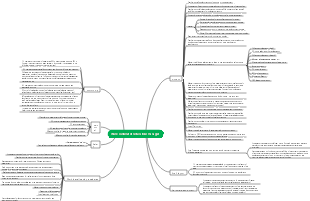
MindMap Gallery Service industry-retail elements mind map
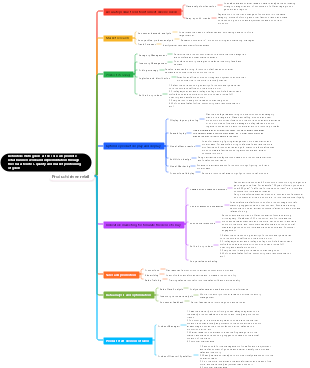
Mind map of service industry retail elements, required elements and indicators, including venues, goods, personnel, etc. Hope this helps you!
Edited at 2023-11-02 21:55:37This is a mind map about bacteria, and its main contents include: overview, morphology, types, structure, reproduction, distribution, application, and expansion. The summary is comprehensive and meticulous, suitable as review materials.

This is a mind map about plant asexual reproduction, and its main contents include: concept, spore reproduction, vegetative reproduction, tissue culture, and buds. The summary is comprehensive and meticulous, suitable as review materials.
This is a mind map about the reproductive development of animals, and its main contents include: insects, frogs, birds, sexual reproduction, and asexual reproduction. The summary is comprehensive and meticulous, suitable as review materials.
This is a mind map about bacteria, and its main contents include: overview, morphology, types, structure, reproduction, distribution, application, and expansion. The summary is comprehensive and meticulous, suitable as review materials.
This is a mind map about plant asexual reproduction, and its main contents include: concept, spore reproduction, vegetative reproduction, tissue culture, and buds. The summary is comprehensive and meticulous, suitable as review materials.
This is a mind map about the reproductive development of animals, and its main contents include: insects, frogs, birds, sexual reproduction, and asexual reproduction. The summary is comprehensive and meticulous, suitable as review materials.
retail elements
field
sales
Sales indicators for different periods of time
Forecast sales in different time periods
Tracking metrics
Store entry rate
(Number of people entering the store/Number of people passing by)*100%
Rate of going upstairs
(Number of customers going up this floor/Number of customers entering this floor)*100%
contact rate
Try-on rate/trial rate
Number of customers trying on (trial)/number of people entering the store*100%
contact rate
(Number of customers touching a product/number of people passing by a product)*100%
Transaction rate
(Number of customers transacting/number of people entering the store)*100%
Completion rate
(Number of completions/Number of goals)*100%
Analysis indicators
growth rate
Same as last month
efficiency index
Area effect
sales per square meter
sales/store area
Profit efficiency
Profit margin/store area
Human efficiency
Sales people effectiveness
Sales/number of store employees
profit efficiency
Profit amount/number of store employees
Rent per square meter
Rent/Area
rent multiple
sales/rent
competitive situation
market share
overall market share
Sales volume (amount)/Sales volume (amount) of the entire industry
target market share
Sales volume (amount)/target market sales volume (amount)
relative market share
Sales volume (amount)/sales volume of the largest competitor in the market
Competitive product index
The company’s sales (volume)/competitor’s sales (volume)
average rank
Promotional indicators
Cost-Effectiveness
(Promotion fee/sales generated during the promotion period)*100%
Goal completion rate
(Number of completed sales/target number during promotion period)*100%
year-on-year growth rate
(year-on-year growth/sales in the same period)*100%
Promotional explosion
(Average sales during promotion - average sales before promotion) / average sales before promotion * 100%
promotion attenuation
(Average sales during promotion - average sales after promotion) / average sales before promotion * 100%
Brand activity
Number of brands participating in promotional activities/total number of brands in the store*100%
member participation rate
Number of members participating in promotional activities/total number of effective members*100%
Channel expansion analysis
Net store opening rate
(Number of stores opened - Number of stores closed)/Number of stores at the beginning of the period * 100%
channel structure ratio
Sales through different channels/total sales*100%
Proportion of important customers
Important customer sales/total sales*100%
goods
Procurement link
Breadth
Number of product categories purchased
depth
Total quantity of purchased goods/Total number of SKUs purchased
width
Total number of SKUs purchased
Supply chain
Service indicators
order fulfillment rate
The total quantity of goods that can be supplied in the order/the total quantity of goods in the order*100%
order execution rate
Number of orders that can be executed/total number of orders*100%
On-time delivery rate
Orders delivered on time/Number of orders that can be executed*100%
Order response cycle
The time when the goods are received in the system and confirmed - the time when the order is placed in the system
management indicators
inventory turnover
supply chain management perspective
Outbound quantity/(beginning inventory quantity ending inventory quantity)/2
sales turnover angle
Sales quantity/(beginning inventory quantity ending inventory quantity)/2
Logistics cost ratio
Logistics cost/(ending inventory amount mid-period outbound amount)*100%
Customer complaint rate
(Customer complaint order batch/total number of orders)*100%
Inventory indicators
Beginning/Ending/Average Inventory
Inventory days
Ending inventory amount/(sales amount of a certain sales period/number of days in the sales period)
inventory-to-sales ratio
Ending inventory amount/sales amount of a certain sales cycle*100%
Effective inventory-to-sales ratio
Effective inventory amount/total inventory amount*100%
Sales links
Commodity indicators
Goods age
Sell out rate
Sales quantity within a certain period of time/(beginning inventory quantity mid-period purchase quantity)*100%
Discount Rate
The actual amount received for the product/the standard retail price of the product*100%
sales rate
Number of product SKUs sold in a certain period/(Number of product SKUs in stock at the beginning of the period Number of new product SKUs in mid-period)*100%
Out of stock rate
Number of products with out-of-stock records in the store during a certain period/(Number of products in stock at the beginning of the period Number of new products in the period)*100%
structural indicators
Category structure proportion
Sales of a certain category/total sales*100%
Price segment share
Sales volume of a certain price segment/total sales*100%
Regular price sales ratio
Regular-priced merchandise sales/total sales*100%
price system
present value of goods
price elasticity index
Price elasticity coefficient = percentage change in demand / percentage change in price
price rule of thirds
It divides the price of goods or services into three parts: high, medium and low, and each part is a price range.
Best seller analysis
Top ten sales and proportion
Top ten stocks and proportions
Sales proportion of slow-moving goods
After-sales indicators
return rate
Number of returns/total sales in a certain period*100%
special service rate
Special service customers/total sales customers*100%
Trade-in, free ironing and other special services
Damage rate
Number of damaged goods/total number of goods*100%
people
staff
sales Index
Transaction rate
Completion rate
Service indicators
average reception length
average transaction time
Product Knowledge Test Score
Sales Skills Score
complaint rate
management indicators
Customized satisfaction rate
turn over rates
Salary proportion
user
Customer price
Total sales amount/total number of customers with transactions
average number of pieces
Total sales quantity/Total number of transactions
Average shopping time
Member indicators
Number of new members
membership growth rate
Average number of purchases by members
Member repurchase rate
Member retention rate
average age