 Wondershare EdrawMind
MindMap Gallery Li Xiang·Product Practice 16 Lectures
- 91
Li Xiang·Product Practice 16 Lectures
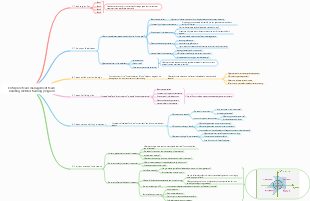
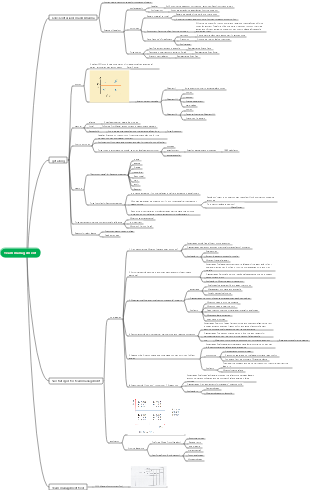
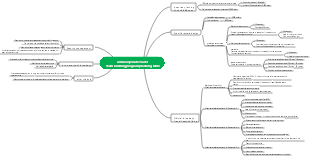
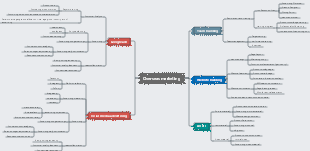
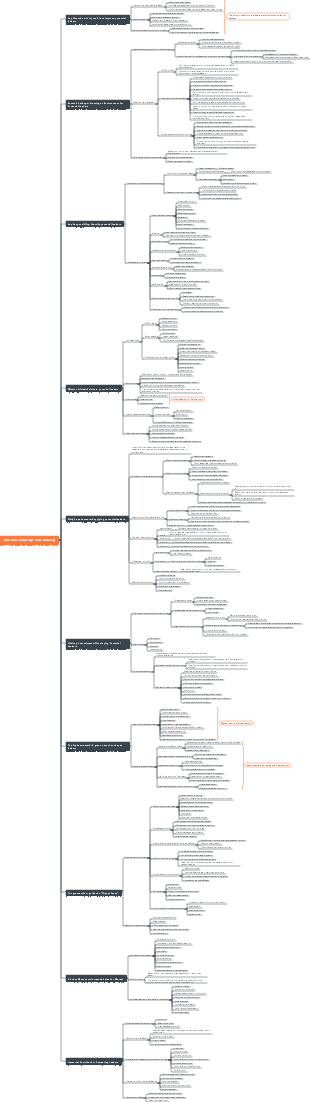
Recently, I studied Li Xiang's "Li Xiang·16 Lectures on Product Practice" on Get. In fact, in addition to products, the course also introduced some content related to team building and marketing. This mind map records several deeply rooted views in the course. At the same time, I would like to share with you the 15 challenges and solutions Li Auto has encountered in the process of building products from 0 to 1, and then replicating popular products from 1 to 10, as well as the pitfalls it has stepped on, the roads it has traveled, and the tools it has used. and an iterative mindset. Hope it is useful to all my friends~
Edited at 2023-11-01 12:00:13
- bacteria
This is a mind map about bacteria, and its main contents include: overview, morphology, types, structure, reproduction, distribution, application, and expansion. The summary is comprehensive and meticulous, suitable as review materials.
- Plant asexual reproduction
This is a mind map about plant asexual reproduction, and its main contents include: concept, spore reproduction, vegetative reproduction, tissue culture, and buds. The summary is comprehensive and meticulous, suitable as review materials.
- Reproductive development of animals
This is a mind map about the reproductive development of animals, and its main contents include: insects, frogs, birds, sexual reproduction, and asexual reproduction. The summary is comprehensive and meticulous, suitable as review materials.
Li Xiang·Product Practice 16 Lectures
- bacteria
This is a mind map about bacteria, and its main contents include: overview, morphology, types, structure, reproduction, distribution, application, and expansion. The summary is comprehensive and meticulous, suitable as review materials.
- Plant asexual reproduction
This is a mind map about plant asexual reproduction, and its main contents include: concept, spore reproduction, vegetative reproduction, tissue culture, and buds. The summary is comprehensive and meticulous, suitable as review materials.
- Reproductive development of animals
This is a mind map about the reproductive development of animals, and its main contents include: insects, frogs, birds, sexual reproduction, and asexual reproduction. The summary is comprehensive and meticulous, suitable as review materials.
- Recommended to you
- Outline



Li Xiang·Product Practice 16 Lectures
Introduction: Methodology for making products
Focus on user value and exceed user needs
Who are our users?
Ideal has firmly chosen to only serve home users from the beginning.
What exactly is the value we create for our users?
Real user value must be helping users solve a certain problem or complete a certain task, rather than just providing a simple function.
Li Auto will follow the solutions proposed by users to find the deeper motivations in their hearts, thereby creatively meeting the users' lowest needs.
Treat the organization as a product and use the growth of the organization to support the growth of the product
In Li Auto, there are three footholds, namely fighting against inertia, fighting against inertia and fighting against ignorance.
How can teams overcome inertia? The personal level relies on good work habits, and the organizational level relies on processes.
How to break inertia? It doesn’t matter what you did in the past or what others did. The only important thing is what you must do if you want to exceed the needs of users.
The biggest difficulty when entering "no man's land" is that we don't know what we don't know. How to do it?
With the help of "stones from other mountains", don't limit your vision to the same industry.
Establish a climate of positive reflection within the organization.
product strategy
1. Positioning: How to find the user group of the product?
Find differentiated positioning---look at the market from a different angle.
Ideal uses price as the vertical axis and life stage as the horizontal axis to find a new way to segment the automobile market; what tasks can your product help users accomplish in different life stages?
High-speed growth market---when judging the market space, don't just look at the size of the market segment, but also see the changes in trends. Prioritize looking for the rising market segments, which is far better than finding the largest market segment in front of you. Market segments are more important.
Needs not met
In the past, cars focused more on the experience of front-row drivers and second-row owners. Switching to the family car scenario, everyone’s needs have not been met, and there is still room for product innovation.
2. Brand: How to establish product consensus with users?
Three questions for brands: Who are we? Who do we serve? What value do we create?
How to answer and verify the three questions about the brand?
When answering who you serve, you can combine the positioning ideas from the previous lecture and gradually focus on it.
When answering who we are, don’t just think about who we want to be, but also what we are good at, which is our competitive advantage.
Can we reach this user group?
Does this user group have purchasing power and willingness to purchase?
Is this a rapidly growing user group?
Who are the real users of this product?
When answering what value is provided, the final refined answer should be simple and direct, without any ambiguity.
How to reach consensus with users?
We need to let users feel it in product design and in the process of contacting users.
In terms of brand promotions, Ideal will start from the perspective of the hostess or children in the second and third rows, which is different from the perspective of the driver in the first row of traditional car videos.
Put an end to "maybe", or it can be incomplete, which means that there are still some functions prepared for other users, and there is room for further focus.
summary
This is the process of brand formation. From the time you think clearly about the "three brand questions" to reaching a consensus with users, the role of brand has already occurred. It is not that the product market share exceeds a certain value, it is considered a brand.
3. Culture: How to ensure internal unity?
Culture is not about making up for what is lacking, but about refining it from the team’s experience.
ideal code of conduct
Solve all problems collaboratively
Do the right thing, don’t do the easy thing
Always put user value first
True culture is to extract those things from the team’s past experiences that have helped us achieve success, amplify them, strengthen them, and let them support us to the next stage of success.
Clarify gray-scale understanding on specific matters
For many things, you can only clarify the problem by doing multiple-choice questions. If you can't clarify it clearly, it is probably because you only gave the team one true or false question. There is no consensus on right or wrong, there is consensus only on choice.
The true implementation of culture lies in the true comparison of specific events. The team will never look at what the boss says, but rather what the boss does. Therefore, we must repeatedly discuss or even debate specific events with everyone to clarify the grayscale understanding of concepts and help the team establish a perceptual cultural consensus.
4. Product standards: How to define whether a product is good or bad?
Sense of security: the fatal flaw of directly dissuading users
Break through the inertia and find space within the industry’s inertia.
People who make products must switch from an industry perspective to a user perspective, and place themselves in real usage scenarios. This way you can easily discover the irrationality contained in inertia.
Sense of value: a reflection of competitiveness
There is no trick to improve the sense of value of a product. It is to focus on the target user group and provide a complete value experience. Never try to patch things together and imitate others.
The sense of value refers to your target user group, whether the functions and experiences they buy for the same money are the best for them, rather than the sense of existence created by the car manufacturers themselves.
Sense of yearning: Scenarios that users desire to have
Making users feel desirable does not require advanced technologies or functions. The key lies in whether your insight into user usage scenarios is close enough to the essence.
We need to find ways to make our products evoke the scenes that users long for.
summary
These three dimensions are also a relatively common set of standards for making products. As long as the product you make is functional and can reflect the user's personality or lifestyle, it should be applicable.
5. Team standards: How to build an efficient and collaborative product team?
Unified weights and measures: Unify the language and tools to keep the team’s way of looking at problems consistent.
Four-step product method:
The fourth step is to estimate the results: define how the goals will be measured, and work backwards based on the results.
The third step is to set goals: Set goals and specific plans that meet the goals.
The second step is to ask yourself: As a company, what are our own demands?
The first step is to ask the user: Who is the user? What are their real needs?
Tools also have values. When we choose tools, we also need to choose matching tools based on the team's genes, in order to further stimulate mutual trust and mutual recognition of the team.
Embedded processes: Further improve team capabilities and efficiency.
In the work process, keep following this method (four-step product method) (1. Really think about problems from the user's perspective and solve problems through co-creation; 2. Be able to keep an eye on the goal at all times and consider the investment in every action Output ratio. ) to do things, to train, to upgrade.
After the four-step method was improved, it became a unique process——PEA (Product Experience Assessment) review process, which is product experience management.
Cultivating adults: Take control of your own destiny and challenge the limits of growth.
"Seven Habits of Highly Effective People": Be proactive, start with the end in mind, put your first priority, win-win thinking, know your enemy and understand yourself, integrate synergy, and constantly update.
How to be an adult who can face problems independently, solve problems collaboratively, and constantly update and grow.
An adult can define his own goals and problems and constantly challenge the limits.
How to implement the Seven Habits of Highly Effective People training system? Incentives and assessments are the ultimate baton. All expectations and requirements can be included in the assessment. During the assessment, don't just look at subjective evaluations. The key is to force everyone to list real cases.
from 0 to 1
1. Experience: How to create an experience that exceeds user expectations?
To improve experience, be pragmatic
New technologies can certainly excite users and bring some experience upgrades. However, if the problems caused by new technologies cannot be solved, and one point is added in some places and three points are lost in other places, then the overall experience will be reduced, which is equivalent to wasted effort.
Those who make products such as durable consumer goods must be able to resist the temptation of concepts.
Regardless of the public or niche, just look at whether it is high frequency
If you want to make a good product, you don’t have to distinguish whether the demand is mass demand or niche demand, but you have to judge whether it is high frequency. As long as it is a function that users frequently use, if you work hard on it, it will be relatively easier to bring users a perceivable experience upgrade.
Weighing the opportunities
Regarding input-output ratio: When we talk about atomic-level benchmarking, we don’t mean stacking functions and comparing parameters. The core of this lies in how to rationally use costs to maximize user experience.
The so-called product strength is not some fantastic idea, but something that is built in a down-to-earth manner. There are not many tricks here, it just depends on who understands the user's needs better, does it deeper, and puts in more effort.
What is an opportunity? When it comes to product competition, everyone plays their cards right. The so-called opportunities are to look at the needs that competitors have not yet fully satisfied, or the existing solutions on the market still have room for improvement.
summary
To put it simply, our core approach is that it does not depend on mass demand or niche demand. Innovation may often come from niche demand. The key depends on whether users will use a feature frequently after it is built. Correspondingly, when we evaluate whether our products are doing well, we also look at the frequency of user use. The higher the frequency, the greater the value created for users.
2. Users: How to discover the real needs of users?
Verification of requirements
The verification of requirements, to be precise, is imagination and simulation. Although it is an imagination, it is actually quite accurate.
The core still comes back to the “scenario” we have talked about ten thousand times. What this means is, don’t just say out of thin air whether this requirement exists or that requirement exists, but verify it in specific scenarios.
Preliminary mining of needs
Instead of "asking", we go to "see" and return to the user's purchase site to observe.
Do less one-on-one interviews and do more co-creation with multiple people
Fourth, the co-creation meeting does not need to draw conclusions on the spot. The purpose of the co-creation meeting is to allow users to express themselves fully. Converging conclusions and finally answering multiple-choice questions are what the product team needs to do afterwards.
Why do more co-creation? In an atmosphere of co-creation, it is easier for individuals to let down their guard, and it is easier for real needs to emerge.
Third, when discussing a specific function, we should not ask the user for specific plans, but rather ask for his emotional expectations.
Second, when asking questions in the co-creation meeting, do not directly ask the user what his needs are, but first ask him to recall the scene.
3. Technology: How to choose the product implementation path?
Selecting technology requires optimal cost and efficiency: comprehensive capabilities that allow users to pay less cost and gain greater value.
(From a cost perspective, for a pure electric vehicle with a real driving range of about three to four hundred kilometers, the battery cost already accounts for more than 40% of the total vehicle cost.) Compared with fuel vehicles, the biggest weight burden for electric vehicles is the large battery pack. An extended-range electric vehicle with a range of 200 kilometers does not have weight problems, and does not need to add a large amount of aluminum materials that are of no value to users to reduce vehicle weight and increase costs.
At the same level and with a price of more than 300,000, the ideal battery cost plus the cost of the range extender only accounts for 25% of the total vehicle cost. For other brands, the battery cost accounts for 40%.
What can you do with the money you save? First, it can make our car prices lower; second, it can greatly increase the perceptible value of high frequency; third, safety can be ignored at any cost.
Select technology to serve product value
Back to the previous product value proposition for users: sense of security, sense of value, and sense of yearning. There is no range anxiety or charging anxiety, which is a sense of security; urban electricity, long-distance power generation, and camping discharge are a sense of value; we can take the family wherever we want to go, travel together, and grow together, which is a sense of yearning. Therefore, it is ideal for family users to choose an SUV that uses extended-range electric technology.
When choosing technology, you should learn from each other’s strengths and offset weaknesses.
Fundamentally speaking, the range extension plan is actually to learn from the strengths of the two technologies of oil and electricity.
When making a choice, you should start from the perspective of user value, not the policy and technology itself. When you see a failed result, don't habitually think that this way is unreachable, but analyze the other party's key issues, and we will be able to find room for innovation. (Previous hybrids generally only had a range of 50-60 kilometers, policy-oriented, and the ideal range of 200 kilometers solved urban commuting)
4. Pricing: How to set a competitive price?
Business business needs
Competition in the automobile industry is basically a protracted war, and development cannot continue to rely on financing.
Therefore, having healthy gross profit margin and hematopoietic ability are the core basic capabilities of an automobile company.
Rationality: product value
More than 80% of users will clearly analyze whether the seat ventilation is suction type or blower type, whether it uses an independent motor or an air conditioning system. These will all be influencing factors in users’ math problems. Then when we set prices, we cannot vaguely consider cost-effectiveness, but must do precise calculations like math problems.
Product value = product power ÷ product price × product quality.
We must define the product value that users perceive more, so that we can give users a reason to choose us among many products.
Perceptual: user experience
These psychological prices do not entirely depend on the cost of the product. They also depend on how the user defines the position of the product in their mind. Is it a functional product, an emotional sustenance, or a status symbol? Products of the same type have different positioning in the minds of users, and the money users are willing to spend is also different.
When it comes to pricing, we cannot ignore competition, but we cannot avoid competition either. (Because they avoid competition, they set lower prices and reduce configurations, which often results in worse sales.)
For a product with a status symbol like a car, pricing must take into account the user’s feelings and not contradict their psychological price.
summary
Looking at it today, Ideal ONE’s pricing is successful, and it also received some luck. But all good luck will only come after you get the basic score.
from 1 to 10
1. Review: How to make hot products from accidental to inevitable?
Goal: Turn experience into ability
When you first affirm what the team does well, the team will be more willing to expose their shortcomings. You don’t even need to remind or emphasize, they will take the initiative to make up for the shortcomings.
The goal of the review should not be to reward and punish based on past results, but to discuss and reach a consensus on "how we can do better in the future."
Therefore, based on this goal, the review must not lead the team to reflect when it comes up, but first summarize what the team has done well, precipitate these successful experiences, and even solidify them into the process.
Review Process: Review against the plan
Review against PEA
When doing PEA analysis in the planning stage, six elements must be clarified
1. What problem to solve: What problem to solve: The person initiating this process must provide specific evidence to prove that the problem he wants to solve is a real problem. Anything that cannot be proven to be a real problem will be rejected during the review process.
2. Goal requirements: It must be clearly stated who the user is without any ambiguity; at the same time, it must also be clear what kind of experience the user is expected to get through this product or this function, which is the goal. We emphasize that this goal must be something that can be said by users, not just our own description.
3. Plan description: It must have both the functional performance after implementation and the specific plan for implementation.
4. Risk and assessment. The key point here is to have plans for possible risks.
5. Resource evaluation: including R&D resources, development costs, licensing fees, and specific R&D cycles, etc.
6. Operation indicators: There must be digitized operation indicators. The indicators must have an accurate relationship with the achieved goals, and each indicator should have a prior expectation.
Whether it is continuing past experience or solving current problems, key "To-Do" must be formulated and assigned to specific people.
How to hold a review meeting
1. The CEO, product manager, and business number one must participate in the review meeting. The review meeting must be held well, and the first person in charge must pay attention to it. No one else can replace this.
2. The meeting must have a dedicated moderator to ensure that the meeting is always in the right direction to achieve the ultimate goal. The moderator does not participate directly in the discussion.
3. The host should fully communicate with key participants before the meeting to let them fully understand the value of the review. My suggestion is to assign homework to the participants in advance, such as telling them the important issues discussed in the meeting, so that they can They write answers to questions ahead of time.
4. The host should fully communicate with key participants before the meeting to let them fully understand the value of the review. My suggestion is to assign homework to the participants in advance, such as telling them the important issues discussed in the meeting, so that they can They write answers to questions ahead of time.
5. We must pay attention to the control of meeting procedures. When discussing a problem, each person and each group takes turns to speak before starting the next question. If an individual fails to comply with the speaking rules, the moderator should publicly point out and correct them in a timely manner.
6. The review meeting must be held on time and embedded in the organization’s workflow, and cannot become a random event. What do you mean by opening on time? That is, according to the type of business, according to the time points of week, month, quarter, half a year, or the whole year; or according to the node where events such as product development, product release, product launch, etc. end, when the time is up, the review will be carried out without hesitation, whether it is the advancement of the plan. Smooth or not?
summary
Once the team enters this cycle of "review - strengthening - practice - review again", the successful advantages of the previous product will become the starting point for your next product. Each of your new products can definitely absorb the advantages of the previous product.
2. Rhythm: How to complete the product from 1 to 10?
From 0 to 1
The control of rhythm tests the core abilities of founders and product leaders.
Before we have the advantages of scale and technology in the industrial chain, bringing these long boards to the ceiling is the only shortcut to win admission to the next stage. ---Concentrate your efforts and do only one big thing.
When starting a business, all you need to think about is how to complete product verification and achieve the smallest business closed loop.
From 1 to 10
Why do you say that? Because, for the knockout rounds, over-preparation may cause some waste of resources, but the waste is very limited. Moreover, if you have the opportunity to look back, you will always feel that the style of play at that time was conservative and the funds and resources invested were far from enough. This is the experience he and Wang Xing had in surviving the "Hundred Regiments War"
Wang Xing and Wang Huiwen said that we should not follow inertia. What should be discussed is how big will the market be in the future? When will the market's turning point arrive? The so-called turning point is the point at which the winner takes all and the loser retires.
Wang Huiwen talked about a big principle: It is better to be over-prepared than under-prepared.
3. Process: How to improve the system capabilities of product production?
How to upgrade the process? Learn from the best companies in the market.
There are three main points: restoring the user value stream, repairing the highway, and aligning and interlocking key nodes.
What is the user value stream? To put it simply, it means going back to the old problem we have emphasized countless times, clarifying who the user is, and then working backwards from the user's perspective to simulate and reproduce the user's real experience process when using the product. All internal processes must correspond to the user value stream.
Based on the user value stream, we can re-determine which processes are truly necessary. This is the most critical step in improving process efficiency.
Build the highway and differentiate between roads and cars.
The so-called "road" is actually the process to be followed in team work.
Our approach is to productize and standardize best practices and then implement them into processes.
The so-called "car" refers to a professional model that extends vertically downwards and supports every key node on the road.
summary
A good process not only connects the work of various departments, but also plans the entire path from producer production to user value realization. At Li Auto, we call this value creation, value delivery and value delivery.
Why must we distinguish between "road" and "car" in the process? The purpose is that regardless of whether the goal is achieved or not, we can position it more accurately when attributing it.
Why should we emphasize interlocking? The core reason is that as we mentioned earlier, when there are too many products, different departments will have inconsistent goals and work independently.
One is that you need to define which are the main processes at the entire company level and which are auxiliary branch processes.
Defining the role of the main process is to allow the branch processes of each department to be built on this main process, and then achieve interlocking of key nodes at the interface.
The second key point is that you need a heavyweight team dedicated to facilitating and operating.
From stage 0 to stage 1, there are few products and a small team size. At this time, it is even more necessary to be fast and flexible like a "guerrilla". But at the stage from 1 to 10, when there are more products and revenue reaches hundreds of billions, it should be a "group army" operation, and process problems will become the biggest obstacle to the company's continued creation of explosive products.
4. Stores: How to improve contact efficiency?
Why do we still have to rely on stores to sell cars?
For low-frequency and large-ticket consumer goods, user decision-making costs are very high, and the decision-making cycle is also longer. They need to actually experience the product. For new brands, it often takes multiple experiences before making a purchase decision. (Note: This is also true for selling houses on the Internet)
Open a store quickly
The digital capabilities of our management system are very good. Whether online or offline, it can fully support the sales system and personnel management.
We have very few SKUs for our models, ensuring efficiency in sales and delivery.
All our sales staff cannot take up the job directly. They must come to Beijing and Changzhou for training and pass exams. A complete training system, training on how to receive, how to explain products, how to sell, how to use the back-end system, etc. Closed training requires passing the exam before you can return to the store in the city where you are working. Those who fail the exam will not be admitted.
The balance of retraction and release
The most troublesome thing about the direct operation model is that it is easy to eat from one big pot, especially after the number of stores increases. This is also a problem that will inevitably arise from opening a store quickly.
What store managers need to do is to establish a deep understanding of the local market environment, set their own sales goals, and most importantly, judge for themselves what resources need to be invested to achieve the goals, how much resources to invest, and how to effectively achieve the goals. use resources efficiently. For example, whether to spend more money to buy sales leads, hire more people, or give employees better sales incentives.
5. Profit: How to improve operating efficiency?
Make good choices: return to user value and not lose your sense of presence
In the specific work, we will establish a very detailed NPS system. This system will record in detail the functional points perceived by each user in the process of recommendation and feedback. Do not engage in duplicative construction and waste resources.
If you use excessively redundant things but cannot create actual product value, then you are just trying to increase your sense of presence.
Budget Control --- Accurate Estimates: Split to the Atomic Level
What is atomic level splitting? This is a point we have repeatedly emphasized, which is to split all data into the smallest unit that cannot be split any further. If every atom is functioning healthily, then the whole thing is healthy.
Tough control: approaching best practices
In all aspects of product development, production, and sales, strong control must be done to truly ensure profit margins.
In this process, strong management methods and a sophisticated digital system are essential. But here, I share with you an experience from Li Auto, which can continuously optimize your business system. How to do it specifically? Refining best practices. The most important thing is to create a field and encourage everyone to be willing to share.
Conclusion
Growth is the first driving force
Challenges stimulate growth
(For example, the Wenjie M7 disabled the Ideal ONE)
How to narrow this gap? Only continuous learning and continuous growth.
At the Yanqi Lake strategic meeting of Li Auto at the end of September 2022, we quickly reached a consensus: learn from Huawei in an all-round way.
How to make the team continue to grow?
The first important thing is to establish a culture of trust in the team.
I believe that I must find people who are better and more professional than me in different fields, and trust them and let them give full play to their talents. This is the basis for achieving great things.
The second point is to seek truth from facts and correct mistakes when you know they are wrong.
Don’t punish new mistakes, only punish repeated mistakes. Once you punish new mistakes, demote them, or impose fines, employees will find ways to hide their mistakes, and they will reduce innovation because they are afraid of making mistakes. On the contrary, if you don't punish, employees will be bolder to solve problems.
The third point is to establish a positive feedback loop for growth.
People change because of pain and persist because of benefits.
Through actual combat, a positive feedback loop of growth is established. Once entering this cycle, even if it encounters failure, the team can still gain something new.