MindMap Gallery Section 1 Chapter 25 Internal Control of Fund Managers⭐️ (Understanding)
2023 Fund Practitioner Qualification Examination Subject 1, Chapter 25, the subject has a total of thirteen chapters, and the content is distributed in two volumes. (Note: The Fund Practitioner Examination consists of Subject One, Subject Two, and Subject Three. Subject One and Subject Two are a mixture of two books, and Subject Three is private equity) Wish you ashore!
Edited at 2023-10-30 09:57:46This is a mind map about bacteria, and its main contents include: overview, morphology, types, structure, reproduction, distribution, application, and expansion. The summary is comprehensive and meticulous, suitable as review materials.

This is a mind map about plant asexual reproduction, and its main contents include: concept, spore reproduction, vegetative reproduction, tissue culture, and buds. The summary is comprehensive and meticulous, suitable as review materials.
This is a mind map about the reproductive development of animals, and its main contents include: insects, frogs, birds, sexual reproduction, and asexual reproduction. The summary is comprehensive and meticulous, suitable as review materials.
This is a mind map about bacteria, and its main contents include: overview, morphology, types, structure, reproduction, distribution, application, and expansion. The summary is comprehensive and meticulous, suitable as review materials.
This is a mind map about plant asexual reproduction, and its main contents include: concept, spore reproduction, vegetative reproduction, tissue culture, and buds. The summary is comprehensive and meticulous, suitable as review materials.
This is a mind map about the reproductive development of animals, and its main contents include: insects, frogs, birds, sexual reproduction, and asexual reproduction. The summary is comprehensive and meticulous, suitable as review materials.
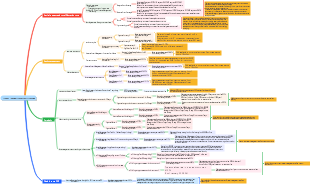
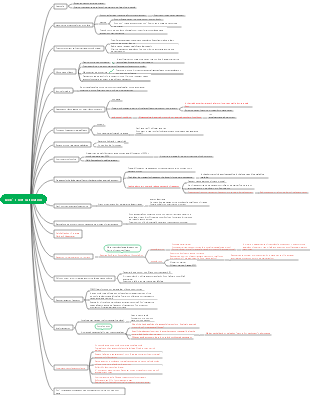
Chapter 25 Internal Control of Fund Managers⭐️ (Understanding)
Section 1 Objectives and Principles of Internal Control
1. The necessity of internal control
Fund managers’ advantages in information, funds and talents can easily create “temptations” for fund managers
2. The meaning of internal control
(1) Internal control
In order to prevent and resolve risks and ensure that business operations are in line with the company's development plan, the company establishes an organizational mechanism, uses management methods, and implements operating procedures and control measures to form a system based on full consideration of the internal and external environment.
(2) Risk management
1. Internal environment (elements)
Integrity, ethical values and competence of all employees
Management philosophy and operating style
Management allocates rights and assigns responsibilities
the way it organizes and develops its employees
Attention and guidance given by the Board of Directors
2. Goal setting
3.Identification of matters
4. Risk assessment
5. Risk response
6. Control activities
7.Information and communication
8. Behavior monitoring
3. Three objectives of internal control
(1) Ensure that the company's operations strictly abide by relevant national laws, regulations and industry regulatory rules, and consciously form business ideas and concepts of law-abiding and standardized operations.
(2) Prevent and resolve operating risks, improve operating and management efficiency, ensure the steady operation of business operations and the safety and integrity of entrusted assets, and achieve the company’s sustained, stable and healthy development
(3) Ensure that the financial and other information of the fund and fund manager is true, accurate, complete and timely
Note: The interests of employees are not protected
4. Five Principles of Internal Control
(1) Principle of soundness
Internal control should include the company's various businesses, departments or institutions, and personnel at all levels, and cover all aspects of decision-making, execution, supervision, feedback, etc.
(2) Principle of effectiveness
Internal control must emphasize efficiency and effectiveness, and all control systems must be implemented
(3) Principle of independence
The responsibilities of each agency, department and position of the fund manager should remain relatively independent
The operations of fund assets, free assets and other assets should be separated
(4) The principle of mutual restraint
The establishment of internal departments and positions of fund managers should have clear powers and responsibilities and mutual checks and balances.
(5) Cost-benefit principle
Achieve the best internal control effect with reasonable cost control
Section 2 Internal Control Mechanism
1. The meaning of internal control mechanism
definition
Internal control mechanism, referred to as internal control mechanism, refers to the company's internal organizational structure and their mutual operational constraints. That is, in order to achieve planned goals and prevent and reduce risks, an enterprise organization involves all employees, intervenes and monitors the internal organizational business processes throughout the process, adopts power distribution and mutual checks and balances, and develops a systematic and institutional system. Guaranteed operation process.
Fund managers’ internal control mechanisms generally include four levels
First, employee self-discipline
The second is inspection and supervision by supervisors at all levels of the department
The third is the supervision and control of various departments and businesses by the general manager of the company and the inspection and audit department led by him.
The fourth is the inspection, supervision, control and guidance of the audit committee and the inspector general under the leadership of the board of directors
NOTE: There is no regulator check as the regulator is external
Strengthen in four aspects
(1) In the establishment of internal control institutions, there must be no tendency to focus on immediate commercial profits and not pay attention to the establishment of full-time internal control institutions.
(2) In the establishment of internal control systems, there must be no tendency to focus on the establishment of internal management systems and not pay attention to the establishment of "firewall" systems for internal core departments.
(3) In the implementation of the internal control system, there must be no tendency to focus on the control of non-recurring events and not on the control of recurring events.
(4) In terms of internal control supervision, there should be no tendency to focus on procedural supervision and not pay attention to the supervision of "insiders".
First of all, it is necessary to strengthen the internal control and supervision of fund managers and establish collective approval systems for major decisions of fund managers to prevent business management leaders from acting arbitrarily;
Note: This is not an independent review and approval
Secondly, it is necessary to strengthen the control and supervision of the management of fund management departments and establish a system for mutual checks between departments to prevent excessive departmental power or collective malpractice;
Thirdly, it is necessary to strengthen the control and supervision of managers in key positions and establish a rotation and regular inspection system for key positions to prevent middle-level managers of fund managers from abusing their power for personal gain or colluding to commit crimes, thereby establishing and improving the internal control and supervision mechanism of the enterprise.
2. Basic elements of internal control
(1) Control environment
Including business philosophy and internal control culture, corporate governance structure, organizational structure, and employee moral quality
(2) Risk assessment
Managers should establish a scientific and rigorous risk assessment system to identify, evaluate and analyze the company's internal and external risks, and prevent and resolve risks in a timely manner.
(3) Control activities
Fund managers can control the operation of business activities through authorized controls. Authorization control should run through the entire company's business activities.
(4) Information communication
Fund managers should maintain smooth information communication channels and establish a clear reporting system.
(5) Internal control
Section 3 Internal Control System
1. Overview of the internal control system
Fund Management Company Internal Control System Composition
Internal Control Program
basic management system
Department business regulations
internal control system principles
(1) Principles of legality and compliance
(2) Principle of comprehensiveness
(3) Principle of prudence
(4) Principle of timeliness
Note: There is no commercial principle
2. Internal Control Outline
The company's internal control program is the refinement and expansion of the internal control principles stipulated in the company's articles of association. It is the outline and overview of various basic management systems. The internal control outline should clarify the internal control objectives, internal control principles, control environment, internal control measures, etc.
Note: There are no performance reviews
3. Basic management system
At least include risk control, investment management, fund accounting, information disclosure, supervision and audit, information technology management, corporate finance, data file management, performance evaluation and emergency response, etc.
Note: There is no position setting
4. Departmental regulations
Department business rules are based on the basic management system and are specific explanations of the main responsibilities, job settings, job responsibilities, operating rules, etc. of each department.
5. Business Operation Manual
It is a guide for business personnel to start their work.
Section 4 Main Contents of Internal Control
1. Investment management business control
(1) Study the main contents of business control
(1) Research work should remain independent and objective.
(2) Establish strict research work processes and form scientific and effective research methods.
(3) Establish an alternative database system for investment objects. The research department shall establish and maintain an alternative database based on sufficient research in accordance with the requirements of the fund contract.
(4) Establish a business communication system for research and investment and maintain smooth communication channels.
(5) Establish a research report quality evaluation system.
(2) Main contents of investment decision-making business control
(1) Investment decisions should strictly abide by the relevant provisions of laws and regulations
(2) Improve the investment decision-making authorization system, clearly define investment authority, strictly abide by investment restrictions, and prevent ultra vires decision-making.
(3) Investment decisions should have sufficient investment basis, and important investments should be supported by detailed research reports and risk analysis, as well as decision-making records.
(4) Establish an investment risk assessment and management system to make investment decisions within the set risk authority.
(5) Establish a scientific investment management performance evaluation system, including investment portfolio status, compliance with fund product characteristics and decision-making procedures, fund performance analysis, etc.
(3) Main contents of fund trading business control
(1) A centralized trading system is implemented, and fund managers are not allowed to directly issue investment instructions to traders or conduct transactions directly.
(2) The company should establish a transaction monitoring system, early warning system and transaction feedback system, and improve relevant safety facilities
(3) Investment instructions must be reviewed and approved and executed only after they are confirmed to be legal, compliant and complete.
(4) The company should implement a fair transaction allocation system to ensure that the interests of different investors can be treated fairly
(5) Establish a complete transaction record system, and daily investment portfolio lists should be checked in a timely manner and archived for safekeeping
(6) Establish a scientific trading performance evaluation system
Special transactions such as over-the-counter transactions and offline subscriptions should formulate corresponding processes and rules based on the principles of internal control.
2. Sales business control
(1) Publicity and promotion materials must be reviewed.
(2) Strictly review customer account opening information to comply with anti-money laundering and sales usability regulations.
(3) Subscription, redemption and conversion transaction applications are all reasonably authorized by the customer and executed accurately and timely.
(4) Establish a due diligence process for agency sales agencies, strictly select cooperative fund sales agencies, review sales agreements, and supervise fund agency behavior to comply with the agreement.
3. Information disclosure control
Information disclosure is an obligation that fund managers must fulfill. Information disclosure may have a significant impact on securities market prices and investor behavior,
Establish a sound information disclosure system to ensure that publicly disclosed information is true, accurate, complete and timely
Fund managers should strengthen the inspection and evaluation of the company's information disclosure, promptly propose improvement measures for existing problems, provide suggestions for handling errors in information disclosure, and hold relevant personnel accountable.
4. Information technology system control
Fund managers shall strictly formulate information system management systems in accordance with the requirements of national laws and regulations, follow the principles of security, applicability, and operability.
When realizing electronic business, a confidentiality system and corresponding control mechanisms should be set up to ensure the accountability of the computer system.
Management measures such as strict authorization system, job responsibility system, access control system, and internal and external network separation system should be adopted to ensure the safe operation of the system.
The use of company software should fully consider the security, reliability, stability and scalability of the software, and should have functions such as identity authentication, access control, fault recovery, security protection, and decentralization restrictions.
Information technology system design, software development and other technical personnel are not allowed to intervene in actual business operations.
The password used by the user must be changed regularly and must not be disclosed to others.
The passwords for the database and operating system should be kept by different personnel.
Strictly enforce the authorization modification procedures for computer transaction data, and adhere to a regular inspection system for electronic information data.
Fund managers should establish a real-time storage and backup system for electronic information data, and important data should be backed up off-site and stored for a long time.
Information technology systems should be audited and inspected regularly, security measures such as business data storage should be improved, and troubleshooting and disaster recovery drills should be conducted to ensure reliable, stable and safe operation of the system.
5. Accounting system control
The company should clearly define the division of responsibilities and clarify the responsibilities of each accounting position on the basis of job division. It is strictly prohibited for positions that require mutual supervision to be operated by one person alone throughout the entire process.
The company shall use the fund as the accounting entity for the funds it manages, establish independent accounts, and conduct independent accounting to ensure that different funds are independent from each other in terms of roster registration, account setting, fund transfer, and account book records.
The accounting of each fund should be independent from the company's accounting.
Fund managers should adopt appropriate accounting control measures to ensure the normal operation of the accounting system
(1) A voucher system should be established to ensure that economic transactions are correctly recorded and economic responsibilities are clarified through a series of voucher management systems such as voucher design, login, delivery, and archiving.
(2) An accounting organization and accounting processing system should be established, accounting books should be correctly set up, and accounting procedures should be effectively controlled.
(3) A review system should be established to prevent accounting errors through accounting review and business review.
(4) Reasonable valuation methods and scientific valuation procedures should be adopted to fairly reflect the value of the securities invested by the fund at the valuation time point.
(5) Fund liquidation and delivery work should be standardized, fund liquidation should be completed promptly and accurately within the scope of authorization, and the safety of fund assets should be ensured.
(6) Strict cost control and performance appraisal systems should be established to strengthen accounting supervision before, during and after the event.
(7) A complete accounting file storage and financial handover system should be developed,
6. Supervision, audit and control
Managers should set up a supervision and audit department to be responsible to the company’s management
The manager should establish a chief inspector who is responsible to the board of directors. He should be appointed by the board of directors and report to the China Securities Regulatory Commission for approval.
The chief inspector can attend relevant meetings of the company, review relevant files, and independently perform inspection, evaluation, reporting and recommendation functions on the implementation of the internal control system.