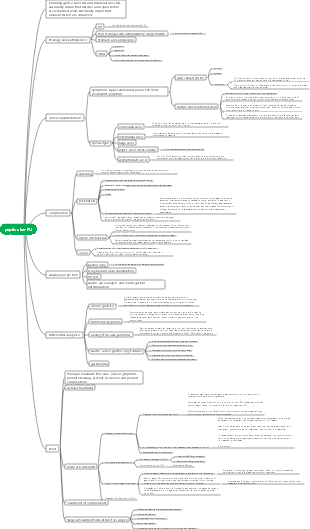
MindMap Gallery Chapter 31 Acute Pancreatitis
Internal Medicine Chapter 3 Digestive System Diseases Acute Pancreatitis. Its clinical symptoms include abdominal pain, nausea, vomiting, fever, and shock. If you like it, you can like it and save it~
Edited at 2023-10-29 23:29:21This is a mind map about bacteria, and its main contents include: overview, morphology, types, structure, reproduction, distribution, application, and expansion. The summary is comprehensive and meticulous, suitable as review materials.

This is a mind map about plant asexual reproduction, and its main contents include: concept, spore reproduction, vegetative reproduction, tissue culture, and buds. The summary is comprehensive and meticulous, suitable as review materials.
This is a mind map about the reproductive development of animals, and its main contents include: insects, frogs, birds, sexual reproduction, and asexual reproduction. The summary is comprehensive and meticulous, suitable as review materials.
This is a mind map about bacteria, and its main contents include: overview, morphology, types, structure, reproduction, distribution, application, and expansion. The summary is comprehensive and meticulous, suitable as review materials.
This is a mind map about plant asexual reproduction, and its main contents include: concept, spore reproduction, vegetative reproduction, tissue culture, and buds. The summary is comprehensive and meticulous, suitable as review materials.
This is a mind map about the reproductive development of animals, and its main contents include: insects, frogs, birds, sexual reproduction, and asexual reproduction. The summary is comprehensive and meticulous, suitable as review materials.
acute pancreatitis AP
Cause
Biliary and pancreatic diseases
cholelithiasis
Non-stone factors: biliary tract infection, biliary ascaris
Heavy drinking and overeating
hypertriglyceridemia
Infect
pathology
acute edema type
acute necrotic type
clinical manifestations
symptom
stomach ache
It is the main manifestation and first symptom of this disease, most of which are sudden onset and acute abdominal pain, which often occurs after drinking alcohol and eating a meal. It can be dull pain, knife-like pain, drilling pain or colic, which is persistent and may have bursts. When the disease gets worse, it can radiate to the lower back in a band-like manner. The pain can be relieved by bending over and holding the knees, and can be aggravated by eating. The pain is mostly in the middle and upper abdomen. Edema-type abdominal pain will be relieved in 3 to 5 days. In the hemorrhagic and necrotic type, severe abdominal pain lasts for a long time and can cause general abdominal pain.
feel sick and vomit
The abdominal pain does not subside after vomiting. Hemorrhagic and necrotic type may also cause abdominal pain or even paralytic intestinal obstruction.
fever
shock
physical signs
Mild acute pancreatitisMAP
Upper abdominal tenderness, no abdominal muscle tension and rebound tenderness, and bowel sounds may be reduced
Severe acute pancreatitisSAP
Abdominal muscle rigidity, obvious tenderness throughout the abdomen, positive rebound tenderness, and weakened or disappeared bowel sounds suggest acute peritonitis.
If the skin around the umbilicus appears blue, it is called Cullen's sign
The skin on both waists is dark gray-blue, which is called Grey-Turner sign. It is caused by pancreatic enzymes, necrotic tissue and bleeding infiltrating into the abdominal wall along the peritoneal space and muscle layer.
Complicated by pancreatic and surrounding abscess or pseudocyst, an obviously tender mass can be palpated in the upper abdomen
If the mass compresses the common bile duct, jaundice may occur
Jaundice can be caused by stones in the common bile duct or ampulla, inflammatory edema of the head of the pancreas that compresses the common bile duct, or damage to liver cells caused by pancreatitis.
complication
local complications of pancreas
Acute peripancreatic fluid collectionAPFC
Once a cyst forms in APFC that persists after 4 weeks, it is called a pancreatic pseudocyst
Acute necrosis accumulationANC
ANC enclosed by the cyst wall is called encapsulated necrosis WON
systemic complications
systemic inflammatory response syndrome SIRS
organ failure
Infections and sepsis
pancreatic encephalopathy
gastrointestinal bleeding
diagnosis
AP diagnosis - diagnosis can be made if 2 of 3 items are met
① Acute, sudden, persistent, severe upper abdominal pain that can radiate to the back
② Serum amylase and/or lipase activities are at least 3 times higher than the upper limit of normal
③Contrast-enhanced CT/MRI shows typical imaging changes of AP (pancreatic edema or peripancreatic effusion)
Classification diagnosis
Mild acute pancreatitisMAP
Meets the diagnostic criteria for AP and is not accompanied by organ failure or local or systemic complications
Moderate to severe acute pancreatitis MSAP
Accompanied by transient organ failure (can recover within 48 hours), or accompanied by local/systemic complications
Severe acute pancreatitisSAP
With persistent (>48h) organ failure
Cause diagnosis
Diagnosis of complications
Differential diagnosis
Acute perforation of peptic ulcer
Cholelithiasis and acute cholecystitis
acute intestinal obstruction
acute myocardial infarction
treat
General treatment
Maintenance of organ function
Early fluid resuscitation
Intestinal function maintenance
ventilator assisted ventilation
Continuous renal replacement therapyCRRT
Reduce pancreatic secretion and inhibit pancreatic enzyme activity
fasting
Acid suppression therapy
Somatostatin and similar drugs
Protease inhibitor
Endoscopic and surgical treatments
Endoscopic treatment
Surgical treatment - surgical indications
① When the diagnosis is unclear and difficult to differentiate from other acute abdominal diseases such as gastric perforation
② Hemorrhagic necrotizing pancreatitis that is ineffective after medical treatment
③When pancreatitis is complicated by abscess, pseudocyst, diffuse peritonitis, intestinal paralysis and necrosis
④ Biliary pancreatitis is in an acute state
Anti-infective
Chinese medicine treatment
prevention