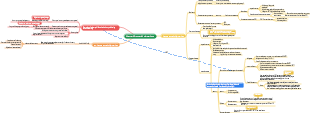
MindMap Gallery Chapter 10 Nitrogen-Containing Compounds
"Organic Chemistry" final review mind map, with clear context and comprehensive content, is a good helper for review. Welcome to use it! The other chapters are on the homepage. It’s not easy to make. Please give it a like! 🥰
Edited at 2023-10-24 10:51:31This is a mind map about bacteria, and its main contents include: overview, morphology, types, structure, reproduction, distribution, application, and expansion. The summary is comprehensive and meticulous, suitable as review materials.

This is a mind map about plant asexual reproduction, and its main contents include: concept, spore reproduction, vegetative reproduction, tissue culture, and buds. The summary is comprehensive and meticulous, suitable as review materials.
This is a mind map about the reproductive development of animals, and its main contents include: insects, frogs, birds, sexual reproduction, and asexual reproduction. The summary is comprehensive and meticulous, suitable as review materials.
This is a mind map about bacteria, and its main contents include: overview, morphology, types, structure, reproduction, distribution, application, and expansion. The summary is comprehensive and meticulous, suitable as review materials.
This is a mind map about plant asexual reproduction, and its main contents include: concept, spore reproduction, vegetative reproduction, tissue culture, and buds. The summary is comprehensive and meticulous, suitable as review materials.
This is a mind map about the reproductive development of animals, and its main contents include: insects, frogs, birds, sexual reproduction, and asexual reproduction. The summary is comprehensive and meticulous, suitable as review materials.
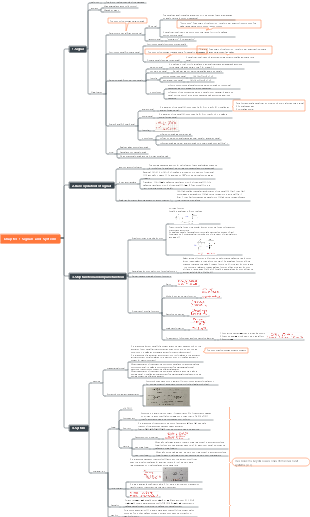
Chapter 10 Nitrogen-Containing Compounds
Nitro compounds
structure
Two nitrogen-oxygen bonds
double bond
Allocation key
The same length (P-π conjugate)
nature
physics
Insoluble in water, soluble in organic solvents and concentrated sulfuric acid
density greater than 1
Polynitro is fragrant
Easily decomposes and explodes when heated
toxicity
Chemical
reduction reaction
aliphatic
Lithium aluminum hydride, metal hydrochloric acid, catalytic hydrogenation
Aliphatic primary amines
aromatic
single molecule reduction
Metal (Zn) Hydrochloric acid
amine
Acidic
Aliphatics have tautomerism tautomerism
Only with α-H
interconversion to enol form
Effect on the ortho-para position of the aromatic ring
Nitro group absorbs electrons and activates
But if it is located in the meta position of the halogen atom, it only has an induction effect and has little impact.
Effect on phenolic acidity
Enhance
amine
name
Indicate the number of hydrocarbon groups
Put the better groups later according to the "order rules"
Complex amine amino group as substituent
Quaternary ammoniums are named by placing the anion and substituent before "ammonium"
structure
Pyramid, SP3 unequal hybridization
nature
physics
Low-level and intermediate-level are liquid, soluble in water, and have an unpleasant odor.
The advanced ones are solid, and the aromatic ones are more toxic.
Boiling points are higher than hydrocarbons and lower than alcohols due to hydrogen bonding
Chemical
alkaline
The lone pair of electrons on nitrogen accepts a proton
The quaternary ammonium bond is as basic as caustic alkali
Influencing factors
The R group donates electrons to enhance basicity
Solvation of ammonium ions
The stronger* the stronger
steric hindrance
Alkylation
Reacts with halogenated hydrocarbons, the hydrogen on the nitrogen is replaced by an alkyl group
Nucleophilic substitution of halogenated hydrocarbons
Fatty amines are more nucleophilic and aromatic hydrocarbons generally do not react
Acylation and sulfonylation
Acylation
Aminolysis of carboxylic acid derivatives
Protected amino group
Reacts with acid chlorides, acid anhydrides, and esters to form amides
Tertiary amines have no hydrogen atoms and do not react.
Hinsberg reaction
Identification, separation and purification
Reacts with p-toluenesulfonyl chloride under alkaline conditions to form sulfonamide
Primary amines
Soluble in alkali solution
The H on N is affected by the strong electron withdrawal of the sulfonyl group
Secondary amine
Produce white precipitate
Sulfonamide precipitates
Tertiary amine
No reaction, oil and water stratify
Reacts with nitrous acid
aliphatic
Primary amines
The reaction produces nitrogen and an unstable mixture, meaningless
Zhong
N-Nitrosodialkylamine (yellow oil)
uncle
Water-soluble nitrite, easily hydrolyzed, reacts with strong alkali to form tertiary amines
aromatic
Uncle
Reaction at low temperature (0-5℃) generates diazonium salt
Hydrolyzes to phenol at room temperature
The only way to prepare phenol
Zhong
N-nitrosodiphenylamine (yellow solid)
uncle
Electrophilic substitution introduces nitroso group
p-Nitroso-N,N-dimethylaniline (grass green solid)
Electrophilic substitution on benzene ring (198)
Aminoactivation
Halogenated
Tribromoaniline
Similar to tribromophenol (white precipitate)
Nitrification
Dissolve in concentrated sulfuric acid to obtain hydrogen sulfate, then nitrify to obtain m-nitro product, and then hydrolyze
sulfonation
First react with concentrated sulfuric acid to form aniline hydrogen sulfate, which is then heated and dehydrated.
Oxidation
Oxidized by hydrogen peroxide or peroxyacid
aliphatic
Primary amines
Oximes of aldehydes and ketones (197)
Zhong
Hydroxylamine Derivatives
uncle
Tertiary amine oxide
Aromatics are easily oxidized and the products are more complex
Diazo and azo compounds (220)
Diazo
[N≡N]
Decomposes into phenol and nitrogen at room temperature
Copper halide halogen substitution
Potassium iodide iodine substitution
H3PO2/C2H5OH/NaBH4 deamination
Azo
N=N
Diazonium salts are formed by condensation with phenols or aromatic amines, coupling reactions (coupling reactions)
The para product is the main product (steric hindrance)
Amide
structure
The acyl and amino groups are directly connected and conjugated
nature
physics
Except for formamide, which is liquid at room temperature, the rest are white crystals.
Hydrogen bonding has a higher melting and boiling point than carboxylic acid
Lower amides are easily soluble in water, while aromatics are insoluble or slightly soluble.
Chemical
Acidity and alkalinity
As the conjugate base weakens, it approaches neutrality
Hofmann degradation
Preparation of primary amines with one less carbon
When an amide with a primary amino group is treated with an alkaline solution of bromine, a primary amine with one less carbon atom than the amide is formed.