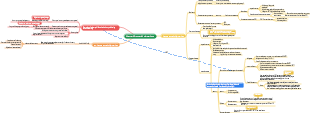
MindMap Gallery Chapter 9 Carboxylic Acids and Carboxylic Acid Derivatives
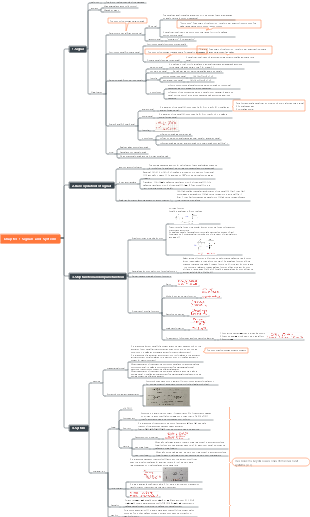
"Organic Chemistry" final review mind map, with clear context and comprehensive content, is a good helper for review. Welcome to use it! The other chapters are on the homepage. It’s not easy to make. Please give it a like! 🥰
Edited at 2023-10-24 10:50:58This is a mind map about bacteria, and its main contents include: overview, morphology, types, structure, reproduction, distribution, application, and expansion. The summary is comprehensive and meticulous, suitable as review materials.

This is a mind map about plant asexual reproduction, and its main contents include: concept, spore reproduction, vegetative reproduction, tissue culture, and buds. The summary is comprehensive and meticulous, suitable as review materials.
This is a mind map about the reproductive development of animals, and its main contents include: insects, frogs, birds, sexual reproduction, and asexual reproduction. The summary is comprehensive and meticulous, suitable as review materials.
This is a mind map about bacteria, and its main contents include: overview, morphology, types, structure, reproduction, distribution, application, and expansion. The summary is comprehensive and meticulous, suitable as review materials.
This is a mind map about plant asexual reproduction, and its main contents include: concept, spore reproduction, vegetative reproduction, tissue culture, and buds. The summary is comprehensive and meticulous, suitable as review materials.
This is a mind map about the reproductive development of animals, and its main contents include: insects, frogs, birds, sexual reproduction, and asexual reproduction. The summary is comprehensive and meticulous, suitable as review materials.
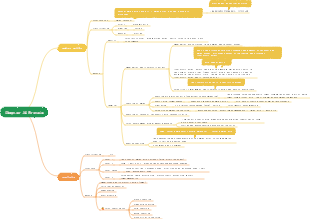
Chapter 9 Carboxylic Acids and Carboxylic Acid Derivatives
carboxylic acid
structure
SP2 hybridization, conjugated system
nature
physical properties
Melting point
High polarity, strong intermolecular force, high melting and boiling point
Lower monocarboxylic acids often form dimers through hydrogen bonding
Solubility
Soluble with each other, the molecular weight increases and decreases
chemical properties
Acidic
Stronger than carbonic acid, affected by R group
Changes significantly as the number of carbon atoms in the hydrocarbon group increases (below 4)
Reacts with carbonate to produce CO2
Generation of derivatives
acid halide
Reacts with SOCl2 or PCl5
Anhydride
Strong dehydrating agent P2O5
ester
Reaction with alcohol (heating with concentrated sulfuric acid)
Does not react with phenol
Reversible
Amides react with ammonia or organic amines at room temperature to form ammonium salts, which can be heated and dehydrated to form amides.
Thermal decomposition reaction (decarboxylation reaction)
Carbon reduction is easy to occur when α-C is connected with an electron-withdrawing group.
Classification
B and C
decarboxylation
Carboxylic acid and CO2
Can clarify limewater identification
Ding Wu
dehydration
Five/six-membered ring acid anhydride
Ji Geng
Decarboxylation and dehydration
Five-membered/six-membered ring ketone
α-H halogenation reaction
Gradually replaced by halogen under the action of phosphorus
reduction reaction
Lithium aluminum hydride LiAlH4
Selective reduction to hydroxyl
Diborane B2H5
It can also reduce aldehydes and ketones
Reduction to primary alcohol
represent
Formic acid
formic acid
Fehling's reagent can be used to identify
Acetic acid
oxalic acid
Oxalic acid
Can be oxidized to CO2 by potassium permanganate
Sulfate plus magnesium
Glyoxylic acid
Sulfuric acid plus zinc
Glycolic acid
propionic acid and butyric acid
Adipic acid
Catalytic oxidation of cyclohexane and oxidation of cyclohexanone using vanadium pentoxide
benzoic acid
Benzoic acid
Phthalate
salicylic acid
o-Hydroxybenzoic acid
polyunsaturated fatty acids
DHA/EPA
substituted carboxylic acid
Hydroxy acid
alkyd
Classification
α
β
γ
...
nature
It has both carboxylic acid properties and alcohol properties.
physical properties
boiling point, increased water solubility
chemical properties
Acidic
The electron-withdrawing effect of hydroxyl groups is stronger than that of carboxylic acids, but decreases as the distance increases.
dehydration
alpha-hydroxy acid
Two molecules form lactide
beta-hydroxy acid
Intramolecular dehydration to form α,β-unsaturated carboxylic acid
γσ
Intramolecular dehydration occurs when heated to form lactone
easy to generate
酸性中性:羟基酸一般以内酯的形式存在
碱性条件下内酯容易水解生成盐
Oxidation
Oxidation to carbonyl acid
represent
P182
Phenolic acid
Common ones are monohydroxybenzoic acid or polyhydroxybenzoic acid
Representative (P183)
Salicylic acid (ortho-hydroxybenzoic acid)
White crystal slightly soluble hydrogen bond
Reacts with iron ions to produce red color
Phenolic properties
Heating decarboxylation
Aspirin (acetylsalicylic acid) can be made by heating with acetic anhydride
Prepared by acidifying carbon dioxide and sodium phenolate
paraben
gallic acid
Gallic acid (trihydroxybenzoic acid)
Carbonyl acid
Classification
aldehyde acid
keto acid
nature
decarboxylation reaction
α-Keto acids are deacidified under the action of dilute sulfuric acid to form aldehydes
Beta-keto acids generate ketones
reduction and oxidation reactions
Sodium tetrahydroborate
Hydroxy acid
Tetrahydrogen lithium aluminum
diol
Aldehydes can be oxidized to dicarboxylic acids
Keto acids are difficult to oxidize. After decarboxylation to aldehydes, α-keto acids are oxidized to carboxylic acids with one less carbon atom than the keto acids.
represent
Glyoxylic acid
Without α-H, Cannizzaro reaction can occur
Pyruvate
Reducible Toulon's reagent
Halogenated acid
amino acids
carboxylic acid derivatives
structure
The part after removing the hydroxyl group from the carboxyl group is called acyl group
nature
physical properties
state
Low molecular weight is a liquid, high molecular weight is a solid
Acid halides and acid anhydrides are volatile and pungent odor, esters have fragrance, and amides have no
Low molecular acid halides and acid anhydrides are easily hydrolyzed, and esters are insoluble in water.
As the hydrogen atom on the nitrogen atom is replaced, the melting point of amides decreases (hydrogen bonding decreases)
chemical properties
nucleophilic substitution
hydrolysis
hydrolyzed to carboxylate
acid chloride
Violent reaction, benzoyl chloride slow (conjugation)
Principle (picture)
Activity (picture)
Alcoholysis
Process and activity (picture)
acid halide
Get ester and hydrogen halide (easy)
Commonly used in the esterification of phenols
Add a base (pyridine) to promote the reaction
Anhydride
Esters and carboxylic acids
ester
Heating under acid catalysis (reversible: transesterification)
Swap large for small, prepare high-boiling alcohol esters that are not easy to obtain, and small molecular alcohols can be steamed out in time
Amine (ammonolysis)
Principle (picture)
Amines containing N-H bonds react violently with acid halides to give amides
Influencing factors
Hofmann degradation
Preparation of primary amines with one less carbon atom
Amide generation
Equation diagram
Reduction of esters
Acylation
protecting group
Claisen ester condensation reaction
α-H is weakly acidic and reacts under the action of strong bases
Similar to aldol condensation, forming β-keto ester
Interconversion between keto form and enol form
Universality (fundamentally stability)
picture
Ethyl acetoacetate has the properties of both ketone and ester, such as nucleophilic addition, reaction with 2,4-dinitrophenylhydrazone, etc.
stable conditions
-CH2 and -NH are greatly affected by the -I group and are highly acidic
π-π conjugation, stable
Intramolecular hydrogen bonding, cyclic chelates
represent
Ethyl acetoacetate
characteristic
and Na release H2
discolor bromine water
Color development with ferric chloride
nature
nucleophilic substitution
Under the action of strong base, substituted with halogenated hydrocarbon or acid halide
It will decompose when heated, and the products vary with the concentration (picture)
Malonate
Similar to "Three B"
The acylated substitution product can be hydrolyzed and decarboxylated to give the ketone (picture)
DMF (dimethylformamide)
Commonly used aprotic polar solvents
NBS (N-bromosuccinimide)
Commonly used bromination agents
Urea (urea)
White crystal, easily soluble in water and ethanol
Biuret reaction: reacting with dilute CuSO4 to produce purple-red color
Acetyl chloride
Colorless irritating liquid, acetylation reagent
Preparation method
乙酸钠+二氧化硫+氯气
乙烯酮+氯化氢
Acetic anhydride
Colorless irritating liquid
Easy to hydrolyze