 Wondershare EdrawMind
MindMap Gallery Causes, findings and inferences
- 56
- 1
Causes, findings and inferences
This is a mind map about the cause of the disease, its discovery and inference, including the basic concepts of the cause, Etiology theory and etiology model, sufficient etiology-component etiology model, discovery and verification of etiology, etc.
Edited at 2024-01-20 12:40:27
- Recommended to you
- Outline




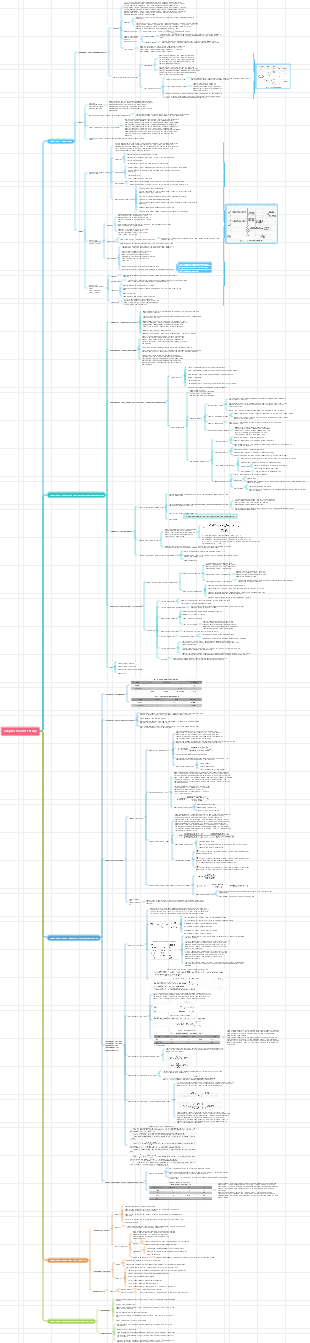
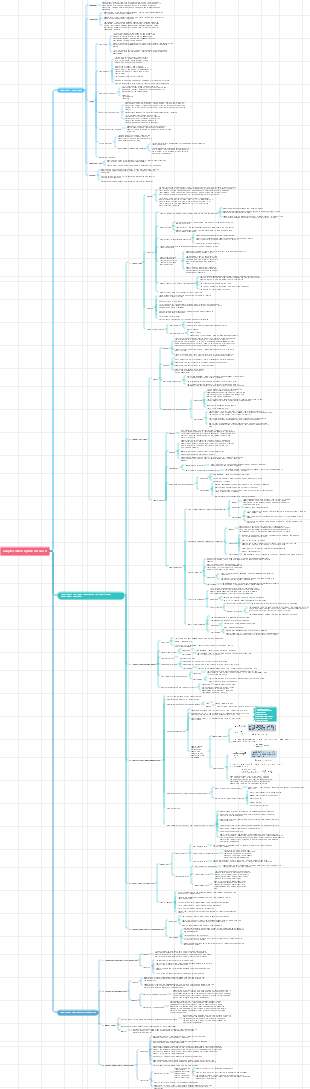
Causes, findings and inferences
Section 1 Basic Concept of Causes of Disease
Epidemiological causes: factors that increase the probability of disease in a population (the cause of a disease is the set of all factors that increase the probability of disease)
causation
Chronological order: cause event occurs before effect event
Correlation: the effect event changes as the cause event changes
Causal variability: changes in causal events are caused by changes in causal events
Temporal order and correlation are directly observable, and variability can be demonstrated indirectly by excluding the possibility of other factors.
Diversity of causal relationships: single cause and single effect, single cause and multiple effects (multiple effects of causes), multiple causes and single effects, multiple causes and multiple effects, direct causes and indirect causes, cause chains and cause networks
Section 2 Etiology theory and etiology model
etiological model
Definition: The theoretical framework used in modern medicine to distinguish different causes and explain their relationship with disease, their relationship with each other, and their mechanisms of action.
use
Explain the relationship between causes and the relationship between causes and diseases
Indicate the direction of causes to reveal new causes
Used to illustrate the role of etiology and explain epidemiological concepts and principles
The ultimate goal: to discover new causes or grasp the main causes to develop a more comprehensive and effective disease prevention strategy.
Triangular model of the etiology of infectious diseases: host, pathogen, and environment are all indispensable for the epidemic of infectious diseases, and they are equal, interrelated, and restrictive to each other
The wheel model of etiology puts the disease-causing person or animal at the center, surrounded by the physical, chemical, biological and social environment in which they live.
Ecological model of health determinants: the center is people, and other causes are divided into different levels. Each level contains many related but different factors, emphasizing the impact of the interaction of various factors on health.
Cause chain: The relationship between mutually causal causes that occur successively in time, and the relationship between these causes and the final disease is represented by a cause chain.
etiology network
Definition: A disease often has multiple independent or interrelated causal chains. Different causal chains of the same disease are connected and intertwined with each other to form a more complex and complete causal network. The overall network structure of connections from etiology to onset is called etiology network
Removing any one factor in a cause chain can completely cut off the entire cause chain, thereby preventing the disease from occurring through this cause chain.
Different causal chains may have different effects on the occurrence of the disease. Effective prevention should cut off the main causal chains.
Different causal chains may independently affect the occurrence of the disease, and cutting off multiple causal chains at the same time will definitely prevent more cases.
Section 3 Sufficient etiology-component etiology model
A sufficient cause is a sufficient condition for the occurrence of a disease, and its formation is equivalent to the occurrence of the disease. A sufficient cause can be composed of one or more components, and they are indispensable. If any component is missing, the disease will not occur.
In the same sufficient cause, the component causes are complementary to each other and are each other's complementary causes. Each component cause of a sufficient cause plays an equal and necessary role or contribution to the development of the disease
A component cause that is present in all sufficient causes is called a necessary cause. If this component cause was not present, any sufficient cause of the disease would not be realized and the disease would not occur. If the disease had occurred, the cause must be present.
A sufficient cause exists for the disease to occur, and there must be a necessary cause for the disease to occur
Causes are divided into four categories: ① Both necessary and sufficient; ② Necessary but not sufficient; ③ Sufficient but not necessary; ④ Neither necessary nor sufficient
Section 4 Discover and verify the cause of disease
Mill's law of causal inference
Method of seeking common ground: Examine different situations where a certain phenomenon occurs. If all the different situations have different conditions except for one condition, then this same condition may be the cause of a certain phenomenon under study.
Difference method: Compare the occasions when a certain phenomenon occurs and the occasions when it does not occur. If the two occasions are the same except for one difference, then this difference is the cause of the phenomenon.
How to find common differences and similarities: If there is only one common factor in various situations where a certain phenomenon under investigation occurs, and there is no such common factor in various situations where the phenomenon under investigation does not occur, then this common factor is the cause of the phenomenon under investigation (two Seeking common ground multiple times and seeking differences multiple times)
Co-variation method: When there is a variation or change in a certain phenomenon, there is a corresponding variation or change in another phenomenon, and no matter what the variation and change of the latter are, then there may be a causal relationship between the two. When a dose-response relationship exists, a causal relationship is more likely to exist
Residue method: If a certain composite phenomenon is determined to be caused by a certain composite cause, subtract the parts that are confirmed to have causal connections, then the remaining parts must also have causal connections.
Mill's Law and Epidemiological Research Design
Mill's methods of seeking agreement, seeking differences, and seeking consensus are only applicable to sufficient and necessary causes or extremely strong causal relationships, and cannot be directly used to study the causes of chronic non-communicable diseases → Change "all" to "many" or "majority"
Randomized controlled trials use random grouping to completely eliminate confounding and are the most reliable method to verify causal relationships in the population. However, it can only be used to evaluate the effects of treatments and interventions, and cannot be used to directly study the causes of diseases.
Cohort studies have a causal relationship and are the most reliable method to verify the cause of disease in the population. They are also often used to study adverse effects of treatment.
Epidemiological research is based on the principle of Muller's law, collecting evidence of the three conditions of the cause in the population, and using this to infer the existence of causal relationships in medicine.
Section 5 Causal Relationship Inference
general principles of scientific inference
Three levels of inference: 1. Inference based on a specific study; 2. Inference based on all similar studies; 3. Inference based on all relevant evidence
The validity of the inferences depends on the type of study design, the methodological quality of the study, and the sample size, with study quality being more important than sample size.
Evaluate the validity of individual studies
Authenticity and research quality
Internal authenticity: How close the observed results are to reality under the conditions of the study. Determined by the methodological quality of the study
Research quality is an overall measure of the degree of control over research bias. The higher the quality, the smaller the bias, the higher the authenticity of the results, and the greater the likelihood that the conclusion is correct.
Factors that determine research quality
The quality of a study is determined by the study's bias control measures. Research design is the most basic method for controlling bias in a study. The quality of a study first depends on the type of research design.
The quality of the study further depends on the general bias control measures of epidemiological research, such as the accuracy of data collection, consistency of measurements between groups, representativeness of the sample, reduction of loss to follow-up, sufficient observation time, etc.
The quality of research also depends on the bias control measures unique to a type of research design. For example, clinical trials can use randomization, group concealment, blinding, and maintenance of original randomization (ITT) analysis, etc. The more used, the better the bias control and the higher the quality.
The sample size determines the size of the sampling error and the accuracy of the result estimation. It is essentially one of the determinants of how close the research results are to the reality.
Methods for evaluating research quality
Grading of evidence: Grading the quality of studies based on the type of study design
① High quality: The conclusion of this study is likely to be correct; ② Medium quality: Future research is likely to change the conclusion of this study; ③ Low quality: Future research is likely to change the conclusion of this study; ④ Very low quality: The conclusions of this study are likely to be wrong
Inferences taking into account all the evidence: Hill's criterion
The Nine Criteria of Hill's Criteria
① Time sequence: In terms of the credibility of chronology, clinical trials, cohort studies, case-control studies and cross-sectional studies decrease in order.
② Association strength: Relative risk indicator measurement. The higher the strength of the association, the less likely it is that the result is entirely due to bias, and the greater the likelihood that there is a causal link between the two.
③Dose-response relationship: There is further support for the existence of a causal relationship
Information available within an epidemiological study
④ Consistency of results: repeatability, different times, different places, different groups of people, different researchers, similar research methods
⑤Experimental evidence: confirmed by experimental research
⑥Biological plausibility: The degree to which a certain etiological hypothesis is consistent or consistent with the facts, knowledge and theories related to the disease
⑦Biological consistency: The degree to which a certain etiological hypothesis is consistent or consistent with existing more general biomedical facts, knowledge and theories.
⑧Specificity: The degree of exclusivity or specificity between the cause and the disease
⑨ Similarity: There are known similar causes and causal relationships of diseases. Due to the existence of comparable causal relationships, the possibility of new causal relationships will be strengthened.
Supplementary Standard: Predictive Power: Use the theory to make a prediction about the future or the past, and then collect data to evaluate the correctness of the prediction.
The existence of correlation and the time characteristics of correlation are necessary and specific conditions for judging causality, and are the basic conditions for judging causality.
Among non-specific criteria, consistency of results is most important
Except for the first 3 items, the lack of any one or all 7 items is not enough to deny the existence of causal relationship.
Even if the relationship between two events meets all 10 conditions, it is not 100% certain that it is a causal relationship.
Inferences from all the evidence: a systematic review
Definition: A brand-new literature synthesis method that applies certain standardized methods to comprehensively and systematically retrieve all published or unpublished original studies on a specific issue, and uses clinical epidemiology to rigorously evaluate the literature. Principles and methods were used to screen out original studies that met the inclusion criteria, extract relevant data, and perform integrated analysis to draw more scientific and reliable comprehensive conclusions.
Strengthened the systematic collection of original research and quantitative inferences from results
For any controversy about efficacy, SR/Meta analysis is the most solid and reliable evidence
Difficulties in inferring etiology