MindMap Gallery Food Safety Law
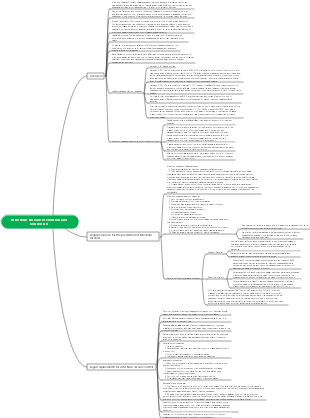
This is a mind map about food safety law. Food safety means that food is non-toxic and harmless, meets the required nutritional requirements, and does not cause acute, subacute or chronic harm to human health.
Edited at 2024-01-20 12:43:25This is a mind map about bacteria, and its main contents include: overview, morphology, types, structure, reproduction, distribution, application, and expansion. The summary is comprehensive and meticulous, suitable as review materials.

This is a mind map about plant asexual reproduction, and its main contents include: concept, spore reproduction, vegetative reproduction, tissue culture, and buds. The summary is comprehensive and meticulous, suitable as review materials.
This is a mind map about the reproductive development of animals, and its main contents include: insects, frogs, birds, sexual reproduction, and asexual reproduction. The summary is comprehensive and meticulous, suitable as review materials.
This is a mind map about bacteria, and its main contents include: overview, morphology, types, structure, reproduction, distribution, application, and expansion. The summary is comprehensive and meticulous, suitable as review materials.
This is a mind map about plant asexual reproduction, and its main contents include: concept, spore reproduction, vegetative reproduction, tissue culture, and buds. The summary is comprehensive and meticulous, suitable as review materials.
This is a mind map about the reproductive development of animals, and its main contents include: insects, frogs, birds, sexual reproduction, and asexual reproduction. The summary is comprehensive and meticulous, suitable as review materials.
Food Safety Law
basic concept
Food safety: refers to food that is non-toxic and harmless, meets the required nutritional requirements, and does not cause acute, subacute or chronic harm to human health.
Food: various finished products and raw materials for human consumption or drinking, as well as items that are both food and traditional Chinese medicinal materials according to tradition, but do not include items for therapeutic purposes.
Prepackaged food: Food that is pre-packaged in quantitative quantities or made into packaging materials or containers
Food additives: artificial or natural substances, including nutritional fortifiers, added to food to improve the quality, color, aroma and taste of food and for the needs of antisepsis, preservation and processing technology.
Food shelf life: The period during which food maintains its quality under stated storage conditions.
Foodborne diseases: Infectious, toxic and other diseases caused by pathogenic factors in food entering the human body, including food poisoning
Food safety accidents: refer to food-borne diseases, food contamination, etc. that originate from food and are harmful or potentially harmful to human health.
General principles
Legislative purpose: This law is formulated to ensure food safety and protect public health and life safety.
Scope of application: The quality and safety management of agricultural primary products for consumption (hereinafter referred to as edible agricultural products) shall comply with the provisions of the Agricultural Products Quality and Safety Law of the People's Republic of China. However, the market sales of edible agricultural products, the formulation of relevant quality and safety standards, the publication of relevant safety information and the provisions of this Law on agricultural inputs shall abide by the provisions of this Law.
Responsibilities of food safety responsible entities
Food producers and traders are responsible for the safety of the food they produce and trade
The State Council shall establish a Food Safety Committee, whose responsibilities shall be prescribed by the State Council: • The Food and Drug Administration Department of the State Council shall supervise and manage food production and operation activities in accordance with this Law and the responsibilities specified by the State Council; • The health administrative department of the State Council shall organize and carry out food safety risk testing and assessment in accordance with this Law and the responsibilities specified by the State Council, and shall formulate and publish national food safety standards in conjunction with the food and drug regulatory department of the State Council.
Institutional Reform: State Administration for Market Regulation
Local people's governments at or above the county level: food safety supervision and management
Food Industry Association: Strengthen industry self-discipline and establish and improve industry norms and reward and punishment mechanisms in accordance with the charter
Consumer associations and other consumer organizations: social supervision
General provisions and prohibitive provisions on food production and operation
Food safety risk monitoring and food safety risk assessment
• The country has established a food safety risk monitoring system to monitor foodborne diseases, food contamination and harmful factors in food. • The health administration department of the State Council, in conjunction with the food and drug administration, quality supervision and other departments of the State Council, formulates and implements the national food safety risk monitoring plan • The health administrative departments of the people's governments of provinces, autonomous regions, and municipalities directly under the Central Government, in conjunction with the food and drug supervision and management, quality control and other departments at the same level, shall formulate and adjust food safety risks in their respective administrative regions in accordance with the national food safety risk monitoring plan and the specific conditions of their respective administrative regions. The monitoring plan shall be submitted to the health administrative department of the State Council for filing and implementation.
• The state establishes a food safety risk assessment system and uses scientific methods to conduct risk assessments on biological, chemical and physical hazards in food, food additives and food-related products based on food safety risk monitoring information, scientific data and relevant information. • The health administration department of the State Council is responsible for organizing food safety risk assessment work and establishing a Food Safety Risk Assessment Expert Committee composed of experts in medicine, agriculture, food, nutrition, biology, environment, etc. to conduct food safety risk assessment. The results of the food safety risk assessment are announced by the health administration department of the State Council.
• The food and drug regulatory department of the State Council shall, in conjunction with relevant departments of the State Council, conduct a comprehensive analysis of the food safety situation based on the food safety risk assessment results and food safety supervision and management information. For foods that have been shown by comprehensive analysis to have higher levels of safety risks, the Food and Drug Administration Department of the State Council shall promptly issue food safety risk warnings and announce them to the public.
Centralized trading market, third-party online food trading platform
Responsibilities of centralized trading market operators, counter lessors and exhibition organizers
Responsibilities of third-party online food trading platform providers
The "Measures for the Investigation and Punishment of Online Food Safety Violations" was reviewed and approved at the executive meeting of the State Food and Drug Administration on March 15, 2016, and will come into effect on October 1, 2016.
food safety standards
content
Formulate: • The health administrative department of the State Council shall formulate and publish together with the food and drug regulatory department of the State Council, and the standardization administrative department of the State Council shall provide the national standard number. • The limits of pesticide residues and veterinary drug residues in food and their inspection methods and procedures are formulated by the health administration department of the State Council and the agricultural administration department of the State Council in conjunction with the food and drug supervision and administration department of the State Council. • Inspection procedures for slaughterhouses and poultry are formulated by the national agricultural administrative department in conjunction with the health administrative department of the State Council
Food labels, instructions and advertising
Prepackaged foods should have labels on their packaging. The labels of main and supplementary foods intended for infants, young children and other specific groups of people should indicate the main nutritional ingredients and their contents.
Genetically modified foods should be clearly labeled according to regulations
It must not contain false content or involve disease prevention or treatment functions. Producers and operators are responsible for the content.
Labels and instructions should be clear and obvious, and the production date and shelf life should be marked clearly and easily identifiable.
The content of food advertisements must be true and legal, must not contain false content, and must not involve disease prevention or treatment functions. Food producers and operators are responsible for the authenticity and legality of food advertising content.
Food and drug supervision and administration departments and other relevant departments of people's governments at or above the county level, as well as food inspection agencies and food industry associations, are not allowed to recommend foods to consumers in advertisements or other forms. Consumer organizations may not recommend food to consumers by charging fees or seeking other benefits.
The state implements strict supervision and management of special foods such as health foods, formula foods for special medical purposes, and formula foods for infants and young children.
food inspection
• Food inspection agencies can only engage in food inspection activities after they have obtained qualifications in accordance with national certification and accreditation regulations. Except as otherwise provided by law. • The qualification conditions and inspection specifications of food inspection agencies shall be stipulated by the Food and Drug Administration of the State Council. Inspection reports issued by food inspection agencies that comply with the provisions of this Law have the same validity. • The food and drug regulatory authorities of the people's governments at or above the county level shall conduct regular or irregular sampling inspections of food and publish the inspection results in accordance with relevant regulations. No inspection shall be exempted. To conduct sampling inspection, the sample taken shall be purchased, a food inspection agency that complies with the provisions of this Law shall be entrusted to conduct the inspection, and relevant fees shall be paid; inspection fees and other fees shall not be charged to food producers and operators.
Food production enterprises may inspect the food they produce on their own, or they may entrust a food inspection agency that complies with the provisions of this Law to conduct inspection.
Publication of food safety information
• The country establishes a unified food safety information platform and implements a unified publication system for food safety information. • The overall national food safety situation, food safety risk warning information, major food safety accidents and their investigation and handling information, and other information determined by the State Council to be published uniformly shall be published uniformly by the Food and Drug Administration of the State Council. • If the impact of food safety risk warning information and major food safety accidents and their investigation and handling information is limited to specific areas, they may also be announced by the food and drug supervision and administration departments of the people's governments of relevant provinces, autonomous regions, and municipalities directly under the Central Government. • No unauthorized release of the above information is allowed.
The food and drug supervision and administration, quality supervision, and agricultural administration departments of the people's governments at or above the county level shall publish daily food safety supervision and management information in accordance with their respective responsibilities.
Publication of food safety information should be accurate and timely, with necessary explanations to avoid misleading consumers and public opinion.
Classification of situations in which legal liability is assumed
The seven most serious illegal food production and operation activities: • Use non-food raw materials to directly produce food, add chemical substances other than food additives and other substances that may harm human health to food, or use recycled food as raw materials to produce food, or operate the above-mentioned food • Production and operation of main and supplementary foods for infants and other specific groups whose nutritional content does not meet food safety standards. • Dealing in the meat of poultry, livestock, beasts and aquatic animals that died of illness, poisoning or unknown causes of death, or the production and sale of their products • Dealing in meat that has not been quarantined in accordance with regulations or that has failed to pass the quarantine, or producing and selling meat products that have not been inspected or that have failed to pass the inspection • Foods that are prohibited from production and operation by the country of production and operation for special needs such as disease prevention • Production and operation of food with added pharmaceuticals • Knowingly engaging in illegal acts stipulated in the preceding paragraph, but still providing them with production and business premises or other conditions
Responsibilities of disease prevention and control agencies: In the event of a food safety accident, disease prevention and control agencies at or above the county level shall conduct sanitary treatment of the accident site and conduct epidemiological investigations into factors related to the accident. Relevant departments shall provide assistance. Disease prevention and control institutions at or above the county level shall submit epidemiological investigation reports to the food and drug administration and health administrative departments at the same level.
Highlights of the 2015 version of the Food Safety Law
Prohibit the use of highly toxic pesticides in fruits, vegetables and tea
Health food labels must not involve disease prevention and treatment functions
Whole-process quality control of infant formula food production
Online food shopping is included in the scope of supervision
Genetically modified foods are labeled according to regulations
Additives are not allowed and are not allowed to be produced.
Hazardous food must be recalled
Edible agricultural product wholesale markets should respond to random inspections of edible agricultural products
Report food violations and be protected
Civil liability takes precedence
Those responsible for illegal activities in government departments will be "resigned"