MindMap Gallery Small company team management
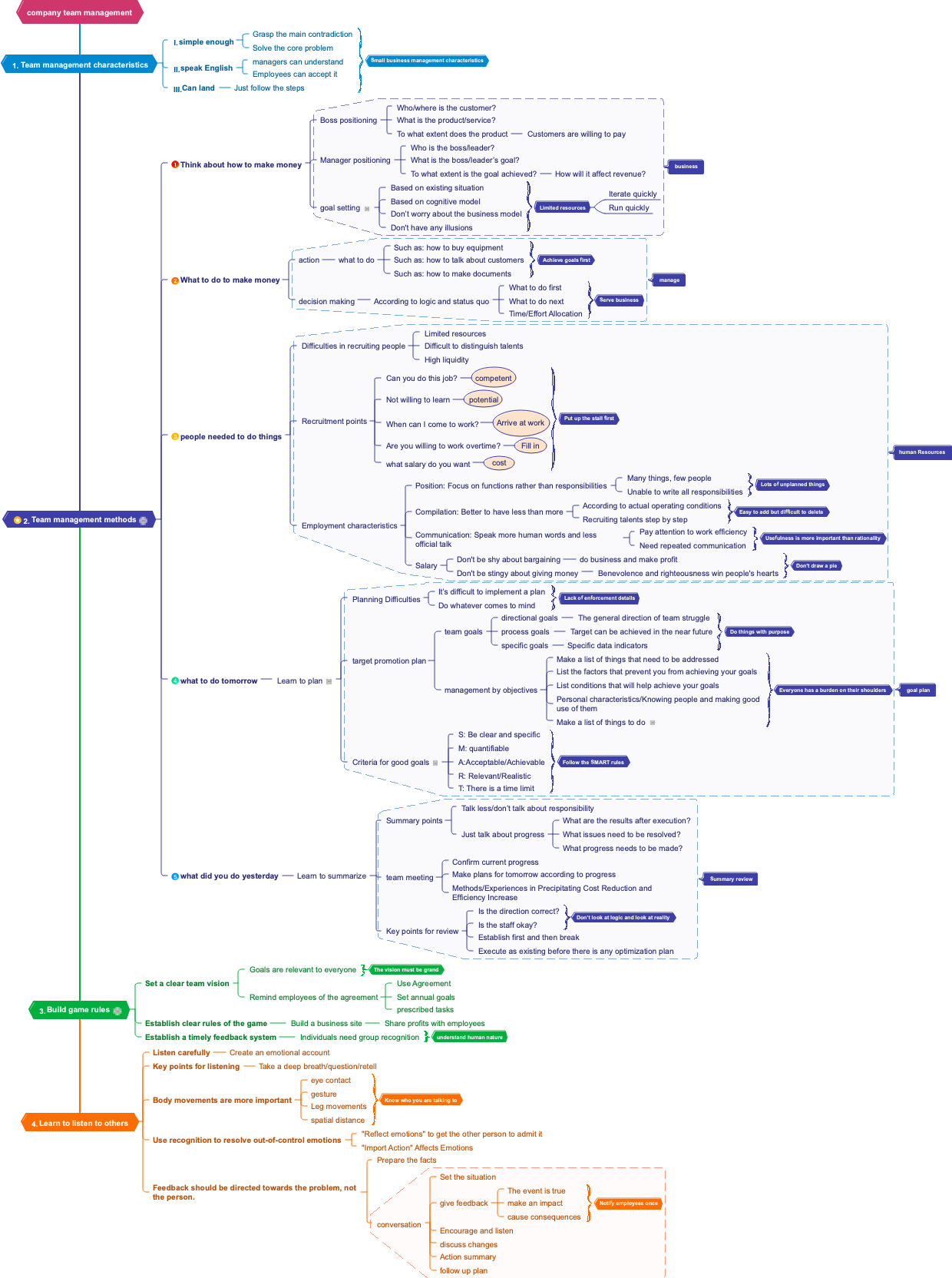
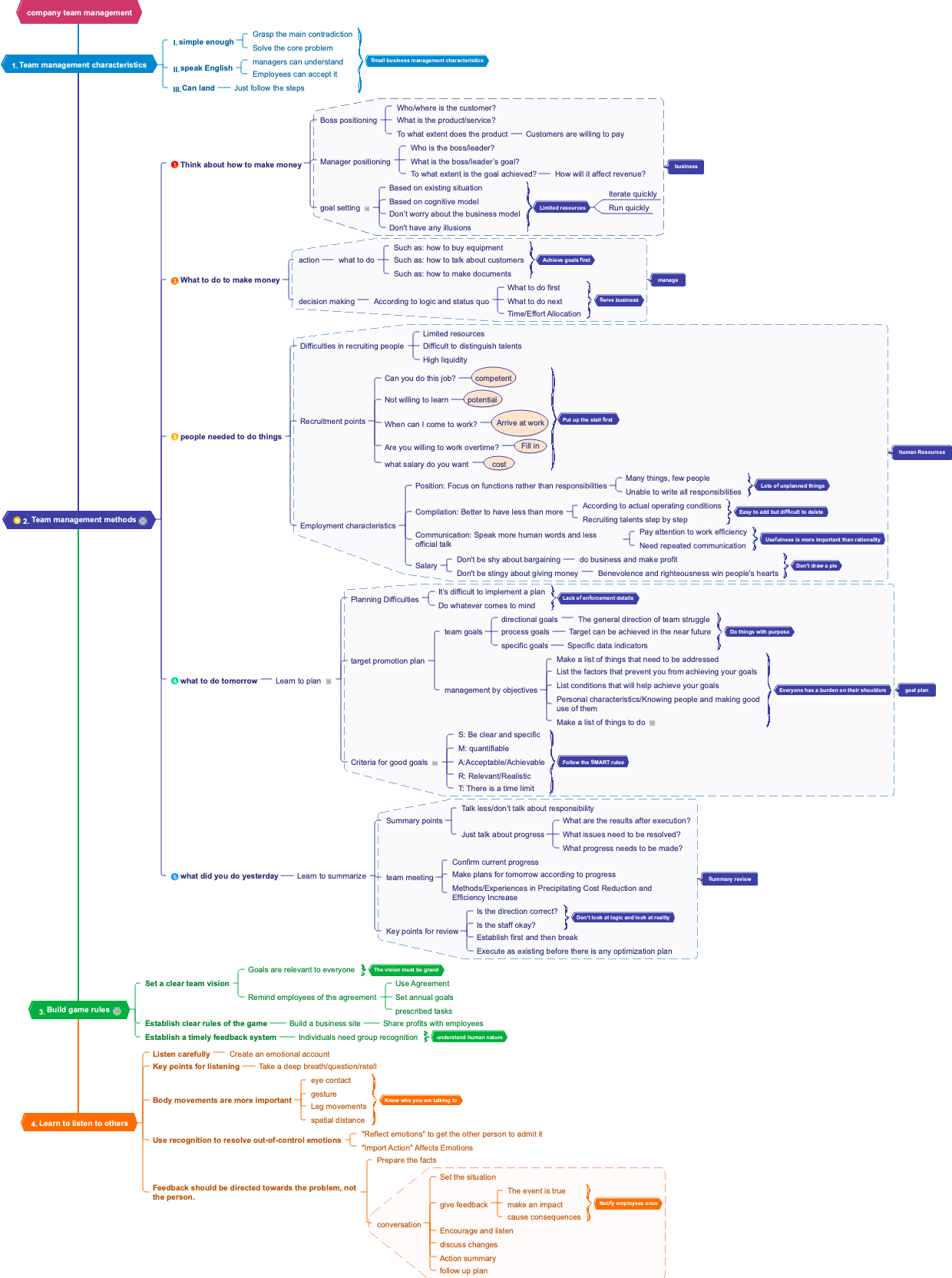
This is a mind map about team management in small companies, including team management characteristics, team management methods, and game rules. Learn to listen to others, etc.
Edited at 2024-01-16 13:44:10This is a mind map about bacteria, and its main contents include: overview, morphology, types, structure, reproduction, distribution, application, and expansion. The summary is comprehensive and meticulous, suitable as review materials.

This is a mind map about plant asexual reproduction, and its main contents include: concept, spore reproduction, vegetative reproduction, tissue culture, and buds. The summary is comprehensive and meticulous, suitable as review materials.
This is a mind map about the reproductive development of animals, and its main contents include: insects, frogs, birds, sexual reproduction, and asexual reproduction. The summary is comprehensive and meticulous, suitable as review materials.
This is a mind map about bacteria, and its main contents include: overview, morphology, types, structure, reproduction, distribution, application, and expansion. The summary is comprehensive and meticulous, suitable as review materials.
This is a mind map about plant asexual reproduction, and its main contents include: concept, spore reproduction, vegetative reproduction, tissue culture, and buds. The summary is comprehensive and meticulous, suitable as review materials.
This is a mind map about the reproductive development of animals, and its main contents include: insects, frogs, birds, sexual reproduction, and asexual reproduction. The summary is comprehensive and meticulous, suitable as review materials.
Small company team management
1. Team management characteristics
I. simple enough
Grasp the main contradiction
Solve the core problem
II. speak English
managers can understand
Employees can accept it
III. Can land
Just follow the steps
Small business management characteristics
2. Team management methods
Think about how to make money
Boss positioning
Who/where is the customer?
What is the product/service?
To what extent does the product
Customers are willing to pay
Manager positioning
Who is the boss/leader?
What is the boss/leader’s goal?
To what extent is the goal achieved?
How will it affect revenue?
goal setting
Based on existing situation
Based on cognitive model
Don’t worry about the business model
Don't have any illusions
Limited resources
Iterate quickly
Run quickly
business
What to do to make money
action
what to do
Such as: how to buy equipment
Such as: how to talk about customers
Such as: how to make documents
Achieve goals first
decision making
According to logic and status quo
What to do first
What to do next
Time/Effort Allocation
Serve business
manage
people needed to do things
Difficulties in recruiting people
Limited resources
Difficult to distinguish talents
High liquidity
Recruitment points
Can you do this job?
competent
Not willing to learn
potential
When can I come to work?
Arrive at work
Are you willing to work overtime?
Fill in
what salary do you want
cost
Put up the stall first
Employment characteristics
Position: Focus on functions rather than responsibilities
Many things, few people
Unable to write all responsibilities
Lots of unplanned things
Compilation: Better to have less than more
According to actual business
Recruiting talents step by step
Easy to add but difficult to delete
Communication: Speak more human words and less official talk
Pay attention to work efficiency
Need repeated communication
Usefulness is more important than rationality
Salary
Don't be shy about bargaining
do business and make profit
Don't be stingy about giving money
Benevolence and righteousness win people's hearts
Don't draw a pie
human Resources
what to do tomorrow
Learn to plan
Planning Difficulties
It’s difficult to implement a plan
Do whatever comes to mind
Lack of enforcement details
target promotion plan
team goals
directional goals
The general direction of team struggle
process goals
Target can be achieved in the near future
specific goals
Specific data indicators
Do things with purpose
management by objectives
Make a list of things that need to be addressed
List the factors that prevent you from achieving your goals
List conditions that will help achieve your goals
Personal characteristics/Knowing people and making good use of them
Make a list of things to do
Everyone has a burden on their shoulders
Criteria for good goals
S: Be clear and specific
M: quantifiable
A:Acceptable/Achievable
R: Relevant/Realistic
T: There is a time limit
Follow the SMART rules
goal plan
what did you do yesterday
Learn to summarize
Summary points
Talk less/don’t talk about responsibility
Just talk about progress
What are the results after execution?
What issues need to be resolved?
What progress needs to be made?
team meeting
Confirm current progress
Make plans for tomorrow according to progress
Methods/Experiences in Precipitating Cost Reduction and Efficiency Increase
Key points for review
Is the direction correct?
Is the staff okay?
Don’t look at logic and look at reality
Establish first and then break
Execute as existing before there is any optimization plan
Summary review
3. Build game rules
Set a clear team vision
Goals are relevant to everyone
The vision must be grand
Remind employees of the agreement
Use Agreement
Set annual goals
prescribed tasks
Establish clear rules of the game
Build a business site
Share profits with employees
Establish a timely feedback system
Individuals need group recognition
understand human nature
4. Learn to listen to others
Listen carefully
Create an emotional account
Key points for listening
Take a deep breath/question/retell
Body movements are more important
eye contact
gesture
Leg movements
spatial distance
Know who you are talking to
Use recognition to resolve out-of-control emotions
"Reflect emotions" to get the other person to admit it
"Import Action" Affects Emotions
Feedback should be directed towards the problem, not the person.
Prepare the facts
conversation
Set the situation
give feedback
The event is true
make an impact
cause consequences
Notify employees once
Encourage and listen
discuss changes
Action summary
follow up plan