 Wondershare EdrawMind
MindMap Gallery Junior high school chemistry
- 97
Junior high school chemistry
This is a mind map about junior high school chemistry, which mainly includes chemical equation balancing methods and techniques, junior high school chemical equations and a summary of related knowledge points, etc.
Edited at 2024-01-14 20:00:28
- bacteria
This is a mind map about bacteria, and its main contents include: overview, morphology, types, structure, reproduction, distribution, application, and expansion. The summary is comprehensive and meticulous, suitable as review materials.
- Plant asexual reproduction
This is a mind map about plant asexual reproduction, and its main contents include: concept, spore reproduction, vegetative reproduction, tissue culture, and buds. The summary is comprehensive and meticulous, suitable as review materials.
- Reproductive development of animals
This is a mind map about the reproductive development of animals, and its main contents include: insects, frogs, birds, sexual reproduction, and asexual reproduction. The summary is comprehensive and meticulous, suitable as review materials.
Junior high school chemistry
- bacteria
This is a mind map about bacteria, and its main contents include: overview, morphology, types, structure, reproduction, distribution, application, and expansion. The summary is comprehensive and meticulous, suitable as review materials.
- Plant asexual reproduction
This is a mind map about plant asexual reproduction, and its main contents include: concept, spore reproduction, vegetative reproduction, tissue culture, and buds. The summary is comprehensive and meticulous, suitable as review materials.
- Reproductive development of animals
This is a mind map about the reproductive development of animals, and its main contents include: insects, frogs, birds, sexual reproduction, and asexual reproduction. The summary is comprehensive and meticulous, suitable as review materials.
- Recommended to you
- Outline
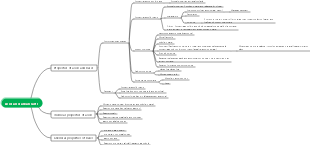
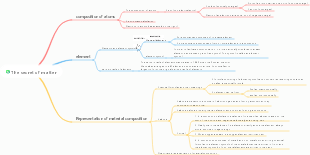
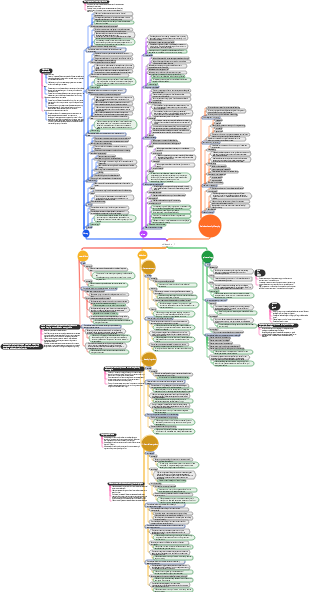
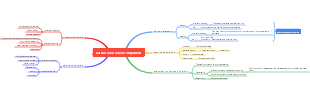
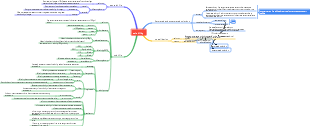
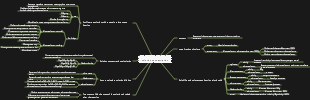
Junior high school chemistry
Experimental equipment name
Mortar and pestle
Test tube, alcohol lamp, iron stand
concept
what is chemistry
What are chemical properties
Example
What are physical properties
Example
what is a compound
Example
What is a pure substance
Example
What is elemental substance
Example
what is a mixture
Example
what is ion
connections between concepts
What are solvents, solutes, solutions
What are acids, bases and salts
What is an electrolyte: An electrolyte is a compound that can conduct electricity when dissolved in an aqueous solution or in a molten state.
What is metathesis reaction
theme
Litmus and phenolphthalein are acid-base indicators
Summary of junior middle school chemical equation phenomena
one. Reaction of substances with oxygen
(1) Reaction of elemental substance and oxygen:
(2) Reaction of compounds and oxygen:
two. decomposition reaction
1. Hydrogen peroxide catalytic production of oxygen:
Phenomenon: A large number of bubbles appear in the solution
2. Water is decomposed under the action of direct current:
3. Heating basic copper carbonate:
Phenomenon: The solid gradually changes from green to black, and at the same time, gas is generated that can make pure lime water turbid.
4. Heating potassium chlorate (with a small amount of manganese dioxide): 2KClO3 = 2KCl 3O2↑
Phenomenon: Generation of gas that can re-ignite wooden sticks with sparks
5. Heating potassium permanganate:
Phenomenon: Generation of gas that can re-ignite wooden sticks with sparks
6. Carbonic acid is unstable and decomposes: H2CO3 = H2O CO2↑
7. High temperature calcined limestone:
Phenomenon: Gas is generated that can make pure lime water turbid.
8. Heating ammonium bicarbonate: NH4HCO3 = NH3↑ H2O CO2 ↑
9. Heating mercury oxide:
Phenomenon: Silver-white liquid metal is produced
10. Heating calcium bicarbonate:
Phenomenon: white precipitate is generated, and at the same time, gas is generated that can make pure lime water turbid.
three. Redox reactions
1. Hydrogen reduction of copper oxide: H2 CuO Cu H2O
2. Charcoal reduces copper oxide: C 2CuO 2Cu CO2↑ Phenomenon: The solid changes from black to red and decreases, and at the same time, gas is generated that can make pure lime water turbid.
3. Coke reduction of iron oxide: 3C 2Fe2O3 4Fe 3CO2↑ Phenomenon: The solid gradually changes from red to silvery white, while the black solid decreases, and gas is generated that can make pure lime water turbid.
4. Coke reduction of ferric oxide: 2C Fe3O4 3Fe 2CO2↑
5. Carbon monoxide reduces copper oxide: CO CuO Cu CO2
6. Carbon monoxide reduction of iron oxide: 3CO Fe2O3 2Fe 3CO2
7. Carbon monoxide reduces ferric oxide: 4CO Fe3O4 3Fe 4CO2
Four. The relationship between elements, oxides, acids, bases and salts
(1) Metal element acid -------- salt hydrogen (displacement reaction)
1. Zinc and dilute sulfuric acid: Zn H2SO4 = ZnSO4 H2↑ Phenomenon: combustible gas is generated
2. Iron and dilute sulfuric acid: Fe H2SO4 = FeSO4 H2↑ Phenomenon: It turns into a light green solution and releases gas at the same time
3. Magnesium and dilute sulfuric acid: Mg H2SO4 = MgSO4 H2↑ Phenomenon: combustible gas is generated
4. Aluminum and dilute sulfuric acid: 2Al 3H2SO4 = Al2(SO4)3 3H2↑ Phenomenon: Gas is generated
5. Zinc and dilute hydrochloric acid: Zn 2HCl = ZnCl2 H2↑ Phenomenon: Gas is generated
6. Iron and dilute hydrochloric acid: Fe 2HCl = FeCl2 H2↑ Phenomenon: The iron powder slowly decreases, while gas is generated, and the solution turns light green.
7. Magnesium and dilute hydrochloric acid: Mg 2HCl = MgCl2 H2↑ Phenomenon: Gas is generated
8. Aluminum and dilute hydrochloric acid: 2Al 6HCl = 2AlCl3 3H2↑ Phenomenon: Gas is generated
9. Silver and dilute nitric acid: 3Ag 4HNO3 (dilute) = 3AgNO3 NO↑ 2H2O Phenomenon: Silver gradually dissolves, and the generated gas turns brown when exposed to air
10. Silver and concentrated nitric acid: Ag 2HNO3 (concentrated) = AgNO3 NO2↑ H2O Phenomenon: Silver gradually dissolves, generating brown gas
11. Copper and concentrated sulfuric acid: Cu 2H2SO4 (concentrated) = CuSO4 SO2↑ 2H2O Phenomenon: Copper gradually dissolves, generating a pungent smelling gas
12. Copper and silver nitrate: Cu 2AgNO3 = Cu(NO3)2 2Ag Phenomenon: Silvery white metal slowly forms on the copper surface
(2) Metal salt (solution) ------- Another salt Another metal (displacement reaction)
1. Iron and copper sulfate solution: Fe CuSO4 = FeSO4 Cu Phenomenon: Iron dissolves to produce red metal
2. Zinc and copper sulfate solution: Zn CuSO4 = ZnSO4 Cu Phenomenon: red metal is generated
3. Copper and mercury nitrate solution: Cu Hg(NO3)2 = Cu(NO3)2 Hg
4. Copper and silver nitrate: Cu 2AgNO3 = Cu(NO3)2 2Ag Phenomenon: Red copper gradually dissolves, and silver-white metal is generated at the same time
5. Iron and ferric chloride: Fe 2FeCl3 = 3FeCl2 Phenomenon: The iron powder gradually dissolves and the solution changes from yellow to light green
6. Iron and silver nitrate: Fe AgNO3 = Fe(NO3)2 Ag Phenomenon: Iron dissolves to form silvery white metal
7. Zinc and ferrous chloride: Zn FeCl2 = ZnCl2 Fe Phenomenon: Zinc powder slowly dissolves to form iron
(3)Alkaline oxide acid -------- salt water
1. Iron oxide and dilute hydrochloric acid: Fe2O3 6HCl = 2FeCl3 3H2O Phenomenon: The red solid gradually dissolves to form a yellow solution
2. Iron oxide and dilute sulfuric acid: Fe2O3 3H2SO4 =Fe2(SO4)3 3H2O Phenomenon: The red solid dissolves and a yellow solution is generated
3. Copper oxide and dilute hydrochloric acid: CuO 2HCl = CuCl2 H2O Phenomenon: The black solid dissolves to produce a yellow-green solution
4. Copper oxide and dilute sulfuric acid: CuO H2SO4 = CuSO4 H2O Phenomenon: The black solid dissolves and a blue solution is generated
5. Magnesium oxide and dilute sulfuric acid: MgO H2SO4 = MgSO4 H2O
6. Calcium oxide and dilute hydrochloric acid: CaO 2HCl = CaCl2 H2O
7. Iron oxide and dilute nitric acid: Fe2O3 6HNO3 = 2Fe(NO3)3 3H2O Phenomenon: The red solid dissolves and a yellow solution is generated
8. Copper oxide and dilute nitric acid: CuO 2HNO3 = Cu(NO3)2 H2O Phenomenon: The black solid dissolves and a blue solution is generated
(4)Acidic oxide alkali -------- salt water
1. Sodium hydroxide deteriorates when exposed to air: 2NaOH CO2 = Na2CO3 H2O Phenomenon: No obvious phenomenon
2. Sodium hydroxide absorbs sulfur dioxide gas: 2NaOH SO2 = Na2SO3 H2O
3. Sodium hydroxide absorbs sulfur trioxide gas: 2NaOH SO3 = Na2SO4 H2O
4. Hydrated lime deteriorates in the air: Ca(OH)2 CO2 = CaCO3 ↓ H2O Phenomenon: white precipitate is generated, used to detect carbon dioxide
5. Hydrated lime absorbs sulfur dioxide: Ca(OH)2 SO2 = CaSO3 ↓ H2O
(5)Acid alkali -------- salt water
1. Hydrochloric acid and sodium hydroxide: HCl NaOH = NaCl H2O Phenomenon: acid-base neutralization reaction, the phenomenon is not obvious
2. Hydrochloric acid and potassium hydroxide: HCl KOH = KCl H2O Phenomenon: acid-base neutralization reaction, the phenomenon is not obvious
3. Hydrochloric acid and copper hydroxide: 2HCl Cu(OH)2 = CuCl2 2H2O Phenomenon: The blue precipitate dissolves to form a yellow-green solution
4. Hydrochloric acid and calcium hydroxide: 2HCl Ca(OH)2 = CaCl2 2H2O
5. Hydrochloric acid and ferric hydroxide: 3HCl Fe(OH)3 = FeCl3 3H2O Phenomenon: The reddish-brown flocculent precipitate dissolves, forming a yellow solution
6. Hydrochloric acid and ferrous hydroxide: 2HCl Fe(OH)2 = FeCl2 2H2O Phenomenon: The white flocculent precipitate dissolves and the solution turns light green
7. Aluminum hydroxide drugs treat hyperacidity: 3HCl Al(OH)3 = AlCl3 3H2O
8. Sulfuric acid and sodium hydroxide: H2SO4 2NaOH = Na2SO4 2H2O Phenomenon: acid-base neutralization reaction, the phenomenon is not obvious
9. Sulfuric acid and potassium hydroxide: H2SO4 2KOH = K2SO4 2H2O Phenomenon: acid-base neutralization reaction, the phenomenon is not obvious
10. Sulfuric acid and copper hydroxide: H2SO4 Cu(OH)2 = CuSO4 2H2O Phenomenon: The blue precipitate dissolves and a blue solution is generated
11. Sulfuric acid and iron hydroxide: 3H2SO4 2Fe(OH)3 = Fe2(SO4)3 6H2O
12. Nitric acid and sodium hydroxide: HNO3 NaOH = NaNO3 H2O Phenomenon: acid-base neutralization reaction, the phenomenon is not obvious
13. Nitric acid and copper hydroxide: 2HNO3 Cu(OH)2 = Cu(NO3)2 2H2O Phenomenon: The blue precipitate dissolves and a blue solution is generated
14. Nitric acid and sodium hydroxide: HNO3 NaOH = NaNO3 H2O Phenomenon: acid-base neutralization reaction, the phenomenon is not obvious
15. Nitric acid and potassium hydroxide: HNO3 KOH = NaNO3 H2O Phenomenon: acid-base neutralization reaction, the phenomenon is not obvious
16. Nitric acid and magnesium hydroxide: 2HNO3 Mg(OH)2 = Mg(NO3)2 2H2O Phenomenon: white precipitate dissolves
17. Ammonia and sulfuric acid: 2NH3·H2O H2SO4 = (NH4)2SO4 2H2O
(6) Acid Salt -------- Another acid Another salt
1. Dilute hydrochloric acid and calcium carbonate: 2HCl CaCO3 = CaCl2 H2O CO2↑ Phenomenon: The white solid dissolves and generates gas that can make pure lime water turbid.
2. Dilute hydrochloric acid and sodium carbonate: 2HCl Na2CO3 = 2NaCl H2O CO2↑ Phenomenon: Generate gas that can make pure lime water turbid.
3. Dilute hydrochloric acid and sodium bicarbonate: HCl NaHCO3 = NaCl H2O CO2↑ Phenomenon: Generate gas that can make pure lime water turbid.
4. Dilute hydrochloric acid and magnesium carbonate: 2HCl MgCO3 = MgCl2 H2O CO2↑ Phenomenon: Generate gas that can make pure lime water turbid.
5. Hydrochloric acid and silver nitrate solution: HCl AgNO3 = AgCl↓ HNO3 Phenomenon: A white precipitate is formed and is insoluble in strong acid. This reaction is used to test chloride ions.
6. Sulfuric acid and sodium carbonate: H2SO4 Na2CO3 = Na2SO4 H2O CO2↑ Phenomenon: Generation of gas that can make pure lime water turbid
7. Sulfuric acid and barium chloride: H2SO4 BaCl2 = BaSO4↓ 2HCl Phenomenon: a white precipitate insoluble in strong acid is generated, used to detect sulfate ions
8. Sulfuric acid and calcium carbonate: H2SO4 CaCO3 = CaSO4 H2O CO2↑ Phenomenon: Generate gas that can make pure lime water turbid.
9. Sulfuric acid and sodium bicarbonate: H2SO4 2NaHCO3 = Na2SO4 2H2O 2CO2↑ Phenomenon: Generation of gas that can make pure lime water turbid
10. Nitric acid and calcium carbonate: 2HNO3 CaCO3 = Ca(NO3)2 H2O CO2↑ Phenomenon: The white solid dissolves and generates gas that can make pure lime water turbid.
11. Nitric acid and sodium carbonate: 2HNO3 Na2CO3 = 2NaNO3 H2O CO2↑ Phenomenon: Generate gas that can make pure lime water turbid.
12. Nitric acid and sodium bicarbonate: HNO3 NaHCO3 = NaNO3 H2O CO2↑ Phenomenon: Generation of gas that can make pure lime water turbid
(7)Alkali Salt -------- Another kind of base Another kind of salt
1. Sodium hydroxide and copper sulfate: 2NaOH CuSO4 = Cu(OH)2↓ Na2SO4
2. Sodium hydroxide and ferric chloride: 3NaOH FeCl3 = Fe(OH)3↓ 3NaCl Phenomenon: Red-brown flocculent precipitate is generated
3. Sodium hydroxide and ferric nitrate: 3NaOH + Fe(NO3)3 = Fe(OH)3↓ 3NaNO3 Phenomenon: Red-brown flocculent precipitate is generated
4. Sodium hydroxide and iron sulfate: 6NaOH + Fe2(SO4)3 = 2Fe(OH)3↓ 3Na2SO4 Phenomenon: Red-brown flocculent precipitate is generated
5. Potassium hydroxide and ferric chloride: 3KOH FeCl3 = Fe(OH)3↓ 3KCl Phenomenon: Red-brown flocculent precipitate is generated
6. Sodium hydroxide and ferrous chloride: 2NaOH FeCl2 = Fe(OH)2↓ NaCl Phenomenon: white flocculent precipitate is formed
7. Sodium hydroxide and ferrous nitrate: 2NaOH Fe(NO3)2 = Fe(OH)2↓ 2NaNO3 Phenomenon: white flocculent precipitate is generated
8. Sodium hydroxide and ferrous sulfate: 2NaOH FeSO4 = Fe(OH)2↓ Na2SO4 Phenomenon: White flocculent precipitate is generated
9. Sodium hydroxide and magnesium chloride: 2NaOH MgCl2 = Mg(OH)2↓ 2NaCl Phenomenon: white precipitate is generated
10. Sodium hydroxide and magnesium nitrate: 2NaOH Mg(NO3)2 = Mg(OH)2↓ 2NaNO3 Phenomenon: white precipitate is generated
11. Sodium hydroxide and magnesium sulfate: 2NaOH MgSO4 = Mg(OH)2↓ Na2SO4 Phenomenon: white precipitate is generated
12. Sodium hydroxide and copper chloride: 2NaOH CuCl2 = Cu(OH)2↓ 2NaCl Phenomenon: Blue flocculent precipitate is generated
13. Sodium hydroxide and copper nitrate: 2NaOH Cu(NO3)2 = Cu(OH)2↓ 2NaNO3 Phenomenon: blue flocculent precipitate is generated
14. Sodium hydroxide and copper sulfate: 2NaOH CuSO4 = Cu(OH)2↓ Na2SO4 Phenomenon: blue flocculent precipitate is generated
15. Calcium hydroxide and sodium carbonate: Ca(OH)2 Na2CO3 = CaCO3↓ 2NaOH Phenomenon: white precipitate is generated
16. Calcium hydroxide and copper sulfate: Ca(OH)2 CuSO4 = Cu(OH)2↓ CaSO4
17. Sodium hydroxide and sodium bisulfate: NaOH NaHSO4 = Na2SO4 H2O Phenomenon: No obvious phenomenon
18. Sodium hydroxide and sodium bicarbonate: 2NaOH Ca(HCO3)2 = CaCO3↓ Na2CO3 2H2O Phenomenon: white precipitate is generated
19. Calcium hydroxide and sodium bicarbonate: Ca(OH)2 Ca(HCO3)2 = 2CaCO3↓ 2H2O Phenomenon: white precipitate is generated
20. Sodium hydroxide and sodium carbonate: NaOH NaHCO3 = Na2CO3 H2O Phenomenon: Not obvious
21. Sodium hydroxide and ammonium chloride: NaOH NH4Cl = NH3↑ H2O NaCl Phenomenon: There is gas generation that can turn litmus paper blue
22. Sodium hydroxide and ammonium nitrate: NaOH NH4NO3 = NH3↑ H2O NaNO3 Phenomenon: Gas is generated that can turn litmus paper blue
23. Sodium hydroxide and ammonium sulfate: 2NaOH (NH4)2SO4 = 2NH3↑ 2H2O Na2SO4 Phenomenon: There is gas generation that can turn litmus paper blue
(8) Salt Salt ----- Two new salts
1. Sodium chloride and silver nitrate: NaCl AgNO3 = AgCl↓ NaNO3 Phenomenon: white precipitate is formed and is insoluble in strong acid
2. Sodium sulfate and barium chloride: Na2SO4 BaCl2 = BaSO4↓ 2NaCl Phenomenon: A white precipitate is formed that is insoluble in strong acid.
3. Silver nitrate and sodium sulfate: 2AgNO3 Na2SO4 = Ag2SO4↓ 2NaNO3 Phenomenon: white precipitate is formed
4. Barium chloride and sodium carbonate: BaCl2 Na2CO3 = BaCO3↓ 2NaCl Phenomenon: A white precipitate is formed but is soluble in hydrochloric acid and nitric acid. In fact, it is also soluble in sulfuric acid, but a barium sulfate precipitate is formed, which is not easy to see.
5. Calcium chloride and sodium carbonate: CaCl2 Na2CO3 = CaCO3↓ 2NaCl Phenomenon: white precipitate is generated
five. Other reactions:
1. Carbon dioxide dissolves in water: CO2 H2O = H2CO3
2. Quicklime dissolves in water: CaO H2O = Ca(OH)2 Phenomenon: releases a lot of heat
3. Sodium oxide dissolves in water: Na2O H2O = 2NaOH
4. Sulfur trioxide dissolves in water: SO3 H2O = H2SO4
5. Thermal decomposition of copper sulfate crystal: CuSO4·5H2O Heating CuSO4 5H2O Phenomenon: The solid changes from blue to white
6. Anhydrous copper sulfate as desiccant: CuSO4 5H2O = CuSO4·5H2O
7. Sulfur dioxide dissolves in water: SO2 H2O = H2SO3
8.CO2 C high temperature 2CO↑ Phenomenon: black solid gradually decreases
9.3C 2H2O = CH4 2CO↑ Phenomenon: The mixed gas generated is called water gas, and they are all combustible gases.
10.CaCO3 CO2 H2O = Ca(HCO3)2 Phenomenon: The white solid gradually dissolves
11.2Na2O2 (sodium peroxide) 2H2O = 4NaOH O2↑ Phenomenon: There is a gas that can re-ignite the wood strips with sparks.
12.4Fe(OH)2 O2 2H2O = 4Fe(OH)3 Phenomenon: Iron hydroxide will turn reddish brown after being placed in the air for a period of time
13.2Fe2O3 3H2 High temperature 2Fe 3H2O Phenomenon: water droplets are generated, and the solid color changes from red to silvery white
14.H2 CuO Heating Cu H2O Phenomenon: The solid gradually changes from black to red, and water droplets are formed at the same time
15.Fe3O4 4CO = 3Fe 4CO2↑ Phenomenon: The solid changes from black to silvery white, and at the same time, gas is generated that can make pure lime water turbid.
16.FeO CO Fe CO2↑ Phenomenon: The solid gradually changes from black to silvery white, and at the same time, gas is generated that can make pure lime water turbid.
17.Fe2O3 3CO 2Fe 3CO2↑ Phenomenon: The solid gradually changes from red to silvery white, and at the same time, gas is generated that can make pure lime water turbid.
18.CuO CO Cu CO2↑ Phenomenon: The solid changes from black to red, and at the same time, gas is generated that can make pure lime water turbid.
6. Respiration and photosynthesis:
1. Respiration: C6H12O6 6O2 = 6CO2 6H2O
2. Photosynthesis: 6CO2 6H2O Light Chlorophyll C6H12O6 6O2↑
think
What is relative atomic weight? How is it calculated?
How to dilute concentrated sulfuric acid? Can you pour water into concentrated sulfuric acid?
Chemistry experiment name
Chemical formula, common name and properties
Copper sulfate (gallite)
physical properties
chemical properties
Calcium carbonate (limestone or marble)
physical properties
chemical properties
Ethanol (alcohol)
quicklime
Calcium hydroxide (slaked lime, slaked lime)
Physical properties: white powder, slightly soluble in water
Nitric acid
acetic acid
rust
Sodium hydroxide (caustic soda, fire soda, caustic soda)
chemical properties
Sodium carbonate (soda)
Sodium bicarbonate (baking soda)
theme
subtopic
Some common terms in experiments
a little, a small amount
oscillation
atom
composition of atoms
Electrons outside the nucleus Each electron carries a unit negative charge
Nucleus
Protons Each proton carries one unit of positive charge
Neutrons are uncharged
Nuclear charge = number of protons = number of electrons outside the nucleus
The extranuclear electrons in an atom are arranged in layers and can be represented by a schematic diagram of the atomic structure.
Chemical equation balancing methods and techniques
1. Observation method
2. Least common multiple method
3. Odd-numbered spouse law
4. Determine “1” balance method
5. Undetermined coefficient method
6. Balance by provisional score allocation method
7. Oxygen gain and loss method: This method is particularly suitable for the reaction of H2 or CO with metal oxides. It is balanced based on the equal number of oxygen atoms gained and lost.
8. Fractional balancing method
Summary of junior high school chemical equations and related knowledge points
1. Pass carbon dioxide gas into clarified lime water (metathesis reaction)
Ca(OH)2 CO2 = CaCO3↓ H2O
Phenomenon: Lime water changes from clear to turbid.
Related knowledge point: This reaction can be used to test for the presence of carbon dioxide gas.
It is best not to test with CO2. If CaCO3 CO2 H2O = Ca(HCO3)2 precipitates, Ba(OH)2 solution can be used.
2. Magnesium ribbon burns in air (combination reaction)
2MgO2 = 2MgO
Phenomenon: Magnesium burns violently in the air, releases heat, emits dazzling white light, and generates white powder.
Related knowledge points:
(1) In this reaction, magnesium is converted from a free state into a combined state;
(2) The color of the substance changes from silvery white to white.
(3) Magnesium can be used as flares;
(4) The ignition point of the magnesium strip is high, and the match releases less heat. It cannot reach the ignition point of magnesium and cannot be ignited with a match;
(5) Magnesium is very active. In order to protect magnesium, apply a black protective film on the surface of magnesium and polish it with sandpaper before igniting.
3. Water is decomposed by electricity (decomposition reaction)
2H2O = 2H2↑O2↑
Phenomenon: After powering on, bubbles appear on the electrode, and the gas volume ratio is about 1:2
Related knowledge points:
(1) The positive electrode produces oxygen and the negative electrode produces hydrogen;
(2) The volume ratio of hydrogen and oxygen is 2:1, and the mass ratio is 1:8;
(3) When electrolyzing water, add a small amount of sodium hydroxide solution or dilute sulfuric acid to the water in advance to enhance the conductivity of the water;
(4)The power supply is DC
4. Reaction of quicklime and water (combination reaction)
CaO H2O = Ca(OH)2
Phenomenon: White powder dissolves
Related knowledge points:
(1) The name of the final solution obtained is calcium hydroxide solution, commonly known as clarified lime water;
(2) Drop colorless phenolphthalein into it, and the phenolphthalein will turn red;
(3) Quick lime is calcium oxide, and hydrated lime is calcium hydroxide.
(4)Emit a lot of heat
5. Laboratory preparation of oxygen
①Heating the mixture of potassium chlorate and manganese dioxide to produce oxygen (decomposition reaction)
Relevant knowledge points: (1) Manganese dioxide acts as a catalyst to speed up the decomposition rate of potassium chlorate or the generation rate of oxygen; (2) The quality and chemical properties of manganese dioxide do not change before and after the chemical reaction; (3) After the reaction is complete , the residual solid in the test tube is a mixture of potassium chloride and manganese dioxide. The method for separation is: wash, dry and weigh.
②Heating potassium permanganate to produce oxygen (decomposition reaction)
2KMnO4 = K2MnO4 MnO2 O2↑
Related knowledge points: Block the mouth of the test tube with cotton to prevent the potassium permanganate powder from sliding down and blocking the tube.
③ Hydrogen peroxide and manganese dioxide produce oxygen (decomposition reaction)
2H2O2 2H2O O2↑
Common knowledge points: (1) When collecting with the upward air exhaust method, the conduit should be extended under the gas collecting bottle, and it should be placed directly on the table after collection; (2) After the experiment, the conduit should be removed first, and then the alcohol lamp should be withdrawn to avoid sinking in the water tank. The water will flow back and burst the test tube; (3) When heating, the test tube should be slightly tilted downward to prevent the condensed water from flowing back and bursting the test tube; (4) Use the drainage gas collection method to collect oxygen and wait until the bubbles emerge continuously and evenly before collecting; (5) Use a spark-strip device to collect oxygen. Put a small wooden strip on the mouth of the bottle to check if it is full, and put it into the bottle to check if there is oxygen.