 Wondershare EdrawMind
MindMap Gallery Chapter 18 Project Risk Management
- 51
Chapter 18 Project Risk Management
Successful Entry in the Software Exam/System Integration Project Management Engineer/Chapter 18 Project Risk Management, detailed introduction, comprehensive description, I hope it will be helpful to interested friends!
Edited at 2024-02-24 02:26:51
- bacteria
This is a mind map about bacteria, and its main contents include: overview, morphology, types, structure, reproduction, distribution, application, and expansion. The summary is comprehensive and meticulous, suitable as review materials.
- Plant asexual reproduction
This is a mind map about plant asexual reproduction, and its main contents include: concept, spore reproduction, vegetative reproduction, tissue culture, and buds. The summary is comprehensive and meticulous, suitable as review materials.
- Reproductive development of animals
This is a mind map about the reproductive development of animals, and its main contents include: insects, frogs, birds, sexual reproduction, and asexual reproduction. The summary is comprehensive and meticulous, suitable as review materials.
Chapter 18 Project Risk Management
- bacteria
This is a mind map about bacteria, and its main contents include: overview, morphology, types, structure, reproduction, distribution, application, and expansion. The summary is comprehensive and meticulous, suitable as review materials.
- Plant asexual reproduction
This is a mind map about plant asexual reproduction, and its main contents include: concept, spore reproduction, vegetative reproduction, tissue culture, and buds. The summary is comprehensive and meticulous, suitable as review materials.
- Reproductive development of animals
This is a mind map about the reproductive development of animals, and its main contents include: insects, frogs, birds, sexual reproduction, and asexual reproduction. The summary is comprehensive and meticulous, suitable as review materials.
- Recommended to you
- Outline
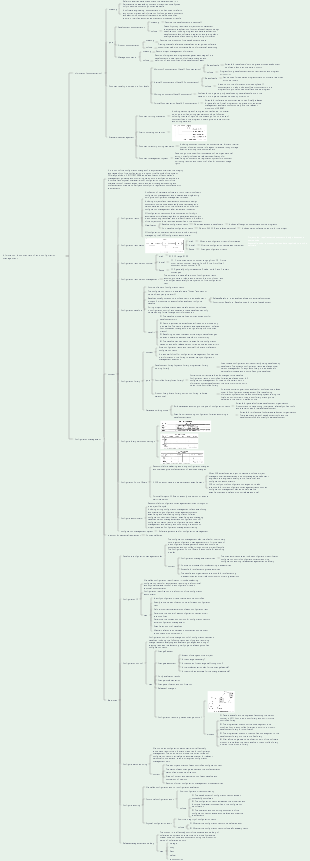
project risk management
risk
definition
Risk is an uncertain event or condition that, if it occurs, will have a positive or negative impact
Narrow sense: uncertainty of loss
Broad: the possibility of loss
Classification
According to nature
pure risk
It refers to the risk that only has the possibility of loss but no possibility of profit.
For example, the risk of fire faced by house owners, the risk of collision faced by car owners, etc.
speculative risk
There is both the possibility of loss and the opportunity of profit
as a result of
No loss - no loss, no gain
Loss - make money
Profit - make money
For example, buying and selling stocks on the stock market
According to the cause
natural risks
It refers to the risk that social production and social life will be threatened due to irregular changes in natural forces.
Natural phenomena such as earthquakes, wind disasters, floods, fires, and various plagues occur frequently and in large numbers.
feature
uncontrollability
cyclical
Co-adhesion
social risk
It refers to the risk of losses to social production and people's lives due to the actions (including negligent behavior, improper behavior and intentional behavior) or omissions of individuals or groups.
Behaviors such as theft, robbery, negligence and vandalism may cause damage to other people's property or personal injury.
Political risk (country risk)
It refers to the risk that creditors may suffer losses due to political reasons or reasons beyond the control of both parties during the process of foreign investment and trade.
For example, the import of goods is suspended due to war or civil strife in the importing country, or the import or foreign exchange controls are implemented by the importing country, etc.
economic risk
It refers to the risk of business failure in production and sales and other business activities due to changes in various market supply and demand relations, economic and trade conditions and other factors, or operator decision-making errors, deviations in prospect expectations, etc., which lead to business failure.
For example, the increase or decrease in the production scale of an enterprise, the rise and fall of prices, and the profit and loss of operations, etc.
technology risk
It refers to the risks that threaten people's production and life along with the development of science and technology and changes in production methods. Such as nuclear radiation, air pollution and noise, etc.
Classification
Divided according to subject matter, such as: property risk, personal risk, liability risk, credit risk;
Divided according to behaviors, such as: specific risks and basic risks,
Divided according to environment, such as: static risk and dynamic risk, etc.
nature
objectivity
Risk is an objective existence that is independent of human will and independent of human consciousness.
chance
Due to information asymmetry, it is difficult to predict whether future risk events will occur
relativity
The nature of risks will change due to changes in time and space due to various factors.
Sociality
The correlation between the consequences of risks and human society determines the social nature of risks and has great social influence.
Uncertainty
The time of occurrence is uncertain
Based on different risk attitudes, organizations and stakeholders are willing to accept different levels of risk. Classification of influencing factors
(1) Risk preference
The extent to which an entity is willing to tolerate uncertainty in exchange for expected returns
(2) Risk tolerance
The degree, amount or container of risk an organization or individual can tolerate
(3) Risk threshold
A specific level of uncertainty or impact that is of particular concern to stakeholders
risk management process
planning risk management
definition
Define how to implement project risk management activities
effect
Ensure the degree, type and visibility of risk management are commensurate with the importance of the risks and projects to the organization
It is also about allocating sufficient resources and time for risk management activities and laying a mutually agreed basis for assessing risks.
ITO
enter
project management plan
Project Charter
Stakeholder register
business environment factors
organizational process assets
Tools and techniques
analytical skills
expert judgment
Meeting
output
risk management plan
methodology
Determine the methods, tools and data sources that will be used for project risk management
Roles and Responsibilities
Identify the responsible person or sponsor for each activity in the risk management plan, as well as the members of the risk management team, and clarify their responsibilities
Budget
Estimate required funds based on allocated resources and incorporate them into cost baselines to develop contingency reserves and how to use management reserves
Schedule
Determine the time and frequency of implementing the risk management process during the project life cycle, formulate a plan for using the schedule contingency reserve, identify risk management activities and incorporate them into the project schedule
risk category
Generally a classification method based on project goals
Definition of Risk Probability and Impact
To ensure the quality and credibility of risk analysis, project managers need to define different levels of risk probabilities and impacts specific to the project environment. During the planning risk management process, generic risk probability and impact definitions should be tailored to the needs of specific projects for use in subsequent processes.
Probability and Impact Matrix
It is usually up to the organization to set various combinations of probabilities and impacts, and accordingly set risk levels of medium, low and medium
Revised Stakeholder Tolerance
Stakeholder tolerances can be revised during the planning risk management process to suit specific project circumstances.
report format
Specify how the results of the risk management process will be recorded, analyzed and communicated, and specify the content and format of risk registers and other risk reports
track
Specify how risk activities will be recorded to facilitate current projects and how the risk management process will be audited
Identify risks
meaning
Determine which risks may affect the project and document their characteristics
effect
Document the identified risks and build knowledge and skills for the project team to anticipate future events
in principle
From coarse to fine, from fine to coarse
Strictly define risk connotations and consider the correlation between risk factors
Doubt first, rule out later
Pay equal attention to exclusion and confirmation. Risks that cannot be excluded but cannot be confirmed must be considered according to confirmation.
If necessary, experimental demonstration can be carried out
Identifying risks is an iterative process
ITO
enter
risk management plan
cost management plan
progress management plan
quality management plan
Human Resource Management Plan
Scope Baseline
Activity cost estimates
Activity duration estimate
Stakeholder register
project files
Procurement documents
business environment factors
organizational process assets
Tools and techniques
Document review
Conduct structured review of project documentation
information collection technology
Brainstorming
Delphi technique
Interview
Root Cause Analysis
Checklist analysis
Risk identification checklists can be prepared based on historical information and knowledge from similar previous projects and other sources
What-if analysis
It is to test the validity of assumptions in the project and identify project risks caused by uncertainty, instability, inconsistency or incompleteness.
Illustration techniques
cause and effect diagram
System or process flow diagram
influence diagram
SWOT analysis
This technique starts from each of the project’s Strength, Weakness, Opportunity, and Threat
expert judgment
output
risk register
List of identified risks
Provide as detailed a description as possible of the identified risks
List of potential countermeasures
In an identified risk checklist, it is sometimes possible to identify potential responses to the risk
Conduct qualitative risk analysis
meaning
Evaluate and comprehensively analyze the probability and impact of risks, and prioritize risks to provide a basis for subsequent analysis or actions.
effect
Enables project managers to reduce project uncertainty levels and focus on high-priority risks
According to the provisions of the project risk management plan, the qualitative risk analysis process needs to be carried out regularly throughout the life cycle of the project. After this process is completed, you can enter the quantitative risk analysis process or directly enter the process of formulating risk response measures.
ITO
enter
risk management plan
Scope Baseline
risk register
business environment factors
organizational process assets
Tools and techniques
Risk probability and impact assessment
Risk probability assessment refers to investigating the likelihood that each specific risk will occur Risk impact assessment refers to the investigation of the potential impact of risks on project objectives, including both negative impacts caused by threats and positive impacts caused by opportunities.
Probability and Impact Matrix
Project managers should prioritize risks based on risk rating results in order to further conduct quantitative analysis and formulate risk response measures.
Risk data quality assessment
It is a technique for assessing the usefulness of risk data for risk management. It is used to examine people's understanding of risks, as well as to examine the accuracy, quality, reliability and completeness of risk data. The quality of risk data directly affects the results of qualitative analysis
Risk classification
Project risks can be classified by source of risk, affected project work, or other valid classification criteria to identify project areas most affected by uncertainty
Risks can also be categorized based on their common root causes. Risk classification counts can help identify work packages, activities, project phases, and even roles within the project for developing effective risk responses.
Risk Urgency Assessment
Risks that need to be addressed in the near future can be identified as more urgent risks
The monitorability of risks, time requirements for risk response, risk signs and early warning signals, and risk levels are all indicators that should be considered in determining risk priority.
expert judgment
output
Updated project files
risk register
What-if log
Conduct quantitative risk analysis
meaning
Conduct a quantitative analysis of the impact of identified risks on the overall project objectives
Objects are risks identified during the risk characterization process as having the potential to significantly impact the competing needs of the project
ITO
enter
risk management plan
cost management plan
progress management plan
risk register
business environment factors
organizational process assets
Tools and techniques
Data collection and presentation techniques
Interview
Interviewing techniques use experience and historical data to quantitatively analyze risk probabilities and their impact on project objectives
Probability distributions
Continuous probability distribution widely used in modeling and simulation to represent numerical uncertainty, such as uncertainty in the duration of schedule activities and the costs of project components
Quantitative Risk Analysis and Modeling Techniques
sensitivity analysis
Helps determine which risks have the greatest potential impact on the project, and helps understand how changes in project objectives are related to changes in various uncertainties A typical representation is a tornado chart, which is used to compare the relative importance and relativity between highly uncertain variables and relatively stable variables.
Expected monetary value analysis
Expected Monetary Value Analysis (EMV) is a statistical method of calculating the average outcome when certain circumstances may or may not occur in the future The EMV of opportunity represents a positive value, the EMV of a threat represents a negative value, and neutral is neither risk averse nor risky. The project's EMV can be calculated by multiplying the value of each possible outcome by its probability of occurrence and adding all the products together.
Modeling and Simulation
Project simulation aims to use a model to calculate the potential impact of uncertainty on project objectives in various aspects of the project Simulations usually use Monte Carlo techniques, in which multiple calculations are performed using the project model.
expert judgment
output
Project probability analysis
Probability of achieving cost and time targets
Quantitative Risk Prioritization Checklist
Trends in Quantitative Risk Analysis Results
Plan risk responses
meaning
Develop plans and measures to improve opportunities and reduce threats based on project goals
effect
Develop response measures based on risk priority, and add the resources and activities required for risk response into the project's budget, schedule and project management plan
Developing risk responses requires understanding the risk treatment mechanism, which is a mechanism by which you can analyze whether the risk response plan is working as it should. Risk responses must match the significance of the risk When risks arise, different people will hold different attitudes: aversion, promotion, and intermediate
ITO
enter
risk management plan
risk register
Tools and techniques
Strategies for coping with negative risks or threats
avoid
A risk response strategy that refers to actions taken by the project team to eliminate threats or protect the project from risks. Including changes to the project management plan that have completely eliminated the threat
transfer
It refers to a risk response strategy in which the project team transfers the impact of threats to a third party along with response responsibilities. Contracts or agreements can be used to transfer certain specific risks to another party In many cases, a cost-reimbursement contract transfers cost risk to the buyer, while a lump sum contract transfers the risk to the seller.
alleviate
It refers to the risk response strategy in which the project team takes actions to reduce the probability or impact of risks. Including using less complex processes, conducting more tests, or choosing more reliable suppliers
accept
Refers to the project team's decision to accept the existence of risk. The strategy can be passive or active. The passive acceptance strategy does not take any action. It only needs to record this strategy without any other actions. When the risk occurs, it will be dealt with by the project team.
Positive risk or opportunity response strategies
open up
Allocate the most potential resources in the organization to the project to shorten the completion time, or adopt new or improved technology to save costs and shorten the duration to achieve the project goals.
improve
Designed to increase the likelihood and positive impact of opportunities, including increased resources by completing activities this morning
share
Refers to assigning some or all of the responsibility for responding to an opportunity to a third party that can best seize the opportunity for the benefit of the project.
accept
Refers to being willing to take advantage of opportunities when they occur, but not actively pursuing them
emergency response strategies
expert judgment
output
Project Management Plan Update
Progress management plan, cost management plan, quality management plan Procurement management plan, human resources management plan Scope baseline, schedule baseline, cost baseline
Project file updates
control risk
meaning
Implement risk response plans throughout the project, track identified risks, monitor residual risks, identify new risks, and evaluate risk process effectiveness
ITO
enter
project management plan
risk register
job performance data
job performance report
Tools and techniques
risk reassessment
risk audit
Deviation and trend analysis
technical performance measurement
Reserve analysis
Meeting
output
job performance information
change request
Recommended corrective actions
Recommended precautions
Project Management Plan Update
Project file updates
Organizational process asset updates