MindMap Gallery Osteology
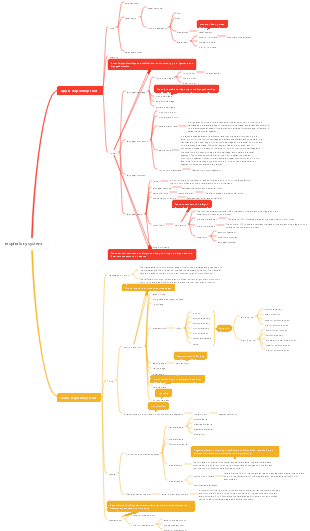
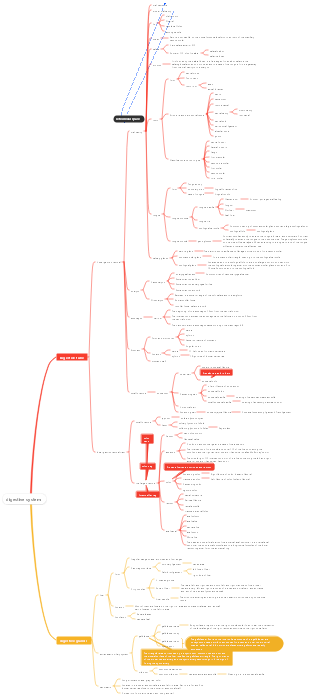
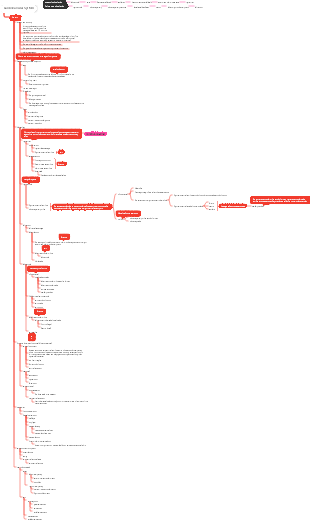
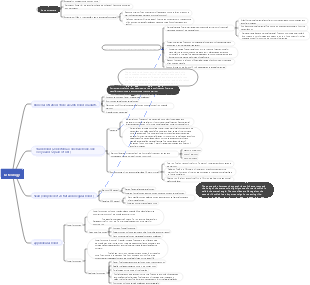
This is a mind map about osteology. Bone is an organ, mainly composed of bone tissue (including bone cells, collagen fibers and matrix), with a certain shape and structure. The outer covering of periosteum contains bone marrow, which is rich in blood vessels, lymphatic vessels and nerves. It can continuously undergo metabolism, growth and development, and has the ability to reconstruct, repair and regenerate.
Edited at 2024-10-23 16:18:27observation stage
skull
brain skull
Parietal and temporal bones: Observe the paired parietal and temporal bones to understand their shape and positional relationship.
Frontal, ethmoid, sphenoid, and occipital bones: Look at the individual frontal, ethmoid, sphenoid, and occipital bones and note their respective positions and characteristics. The ethmoid and sphenoid bones, in particular, can be opened for more detailed observation.
Main structures: Use enlarged models or real objects to observe the external ear door, mastoid process, mandibular fossa, articular tubercle, zygomatic arch, inner ear door, ethmoid foramen, ethmoid vertical plate, pituitary fossa, dorsum sellae, optic canal, superior orbital fissure , round foramen, foramen ovale, foramen magnum, occipital condyle, hypoglossal canal, transverse sinus groove, sigmoid sinus groove, external occipital protuberance and other structures.
facial skull
1. Bones arranged in pairs
1. Maxilla: forms the central part of the face and is connected to almost all facial and skull bones. It can be divided into one body and four processes (supernumeral body, frontal process, palatine process, alveolar process and zygomatic process).
2. Zygomatic bone: On the outside and lower part of the orbit, it forms the bony protrusion of the cheek.
3. Nasal bones: They are paired long strips of small bones, narrow at the top and wide at the bottom, forming the basis of the dorsum of the nose.
4. Lacrimal bone: It is a small square bone located in the anterior part of the medial orbital wall. It is connected to the maxilla anteriorly and to the ethmoid labyrinth and orbital plate posteriorly.
5. Palatine bone: L-shaped, located between the palatal process of the maxilla and the pterygoid process of the sphenoid bone. The vertical plate forms the posterior part of the lateral wall of the nasal cavity, and the horizontal plate forms the posterior part of the bony palate.
6. Inferior turbinate: A thin, curly bony fragment attached to the nasal surface of the maxillary body and the vertical plate of the palatine bone.
2. unpaired bones
1. Vomer: A small oblong bone that forms the lower part of the nasal septum.
2. Mandible: The largest facial bone, consisting of the mandibular body and the left and right mandibular ramus. The posterior and inferior part of the mandibular ramus is the masseter muscle attachment.
3. Hyoid bone: A horseshoe-shaped bone located behind and below the mandible.
Detailed structure of skull
Cranial sutures: Observe the connecting seams between the skull bones, such as coronal sutures, sagittal sutures, lambdoid sutures, etc.
Skull base structure: From the inner and outer views of the skull base, learn in detail the structure of the skull base, including the anterior cranial fossa, middle cranial fossa, posterior cranial fossa and other areas and the main structures within them.
Cranial cavity, orbital cavity, nasal cavity, and oral cavity: respectively observe the composition of the cranial cavity, the composition of the orbital cavity (including frontal bone, ethmoid bone, lacrimal bone, maxillary bone, zygomatic bone, sphenoid bone, etc.), and the composition of nasal cavity (including nasal bones, middle turbinate) , inferior turbinate, maxilla, nasal septum, etc.) and the structure of the oral cavity.
trunk bone
vertebra
Main components of trunk bones
Cervical vertebra: Observe the transverse process foramen, spinous process bifurcation, vertebral body hooks and other features, especially the special structures of the atlas and axis.
Thoracic spine: Note the kidney shape of the vertebral bodies, the plate-like shape of the spinous processes, and the shape of the transverse processes.
Lumbar vertebrae: Observe the larger vertebral bodies and transverse processes, as well as the plate-like structure of the spinous processes.
Sacrum and coccyx: The flat triangular structure of the sacrum and the morphological characteristics of the coccyx.
sternum and ribs
The sternum, ribs, and vertebrae together form the thorax, which protects internal organs and facilitates respiratory movements.
Sternum: The shape of the manubrium, body and xiphoid process, especially the position and importance of the sternal angle.
Ribs: Observe the basic shape of ribs (rib head, rib neck, rib tubercle, rib body, etc.), as well as the differences between true ribs, false ribs and floating ribs.
limb bones
Upper limb bones
upper limb bone
The upper limb girdle is the bridge connecting the upper limbs and the trunk
Clavicle: Observe its "S" shape, the connection between the medial end and the sternal manubrium, the connection between the lateral end and the acromion, as well as the nutrient foramen and attachment points on the body of the clavicle.
Scapula: Observe its triangular flat bone shape, acromion, coracoid process, glenoid, subscapular fossa, scapular spine and other structures. Pay attention to the shape of the upper and lower corners and lateral edges of the scapula.
free upper limb bones
Free upper limb bones constitute the main moving part of the upper limb
Humerus: Observe the humeral head, anatomical neck, large and small tubercle and surgical neck at the upper end, the radial nerve groove at the middle section, the humeral capitellum, humeral pulley and other structures at the lower end.
Radius: Observe the radial head, radial tuberosity at the upper end, radial styloid process, ulnar notch, etc. at the lower end.
Ulna: Observe the olecranon, trochlear notch, and radial notch at the upper end, and the ulnar styloid process, ulnar head, etc. at the lower end.
hand bones
The hand bones are an important part of the upper limb
Carpal bones: Observe the scaphoid, lunate, triangular and pisiform bones in the proximal row, and the large and small polygonal bones, capitate and hamate bones in the distal row. Pay attention to the connections between the carpal bones and the shape of the carpal groove.
Metacarpal bones: Observe the five metacarpal bones and pay attention to the shape and arrangement of the metacarpal base, metacarpal body, and metacarpal head.
Phalanges: Observe the 14 phalanges, including the proximal phalanx and distal phalanx of the thumb, as well as the proximal phalanx, middle phalanx and distal phalanx of the other four fingers. Pay attention to the shape of the base of the phalanx, the trochlea of the phalanx and the tuberosity of the distal phalanx.
Lower limb bones
Lower limbs with bones
The hip bone is the key structure connecting the lower limbs to the trunk
Hip bone: Observe the shape of the hip bone, which is formed by the fusion of three bones: the ilium, pubis, and ischium. Pay attention to the iliac crest, anterior superior iliac spine, posterior superior iliac spine, ischial spine, ischial tubercle, and pubic symphysis surface.
free lower limb bones
The main weight-bearing and moving parts of the lower limbs
Femur: Observe the femoral head, femoral neck, greater trochanter, lesser trochanter and other structures at the upper end, and the medial condyle, lateral condyle, etc. at the lower end.
Patella: Observe its shape and connection with the lower end of the femur.
Tibia: Observe the medial condyle, lateral condyle, tibial tuberosity at the upper end, medial malleolus at the lower end, etc.
Fibula: Observe the fibula head at the upper end, the lateral malleolus at the lower end, etc.
foot bones
terminal structure of lower limbs
Tarsus: Observe the shape and arrangement of the talus, calcaneus, navicular, cuboid and three cuneiform bones.
Metatarsal bones: Observe the shape and arrangement of the five metatarsal bones, and pay attention to the shape of the metatarsal base, metatarsal body, and metatarsal head.
Phalanges: Observe the 14 phalanx bones, including the proximal phalanx, middle phalanx, and distal phalanx. Pay attention to the shape of the base of the phalanx, the trochlea of the phalanx, and the tuberosity of the distal phalanx.
Summary stage
Sort out and connect the observed structures, and deepen the study of limb bones and skull through drawing and other methods.
preparation stage
tool
Such as scalpels, dissecting scissors, saws, tweezers, Scalpel handle, string, periosteal dissector, etc.
Material
Make sure the skull specimen has been properly processed, Such as removing most of the soft tissue but leaving enough structure for observation.