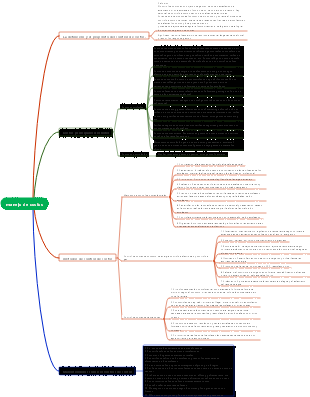
MindMap Gallery carbon steel
Information on the quality grades of carbon steel and their associated properties is presented, providing useful reference information for understanding and selecting appropriate metallic materials, especially when considering the material's quality grade, composition and properties.
Edited at 2024-10-17 18:24:48This is a mind map about the annual work plan of the three pillars of human resources. The main contents include: strategic human resources planning, talent recruitment and allocation, employee performance management, employee training and development, employee relationships and communication, employee welfare and care, human resources information system construction, regulatory compliance and risk management, and organizational culture construction.
This is a mind map for the diagnosis and treatment of acute cerebral hemorrhage in patients with hemodialysis. The annual incidence of acute cerebral hemorrhage in patients with hemodialysis is (3.0~10.3)/1000, and the main cause is hypertension. Compared with non-dialysis patients, the most common bleeding site is the basal ganglia area, accounting for 50% to 80%; but the bleeding volume is large and the prognosis is poor, and the mortality rate is 27% to 83%. Especially for patients with hematoma >50ml, hematoma enlarged or ventricular hemorrhage on the second day after onset, the prognosis is very poor.
The logic is clear and the content is rich, covering many aspects of the information technology field. Provides a clear framework and guidance for learning and improving information technology capabilities.
This is a mind map about the annual work plan of the three pillars of human resources. The main contents include: strategic human resources planning, talent recruitment and allocation, employee performance management, employee training and development, employee relationships and communication, employee welfare and care, human resources information system construction, regulatory compliance and risk management, and organizational culture construction.
This is a mind map for the diagnosis and treatment of acute cerebral hemorrhage in patients with hemodialysis. The annual incidence of acute cerebral hemorrhage in patients with hemodialysis is (3.0~10.3)/1000, and the main cause is hypertension. Compared with non-dialysis patients, the most common bleeding site is the basal ganglia area, accounting for 50% to 80%; but the bleeding volume is large and the prognosis is poor, and the mortality rate is 27% to 83%. Especially for patients with hematoma >50ml, hematoma enlarged or ventricular hemorrhage on the second day after onset, the prognosis is very poor.
The logic is clear and the content is rich, covering many aspects of the information technology field. Provides a clear framework and guidance for learning and improving information technology capabilities.
carbon steel
Carbon steel grade composition
1. Letter representing yield point
Q: Indicates yield strength (yield point)
T: stands for tool steel, commonly used letters.
2. Yield point value
Number: usually the value of yield strength in megapascals (MPa)
For example, in "Q235", the number "235" indicates that the yield strength of the steel is 235 MPa.
3. Quality level
The quality grade is usually not indicated directly in the basic grade, but may be indicated by additional markings:
A: Ordinary level (meets general requirements)
B: Premium grade (higher requirements on ingredients and performance)
C: Premium grade (more stringent requirements on ingredients and performance)
4. Deoxidation method
The deoxidation method is usually represented by a letter suffix in the brand name. Common deoxidation methods are:
F: stands for naturally deoxidized steel
B: Indicates aluminum deoxidized steel
Z: represents zinc deoxidized steel
D: Indicates deoxidized steel whose deoxidized elements include calcium
Notice
High-quality carbon structural steel is divided into ordinary manganese content steel and higher manganese content steel
Number: The mass fraction of carbon in steel, unit is one ten thousandth
For steel with higher manganese content, Mn is added after the number.
carbon tool steel
Number: The mass fraction of carbon in steel, unit is one ten thousandth
Carbon steel properties
Element
Iron (Fe)
Content: usually above 99%, it is the main component of carbon steel.
Function: Provide the basic structure and mechanical properties of steel.
Carbon (C)
Content: Generally between 0.06% and 2.0%, depending on the type of steel.
Function: Increase the strength and hardness of steel, but reduce the plasticity and toughness.
Manganese (Mn)
Content: Generally between 0.30% and 1.50%.
Function: Improve strength, hardness and wear resistance, and improve heat treatment performance.
Silicon (Si)
Content: usually between 0.10% and 0.50%.
Function: Improve strength, increase corrosion resistance, and act as an oxygen scavenger.
Sulfur(S)
Content: usually less than 0.05%.
Function: Excessive content will affect the plasticity and toughness of steel.
Phosphorus (P)
Content: usually less than 0.05%.
Function: A small amount increases strength, an excessive amount reduces toughness.
other elements
Depending on the specific type, elements such as chromium (Cr) and nickel (Ni) may be included to improve performance.
physical properties
Density: approximately 7.85 g/cm³.
Melting point: between 1425°C and 1540°C.
Electrical conductivity and thermal conductivity: suitable for electrical and thermal conductivity occasions.
Corrosion resistance: relatively poor, easy to rust, and requires anti-rust treatment.
mechanical properties
Strength: increases with carbon content.
Hardness: The higher the carbon content, the greater the hardness, which can be increased by quenching.
Plasticity and toughness: The higher the carbon content, the plasticity and toughness decrease.
Fatigue strength: high, suitable for applications with alternating loads.
Ductility: Suitable for processing into parts of various shapes and sizes.