MindMap Gallery A framework for interpreting terms in international relations theory
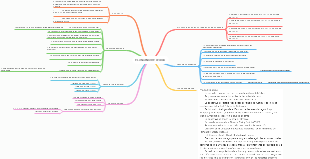
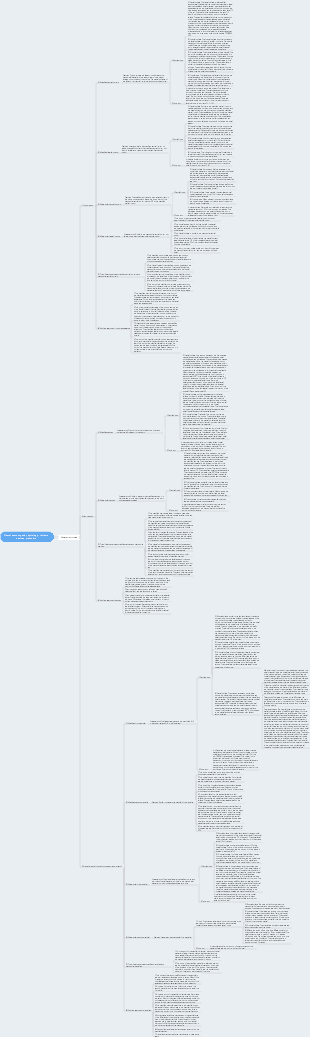
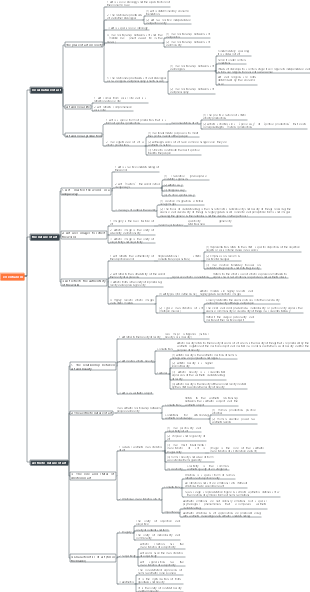
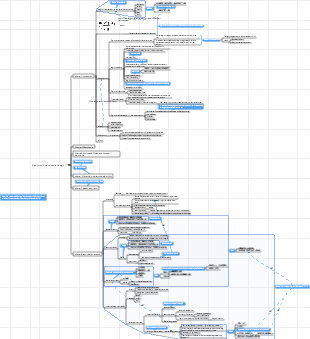
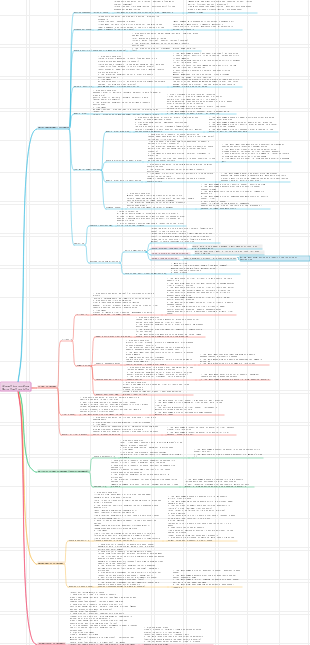
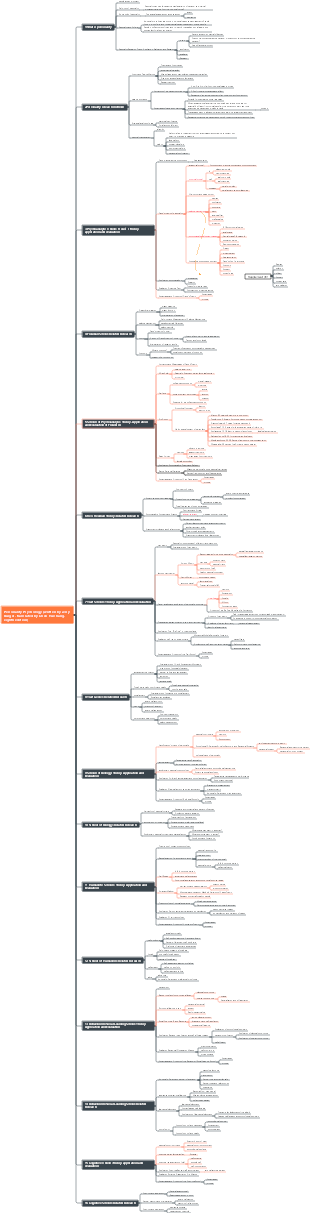
This is a mind map about the interpretation framework of international relations theory, including classical realism, structural realism/neorealism, offensive realism, defensive realism, neoclassical realism, etc.
Edited at 2024-10-17 14:59:01Chronische Herzinsuffizienz ist nicht nur ein Problem der Geschwindigkeit der Herzfrequenz! Es wird durch die Abnahme der Myokardkontraktion und der diastolischen Funktion verursacht, was zu unzureichendem Herzzeitvolumen führt, was wiederum Staus im Lungenzirkulation und Stau der systemischen Zirkulation verursacht. Aus den Ursachen sind die pathophysiologischen Prozesse der Herzinsuffizienz für Kompensationsmechanismen komplex und vielfältig. Durch die Kontrolle von Ödemen, die Reduzierung der Vorder- und Nachlast des Herzens, die Verbesserung der Herzkomfortfunktion und die Verhinderung und Behandlung grundlegender Ursachen können wir auf diese Herausforderung effektiv reagieren. Nur durch das Verständnis der Mechanismen und klinischen Manifestationen von Herzinsuffizienz und Beherrschung der Präventions- und Behandlungsstrategien können wir die Herzgesundheit besser schützen.
Ischämie-Reperfusionsverletzung ist ein Phänomen, dass sich die Zellfunktion und Stoffwechselstörungen und strukturelle Schäden verschlimmern, nachdem Organe oder Gewebe die Blutversorgung wiederhergestellt werden. Zu den Hauptmechanismen gehören eine erhöhte Erzeugung des freien Radikals, die Kalziumüberladung sowie die Rolle von mikrovaskulären und Leukozyten. Das Herz und das Gehirn sind häufige beschädigte Organe, die sich als Veränderungen des Myokardstoffwechsels und ultrastrukturelle Veränderungen, verringerte Herzfunktion usw. manifestieren usw. umfassen die Entfernung von freien Radikalen, die Verringerung der Kalziumüberlastung, die Verbesserung des Stoffwechsels und die Kontrolle von Reperfusionsbedingungen, z.
Stress ist ein unspezifischer Schutzmechanismus, der im Körper unter interner und externer Umweltstimulation auftritt, aber übermäßiger Stress kann zu internen Umweltstörungen und -krankheiten führen. Die Stressreaktion beinhaltet mehrere Systeme wie neuroendokrine, zelluläre und körperliche Flüssigkeiten, und seine Hauptmanifestationen umfassen emotionale Reaktionen, Veränderungen der kognitiven Fähigkeiten und Veränderungen des sozialen Verhaltens. Übermäßige Konzentration von Katecholamin ist einer der Hauptmechanismen des Stresses, die körperliche Erkrankungen wie Herz -Kreislauf -Erkrankungen, Stressgeschwüre und psychische Probleme wie traumatische Belastungsstörungen verursachen können. Das Verständnis des Stadiums und des Aufprallmechanismus von Stress kann dazu beitragen, Stress besser zu bewältigen und die körperliche und psychische Gesundheit aufrechtzuerhalten.
Chronische Herzinsuffizienz ist nicht nur ein Problem der Geschwindigkeit der Herzfrequenz! Es wird durch die Abnahme der Myokardkontraktion und der diastolischen Funktion verursacht, was zu unzureichendem Herzzeitvolumen führt, was wiederum Staus im Lungenzirkulation und Stau der systemischen Zirkulation verursacht. Aus den Ursachen sind die pathophysiologischen Prozesse der Herzinsuffizienz für Kompensationsmechanismen komplex und vielfältig. Durch die Kontrolle von Ödemen, die Reduzierung der Vorder- und Nachlast des Herzens, die Verbesserung der Herzkomfortfunktion und die Verhinderung und Behandlung grundlegender Ursachen können wir auf diese Herausforderung effektiv reagieren. Nur durch das Verständnis der Mechanismen und klinischen Manifestationen von Herzinsuffizienz und Beherrschung der Präventions- und Behandlungsstrategien können wir die Herzgesundheit besser schützen.
Ischämie-Reperfusionsverletzung ist ein Phänomen, dass sich die Zellfunktion und Stoffwechselstörungen und strukturelle Schäden verschlimmern, nachdem Organe oder Gewebe die Blutversorgung wiederhergestellt werden. Zu den Hauptmechanismen gehören eine erhöhte Erzeugung des freien Radikals, die Kalziumüberladung sowie die Rolle von mikrovaskulären und Leukozyten. Das Herz und das Gehirn sind häufige beschädigte Organe, die sich als Veränderungen des Myokardstoffwechsels und ultrastrukturelle Veränderungen, verringerte Herzfunktion usw. manifestieren usw. umfassen die Entfernung von freien Radikalen, die Verringerung der Kalziumüberlastung, die Verbesserung des Stoffwechsels und die Kontrolle von Reperfusionsbedingungen, z.
Stress ist ein unspezifischer Schutzmechanismus, der im Körper unter interner und externer Umweltstimulation auftritt, aber übermäßiger Stress kann zu internen Umweltstörungen und -krankheiten führen. Die Stressreaktion beinhaltet mehrere Systeme wie neuroendokrine, zelluläre und körperliche Flüssigkeiten, und seine Hauptmanifestationen umfassen emotionale Reaktionen, Veränderungen der kognitiven Fähigkeiten und Veränderungen des sozialen Verhaltens. Übermäßige Konzentration von Katecholamin ist einer der Hauptmechanismen des Stresses, die körperliche Erkrankungen wie Herz -Kreislauf -Erkrankungen, Stressgeschwüre und psychische Probleme wie traumatische Belastungsstörungen verursachen können. Das Verständnis des Stadiums und des Aufprallmechanismus von Stress kann dazu beitragen, Stress besser zu bewältigen und die körperliche und psychische Gesundheit aufrechtzuerhalten.
realism
classical realism
Time: It emerged after the outbreak of World War II and became popular in the 40S-60S. The defeat of the United States in the Vietnam War put it in trouble, and later the neorealist school was born on its basis.
representative figure
Edward Carr
Source of thought: Criticism of idealism, reflection on World War I
"Twenty Years Crisis": laying the foundation for classical realism
1. Power: the most important factor
2. Moral relativism: moral illusion
3. Conflict of Interest Theory: Fundamental conflict of interests between countries
Morgenthau
"International Politics": The establishment of the theoretical edifice of realism
content
Basic unit: country
Basic interaction: national competition
Core: Power Politics
International organizations, international law<power, strength
pillar
view of human nature
Origin of thought
Thucydides
Justice is subordinate to power, and interests are the starting point of thinking
The first thing a country pursues is security and survival. Personal morality cannot guide national behavior. A powerful country has the right to define justice.
Machiavelli
Pessimistic assumptions about human nature: Human nature is bad, and perfect virtue cannot solve the problems of human nature → The monarch must use a mixture of virtues and vices according to the need to maintain power
hobbes
State of nature: a state of war in which everyone is against everyone, fear, suspicion, and aggression for the sake of reputation
Rousseau
Natural state: pastoral pastoral
Hans Morgenthau
︽Inter-State Politics |Struggle for Power and Peace︾
Status: 1948 marks the maturity of the realism school
Content: Summarizes the debate between realism and idealism, puts forward views on human nature and historical process, systematically clarifies the basic principles of political realism, thereby pushing Western international relations theory to a new stage
With power politics as the core, the concept of human nature, interests, and morality as the pillars, the country as the basic unit, and competition between countries as the basic mode of interaction, it advocates that all countries should be regarded as political entities pursuing power and interests, and opposes ideals The concept of moralism and legalism advocates the naked pursuit of national power and national interests.
six principles of realism
1. Politics is governed by objective laws rooted in human nature
2. Political leaders think and act from the perspective of “defining interests with power”
3. The power to define national interests is a universally applicable principle and an objective existence
4. “Universal moral principles must be applied to the behavior of the state based on the specific time and place, rather than using abstract and universal formulas.”
5. The moral aspirations of a specific country cannot be equated with universally applicable moral laws.
6. Independence of political science
evaluate
Positive: Adapted to the Cold War between the United States and the Soviet Union and the needs of the United States for hegemony
Negative: Emphasizing that states are the only actors in international politics, advocating complete rationality and traditional characteristics of research methods, causing criticism
Politics is governed by objective laws rooted in human nature
human nature
The view of human nature is the basis of Morgenthau's political philosophy. On the basis of in-depth study of human nature, he established the other two pillars of his political philosophy - power and political morality.
Egoism: the pursuit of scarce material and spiritual interests on which one's own survival depends. Linked to basic personal needs and therefore limited
Dominance: The desire to maintain, expand, or demonstrate one's territory. As a concentrated expression of human power, it is essentially unlimited and irrational. This desire for power creates evil in the world
The reality of political life: The evil and selfish nature of human beings causes everyone to put their own interests above the interests of others, resulting in constant conflicts in human society.
The law of human nature chasing power → Struggle between states: A state is an entity composed of individuals seeking power, and international politics is an extension of domestic politics. Discussion of the actor “people” in domestic politics → Discussion of the actor “state” in international politics
Human beings are products of nature and have natural nature → personal desires, will to survive, and pursuit of interests → the country pursues interests and seeks power → the greater the power, the greater the benefits.
Zero-sum nature of power → conflict → balance of power suppresses conflict
Human nature is evil → Mechanism constraints
Abstract moral principles vs. politicians taking actions that are personally considered immoral for national interests and power
Interest concept
moral values
evaluate
positive impact
foreign policy
Theoretical flaws
Not very theoretical
A single logic that despises morality, advocates that power is both a means and an end, and that anarchy will inevitably lead to confrontation
structural realism/neorealism
Kenneth Waltz
1979 "International Political Theory"
Status: The Manifesto of Neorealism
Advocates for comprehensive and overall research on international relations, emphasizing the study of global systems; emphasizing economic factors in international relations, and paying attention to the interaction and mutual influence of the world economy and international relations
analytic hierarchy process
level
world system
international relations
domestic society
national government
decision maker role
decision maker
System level: the international system, that is, the international environment, studies how the environment affects international interaction patterns
National level: the role of states and other state behaviors in international relations, how to formulate foreign policy
Personal level: The impact of the leader’s personal background, historical experience, value choices and leadership style on decision-making
Basic connotation
Theoretical premise: rationalism
Basic research level: international system
Basic characteristics: international anarchy
Basic international relations actors: nation-states
Independent variable: international architecture
Dependent variable: state behavior
realist scientific theory system
A revision of classicism
1. The primary driving force of international relations is the anarchy of the international system, not human nature.
2. Under conditions of anarchy, the first consideration of a country is survival, not the blind pursuit of power.
3. State power is a means of national survival, not the purpose of national policy.
4. Military power is the first element of national power
Theoretical assumptions
1. The basic nature of the international system: anarchy
2. Basic behavioral unit: state
3. Important factors affecting the stability of the system and the behavior of system units: system structure, that is, the distribution of power among major powers
Inheriting the realist theory of power politics, the core of the theory is still power
Theoretical significance: The use of analytic hierarchy process to solve problems is helpful for in-depth and systematic research. Its shortcomings are that it is difficult to establish a macro theoretical framework and achieve theoretical breakthroughs; it is difficult to identify macro changes in the international pattern and grasp the mid- and long-term trends of international relations.
Methodological significance: Countries must learn to comply with the laws of the international system and act in accordance with the requirements of the international system structure.
neoclassical realism
The branch of neorealism that emerged within realist theory in the mid-to-late 1990s
Nature: A new analytical method to clarify the construction path of foreign policy theory
Representatives: Schweller, Zacharia, Wolfers
Theoretical construction
Called "neoclassical realism" by Giedden Roth
Critical inheritance of structural realism and classical realism
Absorb the system theory of neorealism
Adhering to the tradition of classical realism that attaches great importance to unit-level analysis
It emphasizes the combination of internal variables and external variables, system variables and unit variables. System pressure only works through domestic-level intervening variables to affect foreign policy decisions.
It is dissatisfied with the separation of the external environment and domestic factors when examining a country's foreign policy, and has no intention of constructing a general theory about international relations. Focus only on explaining specific countries’ foreign policies and behaviors. Policy and behavior: national grand strategy, military policy, alliance preferences, crisis management, etc.
The impact of national and domestic factors on state behavior
1. Adhere to the core proposition of realism, power politics
2. Expand the state theory to the two interrelated levels of international and domestic. Emphasizing that security is not the primary goal of the country's foreign policy, the primary goal of the country's foreign policy is to safeguard national interests to the greatest extent and pursue the increase of the country's relative power.
Evaluation: These two aspects of the research framework provide valuable analytical ideas and examples for the study of international relations theory, and the explanatory ability has been strengthened. And without damaging the core concepts and basic assumptions of realism, some new variables such as the concepts of policymakers and domestic government structures are introduced into this paradigm, which makes the present theory closer to the real world it wants to explain. However, its weakness is that it is not suitable to explain the international structure and cannot predict the overall results of strategic interactions between individual countries.
Main content
1. A country’s position in the international system, especially its relative power and material capabilities, is the primary driving factor in foreign policy.
2. System pressure must be transformed through unit-level intervening variables. The international system is not Hobbesian as offensive realism says, nor is it stable as defensive realism thinks. Instead, it is quite vague. It is difficult for countries in an anarchic international system to see clearly what security is. Scarcity or abundance, they can only interpret the international political reality full of uncertainties based on their own subjective experience, that is, system pressure must be transformed through unit-level intervening variables. Therefore, this influence is indirect and complex, that is to say, both system factors and unit factors have an impact on the country's external behavior.
3. Importance of domestic-level variables
First, external decisions are made by elite leaders, so leaders’ understanding of relative power is crucial. This means that short- and medium-term foreign policy choices do not have to take into account carefully and continuously examined relative power trends.
Second, power analysis must examine the relative strength and structure of the state and society. These factors determine the proportion of domestic resources that can be allocated to foreign policy. Such as: Reasons for the expansion of the United States
Third, system pressure determines the general direction of foreign policy, but cannot determine the specific details of a country’s behavior.
defensive realism
background
Defensive Characteristics of Neorealist Theory
It is believed that "the country focuses on maintaining the balance of power" and pursues "power that does not exceed existing power."
1. In anarchy, security is the primary goal and power is a means. The fundamental concern of a country in international politics is to maximize security, not power.
2. The logic of security maximization makes checks and balances rather than following (that is, joining the stronger party) the priority security strategy of the country. This international balance of power mechanism leads to the pursuit of power maximization often being contained and frustrated.
3. The reliable way to maximize security is to maintain the balance of power status quo
In 20C80S, Walter, Snyder, Van Evera, Glaser and others promoted the further development of defensive realism, and the level of analysis also expanded from the system level to the unit level. However, its theoretical core is still concerned with maximizing security and attaching importance to the balance of power. law, reminding major powers of the risks of overexpansion, and advocating that the country pursue a moderate security strategy
Main content
Defensive realism believes that security in the international system is not scarce, but sufficient. The best way for a country to obtain security is usually to adopt a defensive strategy, or a strategy aimed at maintaining the status quo.
In history, countries that pursue expansion strategies often cause checks and balances from other countries and eventually lead to failure. As rational countries, they will learn lessons from this, calculate the gains and losses of expansion, and then restrain their own behavior. In other words, an anarchic international system does not necessarily lead to fierce conflicts and wars, but also prompts countries to adopt moderate, prudent and measured policies. If a country adopts a policy of reckless expansion, the reasons lie at the national level rather than at the international level
Under certain circumstances, such as when the balance between "offense and defense" favors the attacking party, even countries pursuing security goals may conflict with each other due to the intensification of the "security dilemma". But in most cases, the international system is stable, the "security dilemma" problem is not serious, and national mobilization is mainly limited to dealing with certain specific threats arising from the system.
branch
Walter balance of threats theory
Core question: Why do alliances in international politics arise, that is, “how do countries choose friends” in anarchy?
Basic theoretical logic: Threat imbalance leads to alliances between countries, and the alliance behavior of countries "depends on the threats they recognize." That is, countries form alliances not to check and balance the most powerful countries, but to check and balance the countries with the greatest threats to maintain their own security, and at the same time " Affecting the evolution of the international system as a whole”
content
The degree of threat posed by a country is determined by four factors: comprehensive strength, geographical proximity, offensive capabilities and intentions. This corrects the Waltzian balance of power theory's proposition that security threats are determined solely by strength.
A country with strong comprehensive strength, geographical proximity, high offensive capabilities, and clear aggressive intentions is a greater security threat and may lead related countries to form an alliance to fight against it. If the most threatening country or group of countries is significantly more dangerous than the second most threatening person, this creates a threat imbalance, which can lead to alliances to restore the threat balance.
Strategic significance: Reveals the fundamental reason why the Soviet Union is considered more dangerous, demonstrates why the U.S.-led camp can accumulate more power to balance the Soviet threat, and why the development of the U.S.-Soviet competition situation is generally beneficial to the United States. What the United States needs to worry about is not its allies. betrayal, but how to avoid misplaced belligerence inspiring opposition from other countries
Snyder's Mythology of Empire
Domestic politics is used as the basis to explain why big countries always pursue expansionary policies and often move towards over-expansion. The theoretical logic is that the strategic concept of expansionary security is myth-based as an ideology and is used by cartels formed by various interest groups in domestic politics. Political alliances are used to pursue foreign expansion policies. The narrow interests of these interest groups are tied to imperial expansion, military preparation, or economic self-sufficiency. They support each other out of private interests and "pursue their narrow interests under the guise of the general interests of the entire society."
The anarchy of the international system does not necessarily drive a country’s external expansion. On the contrary, the law of balance of power and the law of growth of expansion costs in international politics often cause the strategy of seeking security through expansion to be counterproductive.
The law of balance of power means that imperial expansion will lead to overwhelming alliances with other countries, thus falling into "self-encirclement"
The law of expansion cost growth means that continuous expansion to the periphery will cause costs to gradually exceed benefits, leading to "empire overexpansion"
Snyder's theory shows that to evaluate and predict the expansionary tendency of a country's foreign policy, we should not only look at the international system, but also pay attention to the cartelization of the country's domestic politics. The higher the degree of cartelization, the more likely it is to expand externally, and other countries will Corresponding security strategies should be adopted accordingly
Van Evera's Attack-Defense Balance Theory
Taking the causes of war as the core issue, this paper tests five realist hypotheses about the origin of war, and accordingly makes two major revisions to the realist theory: one is to revise its focus on the overall power structure to focus on the fine power structure; The second is to revise its focus on power itself to focus on the cognition of state power.
Five realist hypotheses about the origins of war
1. If a country has false optimism about the outcome of a war, the possibility of war is very high
2. If the party that mobilizes first or attacks first takes advantage, then the possibility of war is very high.
3. If the relative power between countries fluctuates violently, that is, if the windows of opportunity and vulnerability are both large, the possibility of war is high.
4. If the resources are cumulative, that is, controlling the resources can enable the country to defend or obtain other resources, then the possibility of war is very high.
5. If conquest is easier, war is more likely to occur
misperception
Due to the anarchic nature of the international system, the primary goal of a country is security, and the cause of war lies in the country's misunderstanding of the fine structure of international power.
1. A country’s perception of the international power structure has a significant impact on the risk of war. Countries launch wars because they believe they will win, believe that the advantage lies with the party that strikes first, believe that their relative power is in relative decline, and believe that their resources Be highly cumulative and, most importantly, believe that conquest is easy
2. The actual structure of international power also has an impact on the risk of war, but the impact is smaller because states often have misperceptions of the actual structure of international power and they only respond according to their perceptions.
3. The contemporary power structure is benign. The advantage of preemption is very small. The rise and fall of the relative strength of big countries rarely fluctuates violently. The accumulation of resources is very low. It is very difficult for the government. However, various countries believe that the contemporary international power structure is malignant, that is, they have repeatedly misunderstood various aspects of the above-mentioned fine structure, and a large number of modern wars have become "wars caused by illusions."
Core logic: A world that is "offensive-dominated" (that is, conquest is considered relatively easy) is more dangerous than a "defense-dominated" world (that is, conquest is considered very difficult). The root cause of World War I lay in the rise and spread of "offensive fetishism" in Europe
Glaser contingency realism
The anarchy of international politics will not lead to a general advantage for countries pursuing security to pursue competitive strategies. On the contrary, under a series of conditions, cooperation is the best choice for a rational country.
Factors affecting national strategic choices
1. The country’s own motivations
2. Material factors that influence the country’s military potential, such as power and offensive-defense balance posture
3. Information related to national motives, such as country A’s views on country B’s motives and its views on country B’s possession of information related to country A’s motives. Therefore, the security dilemma is not only about material, but also about information. “If a security-seeking country believes that its opponent is also likely to be a security seeker, and if defense is relatively easier than offense, then the security dilemma will not be serious, and cooperation and restraint will be more important. Attractive"
Glaser's theory is a "rational normative theory" that aims to reveal why cooperation is the "best choice for security seekers" under anarchic conditions. Its major policy implications are the impact of China's rise on U.S. security and Sino-U.S. relations. Optimism, emphasizing that neither the relative security strength of China and the United States after the rise of China nor China’s motives will cause security pressure on the United States and prompt it to launch a defensive war, because the United States still enjoys multiple defense advantages, especially huge nuclear weapons The deterrent effect of its advantages will ensure that the United States will be safe and China’s security interests will be protected.
offensive realism
Theoretical core: International anarchy prompts countries to pursue security maximization. Power maximization is the most reliable way to maximize security. The ideal result is to become a regional hegemon, that is, the far leading power or the only power in the system.
Based on five basic assumptions
1. The international system is in a state of anarchy. There is “no central authority” over sovereign states. The fundamental feature of the country’s living environment is that “there is no night watchman.”
2. Major countries have military attack capabilities in the mainland, providing the capital to harm or even destroy each other. They are potential threats to each other. The stronger the military power, the greater the danger and the more formidable it is.
3. Countries cannot determine other countries’ intentions with 100% accuracy
(1) Intention is uncertain
(2) The state does not necessarily have hostile intentions
(3) There are many possible reasons for attacks, and no country can be sure that other countries are not motivated by any one reason.
4. Survival is the primary goal of a big country, that is, "maintaining its territorial integrity and the autonomy of its domestic political order." Once a country is conquered, it loses its status to pursue other interests.
5. Great powers are rational actors
(1) The country understands the anarchy of other external environments and the reality that other countries have military attack power, and considers its own survival from a strategic perspective
(2) The country “considers the preferences of other countries, pays attention to how its own behavior will affect the behavior of other countries, and also weighs how the behavior of other countries will affect its own survival strategy.”
(3) The state “pays attention to both the long-term impact and the direct impact of its actions”, and the state will carefully screen the long-term and short-term power effects of its actions.
Any one of the five hypothetical propositions is not sufficient to cause a country's offensive behavior alone, but their joint effect creates a powerful driving force for great powers to think and act offensively. Fear, self-help, and power maximization become common national psychology. and behavioral patterns. The above theoretical assumptions and their inferences on state behavior shape the basic logical structure of offensive realism
offensive realism
1. Power