MindMap Gallery DNA
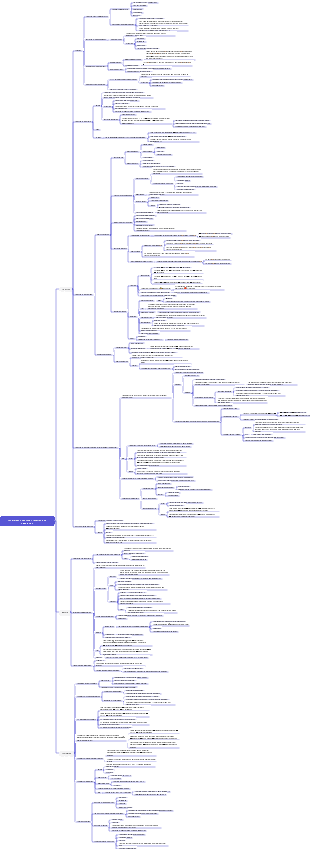
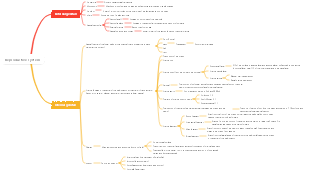
It introduces the characteristics of transcription, transcription of prokaryotic genes, post-transcriptional processing of eukaryotic RNA, functional small RNAs, translation and other detailed knowledge points. The key points are sorted out and the structure is clear. It is very worth learning!
Edited at 2024-11-19 23:07:40This template shows the structure and function of the reproductive system in the form of a mind map. It introduces the various components of the internal and external genitals, and sorts out the knowledge clearly to help you become familiar with the key points of knowledge.
This is a mind map about the interpretation and summary of the relationship field e-book, Main content: Overview of the essence interpretation and overview of the relationship field e-book. "Relationship field" refers to the complex interpersonal network in which an individual influences others through specific behaviors and attitudes.
This is a mind map about accounting books and accounting records. The main contents include: the focus of this chapter, reflecting the business results process of the enterprise, the loan and credit accounting method, and the original book of the person.
This template shows the structure and function of the reproductive system in the form of a mind map. It introduces the various components of the internal and external genitals, and sorts out the knowledge clearly to help you become familiar with the key points of knowledge.
This is a mind map about the interpretation and summary of the relationship field e-book, Main content: Overview of the essence interpretation and overview of the relationship field e-book. "Relationship field" refers to the complex interpersonal network in which an individual influences others through specific behaviors and attitudes.
This is a mind map about accounting books and accounting records. The main contents include: the focus of this chapter, reflecting the business results process of the enterprise, the loan and credit accounting method, and the original book of the person.
DNA
copy
The process of synthesizing two identical daughter DNA molecules using the parent DNA molecule as a template (occurring in the s phase of the cell cycle)
DNA replication is semi-conservative
Main enzymes and protein factors involved in DNA replication
prokaryotes
topoisomerase
helicase
Single-stranded DNA binding protein, also called SSB protein
Primer enzyme also known as primer synthase
DNA polymerase
DNA ligase
eukaryotes
topoisomerase
DNA polymerase
replication protein A
Replication factor C
telomerase
copy process
Unraveling of the DNA double helix
Synthesis of RNA primers
DNA chain extension
Excision of RNA primers
Okazaki fragment connection
Guarantee of accuracy of reproduction
The bases of the NDA daughter chain and the parent chain strictly adhere to the principle of complementary base pairing.
Both DNA polymerase I and III have 5’-3’ polymerase activity and 3’-5’ exonuclease activity.
excision primer
direction of aggregation
Balance of concentrations of four deoxyribonucleotides
Repair effect
Characteristics of Transcription
Using DNA five templates to promote RNA synthesis
Only one strand of the DNA double strand is transcribed into RNA
The direction of transcription is 5’-3’
No primers are required for transcription initiation. And the five corrective effects in the transcription process
The body needs to use DNA as a template, synthesize RNA under the catalysis of RNA polymerase, and transfer genetic information from DNA to RNA (transcription is the first and critical step in gene expression)
Transcription of prokaryotic genes
prokaryotic RNA polymerase
prokaryotic gene promoter
The transcription process of prokaryotic RNA
Template recognition
initiation of transcription
RNA chain extension
termination of transcription
Post-transcriptional processing of prokaryotic RNA
Post-transcriptional processing of mRNA
Post-transcriptional processing of rRNA
Post-transcriptional processing of tRNA
Post-transcriptional processing of eukaryotic RNA
Post-transcriptional processing of eukaryotic mRNA
The eukaryotic transcript product is monocistronic mRNA, the coding sequence is the exon, and the non-coding sequence is the intron (the 5' end is capped and the 3' is polyA tail)
The spliced introns of eukaryotic mRNA must be removed during post-transcriptional processing of RNA, and then the exons can be joined to form mature RNA molecules.
Post-transcriptional processing of eukaryotic rRNA (most eukaryotic rRNA has five introns, and the nascent rRNA precursor is combined with protein to form a huge ribonucleoprotein precursor particle)
Post-transcriptional processing of eukaryotic tRNA
Functional small RNA
microRNA
small interfering RNA
piRNA
translate
The structure and function of mRNA
genetic code
Starting AUG
Terminate UAA UAG UGA
Commonality of codons
degeneracy
Versatility
No overlap
preference
part-time
Structure and function of tRNA
tRNA is the "porter" of amino acids during protein translation
The secondary structure of tRNA is clover-shaped, with a "four rings and one arm" structure
anticodon
During protein translation, the direction is exactly opposite to that of the codons on the mRNA.
The structure of ribosomes
The ribosome is the "assembly machine" for protein synthesis. It is actually a subcellular structure composed of dozens of proteins and several rRNAs. It has two subunits, a large subunit of 50s and a small subunit of 30s.
The function of ribosomes
Peptidyl-tRNA binding site (P position
Aminoacyl-tRNA binding site (A position
Aminoacyl-tRNA release site (E position
extension of peptide chain
Aminoacyl-tRNA enters the A site
formation of peptide bonds
shift
Termination of synthesis
The presence of a signal that specifically halts polypeptide chain elongation
There are protein release factors that read chain termination signals. Since the carboxyl terminus of the polypeptide chain is still bound to the tRNA after it has been extended to a long enough length, termination should include removal of the terminal tRNA, and the nascent peptide chain will quickly detach from the ribosome.