MindMap Gallery How to take notes
This is a mind map about the method of taking notes. "The Method of Taking Notes" is not only a book about how to take notes, but also a book about how to use notes to think and innovate. The book explains in detail the importance of notes, how to take notes, how to organize notes, and how to improve your cognitive level and innovation ability through notes.
Edited at 2024-11-06 11:36:00루미 : 영적 각성의 10 차원. 당신이 자신을 찾는 것을 멈출 때, 당신은 당신이 찾고있는 것이 당신을 찾고 있기 때문에 우주 전체를 찾을 것입니다. 당신이 매일 인내하는 것은 당신의 영의 깊이의 문을 열 수 있습니다. 침묵 속에서 나는 비밀 영역으로 미끄러 져 내 주변의 마법을 관찰하기 위해 모든 것을 즐겼으며 어떤 소음도 만들지 않았습니다. 날개로 태어 났을 때 왜 기어 다니는 것을 좋아합니까? 영혼은 그 자체의 귀를 가지고 있으며 마음이 이해할 수없는 것들을들을 수 있습니다. 모든 것에 대한 답을 내면으로 찾으십시오. 우주의 모든 것이 당신 안에 있습니다. 연인들은 어딘가에서 만나지 않으며이 세상에는 이별이 없습니다. 상처는 빛이 당신의 마음에 들어가는 곳입니다.
만성 심부전은 심박수 속도의 문제가 아닙니다! 심근 수축 및 이완기 기능의 감소로 인해 심장 출력이 불충분하여 폐 순환에서 정체와 체계 순환의 혼잡을 유발합니다. 원인, 유도에서 보상 메커니즘에 이르기까지, 심부전의 병리 생리 학적 과정은 복잡하고 다양합니다. 부종을 제어하고, 심장의 전선 및 애프터로드를 줄이고, 심장 안락함 기능을 향상시키고, 기본 원인을 예방하고 치료함으로써, 우리는이 도전에 효과적으로 대응할 수 있습니다. 심부전의 메커니즘과 임상 증상을 이해하고 마스터 링 방지 및 치료 전략을 이해함으로써 우리는 심장 건강을 더 잘 보호 할 수 있습니다.
허혈-재관류 손상은 기관이나 조직이 혈액 공급을 회복시킨 후 세포 기능 및 대사 장애 및 구조적 손상이 악화 될 것이라는 현상입니다. 주요 메커니즘에는 증가 된 자유 라디칼 생성, 칼슘 과부하 및 미세 혈관 및 백혈구의 역할이 포함됩니다. 심장과 뇌는 흔한 손상 기관이며 심근 대사 및 초 구조적 변화, 심장 기능 감소 등으로 나타납니다. 예방 및 제어 조치에는 자유 라디칼 제거, 칼슘 과부하 감소, 신진 대사 개선 및 저 나트륨, 저온, 저압 등과 같은 재관류 조건을 제어하는 것이 포함됩니다. 이러한 메커니즘을 이해하면 효과적인 치료 옵션을 개발하고 허혈성 손상을 완화시키는 데 도움이 될 수 있습니다.
루미 : 영적 각성의 10 차원. 당신이 자신을 찾는 것을 멈출 때, 당신은 당신이 찾고있는 것이 당신을 찾고 있기 때문에 우주 전체를 찾을 것입니다. 당신이 매일 인내하는 것은 당신의 영의 깊이의 문을 열 수 있습니다. 침묵 속에서 나는 비밀 영역으로 미끄러 져 내 주변의 마법을 관찰하기 위해 모든 것을 즐겼으며 어떤 소음도 만들지 않았습니다. 날개로 태어 났을 때 왜 기어 다니는 것을 좋아합니까? 영혼은 그 자체의 귀를 가지고 있으며 마음이 이해할 수없는 것들을들을 수 있습니다. 모든 것에 대한 답을 내면으로 찾으십시오. 우주의 모든 것이 당신 안에 있습니다. 연인들은 어딘가에서 만나지 않으며이 세상에는 이별이 없습니다. 상처는 빛이 당신의 마음에 들어가는 곳입니다.
만성 심부전은 심박수 속도의 문제가 아닙니다! 심근 수축 및 이완기 기능의 감소로 인해 심장 출력이 불충분하여 폐 순환에서 정체와 체계 순환의 혼잡을 유발합니다. 원인, 유도에서 보상 메커니즘에 이르기까지, 심부전의 병리 생리 학적 과정은 복잡하고 다양합니다. 부종을 제어하고, 심장의 전선 및 애프터로드를 줄이고, 심장 안락함 기능을 향상시키고, 기본 원인을 예방하고 치료함으로써, 우리는이 도전에 효과적으로 대응할 수 있습니다. 심부전의 메커니즘과 임상 증상을 이해하고 마스터 링 방지 및 치료 전략을 이해함으로써 우리는 심장 건강을 더 잘 보호 할 수 있습니다.
허혈-재관류 손상은 기관이나 조직이 혈액 공급을 회복시킨 후 세포 기능 및 대사 장애 및 구조적 손상이 악화 될 것이라는 현상입니다. 주요 메커니즘에는 증가 된 자유 라디칼 생성, 칼슘 과부하 및 미세 혈관 및 백혈구의 역할이 포함됩니다. 심장과 뇌는 흔한 손상 기관이며 심근 대사 및 초 구조적 변화, 심장 기능 감소 등으로 나타납니다. 예방 및 제어 조치에는 자유 라디칼 제거, 칼슘 과부하 감소, 신진 대사 개선 및 저 나트륨, 저온, 저압 등과 같은 재관류 조건을 제어하는 것이 포함됩니다. 이러한 메커니즘을 이해하면 효과적인 치료 옵션을 개발하고 허혈성 손상을 완화시키는 데 도움이 될 수 있습니다.
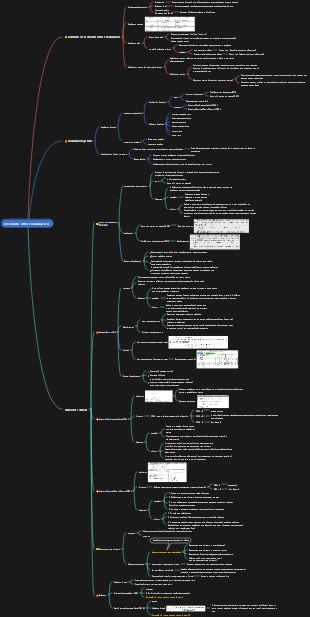
How to take notes
sequence
Luo Zhenyu
Rediscover note taking
The notes are for yourself to read, and they are magic to reinforce yourself.
Seize the opportunity to take notes
Being inspired, getting excited, finding answers, etc. The information received triggers the inner awareness of questions. These are all AHA moments worth taking notes.
Record counter-intuitive information. “It is a sign of first-class wisdom to maintain two completely opposite concepts and still act normally.”
Take notes in your own words
Real masters don’t collect books. They have notes written “in their own words.” When they encounter something good, they immediately pick it up and then annotate it with “their own thoughts.”
Tag the note. The tag is the scenario in which the note may be used in the future.
Review notes regularly
“Memory is the residue of thinking.” The more you think about something, the more likely you are to remember it in the future.
preface
Note taking core
"Pre-process" information to store notes in an activated and capable state, ready to be retrieved by you at any time
Three methods of preprocessing
Take notes in your own words and categorize them with labels; continue stimulation through review
are equally important and need to be done frequently and repeatedly
Part One Application
Three ways of reinforcement
Give "ideas" so you can use them
Give "clues" to provide you with new directions
Give you "basis" to support your actions
Part 2 Records
Take notes in your own words
Necessary Difficulty Theory: The easier it is to store something in memory, the harder it is to retrieve it. If depositing is more difficult, withdrawing will be easier.
Require
Understanding: Don’t copy other people’s things, spend effort to understand the meaning, and connect with past knowledge
Thinking: The important thing is not to record, but to turn vague ideas into clear statements through thinking.
suggestion
Start recording your thoughts
Recording moments: ① Inspiration emerges, ② Useful information (can be used in a short time, specific enough to be implemented), ③ Good feelings
Record content
Inspiring content
Use self-questioning and record with me as the main subject
Why it feels good, how to apply it, have you seen or done anything similar?
Counter-intuitive information
① Actively think reversely, ② Use curiosity to explore
Things that make you moody
① Capture the individual’s inner experience, ② and the corresponding external environment
own practical experience
There is more room for reflection and progress, and it also allows you to continue to accumulate abilities that "grow on you."
Refining core content
Benefits: ① Better use of recorded notes, ② Exercise decision-making and thinking skills.
Method: Eliminate and streamline duplicate information, summarize similar information, and analyze the essence and phenomenon of causal information.
truly worth recording
Personal experiences, insights, interests, thoughts, etc., are unique and cannot be searched
The real purpose of knowing yourself is to understand yourself, not to change yourself. This means awareness and acceptance. In the process of awareness and acceptance, beneficial changes will occur naturally, and such changes are more lasting because they arise from internal motivation rather than external expectations.
record emotions
value
Promote self-understanding, help maintain emotional health, and help enhance decision-making skills
method
Label the day's emotions, briefly record the day's actions, and record mood swings and their causes.
Main points
Be honest with your heart and record your thoughts truthfully, not only your emotions but also your environment
Be honest: ① Detach and maintain a bystander's perspective, ② Just record, don't judge, there are no good or bad emotions, don't criticize yourself
cognitive dissonance
When you have two cognitions that conflict with each other and are contradictory, you will feel stress, anxiety, tension and uneasiness. In order to relieve this pressure, you will have a strong internal motivation to give up or change a certain cognition to realign your cognition. The resolution of cognitive conflicts occurs automatically and subconsciously, and always follows the path of least resistance. Even before we are aware of it, the brain has cleverly tampered with the memory, leaving us no chance to face the real problem.
Record practical experience
solve problems
① Love learning but make limited progress and find it difficult to solve practical problems - the correct learning posture is always to learn in practice ②Working hard but not seeing the steps for growth - theoretical study, practice and review.
Main points
①Record truthfully to combat “cognitive dissonance”. ② Record the thinking process and results of every major decision as detailed as possible to facilitate comparative analysis, review, continuous correction, and self-iteration.
Categorize notes with tags
benefit
①Help categorize and quickly extract all notes under a certain category. ② Implement network classification instead of hierarchical classification to improve the efficiency of extracting notes
Classification
Easy to use classification method
feature
① It is not a mechanical copy, it is relatively subjective; ② It is not a one-time formation, it is a dynamic growth
suggestion
Combine the needs, first learn from it and then transform it. When learning from it, it is important to understand the logic behind it. When transforming, start from the actual needs.
Maintain the knowledge network in two steps to prevent labels from becoming increasingly chaotic.
Make instructions and set buffers (such as inbox tags)
Clean up and maintain the network regularly
Delete or merge old tags; add new tags, including further refinement of the tags themselves, add different types of tags to the same note, and find connections between tags
Reference--IAPR labeling method (stable structure, complementary)
I (Inbox) Inbox
Uncategorized, needs to be organized regularly and moved to three tags
A (Area) Area--Priority I
Be helpful to others and take responsibility for yourself if you fail.
Recording things that you can improve on every week, every month, and every year is very important in the long run.
P (Project) project--Priority II
Things with clear start and end times and goals
Record your thoughts, decisions and response results about the project every day, important things in the near future
R (Resource) resource--priority III
Content that continues to interest you
Reference--#Set up question labels
The hardest question is not finding the answer, but asking good questions.
Continuous stimulation through review
If you don’t review and internalize, you are actually doing useless work.
In the limited time we have, instead of constantly pursuing more knowledge, we should spend some time reviewing the notes we have taken.
The process of knowledge internalization
First, lose weight and gain weight, and continuously optimize the knowledge structure (organize the previously hastily recorded content in your own language and add more practical application examples)
Second, develop new knowledge and increase knowledge connections.
Third, influence reality and use the knowledge in the notes.
Review method
Invest a fixed amount of time to ensure continuity
1. Before each recording, review all the content in the tag where the corresponding content is located, so as to deepen the impression of the relevant notes and quickly establish connections between the notes. 2. Review daily or every other day, it is important to continue (about 30 minutes) 3. Review in weeks or months, the important thing is to find connections (about half a day)
The important thing is not to recite, but to trigger thinking
1. What problem does this note relate to recently? 2. Regarding this note, what new practices or new thoughts can I add? 3. Which other notes is this note related to?
Interact with past notes to enhance the review effect
1. Add: Add more in-depth information, valuable thinking, and richer background information 2. Delete: Out of date or likely not to be used again. 3.Rewrite
Note integration
After the internalization of the entire system is completed, write a systematic text to sort it out, and delete the relevant notes in Flomo.
Part Three Collection
Examine your relationship with information
Avoid information addiction
Escape from the information cocoon
The impact of the information cocoon may be far greater than we imagine, and we need to maintain a high degree of awareness
Confirmation bias: The brain will adopt a "low power" mode when something goes wrong and automatically ignore a lot of information. This pattern makes it easy for us to selectively recall and collect favorable details and ignore unfavorable or contradictory information to support our own ideas or hypotheses.
Three principles to take the initiative in obtaining information
No need to be an expert in everything
Take the initiative to set boundaries for your attention, avoid using limited attention as unlimited resources, and focus on the core areas that are most worthy of improvement.
Focus on specific issues
Actively monitor and remain skeptical
Set trigger words, such as absolutely, definitely, definitely, forever, all, etc.
Facing other people's experiences, set a monitoring question: What is the complete logic of this experience? Usage scenario?
Three Tips—Find Quality Information Sources
Do subtraction, cut back on your information sources
We don’t lack information, we lack attention
method
① Cut down on information sources that exploit your emotions ② Cut down on information sources that make you too comfortable (no incremental information, just emotional massage, gaining self-identity, strengthening cognitive biases, taking up time and energy) ③Reduce information sources that lack specific facts
Make additions and increase high-quality information sources other than books
The problem with book information is that it is not timely enough and most of what you read from books is theoretical.
Look for information sources that are fact-based, challenge past perceptions, and keep you from getting too comfortable
① Use others as sources of information and listen to practitioners
1> To establish a list of people who have actually practiced it, first prepare the questions carefully, and then send an email or add WeChat for help. 2>When listening to the practitioner tell the facts, pay attention to the details he mentioned during the narrative process, and focus on how to review the failure experience. 3> When face-to-face communication is not possible, try not to read third-party narratives, but rather read articles written by them or interviews they have accepted, to ensure that what you get is first-hand information rather than deduced information.
② Use yourself as a method and practice it in the end
Method: Go to the scene to observe, confirm the actual objects with your own eyes, study the reality carefully, invest time and money, and let yourself feel the pain.
Do multiplication and look at information from multiple perspectives
Method 1: Look down and examine the concepts. Every time a vague concept is defined more accurately, the understanding of objective things and objective laws will become deeper.
Method 2: Look upward, abstract one level, and look for transferable paradigms
Paradigm: A concept, theory or method that is recognized by everyone in various fields.
Method Three: Look around, follow the clues, and find key clues related to the information you are concerned about.
Part 4: Mental Dharma: I am the main one, continuous
Focus on me and support the future
Don’t take notes for the sake of taking notes
Knowledge itself has no value, it only has value if it is used by me.
Continuously
Keep your subjective will and let yourself be willing to persist
Design an objective environment to make it easier for you to persist
Manage time according to values so that you can persist