MindMap Gallery You can be angry, but don't get more angry the more you think about it Mizushima Hiroko
"You Can Be Angry, But Don't Get Angry the More You Think About It" is an emotion management book worth reading. It not only provides readers with scientific emotion management methods and communication skills, but also inspires readers to think deeply and understand emotion management.
Edited at 2024-11-03 21:20:00Rumi: 10 dimensiones del despertar espiritual. Cuando dejes de buscarte, encontrarás todo el universo porque lo que estás buscando también te está buscando. Cualquier cosa que haga perseverar todos los días puede abrir una puerta a las profundidades de su espíritu. En silencio, me metí en el reino secreto, y disfruté todo para observar la magia que me rodea y no hice ningún ruido. ¿Por qué te gusta gatear cuando naces con alas? El alma tiene sus propios oídos y puede escuchar cosas que la mente no puede entender. Busque hacia adentro para la respuesta a todo, todo en el universo está en ti. Los amantes no terminan reuniéndose en algún lugar, y no hay separación en este mundo. Una herida es donde la luz entra en tu corazón.
¡La insuficiencia cardíaca crónica no es solo un problema de la velocidad de la frecuencia cardíaca! Es causado por la disminución de la contracción miocárdica y la función diastólica, lo que conduce al gasto cardíaco insuficiente, lo que a su vez causa congestión en la circulación pulmonar y la congestión en la circulación sistémica. Desde causas, inducción a mecanismos de compensación, los procesos fisiopatológicos de insuficiencia cardíaca son complejos y diversos. Al controlar el edema, reducir el frente y la poscarga del corazón, mejorar la función de comodidad cardíaca y prevenir y tratar causas básicas, podemos responder efectivamente a este desafío. Solo al comprender los mecanismos y las manifestaciones clínicas de la insuficiencia cardíaca y el dominio de las estrategias de prevención y tratamiento podemos proteger mejor la salud del corazón.
La lesión por isquemia-reperfusión es un fenómeno que la función celular y los trastornos metabólicos y el daño estructural empeorarán después de que los órganos o tejidos restauren el suministro de sangre. Sus principales mecanismos incluyen una mayor generación de radicales libres, sobrecarga de calcio y el papel de los leucocitos microvasculares y. El corazón y el cerebro son órganos dañados comunes, manifestados como cambios en el metabolismo del miocardio y los cambios ultraestructurales, disminución de la función cardíaca, etc. Las medidas de prevención y control incluyen eliminar los radicales libres, reducir la sobrecarga de calcio, mejorar el metabolismo y controlar las condiciones de reperfusión, como baja sodio, baja temperatura, baja presión, etc. Comprender estos mecanismos puede ayudar a desarrollar opciones de tratamiento efectivas y aliviar las lesiones isquémicas.
Rumi: 10 dimensiones del despertar espiritual. Cuando dejes de buscarte, encontrarás todo el universo porque lo que estás buscando también te está buscando. Cualquier cosa que haga perseverar todos los días puede abrir una puerta a las profundidades de su espíritu. En silencio, me metí en el reino secreto, y disfruté todo para observar la magia que me rodea y no hice ningún ruido. ¿Por qué te gusta gatear cuando naces con alas? El alma tiene sus propios oídos y puede escuchar cosas que la mente no puede entender. Busque hacia adentro para la respuesta a todo, todo en el universo está en ti. Los amantes no terminan reuniéndose en algún lugar, y no hay separación en este mundo. Una herida es donde la luz entra en tu corazón.
¡La insuficiencia cardíaca crónica no es solo un problema de la velocidad de la frecuencia cardíaca! Es causado por la disminución de la contracción miocárdica y la función diastólica, lo que conduce al gasto cardíaco insuficiente, lo que a su vez causa congestión en la circulación pulmonar y la congestión en la circulación sistémica. Desde causas, inducción a mecanismos de compensación, los procesos fisiopatológicos de insuficiencia cardíaca son complejos y diversos. Al controlar el edema, reducir el frente y la poscarga del corazón, mejorar la función de comodidad cardíaca y prevenir y tratar causas básicas, podemos responder efectivamente a este desafío. Solo al comprender los mecanismos y las manifestaciones clínicas de la insuficiencia cardíaca y el dominio de las estrategias de prevención y tratamiento podemos proteger mejor la salud del corazón.
La lesión por isquemia-reperfusión es un fenómeno que la función celular y los trastornos metabólicos y el daño estructural empeorarán después de que los órganos o tejidos restauren el suministro de sangre. Sus principales mecanismos incluyen una mayor generación de radicales libres, sobrecarga de calcio y el papel de los leucocitos microvasculares y. El corazón y el cerebro son órganos dañados comunes, manifestados como cambios en el metabolismo del miocardio y los cambios ultraestructurales, disminución de la función cardíaca, etc. Las medidas de prevención y control incluyen eliminar los radicales libres, reducir la sobrecarga de calcio, mejorar el metabolismo y controlar las condiciones de reperfusión, como baja sodio, baja temperatura, baja presión, etc. Comprender estos mecanismos puede ayudar a desarrollar opciones de tratamiento efectivas y aliviar las lesiones isquémicas.
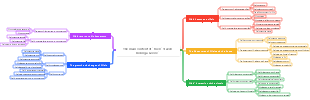
"You can be angry, but don't get more angry the more you think about it" Mizushima Hiroko
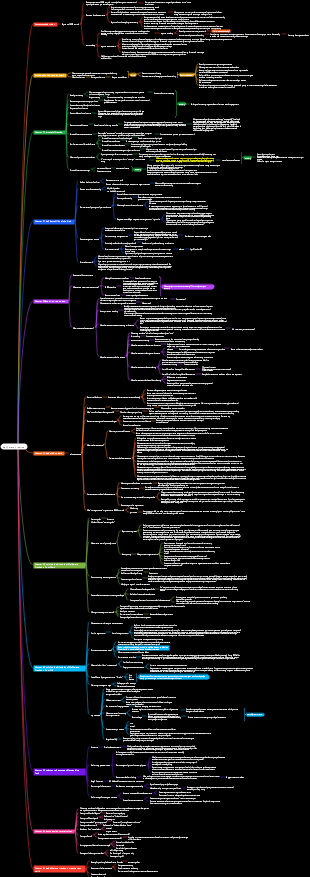
Chapter 6 How to get along with “emotional people”
Although he seems to be arrogant, condescending and angry, and seems to be very strong, as long as he becomes "emotional", he must be weak and powerless.
How to deal with sudden verbal violence?
If it is a question of "who is right and who is wrong", then it really should be "the wrong party apologizes". But "losing your temper" has not reached the category of "wrong and right", so "sorry" here is not an apology.
The "sorry" here is a kind of "sympathy" for "the poor person who is so upset that he is unreasonable and loses his temper."
How to deal with sudden verbal violence?
First of all, you need to comfort yourself who has been hit hard.
In order to better protect your own soul, you still have to start from "I" and accept the "outrageous" emotions calmly. Then he comforted himself by saying, "He speaks so unpleasantly, and it is inevitable that he will be angry. It is really bad luck."
Don't think about "I'm being ridiculed", but focus on "the other person is making fun of others". Then since it is an issue within the other person's "field", it will be easier to laugh it off.
There is always a way to deal with the "self" part.
Obsessing over "I should have done better at the time" will only perpetuate the "emotional" state.
Only by acknowledging the fact of "bad luck" as a whole and comforting yourself can we get rid of the "emotional" predicament as soon as possible.
Don't beat yourself up for not fighting back in time.
What should you do if a stranger suddenly gets angry?
"Anger is a normal reaction." You must first accept your own emotions.
Playing the role of your own friend and comforting yourself with gentle words can also quickly improve your mood.
Even if the other person is right, you should comfort yourself.
Once you are entangled in "attitude" issues, it is equivalent to joining the "tug-of-war game of who is right and who is wrong", and you are likely to suffer unnecessary harm. Because everyone is "right", your state at a certain moment may be viewed by others as "poor attitude"
Don't worry about "who is right and who is wrong", think of the other person as a "hurt person"
How to deal with special people who are emotional?
The emotion of "anger" indicates that "you are in trouble", and "unruly customers" and "parents who make unreasonable demands on the school" are precisely "people in trouble".
They may be upset that some real needs are not being met, or they may blame the school for problems that are detrimental to their children's education.
An effective way to resolve this situation is to adopt a "listen to the other person's troubles" posture
When facing "emotional people", be sure not to worry about "who is right and who is wrong."
“Tell me about your problem” is a proven response.
Listening well is the most effective way to respond.
When we get “emotional,” we completely lose sight of our own resilience. The reason why we emphasize "we are so right" is because we long for the approval of those around us.
The process of how we deal with "emotional" problems is also the process of understanding our own emotions and understanding our own tenacity.
When we are at a loss, we need to rediscover our footing - "our tough yet gentle nature."
【Habit 1】Control your physical condition
This is because at night the part of the brain responsible for thinking becomes tired, the control becomes weaker, and it becomes more difficult to get rid of "emotional thinking"
Think carefully before expressing or suppressing your emotions. Not only emotions are “true temperament”
Reminding people around you that "you are extra sensitive right now" is also an effective method.
When the control of thinking decreases, you need to notice it.
【Habit 2】Change the perspective to look at the problem
At this time, we must learn to change our perspective and regard this problem as a problem in the other party's "field".
Specifically, don’t focus your thoughts on yourself
Putting the problem in the other party's "domain" that has nothing to do with you can help get rid of the "victim mentality".
Avoid falling into the “victim mentality” of “why it’s always me”.
[Habit 3] Write “Friend Notes”
Increasing your level of self-affirmation is a key to “avoiding the ‘emotional’ habit.”
This daily training starts with recognizing yourself in your current state. An effective way to recognize yourself is to understand your emotions
The following 2 steps can effectively solve this problem:
Step ① Write down your emotions truthfully in your notebook (the bits that make you angry)
Step ② Write down what your good friends might say
Look at the incident from the perspective of your best friend, and then write down what your best friend said to comfort you.
The purpose of this is to cultivate the habit of "recording emotions" → "imitating friends to comfort yourself". Writing notes can recapture “initial emotions” that were previously barely recognized, ultimately increasing self-affirmation.
【Habit 4】Look at problems from the perspective of "I"
Develop the habit of looking at problems from the perspective of "I", then you can effectively avoid "emotional excitement".
But for "initial emotions", it will be better to start from "I" and truly regard it as a problem in one's own "field".
You can create a note template with "I" as the subject.
Once you develop the habit of looking at things from the "me" perspective, you can easily differentiate between "hurt" and "victim mentality"
In this way, you will find that "why is it always me" is completely false. It is just a feeling when people are shocked.
Looking at problems from the perspective of "I" means that we must be responsible for our own "field" at all times in life. This will not only establish mature interpersonal relationships, but also prevent yourself from falling deeper into the "victim mentality."
Understand the real "hurt" and abandon the "victim mentality".
"Injury" is normal and happens from time to time, but you must not fall into the "victim mentality"
[Habit 5] Let go of “shoulds” and live for “hopes”
"Should" thinking is one of the ways of thinking that makes people become "emotional". Thoughts such as "this should be done" and "things should be like that" will make people more "emotional"
Our code of conduct is not "should", but what we expect.
If you usually use "should" as your code of conduct, then just adjust it to "hope" to significantly improve your self-affirmation and avoid "emotional" more effectively.
We do things as "hopes", not as "shoulds."
[Habit 6] Stay away from "emotionally exciting" scenes
It is also important to maintain physical distance when emotions are about to explode.
The first priority is to leave the "emotionally charged" scene immediately, and then consider how to deal with your relationship with him after you calm down.
Decisions made when you are calm are considered careless, but if you make decisions when you are "excited", there will definitely be no good results.
If you do not leave this scene, the other party will continue to stimulate the client. The more the other party says, "Don't get excited," the more excited the client will be.
At this time, you should say "Let me think about it" and then leave immediately.
When two people face each other and their emotions continue to collide and become more and more intense, they only need to leave the place where the dispute occurred to calm down.
[Habit 7] Find the “automatic switch” and close the “mental shutters”
In fact, instead of trying to avoid being "emotional," you might as well understand your triggers for being "emotional."
The so-called "closing the blinds of the mind" simply means turning a blind eye. Forcibly clear the triggering conditions from your consciousness and make them disappear from your own world.
Chapter 5 7 Habits to Avoid “Getting Emotional”
What exactly does “emotion” do?
The function of emotions is to react: What impact will the current situation have on your mind? What impact will the current situation have on yourself as an individual?
So what information does "anger" pass? In short, it is "in trouble." The existence of emotions is to protect yourself.
Angry because "plan failed"
You might as well acknowledge your emotions calmly
So how can we avoid this heart-to-heart misunderstanding? Start by paying attention to your emotions (anger, loneliness). Secondly, we must recognize our own emotions and realize that "it is human nature to have certain emotions in certain situations."
Only by paying attention to emotions and acknowledging them can you convey your true feelings to others and avoid misunderstandings.
So why does shock turn into "anger"? Because people themselves are accustomed to seeing change as "pressure." It is normal for people to want to "step by step" and live in a stable status quo.
When a person experiences a shock, he sees it as an "attack."
Evaluation is divided into objective evaluation and subjective evaluation
How to prevent "anger" from developing into "emotional"?
When plans fail, suffer shock, or are labeled, people will naturally feel angry and uneasy. This is just our emotions telling us that something is going on, and we realize that we are in trouble. By becoming aware of this, you can stop being swayed by your emotions and start changing your situation.
The first step, and fundamental principle, is to “recognize negative emotions that are often considered best ignored as natural and beneficial emotions.”
If we realize that "we get angry because we are suddenly criticized and hurt", then the situation will change.
Acknowledge the emotion of anger, otherwise the "emotionality" will get worse.
"Emotional thinking" makes people angrier the more they think about it
It can be seen that the crux of "emotional" lies not in emotions, but in the way of thinking. The more you try to make people look up to you, the more people look down on you.
"Emotional" self-protection will expose people to more severe dangers.
"Explaining" can protect yourself better than "getting angry"
If you just keep getting angry, the other party will never know what you want.
Let’s take a look at ways to control emotions. Only when you realize that you are being impacted can you deal with it calmly.
Chapter 2 “Emotional” people lack “self-affirmation”
One of the characteristics of people who are prone to "emotional" is that they "lack sufficient understanding of their true emotions"
It is important to face your emotions. Even unconsciously, our bodies and minds can sense certain problems and manifest them in certain symptoms.
Always searching for your own shortcomings will make people "emotionally excited" and make it difficult to gain inner peace.
However, based on the present moment, we must see that "it is good as it is now." Only by affirming your current self can you make real progress.
People who are swayed by their emotions are unable to understand the other person's true needs and create a tense atmosphere among those around them.
If you really want to protect yourself, you should accept your true emotions and act calmly. If you are angry about something, admit that you are in a difficult situation, look for ways to improve it, or ask others for help.
The root of the trouble lies in the deviation of "role expectations"
The character expects: "The reason why you are dissatisfied with someone is because this person does not reach your expectations."
Only by knowing what you are expecting can you use your emotions to achieve your goals.
This is the process by which "emotional thinking" escalates the situation. Thinking has been separated from the original problem and constantly generates "impulsive" emotions
"Affirm your negative emotions" is the fundamental point of this book.
If you introduce the "role expectation" way of thinking at this time, the situation will be significantly improved.
What kind of "role expectations" do you have for the other person?
To what extent have you expressed this expectation to the other person?
Thinking about these questions can help people calm down quickly.
If you fully affirm yourself, you can tell your true feelings.
If they just blame each other blindly, then the two of them will not have an optimistic future.
If you are troubled by this sense of uneasiness, you should try to reflect on what kind of "emotional thinking" you have produced.
You might as well think about why your boyfriend is so slow in replying?
Is he a very independent person? Does he rarely look at his phone?
When encountering this situation, you need to communicate with your boyfriend to clarify what kind of role expectations are realistic and feasible for your boyfriend. Failure to communicate with the other party "what one takes for granted" is often a source of conflict.
Respecting each other’s “territory” leads to mature relationships
Role expectations are your own expectations for the other person, and it does not mean that the other person must fulfill them.
But once you find that your anger cannot be calmed down for a long time, you should consider whether you have fallen into "emotional thinking"
When "emotional thinking" keeps lingering in your mind, it will not only intensify the anger caused by the other party, but also make the anxiety of "you are at fault first" intensified.
To impose values on others is to invade the other party's "territory".
Be responsible for your own "field" and don't swallow your anger
“Only you know how you feel, so tell the truth.”
Being able to be responsible for one's own "field" while also being able to respect the other person's "field" is a truly "mature" interpersonal relationship. Taking responsibility for one's own "field" means expressing one's feelings frankly, which is more "mature" than swallowing one's anger day after day.
The function of emotions is to tell us "how a certain thing affects us." Therefore, in order to protect ourselves, unless it is a minor emotion, it is best not to ignore it.
When dealing with others, you must face your emotions sincerely. This will not only help more people, but also prevent you from becoming "emotional".
You don’t have to bring other people’s assumptions into your own “field”
There are also good methods of advice. The most appropriate way is to fully grasp the other party's current situation, and on the basis of recognizing that "it's good as it is now", then make suggestions: "This is what I think, can you make some changes?"
So how should we properly protect ourselves? I think the first thing to do is to explain to the other party. If it is just a harmless misunderstanding, then it can be easily resolved by being honest.
Treat advice that makes you uncomfortable as "the other person is talking to themselves."
The client violated the iron rule of advice: when making advice, one should address the issue rather than the person, and distinguish between “behavior” and “personality.”
Method ① Distinguish the other party’s personality and behavior
Method ② Use "I" as the subject when giving reminders and suggestions.
The safest and most effective way to communicate is to pass on what you want to think in your "field" to the other party
Use “why” sparingly. Because "why" is also a statement that can easily induce personality attacks, similar to saying "Why are you like this!"
People who are accustomed to attacking other people's personalities usually have the following two characteristics: ① Confusing behavior and personality ② Speaking "you, you, you" instead of "I" when speaking and talking ③ Firmly believing that their own opinions should be accepted by everyone. truth"
Making unreasonable judgments is inherently violent, especially when it is derogatory to others, making people become more "emotional"
Don’t take your own subjective evaluation as the absolute truth
Chapter 4 Why not give up the “tug of war of who is right and who is wrong”
Because many people become "emotional" when trying to emphasize that they are right.
In fact, "emotional" is also a "defensive deviation" caused by emphasizing one's own correctness.
The more emotional you are, the harder it is to win the sympathy of others. If you don't get resonance, you will fall into isolation.
One of the causes of "emotional" is "emotional thinking" such as "others look down on me" and "others don't respect me". In fact, they leave the decision-making power of "am I a person worthy of respect" to the other party? .
It is a very unstable and uncomfortable state to leave your own value to the (emotional) judgment of others.
The more you worry about being "right", the lonelier you will be.
"Emotional" is the obsession with being "right"
In fact, arguments about "rightness" can turn into violence. Because "right or wrong" varies from person to person.
Both individuals and countries must have this sense of "field" - respect each other's differences.
Even if the values about what is “right” are the same, not everyone may be able to live up to those “values.” At this time, just say "I tried hard, but I couldn't do it." To do this, we need to create an atmosphere that tolerates failure and mistakes.
Don’t rely on others to “affirm yourself”
Focus on how you feel, not what’s right or wrong
The "correct" standard may vary from person to person, but everyone's "real" feelings are unique.
If you understand this truth, you can express your "own heart" directly and will no longer argue with others about what is right and wrong.
Allowing others to judge yourself can make people easily "emotional"
If you firmly believe that "this is what I really think in my heart", you will be able to gain full self-affirmation.
At times like this, please think like this:
Everyone is a "real" existence, like a genuine diamond.
If you follow your inner truth, you don't need to care about other people's opinions.
The most important part is to "tell the other party about your current situation."
First explain your own situation, rather than trying to change the other person.
The people who are most sensitive to "who is right and who is wrong" are those who have been hurt inside.
Important ways to get out of the “tug-of-war of who is right and who is wrong” are: first, “follow your true feelings”, and second, “explain your situation to the other party”
It is necessary to establish the consciousness of "stop criticizing the key points", and remember in the mind to "only remind a certain behavior". Once the words are hurtful, you must immediately apologize: "I'm sorry, I said it too harshly."
Accusing others of "why bother so much" is infringing on the other person's "territory"
Even if you cannot “forgive others”, you can still “forgive yourself”.
"Although I have encountered great misfortune, it has not changed the nature of my life." As long as we can realize this, we can "forgive ourselves"