MindMap Gallery Primary school third grade science textbook volume 1
Science for the third grade of primary school, Volume 1, Science and Education Edition. The knowledge points are summarized and organized in great detail. It also comes with exercises and answers, which is a good helper for children to learn. Students in need can save it.
Edited at 2024-11-29 10:29:50這是一篇關於把時間當作朋友的心智圖,《把時間當作朋友》是一本關於時間管理和個人成長的實用指南。作者李笑來透過豐富的故事和生動的例子,教導讀者如何克服拖延、提高效率、規劃未來等實用技巧。這本書不僅適合正在為未來奮鬥的年輕人,也適合所有希望更好地管理時間、實現個人成長的人。
This is a mind map about treating time as a friend. "Treating Time as a Friend" is a practical guide on time management and personal growth. Author Li Xiaolai teaches readers practical skills on how to overcome procrastination, improve efficiency, and plan for the future through rich stories and vivid examples. This book is not only suitable for young people who are struggling for the future, but also for everyone who wants to better manage time and achieve personal growth.
這七個習慣相輔相成,共同構成了高效能人士的核心特質。透過培養這些習慣,人們可以提升自己的領導力、溝通能力、團隊協作能力和自我管理能力,從而在工作和生活中取得更大的成功。
這是一篇關於把時間當作朋友的心智圖,《把時間當作朋友》是一本關於時間管理和個人成長的實用指南。作者李笑來透過豐富的故事和生動的例子,教導讀者如何克服拖延、提高效率、規劃未來等實用技巧。這本書不僅適合正在為未來奮鬥的年輕人,也適合所有希望更好地管理時間、實現個人成長的人。
This is a mind map about treating time as a friend. "Treating Time as a Friend" is a practical guide on time management and personal growth. Author Li Xiaolai teaches readers practical skills on how to overcome procrastination, improve efficiency, and plan for the future through rich stories and vivid examples. This book is not only suitable for young people who are struggling for the future, but also for everyone who wants to better manage time and achieve personal growth.
這七個習慣相輔相成,共同構成了高效能人士的核心特質。透過培養這些習慣,人們可以提升自己的領導力、溝通能力、團隊協作能力和自我管理能力,從而在工作和生活中取得更大的成功。
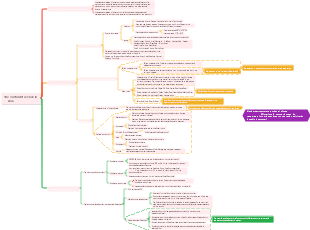
Primary school third grade science textbook volume 1
Unit 1 Water
一、 Get to know thermometers and alcohol lamps
(1) Use the thermometer correctly
1. When using a thermometer to measure the temperature of hot water, the temperature read will be more accurate after the liquid column of the thermometer has rested.
2. How to read a thermometer: Keep your eyes level with the liquid column of the thermometer.
(2) Get to know the alcohol lamp
1. Basic structure of alcohol lamp:
2. The flame of the alcohol lamp is divided into three layers, the outermost layer is called the outer flame, the middle layer is called the inner flame, and the innermost layer is called the flame core. The temperature of the outer flame is the highest, followed by the inner flame, and the temperature of the core of the flame is the lowest.
3. Precautions when using alcohol lamps:
1||| Do not use a burning alcohol lamp against a fire
2||| When extinguishing the flame, cover it with a lamp cap
3||| You cannot blow out the flame with your mouth
二、 Three states of water
(1) evaporation of water
1. The vaporization phenomenon that can occur in liquids at any temperature is called evaporation, and it only occurs on the surface of the liquid. The temperature of the liquid decreases as it evaporates.
2. Factors affecting evaporation: surface area of the liquid, temperature of the liquid, air flow rate near the liquid surface, etc. Evaporation will occur at any temperature, but the higher the temperature, the faster the evaporation, and vice versa.
3. Water vapor is a colorless, odorless, transparent gas that can turn into liquid water when the temperature becomes low, so water vapor is a state of water.
(2) boiling of water
1. Boiling is a violent vaporization phenomenon that occurs when water is heated above a certain temperature. The temperature of the water does not change during the boiling process.
2. At 1 atmospheric pressure, water boils at 100°C. After boiling, the temperature of the water does not change. At the same time, the bubbles that break away from the wall gradually increase in volume as they rise until the liquid surface ruptures, releasing water vapor.
(3) Freezing and melting of water
(1) When the ambient temperature is lower than 0℃ and the temperature of the water drops to 0℃, the water begins to freeze and changes from a liquid state to a solid state.
(2) During the freezing process, water releases heat to the surroundings.
(3) Changes after water freezes: The temperature of ice is 0°C or below, which is lower than the temperature of water. After water freezes, it has a fixed shape, becomes larger in size, and can float on the water.
(4) Ice and water are the same substance, and ice is solid water.
(5) When the ambient temperature is higher than 0℃, ice begins to melt.
(6) During the melting process, ice must absorb heat from the surroundings. Heat is an important factor in changing the state of water.
(7) After ice melts into water, it changes from solid to liquid, and its volume becomes smaller.
(4) Three states of water
(1) Ice is solid water with a certain shape and volume. Snow that falls in winter is also solid water.
(2) Water is liquid and has no fixed shape, but has a certain volume.
(3) Water vapor is gaseous water, has no fixed shape and volume, and exists in the air.
三、 dissolution of water
①Water can dissolve salt and baking soda, but it cannot dissolve sand.
② The amount of salt and baking soda that the same water can dissolve is different. Under the same conditions, the amount of salt that water can dissolve is greater than that of baking soda.
③When doing dissolution experiments, add salt or baking soda in portions, so that the data obtained will be more accurate.
④The speed of salt dissolution in water is related to the temperature of the water. The higher the water temperature, the faster the dissolution speed.
⑤The speed of salt dissolution in water is related to whether the liquid is stirred. The faster the stirring, the faster the dissolution speed.
四、 Mixing and Separating
①The process of salt dissolving in water is a reversible process.
② Sand can be separated from water by filtration.
③Salt and water can be separated by evaporation. The salt in the solution cannot evaporate along with the water.
④ Heating and evaporating the solvent makes the solution change from unsaturated to saturated. If the evaporation continues, the excess solute will precipitate in the form of crystals, which is called evaporation crystallization.
五、 changes in matter
(1) Compare the changes in plasticine, paper and water
(2) Physical change means that although the state of a substance has changed, generally speaking, the composition of the substance itself has not changed. For example: changes in position, volume, shape, temperature, pressure, and the mutual transformation of gas, liquid, and solid states. (Such as the three-state changes of water) etc.
六、 Unit 1 test paper and answers (please click on the attachment)
Unit 2 Air
一、 Feel the air:
1. feature:
Colorless and odorless
Invisible and intangible
will flow
2. effect:
human breath
plant growth
inflatable toys
3. There is air all around us.
4. Stones and water will not leak easily when put into an open cup, but air will leak easily when put into an open cup.
5. The air must be put into a sealed container so that it is not easy to leak. If you want to pass some air to other students or other places, you must put it into a sealed container.
6. Compared with ordinary substances, air has these characteristics: it is easy to leak, is very light, can make the bag bulge, and makes the bag feel soft to the touch after it is bulged, and it will flow and be difficult to grasp...
7. Objects are divided into three types: solid, liquid and gas. Water, soy sauce, cola, etc. are liquids and will flow; stones, sand, wood blocks, etc. are solids and have fixed shapes; air and water vapor are gases, which have no fixed shapes and will flow.
二、 Can air take up space:
1. Air, like water and rocks, can take up space.
2. When doing the experiment of making paper not wet, the paper ball should stick to the bottom of the cup to prevent it from falling into the water.
3. Poke a small hole at the bottom of the cup to let out the air in the cup so that it no longer takes up space in the cup, and the water in the cup will slowly fill up.
4. Use a pump to hit the cup from the bottom. The air occupies the space in the cup and the water in the cup will be slowly squeezed out.
5. In the story of the crow drinking water, the crow uses pebbles to squeeze the air out of the bottle. The air occupies less and less space in the bottle, and the water in the bottle slowly rises.
三、 compressed air
1. The space occupied by air is easy to change, but the space occupied by water is not easy to change.
2. The space occupied by air is easily compressed, and compressed air is elastic; the more compressed the air, the stronger the elasticity.
3. The space occupied by water is not easily compressed or expanded.
4. The space occupied by air is easily expanded, and the expanded air has the ability to return to its original state, thus generating a force.
5. Compared with the air in its original state, the compressed air has the same mass and the distance between air particles becomes smaller.
6. Compared with the air in its original state, the expanded air has the same mass, but the distance between air particles has become larger.
7. The air compression gun uses the elastic force generated by the compressed air to launch the "bullet".
8. Use the elasticity of compressed air to create inflatable tires, inflatable castles, inflatable cushions, etc.
四、 Is the air quality good?
1. Wood has quality. Water has quality. Air also has quality; air will always fill everywhere.
2. A simple small balance can be used to study whether the air has quality.
3. Balance - put an inflated ball on one end and beans on the other end. If it is balanced, it means that the mass of the inflated ball and the beans are equal.
4. If you continue to inflate the ball, the small balance will lose its balance. This is because air has mass: as air is added, the total mass of the ball and air will be greater than the total mass of the beans.
5. Blow the inflated ball with 10 cylinders of air, and continue to add beans to the other end of the small balance. When the balance returns to balance, the mass of the 10 cylinders of air that was hit is equal to the mass of the added beans.
6. If you let out part of the air in the ball, the small balance will lose its balance. This is because the air has mass; if the air is let out, the total mass of the ball and the air will be less than the total mass of the beans.
五、 What is the quality of the air
1. Use lighter objects such as paper clips or mung beans to adjust the balance of the small balance, the more accurate the adjustment results will be.
2.20 cylinders of air and quantitative paper clips: light and small objects such as mung beans have the same mass, indicating that the air has mass, but the mass of the air is very light.
3. In life, we can use balances, electronic scales and other tools to measure the mass of small and light items such as paper clips and mung beans.
4. There is a lot of air around us, and the total mass of that much air is very heavy.
六、 Let's make a "hot air balloon"
1. Hot air is lighter than cold air and will float above cold air.
2. When the air in the hot air balloon is heated, the mass per unit volume is lighter than the original cold air, and the hot air balloon rises.
3. Let the hot air in the hot air balloon slowly cool down (cool). The air mass will be greater than when it was hot, and the hot air balloon will slowly descend.
4. When doing the "hot air balloon" simulation experiment, pay attention to fire safety.
5. When doing a "hot air balloon" simulation experiment, the plastic bag chosen should be larger and lighter, so that more hot air can be filled in and it will be easier to lift off.
6. Before heating, the plastic bag is flat and cool: after heating, the plastic bag will slowly bulge up, and the air will slowly heat up, creating an upward pulling force.
7. Kongming lanterns are made using the principle that hot air is lighter than cold air.
8. Kongming lanterns pose serious fire hazards, so try not to set them off.
七、 causes of wind
1. The flow of air creates wind.
2. We can use fans, open fans, open doors and windows, etc. to make the air flow quickly to create "wind".
3. In the wind simulation experiment, the candle is lit to increase the temperature of the surrounding air; the temperature of the air away from the candle flame becomes relatively low, and the air flows, and wind is formed.
4. When doing wind simulation experiments, using small paper strips (or small fans) placed at the air outlet can help us better observe whether wind is generated and the size of the wind.
5. Natural wind is mainly caused by the flow of air due to different temperatures.
6. The difference in air temperature in nature is mainly caused by sunlight radiation.
八、 Air and our lives
1. Air is a substance. The earth is surrounded by a thick layer of air, which is called the atmosphere.
2. There are traces of air in the air, underground and water. We can find traces of air in the air, underground and water through scientific methods.
3. People use air to do more things that are beneficial to us; natural disasters such as tornadoes caused by air flow sometimes cause heavy losses to people.
4.
九、 Unit 2 test paper and answers (click on the attachment)
Unit 3 Weather
一、 Feel and record weather changes
1. Weather refers to the temperature, warmth, cloudiness, rain, snow, wind, etc. of the atmosphere in a place within a short period of time.
2. The weather is always changing, which affects our lives and all living things on the earth.
3. By recording the weather calendar, it can help us understand the weather changes in a certain area within a period of time.
4. The weather calendar generally records date, time, temperature, rainfall, cloud cover, wind direction and wind speed, etc.
5. Common weather symbols.
二、 Observe, discuss, measure and record four weather characteristics
Measurement of air temperature
Generally, the temperature at noon on the same day is higher than in the morning, with the highest temperature at 2 o'clock in the afternoon and the lowest temperature at dawn. The temperature should be measured at the same time and place every day.
Measurement of rainfall
(1) Precipitation is a basic characteristic of weather and an important data in the weather calendar. There are many forms of precipitation, the common ones are rain, snow, hail, etc.
(2) The rain gauge must be made of a straight transparent container.
(3) Meteorologists divide rainfall into six levels based on the amount of rainfall.
wind observation
Wind direction refers to the direction in which the wind is blowing. For example, north wind is the wind blowing from north to south. Wind direction can be measured with a wind vane. The direction the arrow of the wind vane points is the direction of the wind.
cloud observation
(1) Clouds in the sky are composed of thousands of small water droplets or small ice crystals.
(2) Meteorologists usually divide clouds into three categories: stratus, cumulus, and cirrus. Stratus clouds are uniformly layered, gray fog-like clouds; cumulus clouds are large, accumulated clouds; cirrus clouds are fibrous, feathery clouds.
三、 Organize weather calendar and weather forecast
1. Organizing, summarizing and analyzing weather information can help us understand certain characteristics of the weather and understand some of the laws of weather changes.
2. The long-term average weather conditions in a place are called climate.
3. Weather forecasts are mainly produced and released by meteorological departments distributed around the world. There are roughly five steps in making a weather forecast: data collection, numerical weather forecasting, meteorologists making forecasts, weather consultation, and issuing weather forecasts.
四、 Unit 3 test paper and answers (click on the attachment)
Comprehensive test papers and answers
Third grade science test questions - final test paper 1 textbook version (including answers)
Science test questions for the first volume of the third grade - final test paper 2 textbook version (including answers)
Science Education Edition Primary School Science Third Grade Midterm Comprehensive Quality Inspection Paper (1) (including answers)
The new textbook edition of the third-grade primary school science final teaching quality inspection mock test paper (with answers)