MindMap Gallery inhalation anesthetic
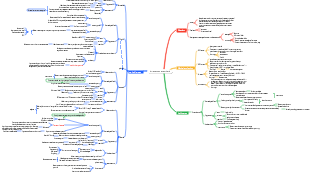
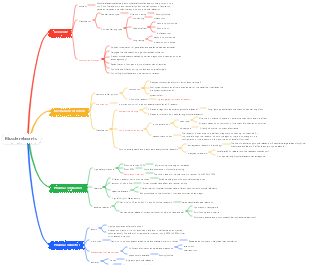
Introduction to inhalation anesthetics. Inhalation anesthetics are general anesthetics that are gases or volatile liquids that exert an anesthetic effect through inhalation. They can reversibly cause varying degrees of loss of sensation and consciousness.
Edited at 2024-11-28 23:48:45這是一篇關於把時間當作朋友的心智圖,《把時間當作朋友》是一本關於時間管理和個人成長的實用指南。作者李笑來透過豐富的故事和生動的例子,教導讀者如何克服拖延、提高效率、規劃未來等實用技巧。這本書不僅適合正在為未來奮鬥的年輕人,也適合所有希望更好地管理時間、實現個人成長的人。
This is a mind map about treating time as a friend. "Treating Time as a Friend" is a practical guide on time management and personal growth. Author Li Xiaolai teaches readers practical skills on how to overcome procrastination, improve efficiency, and plan for the future through rich stories and vivid examples. This book is not only suitable for young people who are struggling for the future, but also for everyone who wants to better manage time and achieve personal growth.
這七個習慣相輔相成,共同構成了高效能人士的核心特質。透過培養這些習慣,人們可以提升自己的領導力、溝通能力、團隊協作能力和自我管理能力,從而在工作和生活中取得更大的成功。
這是一篇關於把時間當作朋友的心智圖,《把時間當作朋友》是一本關於時間管理和個人成長的實用指南。作者李笑來透過豐富的故事和生動的例子,教導讀者如何克服拖延、提高效率、規劃未來等實用技巧。這本書不僅適合正在為未來奮鬥的年輕人,也適合所有希望更好地管理時間、實現個人成長的人。
This is a mind map about treating time as a friend. "Treating Time as a Friend" is a practical guide on time management and personal growth. Author Li Xiaolai teaches readers practical skills on how to overcome procrastination, improve efficiency, and plan for the future through rich stories and vivid examples. This book is not only suitable for young people who are struggling for the future, but also for everyone who wants to better manage time and achieve personal growth.
這七個習慣相輔相成,共同構成了高效能人士的核心特質。透過培養這些習慣,人們可以提升自己的領導力、溝通能力、團隊協作能力和自我管理能力,從而在工作和生活中取得更大的成功。
inhalation anesthetic
Overview
concept
Inhalation anesthetic is a gas or volatile liquid that acts as a general anesthetic through inhalation and can reversibly cause varying degrees of loss of sensation and consciousness.
Physical and chemical properties
blood/gas distribution coefficient
When the partial pressures are equal, that is, when dynamic equilibrium is reached, the ratio of the concentrations of the anesthetic in the two phases
The greater the blood/gas partition coefficient, the greater the solubility of the drug in the blood.
Slow induction
Long recovery period
Low blood/gas distribution coefficient and low metabolic rate are outstanding advantages
Classification
Volatile inhalation anesthetics
gas inhalation anesthetic
Mechanism of action
hydrophobic zone theory
Physicochemical binding to nervous tissue lipids
protein theory of action
Directly binds to protein capsules or clefts on the neural membrane (mainly ion channel proteins)
site of action
spinal cord
analgesia
brain
Hypnosis, consciousness and cognitive dysfunction
Drug generation
absorb
Enter the alveoli
Inhalation concentration
The concentration of inhaled anesthetics in the inhaled mixed gas is positively correlated with the concentration of alveolar anesthetics
concentration effect
The higher the inhalation concentration, the faster it enters the alveoli, the faster the alveolar gas concentration rises, and the faster the partial pressure of the anesthetic in the blood rises.
Application: Inhalation of higher concentrations of anesthetics at the beginning of anesthesia can shorten the induction period
second gas effect
Concept: When high-concentration gas and low-concentration gas are inhaled at the same time, the alveolar gas concentration and blood concentration of the low-concentration gas increase faster than when the same low concentration is used alone.
Concentration effect
incremental effect
pulmonary ventilation
ventilation effect
As minute ventilation increases, the concentration of anesthetics in the alveoli increases, and the partial pressure in the arterial blood also increases.
transmembrane diffusion
Diffusion speed
given patient
Only the partial pressure difference is variable
different patients
Variable diffusion area and distance
enter blood
Solubility in blood (λ)
Often expressed as blood/gas distribution coefficient
Cardiac output (Q)
The speed at which an anesthetic enters the blood
Alveolar-venous blood anesthetic partial pressure difference (PA-PV)
blood uptake
distributed
Solubility in tissues
Can be expressed as tissue/blood partition coefficient
local blood flow
Difference in partial pressure of anesthetic agent between arterial blood and tissue
metabolism
A small amount of redox metabolism
Can cause liver damage
Sevoflurane is considered one of the inhalation anesthetics with minimal liver damage
excretion
Excreted unchanged from the lungs (mostly)
Excreted through the skin (nitrous oxide)
Rescue when anesthesia is too deep
Stop medication
Increase ventilation
Medicinal efficacy
Minimum alveolar effective concentration (MAC)
Concept: MAC refers to the concentration of inhaled anesthetic in the alveolar air that prevents 50% of people (or animals) from moving when exposed to noxious stimulation at one atmospheric pressure.
Features
"Same and similar" properties
Using the same MAC with different anesthetics can produce similar central depressant effects
MAC is usually stable
Species, sex, day and night, thyroid function, type of stimulation and duration of anesthesia did not affect MAC
MAC is additive
clinical significance
Reflects the effectiveness of inhaled anesthetics
The larger the MAC value, the weaker the performance
The lowest potency drug is desflurane with a MAC value of 6
Determine the depth of inhalation anesthesia
Equivalent to concentrations in arterial blood and effect sites
extended value
half-awake alveolar gas concentration
About 1/4~1/3MAC
95% effective dose
Equivalent to 1.3MAC
Half of endotracheal intubation alveolar gas concentration
Equivalent to 1.5MAC
MACʙᴀʀ
Alveolar inhaled air concentration that can block autonomic nervous responses (1.7 MAC)
Special case: Sevoflurane is 2.2MAC
Influencing factors
Lower MAC
age
increased sensitivity
body temperature
Concomitant medication
pregnancy
increased sensitivity
central hypotonicity
Decreased sodium ion concentration
Increase MAC
age
body temperature
Use of drugs that stimulate the central nervous system
chronic alcoholism
central hypertonicity
Effects on various organ systems
breathe
Respiratory depression
Directly inhibits the medullary respiratory center and intercostal muscles
Inhibit bronchial smooth muscle
Effective for asthma patients
irritate airway
Airway irritation may occur when concentrations exceed 1 MAC
cycle
Inhibit myocardial contractility
Degree of inhibition (positive dose-related)
Halothane = Enflurane > Desflurane = Isoflurane = Sevoflurane
rescue
Fentanyl, Esmolol, and Clonidine
cause arrhythmia
dilation of coronary arteries
Isoflurane
central nervous system
Affects brain and spinal cord neurons
memory loss and inability to move
Increase cerebral blood flow
Reduce brain metabolism
liver
Reduce liver blood flow
There is no significant change in liver blood flow during N₂O anesthesia