 Wondershare EdrawMind
MindMap Gallery Card Note Writing Method How to Realize From Reading to Writing (Chapter 3)
- 32
Card Note Writing Method How to Realize From Reading to Writing (Chapter 3)
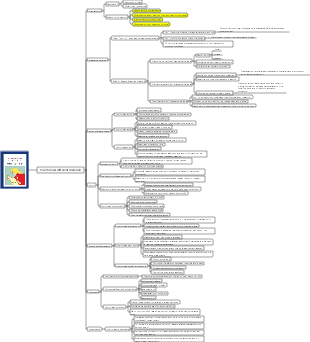
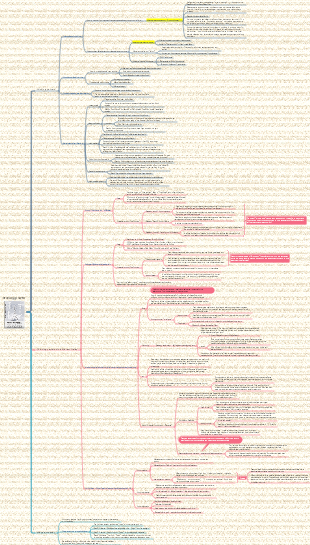
This is a mind map about "Card Note Writing Method: How to Realize From Reading to Writing" (Chapter 3), covering the main content of all chapters in the book. The numbers marked in the article are the corresponding page numbers. See the book information at the beginning of the secretariat version.
Edited at 2025-02-11 21:57:02
- DeepSeek User Guide Collection
In order to help everyone use DeepSeek more efficiently, a collection of DeepSeek guide mind map was specially compiled! This mind map summarizes the main contents: Yitu related links, DS profile analysis, comparison of DeepSeek and ChatGPT technology routes, DeepSeek and Qwen model deployment guide, how to make more money with DeepSeek, how to play DeepSeek, DeepSeek scientific research Application, how to import text from DeepSeek into MindMaster, the official recommendation of DeepSeek Wait, allowing you to quickly grasp the essence of AI interaction. Whether it is content creation, plan planning, code generation, or learning improvement, DeepSeek can help you achieve twice the result with half the effort!
- DeepSeek 30 feeding level instructions
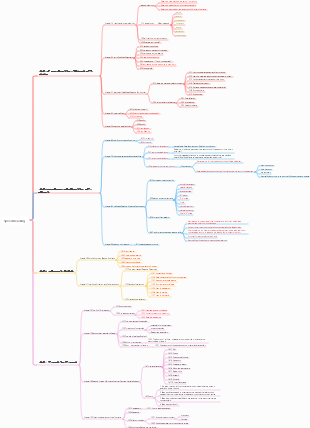
This is a mind map about DeepSeek's 30 feeding-level instructions. The main contents include: professional field enhancement instructions, interaction enhancement instructions, content production instructions, decision support instructions, information processing instructions, and basic instructions.
- Voice recognition commercial solution
This is a mind map about a commercial solution for task speech recognition. The main content includes: text file content format:, providing text files according to the same file name as the voice file.
Card Note Writing Method How to Realize From Reading to Writing (Chapter 3)
- DeepSeek User Guide Collection
In order to help everyone use DeepSeek more efficiently, a collection of DeepSeek guide mind map was specially compiled! This mind map summarizes the main contents: Yitu related links, DS profile analysis, comparison of DeepSeek and ChatGPT technology routes, DeepSeek and Qwen model deployment guide, how to make more money with DeepSeek, how to play DeepSeek, DeepSeek scientific research Application, how to import text from DeepSeek into MindMaster, the official recommendation of DeepSeek Wait, allowing you to quickly grasp the essence of AI interaction. Whether it is content creation, plan planning, code generation, or learning improvement, DeepSeek can help you achieve twice the result with half the effort!
- DeepSeek 30 feeding level instructions
This is a mind map about DeepSeek's 30 feeding-level instructions. The main contents include: professional field enhancement instructions, interaction enhancement instructions, content production instructions, decision support instructions, information processing instructions, and basic instructions.
- Voice recognition commercial solution
This is a mind map about a commercial solution for task speech recognition. The main content includes: text file content format:, providing text files according to the same file name as the voice file.
- Recommended to you
- Outline


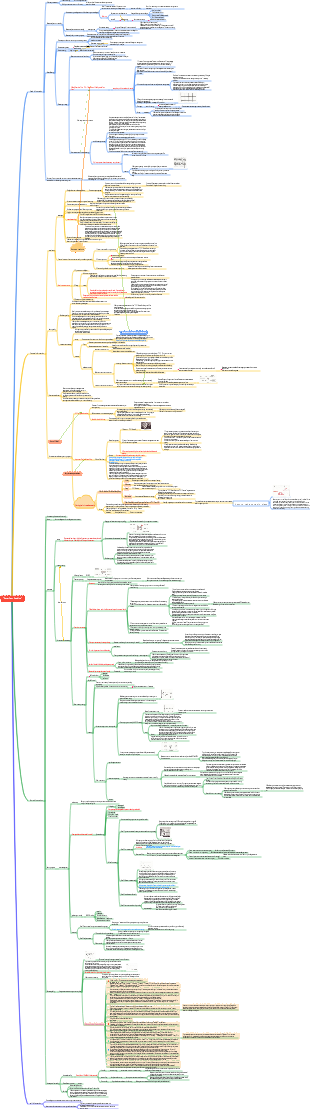


"Card Note Writing Method: How to Realize From Reading to Writing" Chapter 1
Recommended Preface 1 Write a card like Luman
Luman's "card box writing method" belongs to a branch of the card writing genre, and other card writing methods include the "Kyoda Card" mentioned by Japanese scholar Tadao Umeso in "Intellectual Production Technology". (P9)
Nickras Luman (hereinafter referred to as Luman) was a German sociologist in the 20th century. He created the "card writing method", which is especially suitable for creators of essays, academic monographs and other genres. This writing method is in line with the very important "necessary difficulty" theory in cognitive science, that is, it is difficult to form memory, which makes the extraction of knowledge easier. P9-10
Common computer software for card writing methods include: Roam research, Zettelkasten (card box notes), writers, etc.
Recommendation 2: External thinking, writing method that breaks through the limitations of thinking
The most important contribution of this book is to focus on the daily process of academic writing and the details of taking notes that other authors would not notice (P14). Too many people teach us how to write, but few teach us how to promote the natural growth of writing by improving daily processes.
Recommendation 3: Use card notes to accumulate your knowledge compound interest P16-17
slightly
Translator's Preface
In the past, there were two ways to take notes. One was the form of professors taking notes, such as one-page paper method and mind mapping method; the other was mainly taught principles, such as Cornell Notes, PQ4R method, etc. No one can answer the question [How to deal with more and more notes]. P18
The Luman Card Notes Method teaches us: how to integrate, connect reading materials by accumulating more and more notes until the article is output outward. This is a "bottom-up" writing workflow. P19
Luman's card box notes are equivalent to adding another "external brain" to our brain.
The reason why there are many people who take notes and few people who write papers smoothly is that there is not only a "note box" between reading and essays, it involves the dissemination of experience, reshaping the workflow of reading and writing, and Persevering practice is simple to say, but not easy to practice. P19
When practicing card box notes, a constant cycle between theory and practice should be achieved. P21
Introduction P23-26
Most writing books on the market teach everyone to start writing from a blank piece of paper, but in fact, the beginning of the writing process should extend forward to the process of taking notes, and taking notes is a key step. P23
Because taking notes is too common for us, and there is no feedback on whether the notes are good or bad, the importance of taking notes before writing is written is often overlooked by us. But in fact, the difficulty and quality of writing a paper depend more on the preparation stage before writing, that is, "using kung fu in normal times." P24-25
Another benefit of learning to organize writing and taking notes is that you no longer need to use scarce resources - willpower, and you can do this well. P26
Chapter 1 Introduction P27-49
1.1 What you need to know about writing P27
1.1.1 The main purpose of this book is to tell you the correct structure of taking notes, and to teach you how to build a writing workflow from taking notes.
You always procrastinate when writing, maybe because your workflow is not right.
It is a good habit to make plans for yourself in daily life, but making plans with a distinct structure is not suitable for research, thinking, and writing [open process] P28.
[Close Process]: Complete shopping in the mall, finish a course, finish a test, etc.
The difference between good students and poor students is whether they will be satisfied with the "slight taste" of problem exploration
Good students will work hard to find good perspectives and read a large amount of literature, but they may not be able to do so as they wish. They may get lost and suffer from "fake syndrome" P29.
The poor students may have the [Dunning-Gluck] effect, feel good about themselves and will not have too many self-doubt behaviors. P29
1.1.2 Good solutions are often simple and unexpected P29
Benefits of card notes
The first benefit of this reference book is that we can build complex content with a simplified structure.
The second advantage is that we only need to invest a little effort to change the way we work and start doing research.
The third advantage is that the two methods we use are successful methods that have been tested by practice: one is Luman card box technology; the other is to persist in using and forming habits, so that all links are connected to each other to form a [whole] 】 can only exert the effect of the GDT (Get Things Down) theory mentioned by David Allen and eliminate distracting thoughts in thinking. P31
Overall view and modularization: Although the GDT principle cannot be directly copied into academic writing, the [holistic view] it embodies is consistent with the Luman Card notes method. We must not only divide the writing into independent blocks, but also connect them to each other and switch between blocks. P32
1.1.3 Luman Card Box
Its Practice: Its inventor, Nicklas Luman, grew from a civil servant to a professor of sociology with this notation method, and published nearly 60 academic works, including a sensational book: The Social The society of society, 1997.
Choose the right tool and use it correctly: Many people don’t believe that Luman’s achievement of such a high academic achievement is easy and the process is self-pleasant, but practice has proved that we only need to adjust the workflow to make ourselves academically Maintain a sense of control, maintain flexibility, maintain openness of thoughts, and consistency of work and motivation during the creation process, so that you can maintain interest and create easily. Feeling pain, perhaps because there is too much resistance in the work process. P35-36
The revolutionary nature of simple things: like the conveyor belt invented by Henry Ford
1.1.4 Luman Card Box User Manual
Two types of card boxes
One category is document card boxes
The second category is the main card box
All of these cards appear in the index card
Principle of use:
a. When reading information worth recording, first record your thoughts in your own words on the card and record the source of the document;
b. Secondly, check past notes and create links with new notes.
c. Number all notes with a unified coding system, and each note has a unique number.
Bottom-up Topics: No topics are preset in advance, but many topics are developed based on the association between notes.
1.2 What you need to do about writing P40
Writing is not difficult
Using card box notes makes writing fun without consuming too much willpower.
All you need to do is search for notes in the note box and organize the already formed arguments and arguments. P40
Obviously, now writing doesn’t start with a blank piece of paper, every step of it is within your ability and is simple and straightforward. P41
Taking notes is also a very simple thing
Thinking, reading, understanding and proposing ideas are the key to taking notes
All you need to do is prepare a pen (or electronic notes) while reading
Writing a paper is divided into the following steps: P42
1. Take notes on flashes and put them in a "collecting box"
2. Take notes on your literature as long as you read something. It should be very brief, record it in your own language, and try to concentrate citations. Save it uniformly in the document management system.
3. Take permanent notes. P42
Open the flash notes and document notes, think about what these are related to your own research or interests, and record them in permanent notes.
Just like writing, use complete sentences, mark the source clearly, and be precise, clear and short.
After that, throw away the first step of flash notes and put the document notes into the literature management system to centrally manage.
4. Add the newly written permanent notes to the card box. The principle of addition is:
To follow one or more old notes, create a link. If you really can't connect, put it at the end.
5. Develop topics, issues, and research topics from the bottom up from within the system. Look at where the note chain has been formed in the card box and where the idea group has been established. P43
6. After a period of time, you will accumulate enough ideas to determine a topic.
7. Turn your ideas into a first draft.
8. Edit and proofread your manuscript.
1.3 What you need to have about writing P46
Core concept: simplification and systematization.
An example: Pens that can be used in space: The United States has developed one, while Russia chose to use pencils. P46
The core concept of Luman card box notes: focus on writing and don’t complicate simple things.
Academic writing should avoid unnecessary interference as much as possible. Non-systematic reading skills will cause you to encounter many obstacles when you want to establish a link between old and new ideas, and everything else is redundant except for a dedicated brain and a reliable note-taking system.
Toolbox: Four tools you need to read and write:
a. Writing tools, used to write and draw, remember flash notes,
b. Literature management tools, such as Zotero, Citavi, are used to collect literature and write and scratch during reading. See take smart note website
c. The key is to support two-way links between notes. For example, Obsidian, Roam Research, etc.
d. Editing tools, such as word. P49
1.4 Several issues you need to pay attention to about writing P49
Don’t just keep it simple.
Don't be lazy to think about the relationship between notes and notes in the card box.
"Card Note Writing Method: How to Realize From Reading to Writing" (Chapter 2)
Chapter 2 Four basic principles of effective writing
2.1 Writing is the only important thing P51
This book presents an anti-traditional view: students cannot prepare for research through [learning]. [Learning] itself is [doing research], because [Learning] is to gain new insights, make them public, and communicate and share with colleagues.
The format of sharing is not limited to publication in journals. Reviewing, handing over homework to teachers, group discussions, etc. are all a kind of sharing. “The moment the author can leave the scene, this written document becomes a public opinion on the truth. P52”
The presentation and production of knowledge are two sides of the coin, and the two cannot be separated.
Writing is important, and does not mean spending all your time on [writing]. The work links before [writing] are more important, such as reading, listening to lectures, giving speeches, etc. P52
Doing these tasks with the purpose of [Writing at the end] will bring you more benefits. The only difference between how much you gain is to change your view of [writing]. P52
2.2 Simplicity is the most important P53
The simpler the idea is, the more powerful the effect. P53
An example: Malcolm McLean invents sea shipping containers
Concept: [Second Order Effect] P54
The idea is simple, and does not mean that it is just as simple as it is.
Misconceptions in traditional notes
Usually, when taking notes, students often adopt a multi-point flowering approach. The original notes are scattered in various places, and they rely entirely on the brain to remember the notes and store them.
When classifying notes, the logic that is often used is [Which topic was born from the notes], rather than [Which topic should you use the notes under]
Luman's Notes Method to Subvert the Tradition: P55
Standardize all notes formats, like containers.
Classify notes according to [How to use].
The key is to take three types of notes:
Fleeting Notes
Permanent Notes
Project Notes Project Notes, only related to a specific project.
Don't make three mistakes:
Don't mix different categories of notes in the same folder. P56
During the process of taking project notes, be sure to distinguish between project notes and permanent notes. Notes that are not related to the main project are classified into permanent notes and do not discard them directly.
Don’t put all the materials in flash notes, as this will bring you a heavy burden on daily life.
Things to note when remembering flash notes
The threshold should be low enough
To quickly convert to permanent or project notes within 1-2 days. If the comments underlined and written in the sentence during reading are not processed in time, they will soon become meaningless because they forget [Why did I do this].
Things to note when taking document notes and permanent notes:
Be brief, cautious and meticulous, and do not be isolated as much as possible.
Document notes and permanent notes can be recorded in parallel. Document card boxes are mainly used to record basic information of documents. Permanent notes are further considerations for document notes.
"Permanent notes are texts that contain actual thoughts or opinions in written form" P58
Notes on project notes:
Expressions include: comments in the manuscript, collection of literature related to the project; outlines, draft fragments, memos, to-do items, drafts.
Most note-taking software supports creating separate project pages, and they do not interfere with each other with permanent notes.
The author recommends creating a folder for the entity for each project.
2.3 No one writes completely from scratch P60
The author's point of view is that no writing can follow linear planning, but rather it is a cycle of multiple links. Every intellectual effort begins with existing ideas.
The corresponding theory is the [hermeneutic cycle] theory P60 proposed by Hans George Gadamer.
Therefore, we should establish a growing external think tank as a substantive work to assist in the development of our thoughts and interests and reflect our extended understanding of knowledge from the outside.
In the process of building a card box, we can not only see the growth context of the research, but also have traces of the real materials on which each step of growth is based. Therefore, the completion of the paper is no longer "starting from scratch", but starts with notes. P61
The author opposes the claim that academic writing begins with "brain storm", P62
We cannot rely too much on the brain, because the information the brain can remember and retrieve is very limited.
Card box notes are the prerequisite for breaking the linear order problem. Writing should be a multi-link continuous process. P62
Although writing is not a linear process, you still need a clear and reliable work structure.
2.4 Let work move you forward P64
The author believes that we should not let work become an energy-consuming existence, which will only lead us into a vicious cycle of procrastination.
Instead, we should make work behavior itself a positive incentive to move the entire task forward.
[Feedback Loop] is a key factor in all learning behaviors. With it, we can gradually become good at one thing. P64
The first step to growing is to constantly seek feedback rather than avoid feedback. Only in this way can “growth thinking” be formed (P64).
On the other hand, countless small feedback loops will help you avoid missing the opportunity to correct big mistakes, thus avoiding the situation from entering an irreversible situation.
Putting it on cards and notes means: every time you write a permanent note, you are testing whether we truly understand what we are reading, and practicing forming opinions in our own language. (P66) Practice makes perfect.
Permanent notes will also help us test whether the ideas and opinions contained in old and new notes are inconsistent, thereby replacing the brain to help us sort out the connections between thoughts; the more connections, the more conducive it is to understand new information. P66
"Card Note Writing Method: How to Realize From Reading to Writing" (Chapter 3)
Chapter 3 Six Steps to Successful Writing
3.1 Clearly distinguish independent and related tasks
Focus on every task P69
Nowadays, our attention is facing more and more distractions, and it is not easy to improve attention.
Don't be too focused P69
Using multiple things in one's mind will make us exhausted and thus reduce work efficiency.
[Exposure Effect]: Confusing familiarity and skill improvement (Bornstein, 1989), may actually be a low-level multiple repetition.
【Flow Status】: (Csikszentmihalyi, 1975)
Card box notes improve our attention through structured workflows.
Different tasks require different levels of attention P71
We cannot write and review at the same time, and the behavioral logic of the two is contrary. All ideas should be put on paper first, and then jump out of the article and play the role of a critic.
Writing outline: First determine the first version and scroll through the correction during the writing process.
Integration and development ideas: Continuously adjust the connection points between the note clusters to find the most suitable angle.
【Concentrated Attention】 and 【Floating Attention】 P74
[Creativity] Two abilities required: open and lively thinking, and traditional analytical framework, which requires flexible switching between the two.
Be an expert, not a planner P75
No matter how much instruction manual you read, you can't practice it yourself.
[Expert] has internalized the necessary knowledge and accumulated enough practical experience to be able to rely on intuition to deal with complex situations.
The card box notes are guided by writing. By taking three kinds of notes, it continuously provides you with enough opportunities for deliberate practice, allowing you to intuitively judge the growth of your writing skills.
Write down to reduce the burden on the brain P77
Our attention and short-term memory capacity are scarce resources. Up to 5-9 things can be saved in the brain at the same time (Miller, 1956)
[Zeignik Effect]: Unfinished tasks often occupy our short-term memory until they are completed.
And we can deceive the brain by writing down an unfinished task. The task has been completed. This is how card notation works.
The second step is to make sure that we always write down the results of our thinking without keeping it in mind and being unable to trace it back.
Reduce decision making P80
The third scarce resource of the brain: driving force or willpower. Therefore, decision making should be reduced to retain resources.
To this end, the body should rely on muscle memory to operate and bypass decision-making links through systematic and structured work processes. This is the mechanism of the card notes.
3.2 Reading and understanding
Have a pen in your hand while reading P83
Always be ready to output the input information for point of view.
When taking notes, you should not copy the original text, but should constantly practice using your own words to accurately convey the original text you see and convert it into your own discourse system.
Document notes should be as concise as possible, and ultimately serve permanent notes.
Stay open-minded P86
Because we will fall into [cognitive bias] unconsciously.
How to use external systems to discover our psychological limitations? ——
First, reverse the entire writing process; second, no matter what arguments are supported when collecting information, just look at whether it is related or not.
For card notes, first focus on accumulation, but do not determine your conclusions in advance. You should collect two opposite opinions, information, and materials at the same time. Finally, you may find that the opposite view helps your thinking go further.
Develop the ability to grasp key points P89
Through practice, we can continuously enrich our [ideology tools] and form a more general and universal classification method, thereby deepening our thought depth.
As for card notes and academic writing, the difficulty of reading academic articles is the need to fully mobilize long-term memory and the correlation between memory points, and at the same time, it is necessary to filter out the most important and relevant information, and at the same time, it is necessary to jump out of the single article itself. Thinking: What is the difference between the author's explanation and the one who needs to exclude?
The ability to identify patterns, question the framework used, and discover differences between different works is a prerequisite for thinking critically and examining the views behind a text or conversation. Being able to reframe problems, judgments, and information is even more important than having extensive knowledge, without which we cannot use knowledge in practice. P91
Writing it will help you truly understand it, this is a kind of [deliberate practice] P91
Permanent notes are equivalent to giving yourself a brief written speech. We must assume that people who know nothing about this can also understand this note, because you will be in this state of ignorance soon.
Furthermore, written notes can force us to complete those logical loopholes in verbal expression.
Third, it can effectively and promptly avoid the repeated [exposure effect] in life, that is, after a message appears in front of you many times, the brain mistakenly thinks it really understands and remembers it. Continuously remind your brain in time that you are not that smart.
Learning during reading P93
单纯的重复阅读没有任何意义。 The correct way to do this should be to constantly ask questions to yourself, set obstacles, and take the initiative to think during the reading process.
3.3 Take notes on card box
Develop your own ability to go beyond the established framework of reading texts. Transfer the information of the reading material to your own context, think about its meaning with other ideas, and then write it clearly in writing. (P96)
3.3.1 Persist in taking a few notes every day P97
Decompose a grand writing task into a simple and easy task like writing a few ideas for each article.
3.3.2 Thinking outside the brain: Building a scaffolding for the brain P99
Taking card notes means constantly talking to the notes already in the card box during the writing process.
This form of dialogue meets the needs of complex thinking. First, there is sufficient supporting materials, second, language fixed, and third, objectivity, thus avoiding the absolute subjectivity of the brain and psychological experience.
One thing you must think about when writing card notes is why what I wrote can arouse my interest?
Just writing down these questions and clarifying the connection between the new questions and the notes already in the card box is already doing research.
3.3.3 Farewell to rote learning P103
How to deal with document notes?
These notes must be internalized into our own network of thought and put into the context of thinking
Is the brain that does not rely on external memory tools really worth pursuing?
It is not worth pursuing for academic thinking and writing, because you will be lost in a huge amount of details and cannot be further abstracted, summarized, or refined.
Are you afraid of forgetting?
Forgeting is a barrier that the brain erects between our autonomous consciousness and long-term memory, and is an active inhibition.
The real mechanism of memory is to bring back the information that is useful to us back into consciousness.
So how should memory resources be used?
Convert the memory's [Storage Intensity] to above [Extraction Intensity]. Use specific clues to trigger specific memories to build a bridge between fragments of information.
How to build a bridge? ——First of all, the environment is very reminding. Secondly, establish as many contextual connections as possible. Finally, we deliberately create changes and contrasts to help summarize the similarities and differences between different information (P109).
Why can we remember the storyline quickly? ——Because the brain itself prefers to remember meaningful information. P107
What are the shortcomings of the Ebbinghaus curve? ——He deliberately used meaningless information like random letter combinations to eliminate interference from the meaning of the text itself. [Learning] is not memorizing by itself, but establishing a meaningful connection between information. P107
Learning and memory means: 1) understanding, 2) being able to use context for independent interpretation, 3) being able to extract stably; after learning, remember it.
3.3.4 Add permanent notes to card box P109
1. After adding to existing notes first, build a note-taking bridge.
2. With the help of modern software, links between multiple notes,
3. Create an index.
3.4 Development ideas P110
Try to avoid turning the note boxes into unconnected [Wikipedia]
Don’t blindly pursue the integrity of notes, but pursue whether there are any missing arguments in the final manuscript. Remember [Remember nothing is like remembering nothing]
3.4.1 Building a Topic
The purpose of creating an index is to create an entrance to find notes.
You can type keywords. But don't type too many keywords. This will make notes [dictionary]. Focus more on the connection between notes.
Summary of a topic or sub-topic and realize the use of notes to think.
Cultivate your own [writer's thinking]: Let the collected information serve the writing topics you are studying or interested in, and label the information based on these topics. P113
3.4.2 Establishing intelligent connections: Do cross-references
When there is enough content under a topic, the notes under this topic should be reviewed and the notes should be taken.
The most commonly used link is the link between ordinary notes and notes.
3.4.3 Comparison, Correction and Distinguish Notes P116
The role of comparative notes: 1) Discuss and analyzes the differences between different scholars/perspectives/data for the same issue. 2) Discover contradictions, paradoxes or oppositions. Including the information and the thoughts. 3) Update the perspective.
3.4.4 Use card box as a toolbox for thinking P118
Q: What is the "toolbox of thinking"?
A: Use card notes box to help yourself build a "thinking model toolbox".
What the toolbox does:
1) Collect different thinking model frameworks to avoid rigid thinking
2) Fight against the problem of fragmented information in the real world, deepen the depth of thinking, and enhance memory ability
3) Form a self-positive motivation cycle of "learning behavior"
3.4.5 Use card boxes as creative machines
[Steve Jobs: "Creativity just connects things." P121]
All good ideas and creativity must go through a long process of thinking and preparation.
Creativity requires intuition, and intuition is the manifestation of knowledge and experience in the human brain.
Example 1: Stephen Johnson, the concept of "slow intuition". P122
Example 2: The original meaning of the English word "new"
Contributions of card notes: Display a series of ideas in an interconnected way before your eyes, making it easier to compare and then discover subtle differences
3.4.6 Thinking in the card box: Cultivating abstraction ability P123
The internal mechanism of the contribution of card notes when forming academic articles: stripping the idea from the original context, abstracting it first, and then concretizing it.
Abstract application scenario 1: Appreciate art works
Application scenario 2: Engineer
External mechanism: Provides an appropriate operating system for us to abstract and visualize our ideas.
Excerpt: ["Generating new ideas requires breaking through old thinking habits, rather than coming up with as many ideas as possible." P125】
Function/principle: Fight against laziness and think independently.
1. Learn to grasp the main ideas behind the details
2. Repeat confirm the factual basis for you to draw a conclusion to prevent generalization of the conclusion.
Example 1: Abraham Wald’s Example P126; “Survivor Bias (Taleb, 2005)”
Example 2: Robert McMath
Example 3: Oliver Berkman "Anti-drug: How can people who cannot stand positive thinking achieve happiness"
Excerpt: ["If we try to come up with new and effective ideas, we must know what has proven to be ineffective. P127" In other words, we need to look for the problem behind the problem (meta-problem). “In most cases, the key to solving the problem is to redefine it and then adopt existing solutions.”]
3. Reflect on the blind spots in your own thinking:
Way 1: Frequently Asked Questions: Finding the Questions Behind the Questions P127
Path 2: Take simple ideas seriously and don’t be superstitious about the complications of means.
3.4.7 Promote creativity through limits P128
1) Concise: The amount of information in each note should not exceed one screen on the computer or mobile phone.
2) Standardization: Take notes according to the standard structure to liberate the brain's memory space
3.5 Share your insights P131
First collect notes and arguments, then outline your own arguments based on the cluster of rich notes, and finally delete the redundant content.
3.5.1 From Brainstorming to Card Box Storm
Criticism of brainstorming: Easy-to-access ideas do not equal quality ideas.
The brain is born with a preference for vivid, concrete, emotionally attached, and easy to extract.
Writing "Evolution": The reason why our work can be continuously promoted is not based on prior planning, but trial and error in the process.
Characteristics of good questions: both relevant and interesting, not too easy to answer, and potentially solved with existing materials, or at least not beyond our capabilities.
3.5.2 From top to bottom P134
Benefits: See the limitations and shortcomings of existing ideas, and stay open to new ideas
3.5.3 Complete tasks driven by interest P135
Research believes that there are two sources of learning motivation: clarifying the meaning of learning; and connecting personal goals.
Operation method: Continuously ask yourself about the fun points in your work; expand your research interests and follow the flow;
Divide large writing tasks into small goals, so as to facilitate appropriate adjustment of direction
The more we can control our work, the less we need to force ourselves to complete it, so that we can be motivated.
Excerpt: Research believes that the motivationality of choice for people is significantly affected by individual judgment on the value of tasks. The more individuals think that the task is valuable, the more independent choice can motivate people to move forward. (Moller, 2006) P137
3.5.4 Completed and revised: Two key points of card notes
1. It must be structured and flexible. The outline of the article will keep changing, so it is just a reference.
2. Open multiple projects at the same time, so that the by-products on one production line become raw materials on another production line, so as to exert the maximum power of card notes. Learn to leverage your strength. P137
3.5.5 Only by giving up planning can you become an expert P139
1. When [Plan] only focuses on the results and not the process, it fails.
2. Only those instant, repeated feedback can be helpful for personal growth.
Excerpts: Parkinson's Law, (Parkinson, 1957), P140
3.5.6 Repeated modifications
Drafts are just drafts: you must have the courage to delete redundant content; or transfer the redundant parts to other documents.
3.6 Develop habits
Being used to doing something does not mean that you have enough control. Old habits are not always reliable, so develop new habits of taking notes.
Don't try to break with old habits, and don't force yourself. We must gradually replace old habits with strategically new habits. P142
Postscript: omitted