MindMap Gallery 5S on-site management method the basic tool for on-site scientific management
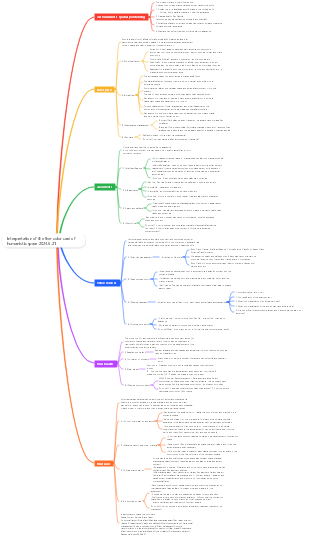
This is a mind map about 5S on-site management method: a basic tool for on-site scientific management. The main contents include: 6. Related tools, 5. Example analysis, 4. Implementation and application, 3. Principles and effectiveness, 2. Main contents, 1. Conceptual meaning.
Edited at 2025-02-04 13:12:54In order to help everyone use DeepSeek more efficiently, a collection of DeepSeek guide mind map was specially compiled! This mind map summarizes the main contents: Yitu related links, DS profile analysis, comparison of DeepSeek and ChatGPT technology routes, DeepSeek and Qwen model deployment guide, how to make more money with DeepSeek, how to play DeepSeek, DeepSeek scientific research Application, how to import text from DeepSeek into MindMaster, the official recommendation of DeepSeek Wait, allowing you to quickly grasp the essence of AI interaction. Whether it is content creation, plan planning, code generation, or learning improvement, DeepSeek can help you achieve twice the result with half the effort!
This is a mind map about DeepSeek's 30 feeding-level instructions. The main contents include: professional field enhancement instructions, interaction enhancement instructions, content production instructions, decision support instructions, information processing instructions, and basic instructions.
This is a mind map about a commercial solution for task speech recognition. The main content includes: text file content format:, providing text files according to the same file name as the voice file.
In order to help everyone use DeepSeek more efficiently, a collection of DeepSeek guide mind map was specially compiled! This mind map summarizes the main contents: Yitu related links, DS profile analysis, comparison of DeepSeek and ChatGPT technology routes, DeepSeek and Qwen model deployment guide, how to make more money with DeepSeek, how to play DeepSeek, DeepSeek scientific research Application, how to import text from DeepSeek into MindMaster, the official recommendation of DeepSeek Wait, allowing you to quickly grasp the essence of AI interaction. Whether it is content creation, plan planning, code generation, or learning improvement, DeepSeek can help you achieve twice the result with half the effort!
This is a mind map about DeepSeek's 30 feeding-level instructions. The main contents include: professional field enhancement instructions, interaction enhancement instructions, content production instructions, decision support instructions, information processing instructions, and basic instructions.
This is a mind map about a commercial solution for task speech recognition. The main content includes: text file content format:, providing text files according to the same file name as the voice file.
5S on-site management method: the basic tool for on-site scientific management
1. Concept meaning
1.1 Generation and development
The 5S originated from Toyota, Japan. In 1955, only the first 2S was initially implemented, with the purpose of ensuring operating space and safety. Later, due to the needs of production control and quality control, the subsequent 3S was gradually proposed. The first 5S book was released in 1986, setting off a 5S craze.
1.2 Specific meaning
5S refers to Japanese SEIRI (organization), SEITON (regulation), SEISO (cleaning), SEIKETSU (cleaning), SHITSUKE (cultivation), and the specific meanings are as follows:
- **Complete**: Distinguish between necessities and non-essentials, and do not place non-essentials on site, with the purpose of improving and increasing the working area, etc.
- **Rectification**: Place the necessities neatly in the specified location and mark them to reduce search time and improve work efficiency.
- **Sweep**: Remove unnecessary things, keep the work site clean and tidy, stabilize product quality, and ensure safe production.
- **Cleaning**: Maintain the situation after sorting, rectifying and cleaning, so as to institutionalize it, and create a comfortable working environment.
- **Cultivation**: Let employees consciously abide by rules and regulations and develop good working habits.
1.3 Core
The core of 5S management is to eliminate waste, including waste in many aspects such as materials and human resources; the second is to prevent management and promptly discover and solve problems. The management objects include people, things, and things.
2. Main content
2.1 Three pillars
The 5S activity is divided into three pillars, namely, a regular factory, a clean factory and a visually managed factory.
2.2 Specific content
2.2.1 Organization
Clearly distinguish between needed and unwanted items and remove unnecessary items. The purpose is to make room and prevent misuse. Implementation principles include comprehensive inspection of the workplace, formulating judgment benchmarks, etc.
2.2.2 Completed
The necessary items left on site after sorting are placed, arranged neatly and marked. The purpose is to make the workplace clear at a glance and improve efficiency. Implementation principles include implementation and organization work, process arrangement, etc.
2.2.3 Cleaning
Clean the working environment, including machines, tools, etc., and also inspection. The purpose is to eliminate stolen and pollutants, stabilize quality, etc. Key points include determining the cleaning targets, investigating pollution sources, etc.
2.2.4 Cleaning
Maintain the results of sorting, rectification and cleaning, and keep employees clean and clean and healthy. Key points include implementing the first 3S work, formulating assessment methods, etc.
2.2.5 Literacy
Employees are self-disciplined and continue to organize, rectify, clean and clean. The purpose is to enable employees to implement rules and regulations in a self-disciplined manner and improve customer satisfaction. Implementation principles include formulating identification standards, rule regulations, etc.
3. Principle Effectiveness
3.1 Principle of action
By improving people's quality, such as developing habits such as seriousness and compliance with regulations, using the interactive relationship between the environment and emotions, and using PDCA cycles, we ensure that 5S activities are carried out continuously, and the quality and level of management are improved.
3.2 Main effects
5S has five major functions, which can be summarized into 5S, namely the best salesman, Saving, Safety, Standardization, and forming a satisfactory site. (Satisfaction).
IV. Implement and Application
4.1 Implementation steps
Implementing 5S requires compliance with the PDCA environment principle. The specific steps include obtaining high-level commitments and preparations, establishing a promotion committee, formulating implementation plans, publicity and education and training, local promotion, comprehensive promotion, standardization and institutionalization, and challenging new goals.
4.2 Main methods of advancing
The main methods include visual management, the promotion of standard operations, the application of PDCA management cycle and the implementation of tri-currentism.
4.3 Key issues to pay attention to in implementation
The smooth implementation of 5S must be carried out step by step, focusing on issues such as determining and implementing organization, formulating guiding documents, training and publicity, comprehensive implementation and supervision and inspection.
4.4 Implementation skills
Implementation techniques are divided into four stages: introduction, implementation, review and maintaining results. Each stage has different points of attention and implementation methods.
4.5 5S activity evaluation form
The 5S activity evaluation form is introduced, including self-evaluation, mutual evaluation and other evaluation methods, as well as evaluation purposes, evaluation personnel, evaluation cycle, evaluation points and other contents.
V. Case analysis
5.1 Case: Application of 5S management in furniture enterprises
5.1.1 Specific methods
It includes five aspects: sorting, rectification, cleaning, cleaning and cultivation. Each aspect has specific implementation principles and operation methods.
5.1.2 Promotion steps
Establish and implement the organization, formulate the implementation policies and goals, formulate work plans and implementation methods, education, publicity and momentum, specific implementation, determine the evaluation methods, check, evaluate and reward and punishment, review and correction, and include them in regular activity management.
VI. Related tools
6.1 6S Management
6.1.1 Conceptual meaning
6S management adds safety (Safe) on the basis of 5S, which refers to sorting, rectifying, cleaning, cleaning, literacy, and safety.
6.1.2 Main content
Including the specific contents and promotion steps, implementation points of sorting, rectification, cleaning, safety, cleaning, and quality.
6.1.3 Implementation steps
Establish and implement the organization, formulate policies and goals, formulate implementation plans and schedules, explain and educate, promote publicity and momentum, introduce and implement, determine the evaluation method, evaluate and review, publish the scoring results, review and revise, comprehensive promotion, include them in regular management activities, and challenge new goals .
6.1.4 Key points to pay attention to when implementing
Identify promoters, carry out pilot projects, and comprehensive promotion.
6.2 7S Management
6.2.1 Conceptual meaning
7S management is based on 5S and safety and saving.
6.2.2 Main content
Introduce the meaning, purpose and implementation points of sorting, rectifying, cleaning, cleaning, literacy, safety and saving.
6.2.3 Scope of application
It is suitable for the management of various aspects of enterprises, institutions and service industries as well as production factors, public affairs, etc.
6.3 8S Management
6.3.1 Conceptual meaning
Based on the 5S, combined with modern enterprise management needs plus study, safety, and saving, including sorting, rectification, cleaning, cleaning, literacy, safety, persistence, and saving.