 Wondershare EdrawMind
MindMap Gallery Comprehensive production management one of the important tools in the production improvement process
- 14
Comprehensive production management one of the important tools in the production improvement process
# Total Production Management (TPM) Knowledge Promotion Document TPM helps enterprises solve problems such as equipment failure and inefficiency. It includes unique modules such as 5S activities, autonomous management, and professional maintenance. From concept to implementation, the logic is clear. Suitable for production managers, equipment maintenance personnel, and front-line employees. Can be used in workshop management and equipment maintenance scenarios. Provides editable source files. Click to bookmark, download and get a TPM practical form template!
Edited at 2025-02-04 13:27:34
- DeepSeek User Guide Collection
In order to help everyone use DeepSeek more efficiently, a collection of DeepSeek guide mind map was specially compiled! This mind map summarizes the main contents: Yitu related links, DS profile analysis, comparison of DeepSeek and ChatGPT technology routes, DeepSeek and Qwen model deployment guide, how to make more money with DeepSeek, how to play DeepSeek, DeepSeek scientific research Application, how to import text from DeepSeek into MindMaster, the official recommendation of DeepSeek Wait, allowing you to quickly grasp the essence of AI interaction. Whether it is content creation, plan planning, code generation, or learning improvement, DeepSeek can help you achieve twice the result with half the effort!
- DeepSeek 30 feeding level instructions
This is a mind map about DeepSeek's 30 feeding-level instructions. The main contents include: professional field enhancement instructions, interaction enhancement instructions, content production instructions, decision support instructions, information processing instructions, and basic instructions.
- Voice recognition commercial solution
This is a mind map about a commercial solution for task speech recognition. The main content includes: text file content format:, providing text files according to the same file name as the voice file.
Comprehensive production management one of the important tools in the production improvement process
- DeepSeek User Guide Collection
In order to help everyone use DeepSeek more efficiently, a collection of DeepSeek guide mind map was specially compiled! This mind map summarizes the main contents: Yitu related links, DS profile analysis, comparison of DeepSeek and ChatGPT technology routes, DeepSeek and Qwen model deployment guide, how to make more money with DeepSeek, how to play DeepSeek, DeepSeek scientific research Application, how to import text from DeepSeek into MindMaster, the official recommendation of DeepSeek Wait, allowing you to quickly grasp the essence of AI interaction. Whether it is content creation, plan planning, code generation, or learning improvement, DeepSeek can help you achieve twice the result with half the effort!
- DeepSeek 30 feeding level instructions
This is a mind map about DeepSeek's 30 feeding-level instructions. The main contents include: professional field enhancement instructions, interaction enhancement instructions, content production instructions, decision support instructions, information processing instructions, and basic instructions.
- Voice recognition commercial solution
This is a mind map about a commercial solution for task speech recognition. The main content includes: text file content format:, providing text files according to the same file name as the voice file.
- Recommended to you
- Outline


Horizontal Leadership – Management Tools and Solutions for Team Communication Problems
- 13



Comprehensive production management: one of the important tools in the production improvement process
1. Conceptual meaning
1.1. Generation and Development
With the development of industrialization, mechanical operations have gradually replaced manual operations, but the equipment failure rate continues to increase, affecting product quality and production efficiency, and equipment maintenance costs continue to increase. The United States will summarize the experience of maintaining equipment and form "Productive Maintenance (PM)," which is the prototype of TPM. The United States uses these management technologies and methods to reduce equipment failures, improve production efficiency and reduce costs.
After World War II, Japan introduced the US PM production and preservation activities and established Japanese-style PM. In 1961, Japan introduced American PM production preservation, and began to establish PM activities involving all production and maintenance personnel in 1968. After exploration, Japan Denso Company successfully established the "Total Productive Maintenance (TPM)". In 1971, TPM was officially recognized by the Japan Equipment Management Association (JIPE) and was fully promoted in the Japanese business community. Initially, TPM was just a local activity carried out by the production department and equipment maintenance department, focusing on equipment. Now its scope has expanded and its theory has made an essential leap.
Since its birth in Japan in the 1970s, TPM has been quickly introduced by most countries in the world. It was spread to countries and regions such as South Korea and Taiwan in the 1980s, and entered mainland China in the mid-1990s.
1.2. Basic meaning
TPM is a management activity that all employees participate in, a thorough and continuous improvement activity, a synonym for brainstorming and high fireworks for everyone, a win-win activity that helps enterprises make money and seeks personal development. It can also be called "comprehensive" profitable management”. Due to the differences in understandings between different countries, regions, enterprises and promotion personnel, the explanations of TPM are different, but the basic points are the same.
1.3. Basic concepts
The basic concept of TPM includes 6 aspects:
The goal is to pursue the highest productivity.
Pursuing "zero failure" for the entire device life cycle.
All personnel participate and act in a team manner.
Contains all production-related departments, such as development, business, procurement, etc.
It emphasizes that operators implement independent maintenance.
The equipment management department implements a combination of planned maintenance and preventive maintenance.
1.4. Guiding ideology
The guiding ideology of TPM management is "three complete": that is, all employees, all systems and all efficiency. The relationship between the three is: all staff is the foundation, the whole system is the carrier, and all efficiency is the goal.
All employees: refers to all relevant personnel from all departments such as equipment planning, research, design, manufacturing, use, maintenance, and supply, from enterprise managers to front-line operators, participating in equipment management and taking on corresponding responsibilities respectively. .
Whole system: TPM whole system production and maintenance system consists of two parts: production and maintenance and basic maintenance. Among them, basic maintenance is a supplement and support for conventional production and maintenance.
Full efficiency: also known as equipment comprehensive efficiency. The equipment comprehensive efficiency is obtained by multiplying the equipment time activation rate, performance activation rate and qualified product rate. The performance activation rate is obtained by multiplying the net activation rate and the speed activation rate. The comprehensive efficiency of the equipment reflects the valuable utilization of the equipment during the planned start time, that is, the load time. TPM improves the overall efficiency of equipment by reducing six major losses (equipment failure, installation adjustment, idle short-term shutdown, speed reduction, processing waste, initial failure to reach production).
2. Main content
2.1. Nine TPM Activities
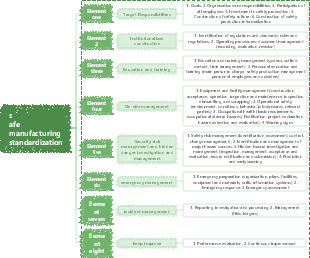
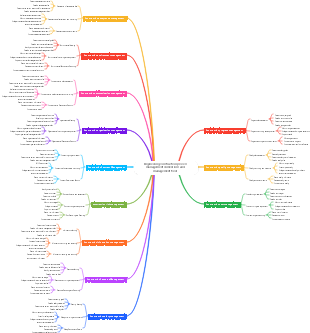
The nine major activities of TPM include autonomous management, theme improvement, professional preservation, intelligence management, affairs innovation, security management, quality preservation, 5S activities, and education and training. The goal is to achieve zero loss in TPM. These nine major activities are interconnected and complement each other to achieve an overall comprehensive effect.
5S activity: It is the abbreviation of sorting, rectifying, cleaning, cleaning and literacy. It is the basis of all activities on site, the necessary preparation work and prerequisite before implementing TPM activities, and the cornerstone of other pillar activities of TPM.
Education and training: placed first among the pillars of TPM activities, highlighting the status of education in TPM activities. For enterprises, promoting TPM requires gaining experience through education and exploration. Educational training and 5S activities are the basic pillars that are parallel.
Self-management activities: The greatest success of TPM activities lies in mobilizing all employees to participate. If the manufacturing department employees can conduct thorough autonomous management and improvement on site, they can improve their autonomy and creativity, reduce management levels and management personnel, and ordinary employees can also participate in corporate management and improve their own strength. Therefore, autonomous management activities are the backbone of TPM.
Department-wide theme improvement activities and project activities: The autonomous management activities participated by all employees mainly eliminate micro-defects and unreasonable phenomena. For individual prominent problems, topic activities need to be carried out, and the theme activities are carried out in the TPM group activities according to the theme activities, and cross-departmental issues It can form project group activities.
Professional preservation activities: Modern enterprises cannot do without equipment production, and doing a good job in equipment management is the fundamental way to improve production efficiency. After the equipment management functions are subdivided, the production department is responsible for the independent management of the equipment, and the special equipment maintenance department is responsible for preventive preservation and planning preservation, and improves the predictiveness of the equipment status through diagnostic technology.
Affairs Innovation Activities: TPM is a lasting collective activity with all employees, and the support of the management indirect department is indispensable. Through innovation activities, the affairs department can improve business efficiency, improve service awareness, and cultivate management and leadership art and business management talents.
Intelligence Management Activities: The intelligence management activities of the technology development department are designed to master the necessary information for product design and equipment design. The initial flow management activities from equipment installation to delivery and normal operation also fall into this category. Product and equipment design without drawbacks is the responsibility of research and development and technical departments, and the key to achieving it lies in obtaining necessary information.
Safety management activities: Safety is the prerequisite for all activities. Safety activities run through them from the 5S activities. If there is a problem with any safety of any activity, everything is equal to zero.
Quality preservation activities: Traditional quality activities focus on results, and it is difficult to ensure excellent quality and produce defect-free products. Quality preservation activities are pre-management activities to improve quality, the fundamental purpose of production, and a relatively difficult project.
2.2. Core content
TPM emphasizes the change in employee mentality and methods, and believes that all employees can achieve twice the result with half the effort when working automatically and spontaneously. We should change our working methods and do more important but not urgent things, and avoid passively dealing with important but urgent things.
The basic work of TPM is 5S management. Pay attention to equipment during cleaning and be good at discovering hidden dangers.
TPM believes that equipment failure is just a surface phenomenon. We must grasp the manifestation of potential failures, prevent the spread of faults, and find deep-seated causes.
When discovering faults and troubleshooting problems, you should ask several reasons continuously until the root cause of equipment failure is found, and then precautions should be formulated.
TPM divides equipment management into autonomous maintenance and professional (planning) maintenance. The former is completed by operators and the latter is mainly completed by professional maintenance personnel. When maintaining the self-support, the operator should turn himself into an operator who is an expert in the equipment.
During independent maintenance, TPM requires at least 100 potential defects to be discovered during the equipment maintenance process and to solve them with 5 Why analysis.
During the process of independent preservation, a benchmark must be formulated. The operator must strictly operate according to the requirements of the benchmark, and the work must be refined and pay attention to details.
The TPM operation process should be as human as possible. You should use tables without text, you should use pictures without tables, and you should use real thumbnails without abstract pictures, which is convenient for employees to operate. This is also a requirement of 5S management.
An effective method to implement TPM is to gradually develop from point to surface, select machines that are prone to failure as demonstration machines, and promote experience after the effect is significant.
In the process of promoting and executing TPM, follow the cycle of finding problems → solving problems → summarizing experience → finding problems, which can reduce equipment failures and even achieve zero failures.
TPM emphasizes using data to speak, starting from the concepts of average fault interval, average maintenance time, and comprehensive equipment utilization rate, objectively examining the effectiveness of equipment maintenance and continuously improving work.
2.3. Characteristic Analysis
Goal: The goal of TPM management is to pursue the maximization of enterprise production efficiency and comprehensively improve the overall quality of the enterprise. By improving the six major losses of equipment and adverse factors at the production site, we can achieve the "5Z" (zero accidents, zero failures, zero defects, zero inventory, zero errors) goals, achieve the best comprehensive equipment efficiency and corporate operating efficiency, and improve market competition Ability and adaptability will ultimately achieve a sustainable enterprise with "3S" (employee satisfaction, customer satisfaction, and social satisfaction).
Systematic: TPM management involves the all-round and full process of the enterprise production system. It takes the various stages of equipment from introduction to scrapping and renewal as the management object, and involves the various subsystems, components and parts of the equipment, forming a system-wide production and maintenance system. At the same time, it is required to implement clean, fixed, visual and civilized management of the equipment environment, workshops and even the entire production site.
Collective: TPM management consists of eight pillar activities, including individual improvement, independent maintenance, professional maintenance, initial management, quality management, safety and environmental management, business improvement, and education and training. These activities are independent and interdependent, restrict and promote each other, forming complex chains and loops.
Integrity: The various activities managed by TPM can be quantified, each with independent functions, but it is difficult to fully exert its full performance alone. These activities must be made into a collection, unified in the whole of TPM management, and function together around the goals to form an overall effect.
Openness: TPM management is in the general environment of enterprise management, affected by enterprise resource conditions, environmental conditions, personnel quality, management methods and means, and also acts on enterprise management and other professional management. TPM management and the environment in which they are located penetrate and promote each other, and the level of enterprise management should be improved in each input and output process.
Full staff: TPM management requires the company to participate fully from the top leaders to the front-line production operators. Large enterprises cannot control quality, cost, equipment maintenance, production safety, etc. by relying solely on a few departments or personnel. All employees must mobilize enthusiasm, initiative and consciousness to achieve group participation.
Dynamic: The requirements for TPM management are relatively stable within a certain period of time, but with the improvement of corporate management level and the development of production and operation activities, especially in the face of challenges of economic globalization and market internationalization, TPM management should constantly adapt to changes and be in dynamic During the PDCA cycle, maintain vitality and play unique functions.
Continuity: The state of pursuing the "5Z" goal and maximizing efficiency is endless. Promoting TPM management is not a surprise or temporary work, but a continuous and lasting and arduous management activity. We must pay attention to it in our thoughts and work hard to continuously improve our corporate management level.
3. Implement application
3.1. Promotion steps
The promotion of TPM includes the introduction preparation stage, the promotion implementation stage and the consolidation stage, with a total of 12 steps, which are as follows:
Introduction preparation stage:
Leadership publicity on the significance of introducing TPM: Announce the beginning of TPM, express determination, and promote through the company's newspapers and other channels.
TPM introduces publicity and personnel training: organize training and publicity education to varying degrees, establish internal teacher groups, and conduct results assessments after each education and training. The key to success or failure lies in the establishment of teacher groups.
Establish a TPM promotion agency: Establish TPM promotion committees and professional organizations at all levels, including members of all departments and strata of the enterprise, adopt the committee organizational structure and matrix organization, and senior personnel must actually participate in the promotion work.
Establish basic TPM policies and goals: On the basis of grasping the current operating status of the enterprise, operators and personnel at or above the manager level set clear, quantifiable, achievable and time-limited goals and policies to let all employees understand.
Formulate a general plan for TPM promotion: According to the scale of the enterprise and business policy, TPM activities will be introduced in stages, and departments closely related to production will be given priority. Formulate a 3-6-year implementation plan. The content of the plan should be simple, specific, coherent, and based on actual conditions. Corrected.
TPM officially starts: After completing all preparations, it officially starts. Cadres must understand the plan and plan their work. The top supervisor and operators must attend to show their determination. The plans of each department shall be reported by the top supervisor in person.
Promote the implementation phase:
Formulate and implement measures to improve the comprehensive efficiency of equipment: select demonstration units and equipment, conduct status surveys, select improvement topics and set up groups, formulate and implement improvement plans, confirm results, hold regular results presentations, and realize improved standardization and horizontal direction To expand, the key is to find out the root cause of the problem and prescribe the right medicine.
Establish an independent maintenance plan: Let all employees establish the concept of "manage their own equipment by themselves" and strengthen their willingness to maintain their own maintenance. Maintenance activities are divided into maintenance activities and improvement activities. The two move in hand. Preventing equipment deterioration, measuring and restoring the three elements of TPM activities. Preventing deterioration is the basic activity.
The maintenance department establishes a maintenance plan: the purpose is to reduce the number of equipment failures and maintenance costs, improve maintenance operation efficiency and equipment reliability, and clarify the sharing of positions. Key tasks include explicitly ensuring maintenance work allocation, selecting key equipment, establishing equipment resumes, and improving maintenance work methods.
Training to improve operation and maintenance skills: improve operation and maintenance technology, reduce equipment failures and quality problems, and improve operational efficiency in response to equipment automation. By cultivating internal teachers, using scrapped or idle equipment for training, paying equal attention to theory and practice, determining the training time and whether overtime allowances are issued based on corporate culture.
Establish a preliminary preparation management system: pursue the economy of equipment life cycle costs, increase equipment service life, realize the standardization of MP (maintenance prevention) design, troubleshoot faults, and establish a management system.
Consolidation phase:
Summary and improve, and comprehensively implement TPM: After importing TPM, depending on the size of the enterprise, the introduction preparation period generally takes 1-3 months, the introduction implementation period takes 2-3 months, and the consolidation period takes the longest time, generally takes 2-3 years , large conglomerates may take more than 3 years or even 5 years. Since Samsung Group introduced TPM in 1988, it has not been implemented continuously for 15 years. The implementation of TPM needs to be based on 5S activities and has a variety of forms, and enterprises can choose according to their own situation.
3.2. Key links
Establish an activity system: When designing a TPM activity system, we must follow the principle of "main planning, step-by-step implementation, comprehensive promotion, and key breakthroughs", grasp the key and weak links, highlight key points and difficulties, and avoid a one-size-fits-all approach.
Establish an organizational system: Establish a promotion organization at four levels: company, factory, workshop and team, and clarify the functions of each level and employees in the TPM activity system. The company's TPM Promotion Committee is responsible for formulating policies, approving plans, evaluating results, etc., and has an office under it responsible for specific management work. The organizational functions of each factory area and workshop are similar, and the division of labor must be clear to create a situation where all employees participate.
Formulate policies and objectives: TPM policy should be in line with the company's development strategy and purpose, grasp the key points, and the language is concise and easy to understand. The TPM goal is to concretize the policy, and it must be clear, quantifiable, achievable, and has time limits to guide and motivate employees and implement TPM management functions.
Improve the system: formulate and improve the rules, standards and management methods for promoting TPM management, form a standardized file system, so that all activities and links can be followed. At the same time, establish an inspection and evaluation system that is compatible with the standards to ensure that the rules and regulations are implemented at the operation site.
Clarify the promotion of work procedures: Design the work procedures for promoting TPM management, arrange the main work in a certain time sequence, and make it programmatic and standardized, which is conducive to coherent, orderly, coordinated and efficient behaviors such as target planning, management and operation, inspection and evaluation. run.
3.3. Promotion Principles
Adhere to voluntary self-discipline: TPM group activities are self-discipline activities that employees voluntarily participate. Managers should arrange their time, prompt the direction of the activity, give care and support, and provide special guidance to backward groups. TPM is a gradual activity.
Adhere to practicalism: TPM is a thorough practical activity. Improvement cannot be rushed. We must pay attention to the process, make the 3S activities organized, rectified and cleaned, maintain a good work site, abide by standards, and promptly discover and improve unreasonable aspects.
Continuously improve business: TPM makes the business more efficient and safer. The improvement activities of different groups must have characteristics and purpose. After improvement, the changes should be reflected in the standard management project, and the connection between TPM and standard management should be done well.
Clarify the goals of each stage: correctly grasp the current level, carry out activities with the best state as the goal, and it is best to aim at zero defects. The goals of each stage should reflect the differences in step-by-step rise.
Together development between individuals and organizations: Carry out people-centered TPM activities to stimulate employees' potential, improve employees' enthusiasm, and achieve common development between individuals and organizations.
3.4. TPM technique
Common TPM methods include PM analysis method, MTBF analysis method, minimum maintenance cost mode analysis method, Q-Component analysis method, etc.
PM analysis method: It is a physical analysis method for equipment association, and is especially suitable for individual improvements in chronic losses of equipment. When the goal of zero chronic losses derived from the device is required, it can be adopted, especially with theory to guide the facts, which requires a considerable understanding of the device. The analysis steps are generally:
The first step is to clarify the phenomenon and determine the priority goals.
The second step is to physically analyze the phenomenon and supplement it with principle explanation.
The third step is to sort out all the inevitable situations.
Step 4: Analyze the possible causes list.
Step 5: For various reasons, find out their associated items and analyze them.
Step 6: Find out the problem points so that they can be solved in a centralized manner.
Step 7: Implement improvements and make records.
MTBF analysis method: The purpose is to formulate a complete prevention and maintenance plan, which is one of the basic analysis methods to achieve zero failure. Its maintenance records can be used as original information on maintenance activities, management and technical activities, and are of great reference value. The MTBF analysis table is an important scale for this method. Its concise production steps are:
The first step is to select key equipment.
The second step is to collect more than 30 items of fault data or the past 3-5 years.
The third step is to draw an overall picture of the equipment and indicate the parts that are prone to failure.
Step 4: When making tabs, classify them in graphic form or colors and marks as much as possible to increase readability.
Step 5: Analysis of the cause of the failure and countermeasures. The countermeasures and methods should be easy to understand and do.
Minimum maintenance cost model analysis method: This method is to find the minimum maintenance cost to avoid waste of over-maintenance during the regular maintenance stage.
Q - Component analysis method (quality constitutive reason analysis method): It mainly lists the causes that constitute the quality relationship in sequence and provides sufficient maintenance to avoid causing quality problems. The method is to determine a quality maintenance plan so that any key factors related to quality can be controlled within a normal range.
In addition to the above methods, there are some methods, such as PQA (Perfect Quality Assurance) method, equipment scale cycle cost (L•C•C, abbreviation of Life Cycle Cost), failure mode analysis, etc.
4. Case Study
4.1. Case: Samsung Group TPM advancement steps
The overall steps for Samsung Group to promote TPM are: establish an implementation agency → full-staff training → comprehensive implementation → continuous improvement.
Establishing a TPM promotion agency: Samsung Group has established a special TPM promotion agency - Business Innovation Department, which consists of 8-10 people. They are responsible for preparing TPM textbooks, implementing documents, management procedures, technical specifications, and various record forms and other materials, and organize education and training, and promote new management models. For example, unreasonable discovery and improvement lists, necessary items lists, problem analysis tables, causality and characteristic charts, sorting and cleaning lists, etc. are all typical record tables created by Samsung in TPM activities.
Full-staff training: Samsung Group pays great attention to the training of its employees. All employees must participate in TPM training and can only take up their posts and start work after passing the exam. During the training process, different levels of education are provided for personnel, such as the educational content of middle and senior managers is TPM management awareness and operation process, and the training content of middle-level equipment managers is equipment management, maintenance and maintenance skills; equipment operation The personnel training content is specific on-site processing methods such as operation methods and troubleshooting. In addition, you can see bulletin boards with TPM knowledge written everywhere in the factory, so that employees can deepen their understanding of TPM and encourage applications.
Comprehensively promote TPM: Samsung Group has created many effective TPM promotion methods when promoting TPM activities. For example, the fixed-point photography method, that is, the same camera is used in the sorting activity, and the workplace or equipment status before and after improvement can be photographed in the same direction in the same position, so as to clearly see the changes in the state before and after improvement. Also, we will formulate and organize the object and process judgment benchmarks in detail, settings of the activity board, 10-minute education, tool graphics visual management, regular TPM discussions, etc.
Periodically evaluate and continuous improvement: During the implementation of TPM activities, various problems will arise for certain reasons. Therefore, in order for TPM activities to be thoroughly executed and produce good results, inspections and evaluations must be continuously organized and continuously improved. Samsung Group's approach is to designate the TPM responsible person for each task, prepare specific forms, and the person in charge will record the content of the work he is responsible for, the nature of the problem, the resolution process, the final result, etc. in detail for future evaluation and improvement.