MindMap Gallery PDCA cycle a tool for effective control of management processes and work quality
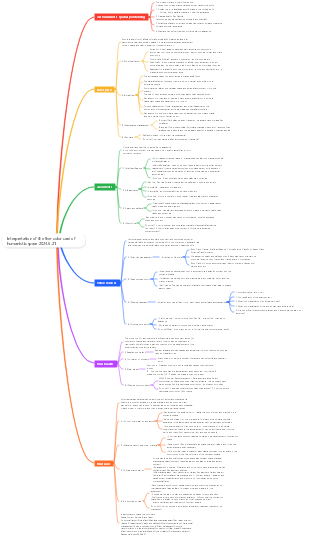
This is a mind map about PDCA cycle: a tool for effectively controlling management processes and work quality. The main contents include: 5. Related tools, 4. Example analysis, 3. Features, 2. Application analysis, 1. Conceptual meaning.
Edited at 2025-02-04 13:01:41In order to help everyone use DeepSeek more efficiently, a collection of DeepSeek guide mind map was specially compiled! This mind map summarizes the main contents: Yitu related links, DS profile analysis, comparison of DeepSeek and ChatGPT technology routes, DeepSeek and Qwen model deployment guide, how to make more money with DeepSeek, how to play DeepSeek, DeepSeek scientific research Application, how to import text from DeepSeek into MindMaster, the official recommendation of DeepSeek Wait, allowing you to quickly grasp the essence of AI interaction. Whether it is content creation, plan planning, code generation, or learning improvement, DeepSeek can help you achieve twice the result with half the effort!
This is a mind map about DeepSeek's 30 feeding-level instructions. The main contents include: professional field enhancement instructions, interaction enhancement instructions, content production instructions, decision support instructions, information processing instructions, and basic instructions.
This is a mind map about a commercial solution for task speech recognition. The main content includes: text file content format:, providing text files according to the same file name as the voice file.
In order to help everyone use DeepSeek more efficiently, a collection of DeepSeek guide mind map was specially compiled! This mind map summarizes the main contents: Yitu related links, DS profile analysis, comparison of DeepSeek and ChatGPT technology routes, DeepSeek and Qwen model deployment guide, how to make more money with DeepSeek, how to play DeepSeek, DeepSeek scientific research Application, how to import text from DeepSeek into MindMaster, the official recommendation of DeepSeek Wait, allowing you to quickly grasp the essence of AI interaction. Whether it is content creation, plan planning, code generation, or learning improvement, DeepSeek can help you achieve twice the result with half the effort!
This is a mind map about DeepSeek's 30 feeding-level instructions. The main contents include: professional field enhancement instructions, interaction enhancement instructions, content production instructions, decision support instructions, information processing instructions, and basic instructions.
This is a mind map about a commercial solution for task speech recognition. The main content includes: text file content format:, providing text files according to the same file name as the voice file.
PDCA cycle: a tool for effective control of management processes and work quality
1. Conceptual meaning
1.1. Generate Source
As a scientific working procedure, PDCA cycle was first proposed by Dr. Walter Shewhart of the Bell Laboratory in the United States in the 1930s. Later, it was promoted and applied in Japan by Dr. Edwards Deming, so it is also called "Deming Ring". ”. PDCA cycle is not only used for product quality control, but also can effectively control work quality and manage quality.
1.2. Basic meaning
PDCA is the first combination of plan (Plan), implementation (Do), check (Check), and adjustment (Action). The specific meanings are as follows:
Planning Phase (P)
Determine the policy and objectives: clarify the direction of the work and the expected results.
Formulate activity plans: including specific steps, resource allocation, time arrangement, etc.
Implementation phase (D)
Implementation plan content: Put the formulated plans and measures into practice.
Inspection phase (C)
Summary of implementation results: compare the plan goals, check the implementation of the plan, and evaluate the effect.
Adjustment phase (A)
Handle lessons: Acknowledge and standardize successful experiences, and summarize the lessons of failures to avoid happening again.
Go to the next loop: Make unresolved issues the next phase of the planned goal.
PDCA cycle is a logical working procedure that effectively carries out any work. It is widely used in quality management. Due to its cycles, it is called the basic method of quality management. [Figure 1: PDCA basic cycle diagram] shows the basic model of PDCA cycle, which cycles in four stages in turn, continuously promoting the improvement and improvement of work.
2. Application analysis
2.1. Four stages
Planning Phase (P)
Formulate management projects and measures: determine quality goals and activity plans, including analyzing the current situation, finding problems, analyzing the causes, determining the main causes, formulating technical organizational measures and plans.
Specific work content
Analysis status: find out the existing quality problems and clarify the performance, scope and severity of the problems.
Analysis of causes: Use scientific methods, such as brainstorming, to find out the various causes and influencing factors that cause problems.
Find out the main reasons: Through the analysis and screening of various reasons, find out the main reasons that affect quality, and provide a basis for formulating measures.
Formulate measures plan: Formulate specific technical organizational measures for the main reasons, clarify the implementation plan, expected results, executors, time and progress, location and completion methods of measures.
Implementation phase (D)
Implementation plans and measures: The plans and measures formulated will be implemented and implemented in detail to ensure that all work will proceed as planned.
Inspection phase (C)
Comparison of target inspection effects: Compare the execution results with the predetermined goals, check the implementation of the plan, and evaluate whether the expected results are achieved.
Summarize lessons: Find out which work has been done correctly, what are the experiences of success; what are the lessons of failure, and what are the reasons.
Adjustment phase (A)
Summarize experience and consolidate achievements: affirm the successful experience and set standards so that it can be followed in future work to prevent problems from happening again.
Handle legacy issues: Summary of unresolved legacy issues, analyze the causes, and turn them into the next management cycle as the planning goal of the next stage.
The PDCA cycle is not one-time, but is carried out repeatedly. After one cycle is over, some problems are solved and the unsolved problems enter the next cycle, thereby achieving a step-by-step rise in work.
2.2. Eight steps
Plan Stage
Step 1: Analyze the status quo and find out the problem
Highlighted points: Pay attention to grasping the status quo and the awareness and ability to discover problems. The survey content includes time, place, type, and symptoms. The survey subjects should be extensive and random to ensure the objectivity of the survey.
Step 2: Analyze various problem factors or causes
Method application: Use various scientific methods such as brainstorming to find out all the causes of problems.
Key points of analysis: Cause analysis must be brainstormed and scientifically verified. Commonly used analysis tools include line diagrams, arrangement diagrams, histograms, normal probability papers, scatter diagrams, control diagrams, etc.
Step 3: Confirmation
Key points: distinguishing between main and secondary causes is the key to effectively solving problems. The fewer the number of main problems finally confirmed, the better, but it must be confirmed accurately.
Step 4: Formulate measures and formulate plans
Plan content: The countermeasures formulated should form a plan, including the necessity of improvement, the goals to be achieved, measures taken, the implementation department and personnel, the execution location, the completion date, etc., that is, the "5W1H" principle is followed.
Do stage
Step 5: Implementation measures and implementation plan
Key points of implementation: Efficient execution is an important part of the organization's goal completion. The implementation stage includes three parts: execution, control, and adjustment. Adjustment is to adjust the work plan, not to adjust the predetermined target value. The adjusted plan must be approved.
Check stage
Step 6: Check and verify and evaluate the effect
Importance: Subordinates only do the work you check, not the work you want, and it is crucial to check, verify and evaluate the effect.
Key points of inspection: Use statistical techniques, use a large amount of reliable data to explain the problem, and list all relevant effects regardless of size.
Action stage
Step 7: Standardize and fixed grades
The significance of standardization: Standardization is the best way to maintain the current situation of enterprise management and accumulate and accumulate experience, and is the basis for the continuous improvement of enterprise management level.
Specific points: Include effective measures in formal documents, implement standardized management, organize training of relevant personnel, and establish a responsibility system to ensure the effective implementation of measures.
Step 8: Deal with legacy issues
Problem handling: All problems cannot be solved in one PDCA loop. The legacy problems will automatically be transferred to the next PDCA loop, reflectively thinking about the problem itself, summarizing the previous work, and looking for legacy problems.
The specific steps and main methods are shown in Table 1 as follows:
2.3. Application Notes
To set goals, standards, etc.: To apply the PDCA cycle, you must first formulate goals, standards, regulations, and procedures. The PDCA cycle connects the company's goals, standards, regulations, and procedures like a chain to enhance the cohesion of the enterprise and improve the level of management work.
Targeted: You must select fundamental problems that affect quality as the solution target in a target and select the right target to achieve obvious results.
Term requirements: PDCA cycles have term requirements. The length of cycle time of different management levels is different. The higher the level, the longer the cycle period, and the lower the level, the shorter the cycle. Only with time constraints can management work efficiency be improved.
Reward and punishment cashing and original records: Make good reward and punishment cashing and original records. Untimely reward and punishment cashing is not conducive to mobilizing enthusiasm and is not conducive to the smooth progress of the next cycle. The original records can provide information for management work, provide a basis for reward and punishment cashing, and can also be Leading decision making and moving to the next cycle provides original information.
In short, using PDCA cycles can make management work more organized, standardized, systematic and scientific, and improve the level of enterprise management.
3. Features
Repeat the cycle. The PDCA cycle is not completed after running once, but a process of continuous cycle. After one loop ends, some of the problems are solved, but there may be other problems that have not been resolved, or new problems appear, and the next loop needs to be carried out, and so on.
If the work of the entire enterprise is regarded as a large PDCA cycle, then each department and group also has its own small PDCA cycle. The large ring drives the small ring, one step and one level, organically forming a operating system. . [Figure 3: Large ring belt and small ring operation system] Displays the operation system of large ring belt and small ring, reflecting the relationship between the whole and the local in enterprise management.
Step-by-step rise The PDCA cycle does not circulate at the same level. Each cycle will solve some problems and achieve some results. The work will go further and the level will be improved one step. In the next cycle, new goals and content have been created to achieve a higher level of improvement.
Comprehensive application of scientific management methods PDCA cycles apply statistical processing methods mainly based on seven QC tools (histograms, control charts, causal charts, arrangement charts, correlation charts, stratification methods and statistical analysis tables) and industrial engineering (IE) The method of research on work in the work as a tool for carrying out work and discovering and solving problems.
4. Case Study
4.1. Case: PDCA cycle analysis in a carton factory
Background A secondary carton factory in Shandong has achieved good results in developing packaging markets such as food, medicine, and glass. The market orders have increased and the demand for cartons has increased. However, in the peak season of autumn and winter, the production task is tight and some products cannot be delivered on schedule. In terms of the market, There is a problem.
PDCA cycle process
Phase P
Current situation survey: The printing unit implements continuous production of three shifts, and overtime cannot solve the problem. The daily output of each shift must reach 4,500 square meters to meet market demand, while the average current is only 4,000 square meters. The printing press is operated by 4 people, and the average number of products for each class is 3.
Cause analysis: Use brainstorming method to find out the reasons for insufficient preparation work, slow debugging speed on the version, long proof signature time, unreasonable work order arrangements, and many times of changing colors and washing cars.
Confirmation of the cause [Table 1: A carton factory must confirm the cause of the cause]
[Table 2: Measures formulated by a carton factory for reasons]
Next, enter the next PDCA cycle: - P2 stage - Target setting: Complete the debugging work of the previous version in 15 minutes and produce the first product to be inspected. - Current situation survey: The captain is responsible for partial adjustment and review, and the first and second auxiliary assists in completing the upper version and other work. There are problems such as many tasks, different sizes of the plate lining, and large errors in the plate base. - Plan measures: Re-dividing the labor, the captain is responsible for adjusting and reviewing the dimensions of the front gear, pressure, etc., the second auxiliary is responsible for the groove size and assisting in the introduction of the plate, the classification storage and collection of the plate lining, and the improvement of the hanging technology of the plate room. - D2 Stage - Personnel Training and Resource Allocation: Printing unit focuses on training second auxiliary equipment, improve operational skills, rationally allocate human resources, classify and store the plate lining and use labels to control the accuracy of the plate registration. - C2 stage - Effective inspection: After division of labor, the coordination is tacit, the debugging time of the previous version is about 15 minutes, and the goal is achieved, and the daily output of the team single-machine machine is 4,600 square meters. - Phase A2 - Standardization: Include the division of labor and cooperation on the unit in the operating procedures manual, the classification management of the plate lining is included in the 6S on-site management specifications, and the accuracy of the plate registration is included in the process quality assessment standards.
The basic principle of the PDCA cycle is to "strive to excel". Through each cycle, we can consolidate achievements, overcome shortcomings, and achieve continuous improvement in management level.
5. Related tools
5.1. SDCA cycle
5.1.1. Conceptual meaning
The SDCA cycle is a standardized maintenance, i.e. the "standardization, execution, inspection, summary (adjustment)" mode, which includes updates (standardization) of all processes related to the improvement process and makes it run in a balanced manner, and then checks the process to ensure its accuracy. , and finally make reasonable analysis and adjustments so that the process can meet the wishes and requirements. The purpose of the SDCA cycle is to standardize and stabilize existing processes. [Figure 6: SDCA cycle] shows the process of the SDCA cycle, from standard formulation to execution, inspection and adjustment, and continuously cycles to maintain the stability of the process.
5.1.2. Main content
standardization
Standard definition: Various quality system documents prepared by enterprises to improve product quality, such as procedures, regulations, rules, standards, essentials, etc.
Standardization process: a process of formulating standards, then taking action according to standards and continuously improving them.
Requirements for setting good standards
Four purposes
Technical reserve: preserve skills and professional skills to avoid the loss of technology, skills and experience of enterprises or organizations.
Improve efficiency: reduce changes and reduce costs through convenience and compatibility.
Prevent recurrence: Prevent problems from happening, minimize mutations, and not be affected by personnel changes.
Education and training: It is the foundation and foundation of corporate training.
Six requirements
Goal direction: Standards must target the target, and following standards can ensure that products of the same quality can be produced.
Show cause and result: If “tighten screws on the safe ground”, how to tighten the screws should be described.
Accurate: Avoid abstract, vague words such as "be careful when tightening screws".
Quantitative - Specific: Graphs and numbers should be used more in the standards so that everyone can interpret the standards in the same way.
Reality: The standards must be realistic and feasible and can be operated in actual work.
Revision: The standards should be revised in a timely manner as needed to reflect the latest operational situation.
5.1.3. Application steps
Standardization
Find questions: Call relevant employees to find out the problems that have a gap with the standards.
Research current methods: collect data on current methods and organize them.
Find out the cause: Find out the cause of the problem.
Implement (Do)
Standardization and formulating solutions: Find solutions based on problems and implement them immediately after arranging the process.
Check the result
Check the effect: collect, analyze, and check whether the solution has achieved the expected results.
Methods for formulating (Action)
Institutionalization: When the method is proven to be effective, the standardization is a code of work that all employees must abide by.
Review the results and develop new goals: summarize the results and formulate plans to solve other problems.
5.1.4. SDCA cycle and PDCA cycle
The SDCA cycle and the PDCA cycle correspond to two aspects of maintenance and improvement of enterprise management work, which complement each other and are indispensable. Without the SDCA cycle, the improvement results cannot be effectively consolidated; without the PDCA cycle, we can only stick to the current level and cannot make breakthroughs and improvements. [Figure 7: SDCA cycle and PDCA cycle] shows the relationship between the two, and promotes the continuous improvement of enterprise management and technical level through cycles.