MindMap Gallery Taguchi method a powerful tool for quality management and an indispensable tool for enterprise technological innovation
Are you still troubled by unstable product quality and high development costs? Taguchi method to help! It covers modules such as concepts, applications, tools, etc., and analyzes them in all aspects from principles to practice. Suitable for product R
Edited at 2025-02-04 12:55:31In order to help everyone use DeepSeek more efficiently, a collection of DeepSeek guide mind map was specially compiled! This mind map summarizes the main contents: Yitu related links, DS profile analysis, comparison of DeepSeek and ChatGPT technology routes, DeepSeek and Qwen model deployment guide, how to make more money with DeepSeek, how to play DeepSeek, DeepSeek scientific research Application, how to import text from DeepSeek into MindMaster, the official recommendation of DeepSeek Wait, allowing you to quickly grasp the essence of AI interaction. Whether it is content creation, plan planning, code generation, or learning improvement, DeepSeek can help you achieve twice the result with half the effort!
This is a mind map about DeepSeek's 30 feeding-level instructions. The main contents include: professional field enhancement instructions, interaction enhancement instructions, content production instructions, decision support instructions, information processing instructions, and basic instructions.
This is a mind map about a commercial solution for task speech recognition. The main content includes: text file content format:, providing text files according to the same file name as the voice file.
In order to help everyone use DeepSeek more efficiently, a collection of DeepSeek guide mind map was specially compiled! This mind map summarizes the main contents: Yitu related links, DS profile analysis, comparison of DeepSeek and ChatGPT technology routes, DeepSeek and Qwen model deployment guide, how to make more money with DeepSeek, how to play DeepSeek, DeepSeek scientific research Application, how to import text from DeepSeek into MindMaster, the official recommendation of DeepSeek Wait, allowing you to quickly grasp the essence of AI interaction. Whether it is content creation, plan planning, code generation, or learning improvement, DeepSeek can help you achieve twice the result with half the effort!
This is a mind map about DeepSeek's 30 feeding-level instructions. The main contents include: professional field enhancement instructions, interaction enhancement instructions, content production instructions, decision support instructions, information processing instructions, and basic instructions.
This is a mind map about a commercial solution for task speech recognition. The main content includes: text file content format:, providing text files according to the same file name as the voice file.
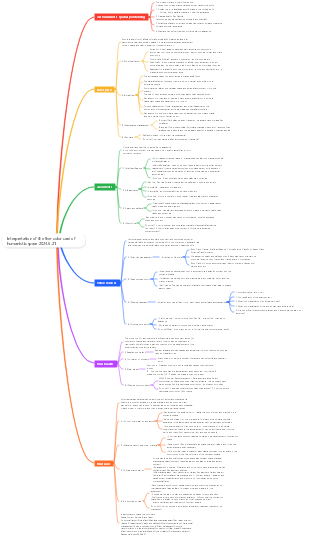
Taguchi method: a powerful tool for quality management and an indispensable tool for enterprise technological innovation
1. Conceptual meaning
1.1. Generation and Development
Taguchi Methods were founded by Dr. Genichi Taguchi in the 1950s, and its core content was regarded as a "national treasure" by Japan. This method is suitable for product design, scientific experiments, technological innovation, process reform, material development and other development fields, as well as quality evaluation and quality improvement.
In the early 1960s, Taguchi method won the Deming Award for Quality Application. After the 1980s, AT&T, Ford, Xerox, Motorola, Kodak and other companies successively adopted it. The Taguchi method is an orthogonal experimental technology developed by researchers led by Genichi Taguchi, the Japan Telecommunications Research Institute, based on the experimental design of the Fischer multi-configuration method. It links quality management with economic benefits and integrates engineering experience and statistical principles. , using mathematical methods to comprehensively study quality management theories and methods from multiple perspectives, forming a quality robust design method.
Taguchi theory believes that there is a nonlinear relationship between product target characteristics and the combination of influence parameter levels. Using this characteristic, even if a third-level product component with large characteristic fluctuations is used, relatively stable quality characteristics can be obtained. Japanese technicians often use this method to improve products and production processes, reduce parts and assembly tolerances, and reduce production costs. It is said that 80% of Japan's quality improvement benefits are due to the Taguchi method. In addition, the United States has set up a research association to promote this method, and the former Ministry of Ordnance Industry of my country has also vigorously promoted it, and has achieved certain results in weapon development and functional improvement.
1.2. Basic ideas
Taguchi method is a robust optimization design method. It uses orthogonal tables to arrange test plans, simulate various interferences that cause product quality fluctuations with error factors, and uses signal-to-noise ratio as an indicator to measure product quality robustness. By conducting statistical analysis of different experimental plans, we can find design plans with strong anti-interference ability, good adjustment ability, stable and reliable performance, and reasonably determine the parameter tolerance based on the principle of minimum quality loss, so as to achieve the lowest cost and best quality technical and economic integration with the lowest quality Effect.
Dr. Taguchi divides product design into three stages: system design, parameter design and tolerance design, also known as three-time design:
System design: When choosing the entire system or configuration for the product, you need to find a variety of different systems, use complete engineering knowledge to evaluate, and choose a design that can meet customer needs with the best technology and the lowest cost.
Parameter design: Find out the main variables that affect product variation in the production process, select a set of parameter standards, and ensure stable product performance. In this stage, the nonlinear effect was used, and the signal-to-noise ratio (SN ratio) was used as the stability index to perform statistical analysis through the orthogonal test method (internal orthogonal and lateral orthogonal). Usually, cheap original components with wide fluctuation range were designed, taking into account both the Improved product quality and cost.
Tolerance design: Based on parameter design, comprehensively consider product quality and production and maintenance costs, determine the optimal tolerance range of various parameters during product production, and use mass loss function and orthogonal polynomial regression analysis for reimprove or redesign. Achieve the best economic benefits.
1.3. Purpose
The Taguchi method aims to make the designed product quality stable and volatile, making the production process insensitive to various noises. In the product design process, high-quality products are developed under low cost conditions by using the functional relationship of quality, cost and efficiency. Taguchi method believes that the benefits of product development can be measured from both internal benefits and social losses in the enterprise. Internal benefits of the enterprise are reflected in low costs under the same functions, while social benefits are measured by the impact of products on people after entering the consumer field. If the product's function fluctuates from its ideal goal and causes losses to society, it means that its robust design is poor, and the Taguchi-style robust design can play a role in reducing costs and reducing product fluctuations.
2. Application analysis
2.1. Quadratic loss function
The mass loss function is the basis of Taguchi's method, which enables decision makers to recognize customer satisfaction, preferences and expectations to determine quality loss, and promotes engineering and technicians to analyze product design and manufacturing processes simultaneously from both technical and economic aspects.
2.2. Three designs
Three designs are three stages that have been experienced in product development or quality improvement, namely system design, parameter design, and tolerance design. In fact, three optimization designs are carried out. The last two designs mainly use orthogonal optimization design to explore product quality and cost. Potential, pursue the effect of less investment, high efficiency and great profit.
System design: that is, functional design, select the basic model system based on the product functions of the market planning, determine the goals and tolerances of product characteristics, and ensure that the product functions meet the standards. In this stage, professional technical theories and methods are mainly used to determine the functions and structure of the system, including the selection of raw materials, parts, components and assembly systems.
Parameter design: It is the core link of product design. The system model is improved and redesigned according to actual production and product usage, and the optimal level combination of all parameters in the system (such as raw materials, parts, components, and components, etc.) is selected to enhance product resistance. Interference, stabilize performance indicators near the target value. Its essence is to use nonlinear effects, use the orthogonal test method of statistical mathematics, and use the signal-to-noise ratio as the stability index of the product quality characteristic value for statistical analysis. At this stage, cheap original components with wide fluctuations are generally designed to achieve dual improvements in quality and cost.
Tolerance design: Based on parameter design, the optimal tolerance range is determined for various parameters during product production. Taking into account product quality and production and maintenance costs, reimprove or redesign the product to achieve the best economic benefits. Tolerance design mainly uses mass loss function and orthogonal polynomial regression analysis.
It can be seen that in the three designs, the system design mainly relies on professional technology, and parameter design and tolerance design belong to the general technical category, relying on mathematics and statistical knowledge.
2.3. Application steps
Select the quality characteristics.
Ideal function for determining quality characteristics.
List all factors that affect this quality characteristic.
Determine the level of the signal factor.
Determine the control factors and determine their levels.
Determine the interference factors and determine their levels, and conduct interference experiments if necessary.
Select the appropriate direct cross-section and arrange a complete experimental plan.
Perform experiments and record experimental data.
Data analysis.
Confirm the experiment. If necessary, the above steps can be repeated until optimal quality and performance are achieved.
2.4. Application Notes
It is best to make the error factor compounded to 1 - 2, up to three.
The error factor can be determined based on its influence degree and experimental purpose.
Generally, 2 levels are selected.
3. Tool features
Engineering Features: Taguchi method uses engineering methods to study product quality, regard product design as engineering design, and measure its quality based on the economic losses caused to society by the product.
"Source flow" management theory: This method believes that the development and design stage is the source of ensuring product quality. In quality management, it will be easier to manage the upstream design stage, and the downstream manufacturing and inspection stage management will be easier. If the design quality is not high, it is difficult to produce and manufacture high-quality products.
Three-time design method for product development: Product development design (including production process design) is divided into three stages: system design, parameter design, and tolerance design, among which parameter design is the core. Traditional designs often pursue target values first and reduce fluctuations by screening components, but the performance of the whole machine may be unstable due to poor parameter matching. Taguchi method first pursues product stability, emphasizing the use of low-level product components to make the product insensitive to non-control factors, and finds the best stability combination by analyzing the nonlinear relationship between quality characteristics and element components. The three-time design can fundamentally solve the quality fluctuations caused by internal and external interference, and the designed products are of good quality, low price and stable performance.
The balance between quality and cost: Introducing a quality loss function allows engineering and technical personnel to analyze the product's design, manufacturing, use, scrapping and other processes from both technical and economic aspects, so as to minimize the total social loss of the product throughout its life cycle. Tolerance design technology is adopted in product design to achieve a balance between quality and cost and improve product competitiveness.
Novel and practical orthogonal experimental design technology: use advanced technologies such as comprehensive error factor method and dynamic characteristic design to simulate various interferences (such as noise) with error factors, so that the experimental design has more engineering characteristics and improve the test efficiency and scientificity. The optimal results designed by the test can be optimal in both the processing process and the customer environment, and can also save test costs.
4. Tool function
Taguchi method is highly practical in production practice, especially product development and design, and has the following significant advantages:
Improve product technological content and promote technological innovation: Using the Taguchi method can change the situation where enterprises simply introduce advanced equipment, enhance secondary innovation capabilities, and improve product development capabilities.
Shorten product development cycle and accelerate product updates: applying the Taguchi method in quality management can improve productivity and achieve twice the result with half the effort.
Create famous brands using Taguchi method: The products designed with the three-time design technology of Taguchi method have good stability, strong anti-interference ability, small fluctuations, and reliable quality, which is conducive to creating well-known products, occupying the market, and building a brand.
Use Taguchi method to create benefits: Taguchi method can use cheap third-class parts to assemble first-class products to achieve low prices and good quality and improve corporate economic benefits.
At present, the Taguchi method is widely used in developed countries and has created considerable returns. Some Chinese companies have also achieved good results after introduction.
5. Related tools
5.1. Xie Ning Method
5.1.1. Conceptual meaning
Xie Ning method is a systematic method and tool used to solve quality and reliability problems in product manufacturing and design development process by American Dorian Shainin in the 1980s. This method summarizes seven new DOE application technologies, including variable graph technology, part search technology, pairwise comparison technology, variable search technology, complete factor analysis technology, improved effect inspection and regression analysis of experimental design, aiming to find production and make it combine with the best parameters to greatly improve product quality.
5.1.2. Analytical Applications
Xie Ning method uses 7 methods (or technologies) in combination, each method can be applied individually or in combination. When there are many test factors (20 or more), variable graph technology, part search technology, pairwise comparison technology, and variable search technology can be used.
Variable graph technology: Determine possible factors that affect quality based on past experience, such as worker shifts, machine tools, raw materials, process variables, etc. Several products produced continuously are extracted every once in a while, and the quality characteristics are tested according to the different conditions of the elements, and drawn into a chart for comparison and analysis to determine the causes of the fluctuations. The variable diagram can be summarized into three categories: severe deterioration on a single workpiece, severe deterioration on a workpiece, and severe deterioration on a working time to work. After determining the type through the variable diagram, use professional knowledge to analyze it in depth.
Part search technology: Determine suspicious parts that affect product quality based on past experience, randomly select several good products and bad products, exchange suspicious parts on bad products with corresponding parts on good products, and measure, compare and analyze quality after reassembly. Characteristic parameters to find the main parts that affect product quality.
Pair-based comparison technology: Randomly select more than 5 pairs of good and bad products, use multiple methods to test various parameters and compare differences, so as to determine the main reasons affecting product quality. This technology is suitable for non-removable products.
Variable search technology: Similar to part search technology, they are replaced one by one and tested and compared to find the main reasons for fluctuations in product quality. The difference is that variable search is for variables, while part search is for parts.
Complete factor analysis technology: Use the above four technologies to find out the following four main factors, and then conduct experiments on these factors according to all combinations of all factors and all levels to study the main effects and interactions between factors, and determine the most Excellent factor level matching scheme.
Improvement effect inspection: Suppose the improved process is B and the process before improvement is C. To verify the improvement effect, set the risk rates a (Class I risk) and b (Class II risk), randomly select two products B and C (sample size is determined by the risk rate) for hypothesis testing, and judge the risk rate at the specified Next, is product B better than product C.
Regression analysis of experimental design: draw a scatter chart on the scattered data, use regression theory to diagnose the size factors affecting the product, find out the main reasons that affect product quality fluctuations, and determine the target values and tolerances of each factor based on the scattered fluctuations.
5.1.3. Comparison of classical methods, Taguchi method and Xie Ning method