 Wondershare EdrawMind
MindMap Gallery 6σ The world's most advanced quality management method
- 41
6σ The world's most advanced quality management method
Still worrying about the low quality of the product and the inability to reduce costs? 6σ management method is here to help! It covers modules such as concepts, characteristics, and implementation, and comprehensively analyzes them from principles to implementation. Suitable for enterprise managers, quality managers, and production managers. It can be used in manufacturing to improve product quality and optimize service processes in the service industry. Provide update services. Click to bookmark and download it and get a practical 6σ management template!
Edited at 2025-02-04 12:50:25
- DeepSeek User Guide Collection
In order to help everyone use DeepSeek more efficiently, a collection of DeepSeek guide mind map was specially compiled! This mind map summarizes the main contents: Yitu related links, DS profile analysis, comparison of DeepSeek and ChatGPT technology routes, DeepSeek and Qwen model deployment guide, how to make more money with DeepSeek, how to play DeepSeek, DeepSeek scientific research Application, how to import text from DeepSeek into MindMaster, the official recommendation of DeepSeek Wait, allowing you to quickly grasp the essence of AI interaction. Whether it is content creation, plan planning, code generation, or learning improvement, DeepSeek can help you achieve twice the result with half the effort!
- DeepSeek 30 feeding level instructions
This is a mind map about DeepSeek's 30 feeding-level instructions. The main contents include: professional field enhancement instructions, interaction enhancement instructions, content production instructions, decision support instructions, information processing instructions, and basic instructions.
- Voice recognition commercial solution
This is a mind map about a commercial solution for task speech recognition. The main content includes: text file content format:, providing text files according to the same file name as the voice file.
6σ The world's most advanced quality management method
- DeepSeek User Guide Collection
In order to help everyone use DeepSeek more efficiently, a collection of DeepSeek guide mind map was specially compiled! This mind map summarizes the main contents: Yitu related links, DS profile analysis, comparison of DeepSeek and ChatGPT technology routes, DeepSeek and Qwen model deployment guide, how to make more money with DeepSeek, how to play DeepSeek, DeepSeek scientific research Application, how to import text from DeepSeek into MindMaster, the official recommendation of DeepSeek Wait, allowing you to quickly grasp the essence of AI interaction. Whether it is content creation, plan planning, code generation, or learning improvement, DeepSeek can help you achieve twice the result with half the effort!
- DeepSeek 30 feeding level instructions
This is a mind map about DeepSeek's 30 feeding-level instructions. The main contents include: professional field enhancement instructions, interaction enhancement instructions, content production instructions, decision support instructions, information processing instructions, and basic instructions.
- Voice recognition commercial solution
This is a mind map about a commercial solution for task speech recognition. The main content includes: text file content format:, providing text files according to the same file name as the voice file.
- Recommended to you
- Outline
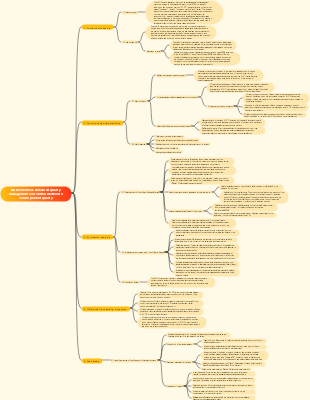
AUDIT method Advanced quality management and control method to ensure product quality
- 18
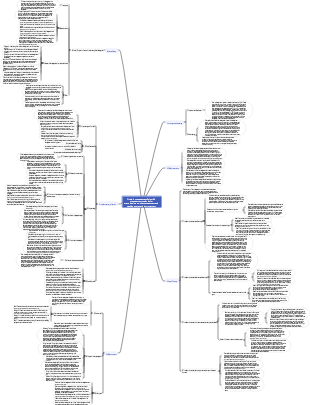
Fixed-in management Scientific management methods for strengthening on-site management and seeking systematic improvement
- 13
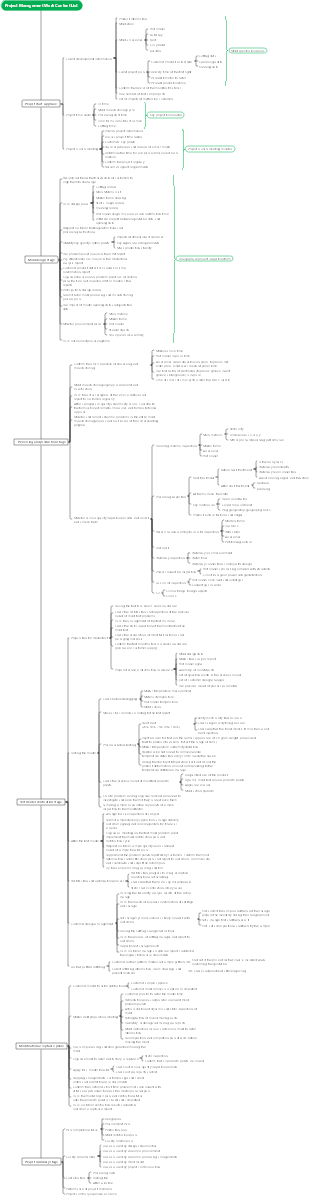

6σ: The world's most advanced quality management method
1. Conceptual meaning
1.1. Generation and development
Six Sigma was born in the United States: the US economy developed rapidly in the 1950s, and its products could meet consumer needs. However, in the 1970s, Japanese products entered the US market with excellent quality and low prices, which had an impact on American companies. Such as Motorola's TV, audio, mobile phone business, etc., prompting American companies to explore Six Sigma management to improve product quality.
Motorola ignited the 6SIGMA spark: Motorola recognized the key issues of product quality, and was inspired by Panasonic's application of Deming's quality management principle to reduce defect rates, and invested in research. In 1981, Motorola proposed to reduce bad products by 10 times within five years and use part of its sales profit to improve quality. Bill Smith, an engineer in the company's communications department, submitted a 6SIGMA mechanical design tolerance document to reduce or eliminate product defects. The company's communications department stated that the goal could be achieved within 6 years, so Motorola named the 6-year plan "6σ solution" and officially implemented it in 1985. 6SIGMA management. At that time, Motorola's quality level was 4SIGMA, that is, there were 6,800 defects in every million opportunities. The 6SIGMA solution set specific quality improvement goals. Two years after implementing 6SIGMA management, Motorola became the first company to win the National Quality Award in the United States, and won the NIKKEI Award in Japan's manufacturing industry the following year. In 1994, Six Sigma achieved great success in Motorola, achieving the 6σ target in many fields, with the manufacturing industry being about 5σ and the input-output ratio being 1:6.2.
"Wildfire" burns all over GE: GE led by Jack Welch implements 6SIGMA management, making it a competitive, agile and flexible company of excellence. In 1995, GE's quality level was between 3SIGMA and 6SIGMA, and due to quality problems, it caused an additional US$7 billion to 10 billion in scrap, rework, etc. Welch was determined to launch the quality revolution and announced the launch of the company's 6SIGMA quality behavior in early 1996, proposing to achieve the goals that Motorola has achieved in 10 years in five years. GE not only learns from Motorola's experience, but also enriches and develops the applications of 6SIGMA, such as applying variance tools to improve efficiency, focusing on helping customers win market competitive advantages, and carrying out many projects that help customers improve their production processes. 6SIGMA management method has achieved significant benefits in GE, with revenue of US$750 million at the end of 1998 and approximately US$1.5 billion in 1999. Analysts believe that the company's revenue will reach US$5 billion by 2010. GE also applies 6SIGMA to customer management, supply chain management, network management and other fields, continuously expanding its application scope.
1.2. Basic Concept
Sigma (Chinese translation of Sigma and Greek letter σ) represents the degree of dispersion of data in statistics, that is, standard deviation; in the field of quality management, it is used to measure the level of quality control. > - If controlled at 3σ level, it means that the product pass rate is not less than 99.73%; > - If controlled at 6σ level, it means that the product pass rate is 99.99966%, that is, for every 1 million products produced, the unqualified products shall not exceed 3.4 , close to zero defects, is equivalent to an enterprise having extraordinary competitive advantages and excess profits. The meaning of quality management is "no matter what you do, there are only 3.4 mistakes in a million operations", which is a pursuit of perfect quality concepts and excellent management methods.
6SIGMA is a concept, philosophy, culture, method and tool that uses statistical methods to discover and find the laws of development of things, reflecting the corporate culture of continuous improvement, boundlessness and lofty learning.
1.3. Main meaning
6SIGMA - a symbol of high quality level and perfection: In terms of quality management, 6SIGMA requires product quality characteristics and services to meet customer needs and avoid defects in the production process. The σ value measures the quality level of the product or service. The error rate of the 6σ quality level is much lower than 2σ and 3σ. Mr. Dever said that 6SIGMA can achieve breakthrough performance levels and provide perfect services to customers.
Volatility is the real focus of quality: In the field of quality management, "average" often conceals "volatility", and "volatility" is the main problem in quality management. 6SIGMA regards solving "volatility" as its core problem, because "volatility" will lead to a large number of rework and repairs in the production department, causing cost losses. σ represents the standard deviation of the normal distribution and is used to characterize the magnitude of fluctuations in mass characteristics.
6SIGMA and processing capability: The CP value of the process (process) capability index is the predecessor of SIGMA. The CP value of 1.33 is equivalent to the effectiveness of 4σ, and the CP requirement of 6σ is equivalent to the CP value of 2.0. CP value is the result of comparing the variance requirements after data measurement, and is mainly used in manufacturing or engineering; 6σ management is the result of comparing the variance (customer satisfaction) after data measurement, and is more widely used. [Formula] In the 6SIGMA management method, the upper or lower limit of product quality and the enterprise's production capacity or processing capacity $B = 6\sigma$, so the processing capacity index $CP = T / B = T / 6\sigma$ ( $T$ is the product quality requirement). Usually the product quality distribution center does not coincide with the processing distribution center, and the average offset is 1.5σ, then the offset degree $K = 1.5\sigma / (T / 2) = 1 / 4$, and the actual processing capacity index $CPk = ( 1 - K)CP$. The processing capability index is a parameter that measures the equipment processing capability of an enterprise under the optimal control conditions. The defect rate calculated based on this parameter is the lowest defect rate that an enterprise can achieve and is the best value.
6SIGMA and defects: 6SIGMA uses three indicators: DPU, DPO, and DPMO to represent defects: > - DPU represents the average number of defects per unit product; > - DPO represents the average number of defects per opportunity, $DPO = $Total number of defects $/ $Total number of chances; > - DPMO represents the average defects per million chance (number of million chances).
DPO and DPMO are the same concept, and it is easier to judge a higher product quality level with DPMO. 5. Evaluation of 6SIGMA performance——Evaluation of circulation pass rate: Performance of the commonly used circulation pass rate KTY evaluation process of 6SIGMA method. Since each process of the production line may have defects, the final pass rate cannot reflect the losses caused by rework and repair of the intermediate process. Therefore, the concept of circulation pass rate is proposed. It is the product of the pass rate of each process, expressed by RTY (R is procurement, T is processing , Y is assembly). [Case] For example, the product has three key links, the pass rate of raw material procurement is 95.5% (waste of 45,000PPM), the pass rate of personnel operation is 97% (waste of 30,000PPM), and the assembly pass rate is 94.4% (waste of 56,000PPM), so the product's The circulation pass rate is: $RTY = 0.955×0.97×0.944 = 87.4%$ (a total of 131,000PPM wasted). This circulation pass rate accurately reflects the efficiency and cost of production, and also reminds of waste problems in production.
2. Characteristics and functions
2.1. Features and innovative content
6SIGMA quality management method almost perfectly meets customer needs, with a defect count of only 3.4PPM, which is a high-level and high-standard quality management.
It is a win-win approach for customers and organizations, starting from the entire business perspective, focusing on customers and businesses at the same time to obtain greater profits and stronger competitiveness.
6SIGMA quality management method is a flexible and comprehensive system approach that requires understanding customer needs, standardizing the use of facts and data, conducting statistical analysis, and focusing on management, improvement and business process reconstruction.
It is a management method that reduces the cost and risks of operating resources, aiming to reduce the risk of customers purchasing and the risks of products or service providers, and improve performance in all aspects.
6SIGMA Quality Management Method emphasizes the combination of quality improvement and economic accounting. Each quality improvement project must have financial results to improve customer satisfaction and corporate efficiency with minimal consumption and resource investment.
The 6SIGMA Quality Management Method is also known as the 6SIGMA Process Method. It uses process improvement projects as units to conduct project selection, design, assessment, implementation monitoring and financial cost analysis. When GE promotes 6SIGMA, it selects a large number of improvement projects and implements them in a team form.
2.2. 6SIGMA’s role in enterprises
The implementation of 6SIGMA can achieve high quality levels. For example, Motorola was awarded the National Quality Award, and GE's defects have been greatly reduced after implementing 6SIGMA, becoming an excellent company in the world.
With customer-centricity, we meet customer needs, enhance customer satisfaction, retain old customers, strive for new customers, increase market share, and increase operating profits. For example, GE's operating profit rose from 14.8% in 1996 to 18.9% in 2000.
Reduce inferior costs and increase returns: Dever, director of the Julan Institute of the United States, pointed out that inferior costs account for a large proportion of sales costs. 【Table 1: Inferior Cost Table】
It can be seen from the table that the proportion of inferior cost increases with the decrease in Sigma level. According to data, companies that implement 6SIGMA can reduce costs and increase revenue. For example, Motorola implemented 6SIGMA, saving $700 million in cost in 1991, and saving $2.4 billion in cost from the start of implementing 6σ. 4. Create a backbone team of the company. Through 6SIGMA's knowledge training and practical experience, cultivate a backbone team of employees with high quality, good skills and strong sense of responsibility to ensure the successful implementation of 6SIGMA. 5. Implementing 6SIGMA can achieve considerable benefits, such as Motorola's employee productivity increases by 126%, and shareholder share value increases by 4 times; General Electric (GE) implements 6SIGMA, achieving Motorola's 10-year target in 5 years, improving quality levels, revenue and profits , Revenue per share increased, shareholders' investment return reached 45% annually, plastic factory production capacity doubled, becoming the world's most valuable company.
3. Implement application
3.1. Application process
1.1.1. Key Activities
Only by carefully selecting projects, carefully designing projects, and carefully implementing projects can we obtain faster and better returns. Among them, carefully selecting projects is a prerequisite and key activity. It is mainly about selecting projects and evaluating projects:
Select projects: implement the principle of preferring to lack rather than abuse, launch an appropriate number of projects, and identify potential 6SIGMA projects. Pay attention to the appropriate scope of the project, choose projects that are effective quickly to improve promotion confidence, and take into account both long-term and short-term projects to ensure that 6SIGMA continues to advance.
Evaluation items: The most basic evaluation methods are cost of inferior quality (COPQ) analysis and pass rate (RTY) analysis:
Cost of inferior quality (COPQ): that is, the operating cost that does not increase value during the process. 6SIGMA's fundamental purpose is to improve efficiency and reduce the low-quality costs that do not add value. There are undiscovered and excluded inferior costs in the enterprise, such as excessive overtime work and product development failure, accounting for about 15% to 20% of sales, and should be the target of 6SIGMA management.
Circulation pass rate (RTY): It is an important tool commonly used in evaluation projects, which can indicate the existence of inferior costs and provide a basis for exposing the "hidden factory". Through the analysis and measurement of the process, we study the impact of different parts of the process on the whole and find out the weak links of the process.
1.1.2. Process improvement mode—DMAIC
6SIGMA management method forms a personalized improvement model - DMAIC, which includes five stages: definition (D), measurement (M), analysis (A), improvement (I), and control (C):
Definition stage (D): The purpose is to figure out who the customer is, the issues that are focused on, customer needs, and the investigation process. The key is to clarify the key quality characteristics in the process. During implementation, we must do three tasks: identifying customer needs, writing project plans, and drawing SIPOC diagrams.
Measurement phase (M): Start describing the process, concretizing the process files, collecting planned data, verifying the measurement process capabilities after measurement, to identify product characteristics and process parameters, understand the process and measure its performance, accurately evaluate the current status of the process, and find room for improvement . During implementation, do four tasks: describing the process, collecting data, verifying measurement, and measuring process capabilities.
Analysis phase (A): organize and analyze the data collected in the measurement phase, find out the influencing factors of product characteristics, propose and verify the relationship between factors and key quality characteristics, determine the key factors that affect, and provide key attention for the improvement phase. Object. During implementation, do three tasks: collecting and analyzing data, proposing and verifying causal relationships, and determining key factors.
Improvement stage (I): Determine the input variables, find the relationship between key quality characteristics and key process characteristics, improve the output variables by improving the input variables, and optimize the results. Factor analysis design, orthogonal design and response surface methods are commonly used. During implementation, do three tasks: putting forward improvement opinions, selecting improvement plans, and implementing improvement strategies.
Control phase (C): It is difficult to maintain improvement results, and a detailed control plan is required for key process characteristics (KCC). During implementation, do a good job in formulating standards, clarifying management responsibilities, and implementing monitoring. Process management is the end point of 6SIGMA management and the starting point for enterprises to become 6SIGMA organizations. Mature process management can promote the quality of the work process and respond to customer needs in a timely manner.
3.2. Essential conditions for implementation
Leadership is the key to the success of 6SlGMA management: 6SIGMA management adopts a top-down implementation method, and leaders need to play a core role in the whole process, and personally plan, commit, practice and implement it. For example, Motorola President Galvin and GE's Jack Welch, their decisions and actions play a key role in the implementation of 6SIGMA management. The leadership responsibilities include setting goals and requirements, ensuring resource supply, selecting outstanding personnel to participate, and taking strong measures. Measures to ensure the realization of 6SIGMA, etc.
Create a large number of 6SlGMA backbone teams: continuous education and training of employees are necessary factors for career success. Motorola pays about 4% of its salary each year to familiarize key employees with quality management concepts and tools, requiring employees to accept and implement 6SIGMA. GE invested $500 million in the first two years for quality training for all employees. Professionals completed 6SIGMA training for green belts or black belts. The black belt training lasted 4 months, and practiced while learning, and followed up learning to master it. Latest technology.
There must be a strong organization to ensure that 6SIGMA management is a systematic improvement of activities and corporate culture, and requires an effective organizational system and excellent talents to promote it. Its organizational form is generally divided into three levels:
Leadership: The executive committee consists of advocates, managers in charge of quality and financial supervisors, and is responsible for formulating plans, providing resources, and reviewing results;
Guidance level: consists of black belt masters or consultants hired by outsiders, responsible for organizing training, guiding projects, and checking progress;
Operation layer: consists of black belts and green belts that carry out improvement activities on the front line, and carry out project improvement activities according to the DMAIC method.
Another organizational model can also be constructed from the perspective of human resources, resources and technology, and the members of the organization involved in the implementation of 6SIGMA have clear responsibilities and authority. 4. To implement the 6SIGMA Management Law, we must have a good corporate foundation: the 6SIGMA Management Law pursues the goal of excellent quality and is a scientific system with rich content, covering many aspects such as management specification system, employee quality, mathematical statistical analysis tools, etc. It is a major system project of the enterprise. . Implementation requires a certain overall quality and ability of the enterprise. Motorola has lasted for ten years and GE has been in use for five years to achieve significant results. However, 6SIGMA can first select advantageous projects in the department or process, and then accumulate experience before expanding to the entire enterprise. 5. 6SIGMA is linked to rewards and promotions: Motorola announced that employee rewards are related to the realization of 6SIGMA goals. GE President Jack Welch stipulates that managerial personnel promotion is linked to 6SIGMA, adjust the company's reward and punishment plan, link some funds to 6SIGMA results, and also Send most of the gifted stock options to employees participating in black belt training, which fully mobilizes employees' enthusiasm and trains a large number of 6SIGMA-type leaders.
3.3. Infrastructure
[Picture: 6SIGMA Team Picture] The 6SIGMA team includes different roles, each with clear functions: > - Champion: The number of people is generally smaller than that of the Black Belt Master, most of which are part-time jobs. The main function is to supervise and guide the entire 6SIGMA activities, set goals, and select Black Belt Master and black belt. > - Black Belt Master: Full-time positions, the number is about 0.1% of the total number of employees in the company. The main function is to teach Black Belt 6SIGMA's strategies, skills and tools, check the progress of Black Belt and its team's activities, formulate plan goals for the team, and train Black belt. > - Black Belt: Full-time positions, with a total number of about 1% of the company's total number. It is the core resource and backbone of the company's continuous implementation of 6SIGMA management. Its main function is to select and guide team members to form a boundless team, and train team members to use 6SIGMA tools , training green belt. > - Green Belt: The number of part-time employees is about 10% of the total number of employees in the company. It is an important resource and backbone for the implementation of 6SIGMA management. Its main function is to select projects that have a direct impact on the current work and implement them, and train yellow Belt or leucorrhea. > - Yellow belt or leucorrhea: Part-time staff, mostly low-level managers or operators, and their main function is to participate in the specific implementation and cooperation of the project.
3.4. Core Toolbox
6SIGMA management core toolbox is based on the tools that black belt should master, including statistical tools at different stages:
Definition (D) stage tools: questionnaire method, histogram, hierarchy method, arrangement method, causal graph, bar graph, random sample and random sampling, hierarchy method (AHP), and quality function expansion (QFD).
Measurement (M) stage tools: process flow chart, causal chart, control chart, arrangement chart, scatter chart, measurement system analysis (MSA), failure mode analysis (FMEA), process capability index, and customer satisfaction index.
Analysis (A) stage tools: brainstorming method, multivariate graph, confidence interval for determining key quality, hypothesis test, box graph, histogram, arrangement graph, multivariate correlation analysis, regression analysis, analysis of variance (ANOVA).
Improvement (I) stage tools: Quality function expansion (QFD), experimental design (DOE), orthogonal test, response surface method (RSM), expansion operation (EVOP).
Control (C) stage tools: control chart, statistical process control (SPC), fault prevention program (Poka - Yok), process capability index (Cp, Cpk), standard operating program (SOPS), process file (program) control.
3.5. Scope of application
6Sigma management methods are suitable for all types of organizations and management fields, but not all organizations are suitable for immediate implementation. Only organizations with a fairly standardized management foundation and with good quality personnel can have the basis for implementing the 6Sigma management method. Currently, most of the first-class international or domestic enterprises that promote and implement 6Sigma management methods are promoted and implemented.
4. 6SIGMA, TQM, IS09000 connection and difference
4.1. 6SIGMA and ISO9000
Birth time, origin and historical background: ISO9000 was formulated by the International Organization for Standardization in 1978 to summarize the experience of supplier quality assurance system for Western industrial countries, and is a product of the development of the world economy and trade; 6SIGMA was approved by Motorola President Galvin in 1978 to implement the " The 6SIGMA solution was born under the background of fierce competition in market quality that affects the survival and development of enterprises.
Purpose: ISO9000 aims to meet the requirements of customers and laws on product and service quality, with a business activity color; 6SIGMA pursues excellent quality, provides customers with defect-free products and perfect services, and improves corporate economic benefits.
Coverage: ISO9000 does not cover corporate finance; 6SIGMA emphasizes the combination of improvement and finance, and improves results through financial evaluation and analysis.
Training and education: The depth and breadth of ISO9000 are limited; the training and education of 6SIGMA has a long time, wide knowledge and rich content to ensure the effective implementation of 6SIGMA.
Function: 6SIGMA is a major business management strategy for the enterprise and has a breakthrough and improvement effect on the enterprise; ISO9000 has failed to achieve major breakthrough improvement.
4.2. 6SIGMA and TQM
Inheritance and development relationship: 6SIGMA is the inheritance and development of TQM.
Characteristics of the times: 6SIGMA is the product of the development of the times, and is adapted to the background of the continuous improvement of product and service quality requirements for modern life and economic activities.
System Method: 6SIGMA is a scientific and complete system method, with clear ideas and rich content, effectively integrating various tools, giving full play to the value-added role of tools on enterprises; TQM is difficult to achieve this.
Organizational form: TQM carries out work with QC group activities; 6SIGMA carries out work with team activities for improvement projects. Team members include highly qualified black and green belts that have been strictly trained, attaching importance to data analysis, problem-solving process and goal determination.
Application scope and effectiveness: 6SIGMA has a wide range of applications and focuses on effectiveness, and pursues maximization of economic benefits, which can enable multiple personnel to integrate with common goals; TQM application scope is relatively narrow, and its economic benefits are not as good as 6SIGMA.
6SIGMA, ISO9000 and TQM all emphasize continuous improvement and carry out the next round of improvements according to the PDCA cycle. However, ISO9000 is less used in enterprises, and the TQM improvement is not as strong as 6SIGMA. The improvement of 6SIGMA has undergone a fundamental change and is welcomed by more and more companies.
5. Case Study
5.1. Case: Shanghai Mobile Communications promotes Six Sigma management to improve "billing accuracy" and "call drop rate"
Understanding of Six Sigma Quality Management:
Conditions for mobile communication enterprises to apply the Six Sigma Management Method: The service targets of mobile communication enterprises are the general public, the service is continuous and highly technical, and the service quality determines its market competitiveness. The introduction of the Six Sigma management method has relevant prerequisites: First, there is a process, and the improvement can be found by using Six Sigma's "SIPOC" process analysis method; second, there is a cost, and the Six Sigma management method can be used to obtain cost benefits by improving service quality.
The application of the Six Sigma Management Method is full of opportunities: Shanghai Mobile has established a quality management system through the "ISO9001" and "TL9000" standards, but there is still room for improvement in service quality. According to the 2003 CSI test, the customer satisfaction level was 85.3, which was converted to the six sigma level of about 2.58, and there was huge room for improvement. A series of methodologies of the Six Sigma Management Method can solve quality problems and combine them with the existing quality management system to improve service quality.
Implementing Six Sigma Management: Shanghai Mobile explores and summarizes the Six Sigma promotion and application method of "two major strategies and three stages".
Two major strategies:
Pay attention to Shanghai Mobile's "manufacturing" department to improve internal customer satisfaction: Shanghai Mobile's internal billing information center, operation and maintenance center and other "manufacturing" departments have clear work flow and measurable data. Improving the quality of products in these departments (such as call order processing accuracy and call success rate) can ensure operational standards accuracy, form a virtuous cycle of "internal customer-front desk service interface-external customer" and improve customer satisfaction and service quality.
Find key processes in the continuity of customer service processes, so that the invisible service processes gradually become obvious: the service processes in the mobile communication industry are continuity, and related processes can be separated from the perspective of users using mobile products, such as purchasing cards, using the network, and billing. Processes such as payment, consultation and complaint handling, and retention of users. Among them, normal calls, accurate billing, precise deduction and other processes are key processes that customers pay attention to. Improving the quality of these key processes through Six Sigma can make invisible services explicit, meet customer expectations, and improve service quality.
Three stages:
Top-down introduction stage: In the second half of 2003, Shanghai Mobile introduced the basic theory of the Six Sigma management method to high school managers through special lectures and written materials, focusing on leadership-driven and financial-driven principles, and cultivating a good implementation atmosphere.
Various training stages: Starting from early 2004, Shanghai Mobile compiled training materials, invited experts to organize training, and selected personnel to participate in external training. It trained 5 black belt personnel and 50 green belt personnel, and 3 people were engaged in quality management for a long time. The personnel are trained in the direction of "black belt masters", laying the personnel foundation for project implementation.
A targeted progress phase: In 2004, Shanghai Mobile launched several six sigma projects, such as billing accuracy, call drop rate and 1860 account query optimization projects. Billing accuracy items improve the accuracy of billing wholesale price processing to avoid mis-collecting, over-collecting, and less collection; call drop rate items increase user call reconciliation rate; 1860 Account query items shorten user query queuing time and improve user service recognition.
The results of applying Six Sigma:
Exploring the path of practice: Shanghai Mobile took the lead in exploring the path of practical use of the Six Sigma management method for mobile communication enterprises to achieve excellent enterprises, providing useful reference for the quality improvement of other mobile communication enterprises.
Improve service indicators and reduce costs: Through the Six Sigma project, the company has significantly improved in weak links and improved customer satisfaction, such as the satisfaction with billing accuracy rose from 75 in the fourth quarter of 2003 to 86.6 in the third quarter of 2004; The waiting time for 1860 accounting inquiry was shortened from about 2 minutes in 2003 to within 15 seconds in 2004; the pilot project achieved direct economic benefits of about 6 million, and also won a number of honors, with significant indirect benefits.
Integrate service quality evaluation system: The Six Sigma Management Law effectively integrates Shanghai Mobile's service quality evaluation system, making the original quality management system more sound and perfect, and at the same time continues and supplements quality management tools and basic systems such as CSI and TQM.
Directions for promoting the application of Six Sigma Management: In view of the successful practice of Six Sigma quality management method at Shanghai Mobile, the company will continue to carry out the Six Sigma project. According to the selection of project strategies and SERVQUAL service quality characteristics, select key departments and key processes to promote, such as improving signal coverage in Shanghai, shortening account managers' attendance time and business hall queuing time, improving billing accuracy and timely bill delivery rate, and providing business The department’s self-service inquiry terminal, etc.
6. Related tools
6.1. Lean Six Sigma
1.1.3. Conceptual meaning
Lean Six Sigma (LSS) is a combination of lean production and Six Sigma management, essentially eliminating waste. The purpose is to effectively allocate and optimize resources by integrating the advantages of the two, reduce costs, shorten production lead time and delivery time, improve quality and customer satisfaction, and enhance organizational competitiveness. It is not simply adding the two, but complementing each other and organically combining them.
By the scope of the problem solving, Lean Six Sigma includes simple lean improvement activities and Lean Six Sigma project activities. Simple lean improvement activities adopt the theory and methods of lean production to solve simple problems; Lean Six Sigma project activities target complex problems, including traditional lean projects, Six Sigma project and narrow lean Six Sigma project. The narrow lean Six Sigma project needs to combine lean production and Six Sigma philosophy, Methods and tools. The traditional Six Sigma project mainly solves complex problems related to mutation, while the Lean Six Sigma project solves comprehensive complex problems related to mutation, efficiency, etc.
By implementing Lean Six Sigma, organizational processes can benefit from reducing business process variation, improving process capabilities and stability, reducing inventory, shortening production beats, quickly responding to customer needs, and improving customer satisfaction.
1.1.4. Implement application
Key success factors for implementation:
Focus on the system: The power of lean Six Sigma lies in the entire system. When implementing it, you should not only focus on a single project. You should consider overall improvement of the operating system, balance short-term financial performance with the company's long-term strategy, organically combine lean production and Six Sigma, and choose appropriate methods and tools based on the problem stage. Avoid different departments using different models separately.
Attach importance to cultural construction: Culture is crucial to the success of Lean Six Sigma. We must build a culture of continuous improvement, pursuit of perfection, and participation of all employees, so that employees can consciously do things in the Lean Six Sigma way.
Process management as the center: Lean Six Sigma must be process-centered, get rid of the thinking method based on organizational functions, discover the value-added and wasteful links in the value stream, and conduct efficient management.
Leader’s support: Lean Six Sigma needs to deal with complex system problems, communicate with multiple departments and obtain resource support. Leaders should provide tangible support, participate in management changes, and promote the implementation of Lean Six Sigma.
Select the right person: Lean Six Sigma implementation involves all staff and has high requirements for personnel in terms of awareness, morality and technical level. Employees should have enterprising spirit and pursuit of perfection, noble professional ethics and team spirit. Generally, employees are multi-skilled workers, and leaders can skillfully use relevant tools and skills and have good communication skills.
Correct usage methods and tools: Choose lean production or Six Sigma method tools according to the complexity of the problem, or use them in combination. For simple problems, use lean production methods and tools, and for complex problems, use Six Sigma methods and tools. Some complex problems need to be combined to achieve lean production speed and robustness of the Six Sigma process.
Implementation process: Lean Six Sigma activities are divided into simple lean improvement activities and lean Six Sigma project activities. Simple lean improvement activities use lean method tools to solve simple problems. The Lean Six Sigma project targets complex problems. The narrow Lean Six Sigma project adopts a new "Definition - Measurement - Analysis - Improvement - Control" process (DMAIC II), which is different from the traditional DMAIC process by adding lean philosophy, methods and tools:
Definition stage: Define value using lean ideas, propose process frameworks, and define improvement projects in combination with Six Sigma tools, including defining customer needs, analyzing systems to find waste or variation, identifying improvement opportunities, analyzing organizational strategies and resources, identifying project key outputs, resources used, and scope.
Measurement stage: Combining lean production time analysis technology with Six Sigma management tools, the current status of measurement process management, including defining process characteristics, measuring process status, analyzing the measurement system, and evaluating process capabilities.
Analysis stage: Use Six Sigma technology to combine with lean flow principles to analyze variation and waste, find the source of waste or source of variation, and determine the process and key input factors.
Improvement stage: Based on the principle of flow and pull, two mode tools are used to add, rearrange, delete, simplify and merge the process, and at the same time improve process stability and capabilities, determine the relationship between input and output variables, propose optimization plans, and formulate improvement plans. .
Control stage: In addition to completing the Six Sigma management control content, summarize new problems arising from implementation, establish operational specifications, implement process control, verify measurement systems, processes and their capabilities, standardize successful experiences, and raise new questions.