 Wondershare EdrawMind
MindMap Gallery Fixed-in management Scientific management methods for strengthening on-site management and seeking systematic improvement
- 13
Fixed-in management Scientific management methods for strengthening on-site management and seeking systematic improvement
This is a mind map about fixed-location management: strengthening on-site management and seeking systematic improvements in scientific management methods, and is still worried about the chaos and inefficiency of the production site? Customized management will help you! It covers modules such as conceptual meaning, basic theories, implementation and application. It is suitable for business managers, workshop directors, and on-site staff. It can be used in factory workshops, warehouses, construction sites and other scenarios. Provides editable source files. Click to bookmark and download it and get a practical template for fixed management!
Edited at 2025-02-04 12:48:28
- DeepSeek User Guide Collection
In order to help everyone use DeepSeek more efficiently, a collection of DeepSeek guide mind map was specially compiled! This mind map summarizes the main contents: Yitu related links, DS profile analysis, comparison of DeepSeek and ChatGPT technology routes, DeepSeek and Qwen model deployment guide, how to make more money with DeepSeek, how to play DeepSeek, DeepSeek scientific research Application, how to import text from DeepSeek into MindMaster, the official recommendation of DeepSeek Wait, allowing you to quickly grasp the essence of AI interaction. Whether it is content creation, plan planning, code generation, or learning improvement, DeepSeek can help you achieve twice the result with half the effort!
- DeepSeek 30 feeding level instructions
This is a mind map about DeepSeek's 30 feeding-level instructions. The main contents include: professional field enhancement instructions, interaction enhancement instructions, content production instructions, decision support instructions, information processing instructions, and basic instructions.
- Voice recognition commercial solution
This is a mind map about a commercial solution for task speech recognition. The main content includes: text file content format:, providing text files according to the same file name as the voice file.
Fixed-in management Scientific management methods for strengthening on-site management and seeking systematic improvement
- DeepSeek User Guide Collection
In order to help everyone use DeepSeek more efficiently, a collection of DeepSeek guide mind map was specially compiled! This mind map summarizes the main contents: Yitu related links, DS profile analysis, comparison of DeepSeek and ChatGPT technology routes, DeepSeek and Qwen model deployment guide, how to make more money with DeepSeek, how to play DeepSeek, DeepSeek scientific research Application, how to import text from DeepSeek into MindMaster, the official recommendation of DeepSeek Wait, allowing you to quickly grasp the essence of AI interaction. Whether it is content creation, plan planning, code generation, or learning improvement, DeepSeek can help you achieve twice the result with half the effort!
- DeepSeek 30 feeding level instructions
This is a mind map about DeepSeek's 30 feeding-level instructions. The main contents include: professional field enhancement instructions, interaction enhancement instructions, content production instructions, decision support instructions, information processing instructions, and basic instructions.
- Voice recognition commercial solution
This is a mind map about a commercial solution for task speech recognition. The main content includes: text file content format:, providing text files according to the same file name as the voice file.
- Recommended to you
- Outline
AUDIT method Advanced quality management and control method to ensure product quality
- 18
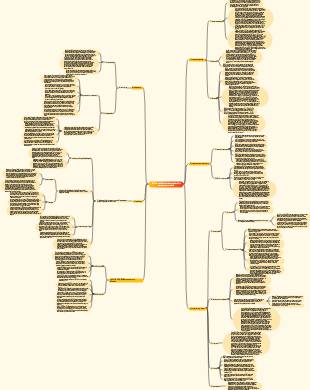

Fixed-in management: Scientific management methods for strengthening on-site management and seeking systematic improvement
1. Conceptual meaning
1.1. Generation and Development
Fixed-in management originated in Japan and was founded by Mr. Aoki Kameo, the civilized production instructor of the Aoki Nengsu (Industrial Engineering) Research Institute in Japan. Since the 1950s, he proposed this new concept based on the practice of production site management of Japanese enterprises. Later, Japanese enterprise management expert Mr. Chihiro Shimizu developed fixed-site management based on application, summarizing and refining fixed-site management into a scientific management method, and published the book "Introduction to Fixed-site Management" in 1982. Since then, this scientific method has been promoted and applied in many Japanese companies and achieved obvious results. At present, many enterprises in my country have incorporated fixed-location management into an important part of logistics management, and have continuously applied and developed this scientific management method, and achieved practical results.
1.2. Basic meaning
The so-called fixed-establishment management is a scientific management method for enterprises and institutions to strengthen on-site management and seek systematic improvement. It takes production and work site as the research object, and explores the status of people, objects, places, and information in production factors and their relationship in production and work activities. Through operation research and action research, various items at the production and operation site are placed in a scientific and reasonable position according to the requirements of the process flow, restrictive conditions and usage methods, so that the people, objects and the site are in the best combination state, realizing time to maximize the elimination of unsafe state of matter and the control of unsafe behavior of people, promote safe and civilized production and improve economic benefits.
It takes the scientific setting of objects on site as the premise, and uses a complete information system as the medium to achieve the effective combination of people and objects. By sorting and rectifying the production site and existing items, we will resolutely remove unnecessary items and place needed items in the prescribed position, so that they can be easily obtained and improve work efficiency.
2. Main functions
Implementing fixed-location management can eliminate unsafe conditions of objects. It can rationalize the placement of various items, optimize the combination of mechanical and electrical equipment, reasonable layout of workstations, unimpeded safety channels, sufficient illumination, bright light, orderly production site, orderly various operations, minimize the production site unsafe factors. Implementing special fixtures and controls for special items and key departments can greatly reduce the unsafe state of objects, strengthen equipment management, and reduce equipment failures and personal accidents.
Fixed management is conducive to restricting people's unsafe behavior. The working environment established by implementing fixed-location management can affect people's psychology and have a huge influence and shaping power on operators' safety values. In such an environment, people with unsafe behaviors will be "assimilated" to form a self-discipline and self-control self-management situation, and at the same time, it can strictly implement discipline and process regulations and reduce violations.
The implementation of fixed-set management can create first-class market behaviors in built-in and create first-class market behaviors outside. Good safety conditions and working environment have an incentive effect on the development of productivity. Implementing fixed-location management can make production balanced, labor organization reasonable, job responsibilities clear, and improve production efficiency.
Implementing fixed-location management can make logistics orderly, eliminate ineffective labor, reduce labor intensity, and ensure product quality. It can also accurately verify various consumption quotas, explore space resources, turn waste into treasure, and build a good production and operation site to create a first-class market outside.
3. Basic Theory
The basic theory of fixed management is to use dialectical perspectives and systematic ideas to correctly handle the relationship between people, objects, environment and information, thereby deriveing scientific management methods and opening up a new way for safe and civilized production.
3.1. The relationship between people and things
In production activities, there are five major factors: people, machinery, equipment, materials, methods, and environment. From the perspective of safe and civilized production, the most important factors are the two factors of people and things. Only by eliminating the unsafe state of things and controlling the unsafe behavior of people and correctly handling the relationship between people, things and the environment can the accident be controlled.
There are two forms of combination between people and things: direct combination and indirect combination:
The so-called direct combination means that the things that people need can be obtained immediately and accurately, such as the processing objects, tools, etc. placed in a convenient and acceptable position, and the operator can obtain them at will without being away from the post.
The so-called indirect combination means that people and things are in a state of separation. People need guidance and confirmation of information media to obtain things smoothly and accurately. If there is an error in the information or a mistake in confirmation, it will not only affect production, but also add insecurity factors.
Three states of the combination of humans and things:
State A: The combination of people and things can be carried out immediately and accurately, and effective production activities can be carried out immediately.
State B: People and things are in a search state, or something has certain defects and must go through certain activities before they can carry out safe and effective production activities.
State C: The object has nothing to do with production, and people do not need to combine it with the object. However, these objects do occupy limited space on the production site, making the site on the production site narrow and messy, directly affecting the tidy environment, the passage and operation of personnel, and affecting the rapid integration of people and things.
The above three states are the most ideal in state A, which is most beneficial to safe and civilized production and to improve economic benefits. Therefore, one of the purposes of fixed-set management is to maintain state A for a long time through 5S (organization, rectification, cleaning, cleaning, habit) activities; analyze state B, and improve it gradually approaches or reaches state A; C state, clean up separately according to its specific circumstances, so that all items that have lost contact with production can be cleaned out of the production site and placed in the most reasonable position. In the process of implementing fixed-location management, the handling of state C is a very important and critical task. On the one hand, it can restore some items to its use value; on the other hand, it can free up places and save limited space resources. Promote safe and civilized production.
3.2. The relationship between places and people and things
In production activities, the combination of people and things is the key factor that determines safe and civilized production. However, the state of union between people and things is inseparable from the state of the production site. Therefore, to achieve the best combination of people and things, it is necessary to first deal with the combination between things and places. To this end, the people and objects at the production site must be analyzed, time and action, so that the objects should be fixed in a reasonable position in the place according to the requirements of the process flow and the needs of ensuring safe and civilized production, so as to realize the objects and places. Effective combination, shorten the time and distance of taking things, reduce the ineffective labor of people, promote the optimal combination of people and things, and reduce the occurrence of accidents.
The scientific combination form of place and object: In the production site, based on the regularity of logistics movement, based on the principle of combining people and objects and making full use of the place space, the location of objects is scientifically determined. This is the place and object a scientific way of combining. There are two basic forms of the combination of places and objects:
First, fixed position. Fixed place, fixed place of items, fixed information medium of items. For example, driving, spreaders, workbenches, molds, rolls, containers, etc., these objects undergo periodic back and forth movements in logistics movements, and constantly combine people and objects. After these items are used, they must return to their original place.
The second is free position. Items are placed freely within a certain range, and relying on information media and information processing methods to achieve the combination of people and objects. This fixed-setting form is suitable for items in the logistics system that do not return or reuse. However, in practice, the two forms can be used in combination as needed.
There are three states of a place: The state of a place can be divided into three types:
State A, that is, good state. The working environment, working space, ventilation facilities, lighting illuminance, temperature, humidity, noise, vibration, smoke, dust, dust, etc. all meet the operator's physiological and production requirements and comply with the technical regulations.
State B, that is, a state that needs to be improved. The labor environment, place layout, and safe production conditions may not meet the operator's physiological requirements, or may not meet the production requirements, or both may not be fully met.
State C, that is, a state that needs to be completely transformed. The working environment and workplace cannot meet the physiological requirements of the operator, nor can they meet the requirements of safe production.
3.3. The relationship between information media and people, objects and places
In production activities, it is impossible for many objects to be directly combined with each other, but most of them are in an indirect state of bonding. To achieve the scientific combination of people and things, we must rely on the guidance and confirmation of information media.
Classification and function of information media: Information is all things that exist objectively, and all the knowledge contents that can be transmitted and exchanged in messages, intelligence, data and signals that occur through material carriers. In production activities, information plays a role in guiding, controlling and confirming the logistics of targeted items. Generally speaking, information can be divided into four categories: instructional information, standard information, guiding information and confirmatory information, collectively referred to as information flow. In fixed-location management, the specific information used can be divided into two categories: guiding information and confirmatory information:
First, guiding information: refers to people being guided to the destination through information medium. The guiding information includes a first vehicle and a second vehicle. The first medium tells people "Where is the object?" to guide people to combine with the object, such as the location ledger of various items. The second medium tells people: "Where is it?" For example, a fixed-setting graph is used to vividly indicate the location of the place or area where the items are stored.
Second, confirmatory information: refers to people confirming the place and items through information media. It includes the third and fourth media. The third medium tells people that "this place is the place", also known as place signs, such as area signs, etc. The fourth medium tells people that "this thing is the thing", such as the name and specification of the item, so that the combination of people with the thing becomes an effective combination.
The use of information media in the location system:
The information flow and logistics are combined to achieve the effective combination of objects, places, people and things. This is the application of information media in the location system. In a fixed position system, the object is fixed at a certain position in the place by using information media, guiding people to return to their original position after the item is used, and the periodic effective combination of people and objects is achieved, such as in the warehouse. "No. 4 positioning" (store, area, shelf, position) and "three consistency" (account, card, item), etc.
In the free position system, information media is used to transfer objects that do not return or reused to operators or managers, to achieve an effective combination of people, objects and places, and to give full play to the role of the place space, such as recording raw material information notices, etc. The information required for information media in the location system must be clear and eye-catching; the guidance information must be complete; the workshop, work section, team toolbox, all production sites and business sites must have fixed maps, and various location ledgers must be complete; Information media should be standardized and standardized.
3.4. The relationship between logistics system and people, objects, places and information
The so-called logistics system refers to the entire process from the entry and output of raw materials into the factory and the entry and output of each process according to the process flow. The quality of a logistics system is determined by the mutual relationship between the people, objects, places, and information media that constitute the system.
A good workplace is the basis for smooth logistics. During the production process, various products must go through a series of processes. In order to make full use of space and time and achieve efficient efficiency of the logistics system, it is necessary to arrange the handling route of the workplace and clarify the inspection area, parking area and storage. The site, etc., enables the processing object to flow in a good environment.
Information media reflects the location, characteristics and status of the object in a timely and accurate manner, which is the prerequisite for the logistics system to achieve order and efficiency. Information media combines the people, objects and places in the logistics system, and flows according to the route, time, quantity, quality and standards specified by the information, so as to promote continuous production activities according to the predetermined plan and goals. Proceed rhythmically.
The rational placement of items, the rational configuration of processing objects and processing means objects, and the effective combination of people and objects are the main body of the logistics system. Only when the object of processing has a reasonable position and can the object of processing be properly configured with the means of processing can the operator shorten the time for picking up the items in each process position, facilitate operation, reduce or eliminate ineffective labor, reduce labor intensity and reduce risk factors.
4. Main content
4.1. Basic content
The content of fixed-set management is large and wide. According to its principles and the practical experience of advanced enterprises, the formula can be expressed by: "The objects are divided into four categories and positioned according to the diagram; ABCD, which is often replaced by waste; different colors, red, blue, yellow and black; Adhere to fixed-setting is the best of civilization.”
Things are divided into four categories, that is, according to the combination status of people and objects on the scene, items are divided into four types:
Class A: Represents commonly used items, such as objects being processed and methods being processed, etc., and are represented in red.
Category B: It means items that are to be converted into Class A at any time, such as semi-finished products in turnover and station equipment used for turnover, etc., which are represented in blue.
Category C: It indicates items stored on behalf of others, such as products to be shipped and workstations temporarily sealed, etc., which are represented in yellow.
Class D: It represents waste, waste, etc., waiting for treatment, such as steel slag, garbage, etc., and is represented by black.
The above four types of items are placed in a reasonable position according to the fixed map, and signs are set according to the standards to ensure that the pictures and objects are consistent.
4.2. Objects for fixed management
Site setting: Through process analysis and operation research, scientific and reasonable division of production areas, greening areas, sanitary areas and item stacking areas, etc., and design reasonable setting drawings according to requirements to make the area, process and production site orderly. The production site must also be divided into storage areas such as raw materials, semi-finished products, finished products, maintenance products, and waste products to prevent chaos; safety channels should be set up according to standards and marked clearly; management systems must be formulated in greening areas, sanitary areas and various item stacking areas. Implement responsibilities and conduct regular assessments.
Fixing of equipment: Through action research, time research and process flow analysis, the electromechanical equipment is optimized and combined, and the work station equipment is arranged reasonably; the height of the workbench and the operating table must be appropriate; for consumable parts, be prepared in advance and set in the spare parts of the equipment In the box; various materials and spare parts should be placed in the designated container next to the machine or assembly line according to the required amount required by the production process, and should be supplemented regularly according to the amount required by each shift.
Fixed placement of special items: special placement for flammable, explosive, toxic and harmful items polluting the environment, as well as unsafe workplaces to prevent accidents, control pollution, and achieve safe and civilized production.
Fixed warehouse management: By adjusting the location of items, the various items in the warehouse are placed in an orderly manner, with accurate positioning and neat standard, thus promoting warehouse management to be safer and more civilized, giving full play to the functions of the warehouse, and ensuring that at the specified time Within, accurately and timely provide the required number of materials, parts, etc. to the production process.
Fixing of toolbox: Determine the standardization standards and placement location of toolboxes and the scientific and standardized stacking of items in the box.
Operator's Fixing: Every operator must stick to his or her own operating position according to the division of labor of the process and position. He or she is not allowed to interfere with a job, especially for special operations. He or she must be certified to work.
4.3. Main types
The scope of fixed-set management is different, and fixed-set management can be divided into five types:
System-wide fixed-location management: that is, implement fixed-location management in all systems and departments of the entire enterprise.
Regional fixed-location management: that is, the production site is divided into several fixed-location areas according to the process flow, and fixed-location management is implemented for each area.
Functional department fixed management: that is, the functional departments of the enterprise implement fixed management of various items and documents.
Warehouse fixed management: that is, implement fixed management of the stored items in the warehouse.
Special fixed-location management: that is, fixed-location management of weak links that affect quality and safety, including flammable and explosive, toxic substances with deterioration, etc.
5. Implement application
5.1. Understanding and Principles
The main basis for implementing fixed-location management is the production system goal, that is, storage costs, labor, idle equipment and management costs are kept at a certain level, achieving the expected production volume, and meeting the production capacity needs for the future period. Secondly, the requirements of the processing process and the effective space at the production site are also the main basis for carrying out fixed-location management. The main principles of fixed-location management are as follows:
Comply with process requirements, through design and adjustment, the people, objects and information on the production site can reach the best state and meet the process flow.
Taking safety as the premise, ensure safe operation, safe placement of items, proper protection, unobstructed roads and convenient fire fighting.
Comply with the standards stipulated in environmental protection and labor protection.
Implement the principle of saving, adapt to local conditions, use existing conditions, and spend less money and do more work.
Following the dynamic principle, fixed storage and places should change with changes in production and operation.
5.2. Basic Requirements
Clarify the scope of fixed-level management and implement the fixed-level management responsibility system.
Optimize the placement of items.
Items that are not related to production or work shall not be placed in production and work.
Formulate floor plan of indoor items.
Items must have complete and standardized labels and logos.
5.3. Progress steps
5.3.1. Establish an organization and train personnel
A fixed management leadership group was established with the deputy director of production as the group leader and the heads of multiple departments as members, and the heads of various workshops, department heads and team leaders were trained to provide fixed management training to lay the foundation for carrying out work.
5.3.2. Research on process routes
Process research is the starting point of the process of fixed-location management. It is necessary to conduct detailed research on the processing methods, machinery and equipment, and process flow at the production site, determine the advancedness and rationality of the process, and clarify the production site product manufacturing and handling routes. The steps are as follows:
Conduct a site investigation and use standard symbols and charts in industrial engineering to record the current methods in detail to provide accurate data for process research.
Use method research and time research to analyze and record facts, find out the problems and influencing factors in the process flow and transportation route, and propose directions for improvement.
Conduct technical and economic analysis of the improvement plan, compare it with the old plan, and implement it as a standardized method after confirming the ideal.
5.3.3. Conduct on-site investigation and analysis of the state of combining people and objects
Analysis of the state of combining people and things is a key link in fixed-location management. The combination forms between people and things are direct and indirect. The degree of binding is divided into three states: A, B, and C:
Status A: People and things can be combined immediately and exerted. If the tools required by workers are placed reasonably, they can be obtained immediately.
State B: People and things are in a search state or cannot perform well, such as difficult to find tools and unreasonable placement of roughs.
Status C: People have no connection with things, such as scrap items at the production site, occupy space and affect work efficiency and safety.
When designing fixed management, state C should be eliminated, state B should be improved to state A and maintained.
5.3.4. Fixed-location management design
Fixed management design includes fixed drawing design and information medium design:
Fixed-set drawing design: Fixed-set drawings comprehensively reflect the fixed location of objects on the production site and the relationship between people, objects and places. There are various types, and the drawing principle includes that all items on site should be drawn, the drawing should be concise and complete, reflect the fixed and made items, marked and explained with standard or custom symbols, and modified with changes in the fixed relationship.
Information media design: including information symbol design, panel diagram, and sign design. Enterprises should design information symbols based on actual conditions and adopt them directly with national standards. The designed symbols should be concise, vivid and beautiful. Fixed display panels and signs are visual management methods. Each place should be hung, and its content is consistent with the blueprint. The background color is selected as light tones. The picture is clean, eye-catching and not easy to fall off. All types of fixed objects and areas should stipulate color standards.
5.3.5. Customized implementation
Fixed implementation is a key stage in putting theory into practice, including the following steps:
To eliminate things that have nothing to do with production, in the spirit of "double increase and double festival", you can change and use what you cannot sell.
Fixed placement is implemented according to the fixed-set diagram. Each workshop and department classifies, transports, adjusts and locates the items to ensure that the items are in line with the drawing, is in correct position, is neatly placed, and has utensils stored. Moving items also need to be fixed.
Place standard information brand, ensure that the cards, objects and pictures are consistent, and manage them with a dedicated person. The principle is to be eye-catching and not hinder production operations, so as to realize that there must be objects with pictures, there must be areas with objects, there must be signs with areas, and there must be categories with cards. Set up according to the picture, store by category, and the accounts (pictures) are consistent.
5.3.6. Fixed-set inspection and assessment
Fixed-in management needs to be persistent, so it is necessary to establish inspection and assessment systems, formulate measures and reward and punishment according to standards to achieve long-term, institutionalized and standardized fixed-in-term. Inspection and assessment are divided into acceptance inspection after fixed placement (reset if unqualified) and regular inspection and assessment (more complicated and important). The basic indicator of fixed placement assessment is fixed placement rate, and the calculation formula is: fixed placement rate = actual fixed number of items (number of types)/number of fixed items (number of types) specified in the fixed placement chart × 100%.
5.4. Basic Techniques
Fixed management is a dynamic system, and requires the use of a variety of basic techniques to scientifically analyze the site and design it:
On-site diagnosis: analyze the on-site status, find out the problems and causes, design the plan to achieve the predetermined management goals, and determine the tools and methods that need to be managed in a fixed manner.
Operation research and analysis: study the location of operators and machines, determine fixed tool items, analyze operator actions, improve work efficiency, and establish a reasonable production order.
Process analysis: According to the processing and processing process of objects, analyze them in different links, determine reasonable processes and transportation routes, and realize the integration of people, objects and places.
Action analysis: Study the actions of the operator, optimize the combination of people and objects, and make the operation standardized, the item setting standardized, and the combination of people and objects and places efficient.
Environmental factors analysis: Improve environmental factors that do not meet national environmental standards to achieve the standards.
6. Case Study
6.1. Case: XX Shipyard’s Practice for Implementing Fixed Management
background
XX Shipyard is a large civil shipyard in my country. It is a large backbone enterprise in the country. It has fixed assets of more than 100 million yuan, more than 4,800 employees, and an area of 993,000 square meters. Its product has high technical requirements, high manufacturing difficulty, long production cycle, wide coverage, numerous raw materials and parts, complex processes, many cross-three-dimensional operation links, and difficult on-site management.
Ideas and methods
XX Shipyard has a total of 13 production workshops. Some workshops are less difficult to implement fixed management, so they can be designed and planned according to experience; workshops such as hulls are difficult, but as the main workshop of production, it is imperative to implement fixed management. The shipyard considers the methods, key points, procedures and steps for implementing fixed-location management as follows:
Formulate fixed management measures, organize learning, clarify concepts, content, requirements, activities, standards, inspection and assessment, etc.
Choose the hull workshop as the focus and carry out work from the point to the surface.
Based on the actual production, organize cleaning and rectification activities to create conditions for fixed-location.
Establish rules and regulations, combine activities with daily management, and link them with the economic responsibility system to assess.
The All-Quality Office organizes inspection, evaluation, assessment, commends advanced and promotes experience.
Shipyards have formulated and issued fixed-location management measures for factory civilized production, including fixed-location management and "5S" activity concepts, fixed-location content, object classification, fixed-location drawing regulations, management requirements, goals, functional allocation and inspection and assessment requirements.
Implement fixed management from the actual situation
The steps for implementing fixed-location management in the hull workshop are as follows:
Organize the study of the "Civilized Production Fixed Management Measures" of the factory, and visit and study at other shipyards to lay a solid ideological foundation.
Focusing on the most difficult spans, we will focus on the fixed management of flowing animals, draw fixed management diagrams, and standardize management.
Carry out the "5S" activities, clean up and rectify the production site, arrange according to the fixed-set drawings, set up fixed-set areas, standardize item management, and set up safe channels to ensure smooth flow of people, logistics and products.
Establish rules and regulations, formulate the "Regulations on the Fixed Management of Hull Workshops", strengthen daily management, and link them to the economic responsibility system to assess the results, with remarkable results.
Improve the management of welding rods, keep a close eye on the issuance and recycling assessment, reduce waste, improve environmental sanitation, and cooperate with the fixed management work.
After the initial results of the fixed-setting management of the hull workshop, the shipyard held an on-site meeting to promote the experience and promoted the fixed-setting management of the entire factory. It required all workshops to make good plans, carry out "5S" activities, establish rules and regulations, and link them to the economic responsibility system for assessment.
Effect
Establish a good corporate image, win the market, and improve production site management to prompt the signing of certain shipbuilding contracts as soon as possible.
Expand production space, improve labor production efficiency, eliminate facilities and materials that are not related to production, increase the effective use area, improve the operating environment, improve work and labor efficiency, and ensure the ship production cycle.
Improve product quality, control dirty and messy production sites, reduce fire hazards and work-related accidents, standardize the placement of items, reduce product damage, improve employees' mental state, and thus improve product quality.
Create better economic benefits, reduce leakage, reduce consumption, improve production efficiency, reduce waste loss, and reduce product costs. For example, after the improvement of welding rod management, similar ships save more than 5t of welding rods.