MindMap Gallery 3P Model An effective tool for implementing strategic management of enterprise human resources
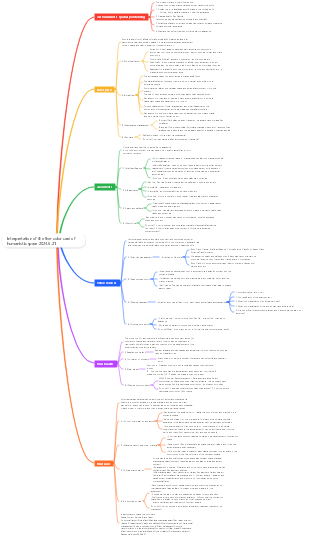
This is a mind map about the 3P model: an effective tool for implementing strategic management of enterprise human resources. The main contents include: 4. Related tools, 3. Example analysis, 2. Content analysis, 1. Conceptual meaning.
Edited at 2025-02-03 19:12:44In order to help everyone use DeepSeek more efficiently, a collection of DeepSeek guide mind map was specially compiled! This mind map summarizes the main contents: Yitu related links, DS profile analysis, comparison of DeepSeek and ChatGPT technology routes, DeepSeek and Qwen model deployment guide, how to make more money with DeepSeek, how to play DeepSeek, DeepSeek scientific research Application, how to import text from DeepSeek into MindMaster, the official recommendation of DeepSeek Wait, allowing you to quickly grasp the essence of AI interaction. Whether it is content creation, plan planning, code generation, or learning improvement, DeepSeek can help you achieve twice the result with half the effort!
This is a mind map about DeepSeek's 30 feeding-level instructions. The main contents include: professional field enhancement instructions, interaction enhancement instructions, content production instructions, decision support instructions, information processing instructions, and basic instructions.
This is a mind map about a commercial solution for task speech recognition. The main content includes: text file content format:, providing text files according to the same file name as the voice file.
In order to help everyone use DeepSeek more efficiently, a collection of DeepSeek guide mind map was specially compiled! This mind map summarizes the main contents: Yitu related links, DS profile analysis, comparison of DeepSeek and ChatGPT technology routes, DeepSeek and Qwen model deployment guide, how to make more money with DeepSeek, how to play DeepSeek, DeepSeek scientific research Application, how to import text from DeepSeek into MindMaster, the official recommendation of DeepSeek Wait, allowing you to quickly grasp the essence of AI interaction. Whether it is content creation, plan planning, code generation, or learning improvement, DeepSeek can help you achieve twice the result with half the effort!
This is a mind map about DeepSeek's 30 feeding-level instructions. The main contents include: professional field enhancement instructions, interaction enhancement instructions, content production instructions, decision support instructions, information processing instructions, and basic instructions.
This is a mind map about a commercial solution for task speech recognition. The main content includes: text file content format:, providing text files according to the same file name as the voice file.
3P Model: An effective tool for implementing strategic management of enterprise human resources
1. Conceptual meaning
3P model: A comprehensive and cross-integrated enterprise performance appraisal system centered on performance evaluation, combining position analysis and salary design, and jointly constitutes a comprehensive, cross-integrated enterprise performance appraisal system. In this system, job analysis provides assessment content and methods for performance appraisal; performance appraisal results determine employees' work performance salary; salary as a feedback mechanism supports the durability and efficiency of performance appraisal.
2. Content analysis
2.1. Basic elements
2.1.1. Job Analysis
Job analysis is a collection of various tasks and responsibilities that corporate employees must complete and is an objective requirement for achieving corporate strategic goals. The establishment process is as follows:
Job analysis: Establish a systematic project of skills, responsibilities and knowledge required to complete various tasks, with the purpose of solving problems such as activities, time, place, method, reasons and conditions related to employees' work.
Establish work instructions and work norms: Based on work analysis information, form documents that explain work tasks, responsibilities and responsibilities, as well as basic qualities such as the necessary knowledge, skills and abilities for individuals to complete work.
Job evaluation: Based on the work description and work specifications, a systematic process of determining the relative value of a work and other work will help confirm the organizational work structure, make the work connection fair and orderly, and develop the work value hierarchy to establish a wage payment structure. , and achieve consistency in internal work and salary.
2.1.2. Performance Appraisal
Performance assessment is a formal system for regularly examining and evaluating individual or group work performance. Its objectives include improving performance, achieving organizational goals, analyzing the pros and cons of human resources to arrange plans, providing forecasts for recruitment selection, judging employee training and development needs, providing a decision-making basis for increasing compensation, and for internal employee relationship decision-making.
2.1.3. Salary Management
The salary management system is a management system for the salary level, structure, system, form and treatment of an enterprise, aiming to supervise whether it meets the organizational and individual goals. Its primary task is to pay fairness, including internal fairness (achieved through work evaluation) and external fairness (maintaining a competitive salary level). Its focus and difficulty is to handle the contradiction between attracting talents and reducing costs.
2.2. Inner Relationship
2.2.1. Performance appraisal and job analysis
The work of each position can be examined from three aspects: stability, proceduralness and independence. The differences in these three-dimensional characteristics of different positions determine different requirements for the job skills, experience and quality. Effective job analysis can clarify the characteristics of each position, and the results determine the content and methods of performance appraisal. For example, the assessment content and methods for assembly line assembler and senior manager positions vary depending on the position characteristics.
2.2.2. Performance appraisal and salary design
The significance of performance appraisal lies in guiding employees' behavior. A good performance feedback process is very important. Its essence is value evaluation, and the effectiveness of value evaluation requires solving the problem of value allocation. Salary includes a fixed part (depending on the position) and a dynamic part (depending on the position performance). The salary distribution established on the basis of performance appraisal increases impartiality and can motivate employees to improve their performance. However, vague and subjective performance evaluation standards will make salary distribution less motivating.
2.3. Function and limitations
The 3P model clarifies job responsibilities and goals, defines operational assessment indicators, makes the salary structure reasonable, stimulates employees' enthusiasm and creativity, and builds a standardized performance assessment system. It is easy to operate and practice, reduces human resource management costs, and has a pioneering effect on the establishment of human resource management systems for small and medium-sized enterprises and the transformation of large and medium-sized enterprises.
However, it also has limitations:
In terms of concept, human resources are attributed to labor costs, pay attention to technical operation details and short-term cost reduction, and ignore the role in corporate strategy, employee development, organizational innovation, etc.
Taking the position as the basis and ignoring the person themselves may lead to the lack of employee participation and recognition of human resources management.
The relationship between human resource management and corporate strategy is rarely considered, and the horizontal relationship between human resource management modules is handled simply, and key links are missing.
3. Case Study
3.1. Case: Application of 3P model in human resource management of a virtual team in a certain enterprise
The strategies for applying 3P models in virtual team management are as follows:
Using scientific job analysis methods, form a harmonious virtual team: Virtual team job analysis is a description and research process of employee positions, etc., and collects information according to the principles of "5W" and "1H", which helps to introduce ideal employees and form a harmonious team. .
With a complete performance appraisal system, build a high-performance virtual team: Based on the characteristics of the dispersed work of the virtual team, a comprehensive performance appraisal system is formulated, a variety of assessment methods are used comprehensively to improve the ability to feedback assessment information, and build a high-performance team.
With a fair salary and benefits mechanism, activate the internal energy of the virtual team: the virtual team is composed of knowledge-based employees, and they value salary fairness more. Managers should design compensation and benefits mechanisms in accordance with the principles of fairness and other principles to activate team internal energy.
Integrate the 3P model and establish a "people-oriented" virtual team culture: the virtual team is aimed at and tasks, and the construction of organizational culture requires integrating the 3P model, permeating the "people-oriented" concept, strengthening member contact and communication, and creating a harmonious atmosphere.
4. Related tools
4.1. Human Resource Management 4P Model
4.1.1. Conceptual meaning
The 4P model of human resources management focuses on the strategic center of the enterprise, takes "people" and "posts" as the two footholds, conducts quality management, job management, performance management and salary management, and realizes people and positions, positions and positions, Match between people and companies. It enriches and develops the 3P model, guided by the theory of strategic human resource management and human resource matching, and clearly proposes multiple leaps in the process of human resource management, so that relevant management ideas and concepts have specific content and operation space.
4.1.2. Main content
Quality management: Based on quality assessment, build a quality model based on corporate strategies and improve the quality of employees. It includes quality acquisition, maintenance, improvement and use management, aiming to improve employees' own and enterprise service capabilities and achieve common development.
Job management: Take the positions in the organization as the target, and carry out job setting, analysis, description, monitoring and evaluation activities. Its focus is on developing an organizational structure that matches the company's strategy, improving employee satisfaction and intrinsic work incentives, and it is necessary to consider a variety of factors to dynamically manage positions.
Performance management: By establishing a closed-loop management of performance planning and expectations, performance implementation and support, performance appraisal and evaluation, performance feedback and development, it develops into a systematic model for assessing, feedback and developing employees' work performance, improving organizational and employee performance, and developing teams With individual potential, promote interaction between employees and managers, and improve employees' sense of accomplishment and belonging.
Salary Management: Emphasizes sharing success and strategic orientation, elevating salary to a strategic level, realizing the transformation from viewing compensation and benefits to human costs to viewing human investment, and from transaction-based wage allocation to win-win compensation management. Its content includes goals, levels, systems, structures and institutional management to meet employee needs and stimulate employee attitudes and behaviors that are conducive to the realization of corporate strategies.
4.2. Human Resource Management 5P Model
4.2.1. Conceptual meaning
The 5P model of human resources management has been developed richly based on the 3P model. 5P refers to position design, personnel selection, performance evaluation, salary design, and employee work enthusiasm.
4.2.2. Main content
Job design: analyze and design existing work, collect information for other human resource management practices, and form work process description books and specification books.
Personnel selection: Enterprises select human resources through recruitment and recruitment, which is crucial for young companies.
Performance evaluation: It is an important management function of the enterprise, which is conducive to promoting employee capacity development and career development and achieving the company's strategic goals.
Salary design: It is an important part of human resource management and plays an important role in attracting, retaining and encouraging talents.
Work enthusiasm: includes soft environmental resources such as corporate culture and employee quality, which affects the development of the company. High-quality employees and good corporate culture can promote the development of the company, but otherwise hinder the development of the company.
4.2.3. Logical Relationship
The 5P model is a sequential model structure, and job design is the basis. On this basis, personnel selection is carried out, performance evaluation is connected to the past and future, and compensation design is carried out based on the evaluation results. Reasonable compensation design can promote employees' work enthusiasm, and employees' work enthusiasm affects the company's efficiency.
4.2.4. Comparison between 3P model and 5P model