MindMap Gallery All over the world - List revolution
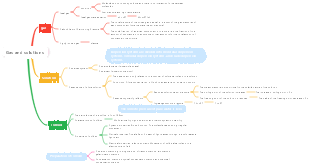
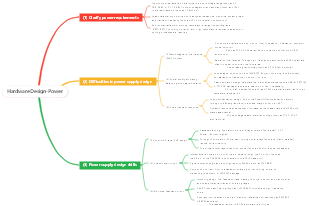
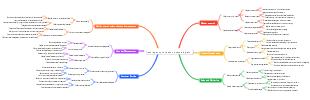
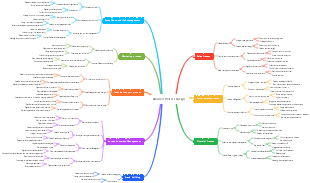
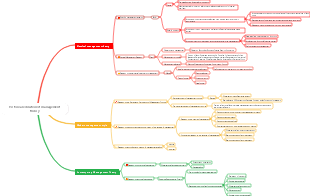
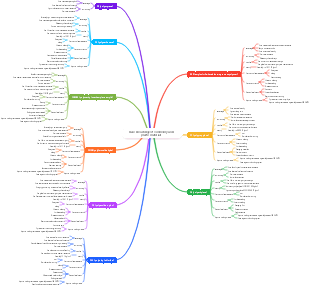
This is a mind map about the causes and solutions for human errors. The main contents include: 3. Three key points of the list revolution, 2. System design for problem solving, 1. Classification of human errors.
Edited at 2025-03-01 17:53:17Rumi: 10 dimensions of spiritual awakening. When you stop looking for yourself, you will find the entire universe because what you are looking for is also looking for you. Anything you do persevere every day can open a door to the depths of your spirit. In silence, I slipped into the secret realm, and I enjoyed everything to observe the magic around me, and didn't make any noise. Why do you like to crawl when you are born with wings? The soul has its own ears and can hear things that the mind cannot understand. Seek inward for the answer to everything, everything in the universe is in you. Lovers do not end up meeting somewhere, and there is no parting in this world. A wound is where light enters your heart.
Chronic heart failure is not just a problem of the speed of heart rate! It is caused by the decrease in myocardial contraction and diastolic function, which leads to insufficient cardiac output, which in turn causes congestion in the pulmonary circulation and congestion in the systemic circulation. From causes, inducement to compensation mechanisms, the pathophysiological processes of heart failure are complex and diverse. By controlling edema, reducing the heart's front and afterload, improving cardiac comfort function, and preventing and treating basic causes, we can effectively respond to this challenge. Only by understanding the mechanisms and clinical manifestations of heart failure and mastering prevention and treatment strategies can we better protect heart health.
Ischemia-reperfusion injury is a phenomenon that cellular function and metabolic disorders and structural damage will worsen after organs or tissues restore blood supply. Its main mechanisms include increased free radical generation, calcium overload, and the role of microvascular and leukocytes. The heart and brain are common damaged organs, manifested as changes in myocardial metabolism and ultrastructural changes, decreased cardiac function, etc. Prevention and control measures include removing free radicals, reducing calcium overload, improving metabolism and controlling reperfusion conditions, such as low sodium, low temperature, low pressure, etc. Understanding these mechanisms can help develop effective treatment options and alleviate ischemic injury.
Rumi: 10 dimensions of spiritual awakening. When you stop looking for yourself, you will find the entire universe because what you are looking for is also looking for you. Anything you do persevere every day can open a door to the depths of your spirit. In silence, I slipped into the secret realm, and I enjoyed everything to observe the magic around me, and didn't make any noise. Why do you like to crawl when you are born with wings? The soul has its own ears and can hear things that the mind cannot understand. Seek inward for the answer to everything, everything in the universe is in you. Lovers do not end up meeting somewhere, and there is no parting in this world. A wound is where light enters your heart.
Chronic heart failure is not just a problem of the speed of heart rate! It is caused by the decrease in myocardial contraction and diastolic function, which leads to insufficient cardiac output, which in turn causes congestion in the pulmonary circulation and congestion in the systemic circulation. From causes, inducement to compensation mechanisms, the pathophysiological processes of heart failure are complex and diverse. By controlling edema, reducing the heart's front and afterload, improving cardiac comfort function, and preventing and treating basic causes, we can effectively respond to this challenge. Only by understanding the mechanisms and clinical manifestations of heart failure and mastering prevention and treatment strategies can we better protect heart health.
Ischemia-reperfusion injury is a phenomenon that cellular function and metabolic disorders and structural damage will worsen after organs or tissues restore blood supply. Its main mechanisms include increased free radical generation, calcium overload, and the role of microvascular and leukocytes. The heart and brain are common damaged organs, manifested as changes in myocardial metabolism and ultrastructural changes, decreased cardiac function, etc. Prevention and control measures include removing free radicals, reducing calcium overload, improving metabolism and controlling reperfusion conditions, such as low sodium, low temperature, low pressure, etc. Understanding these mechanisms can help develop effective treatment options and alleviate ischemic injury.
Causes and solutions for human error
1. Human error classification
1.1 The mistake of ignorance
1.1.1 Definition and representation
Ignorance mistakes refer to mistakes that people make due to lack of knowledge or information, usually arise from insufficient education and experience.
This kind of mistake is often manifested as a wrong understanding of the facts, leading to decision-making mistakes and behavioral deviations.
1.1.2 Example Analysis
In an emergency, the wrong judgment of the first responders may be due to ignorance of the disease, resulting in delayed treatment.
Enterprises fail to conduct sufficient market research in market decisions, resulting in product failure and economic losses.
1.2 The mistake of incompetence
1.2.1 Definition and representation
The mistake of incompetence is that even if you have knowledge, people cannot apply it correctly, which is usually related to personal abilities and experience.
This kind of error often involves wrong application in the decision-making process, leading to a disconnect between practice and theory.
1.2.2 Example Analysis
Although a doctor has treatment knowledge, he lacks experience in actual operation, which may lead to surgical errors.
IT project managers have technical knowledge but lack project management skills, resulting in project delays and cost overruns.
1.3 Complexity of the problem
1.3.1 Simple Question
Simple problems often have clear solutions, easy to identify and handle, and require little teamwork.
For example, daily office document errors can be resolved through simple proofreading and modification.
1.3.2 Complex issues
There is no direct solution to complex problems, but they can be broken down into multiple simple problems and require teamwork to solve them.
For example, product research and development requires experts from multiple disciplines to work together to integrate knowledge in different fields.
1.3.3 Extremely complex issues
Extremely complex problems involve high uncertainty, and solving them may not necessarily be reused once, and solutions often vary from situation to situation.
For example, raising children is an extremely complex problem. Because each child has different characteristics and environment, the solutions are diversified.
1.4 Solution framework
1.4.1 List Revolution
The list revolution emphasizes improving efficiency and reducing error rates by establishing a systematic list.
It requires institutionalization of the use list and improve the overall workflow by encouraging teamwork and execution.
1.4.2 Delegation and Communication
Decentralization is a management strategy that delegates power to the grassroots level, encourages teams to make joint decisions and enhances execution.
Strengthen communication, especially in areas with significant professional differentiation, to ensure that opinions from all parties gather and find potential conflicts and their solutions.
1.4.3 Principles of list preparation
The listing should follow the principles of concise, clear and practical to ensure that users can quickly understand and execute.
The residence time of each checkpoint should not be too long to avoid the user skipping important steps due to impatientness.
2. System design for problem solving
2.1 Problem classification
2.1.1 Simple Question
Simple problems are those with clear solutions, such as a specific technical operation or process.
These problems can be solved efficiently through standardized processes and clear guidance.
2.1.2 Complex issues
Complex problems usually have no direct solution, so big problems need to be broken down into multiple simple problems.
Professionals of different skills often need to work together to accumulate experience to help solve similar problems.
2.1.3 Extremely complex issues
Extremely complex problems are characterized by high uncertainty, and even if they are successfully solved once, the experience is difficult to replicate.
Issues such as raising children are extremely complex issues, full of changeable factors.
2.2 Three key points of list revolution
2.2.1 System
Establish a complete system for list use so that both management and execution levels can recognize the importance and utility of lists.
Logistical preparation and leadership structure for inventory execution are key to ensuring inventory implementation.
2.2.2 Delegation of power
By decentralizing decision-making power to the grassroots, team decisions are encouraged rather than centralized individual decisions.
Management support and execution training are necessary conditions for achieving decentralization.
2.2.3 Communication
Open discussions in industries with severely specialized and differentiated specialists to ensure that the opinions of all relevant experts are taken into consideration.
Solutions should be inclusive and deal with potential conflicts, and be prepared for the psychology and strategies to deal with emergencies.
2.3 Six principles for list preparation
2.3.1 Check the node
The list should set up clear inspection nodes to ensure that every step can be effectively monitored.
Simplify workflow and improve execution efficiency through node settings.
2.3.2 The choice of compiler
The compiler of the list needs to make clear choices between operation confirmation and reading while doing to ensure that the usage method is clear.
A clear statement will help users better understand and execute the checklist.
2.3.3 List length management
The list should be limited to 5-9 items so that the user's attention can be maintained at its best.
Make sure that users are not allowed to stay on a checkpoint for too long and avoid unnecessary impatience.
2.3.4 List Terms
The list terminology needs to be concise and accurate, using professional terms familiar to the target readers.
Such a statement can help users quickly understand and apply the content of the list.
2.4 Inspiration from the personal life use list
2.4.1 Summary of Other People's Mistakes
You can avoid duplicate mistakes by learning from others’ mistakes and taking them into your own list.
The list brings together lessons learned and can effectively reduce the probability of similar problems in the future.
2.4.2 Use scenarios of list
Lists are especially effective in events with high uncertainty and help reduce decision fatigue.
Ability to provide clear paths of action in complex or stressful situations and reduce stress.
2.4.3 Improve efficiency
Using checklists can help individuals improve their work efficiency and avoid repeated ineffective discussions and decisions.
During stress and mood swings, the list can help individuals make rational decisions and maintain action.
3. Three key points of list revolution
3.1 System
3.1.1 The importance of the list
Understanding the value of a list is the key to improving execution efficiency so that everyone can use it properly.
A culture that needs to be established for list usage is ensured that all team members can rely on lists to reduce errors.
3.1.2 Implementation
When formulating a list, a complete execution system is required, including tracking and feedback on the implementation of each link.
The implementation process of the checklist requires regular evaluation to ensure that its steps are simple but effective.
3.1.3 Problem tracking
Establish a problem tracking mechanism to promptly discover and resolve obstacles in the use of the list.
Timely feedback and comparison of execution results will help continuously optimize the list content and execution methods.
3.2 Delegation of power
3.2.1 Decentralization
Managers should trust the judgment of grassroots employees and put decision-making power into the team to improve efficiency.
Decentralization requires strong support from management while providing necessary educational and practical opportunities.
3.2.2 Team decision-making
Team members are encouraged to participate in decision-making together and to enhance the quality and implementability of decisions through brainstorming.
Ensure that every team member can speak in the decision-making process, rather than being arbitrary.
3.3 Communication
3.3.1 Communication under professional differentiation
In complex industries, promote dialogue among different professions to solve problems more effectively.
Integrate the opinions of experts in various fields to ensure that every possible conflict is discussed and resolved in advance.
3.3.2 Foreseeing Problems
Assuming that every link will go wrong, prepare emergency solutions and processes to deal with emergencies.
Deal with potential problems in a stable environment in a timely manner and try to avoid greater risks caused by delays.
3.3.3 Psychological preparation
Develop teams’ psychological resilience when facing problems and enhance their ability to deal with challenges.
Regular training and communication can improve team members’ coping skills and relieve anxiety.