MindMap Gallery Guide to game activities
This is a mind map about the guidance of game activities, the main contents include: Chapter 2 The characteristics and guidance of the game, Chapter 1 Overview of children's games.
Edited at 2025-02-18 19:53:17This template shows the structure and function of the reproductive system in the form of a mind map. It introduces the various components of the internal and external genitals, and sorts out the knowledge clearly to help you become familiar with the key points of knowledge.
This is a mind map about the interpretation and summary of the relationship field e-book, Main content: Overview of the essence interpretation and overview of the relationship field e-book. "Relationship field" refers to the complex interpersonal network in which an individual influences others through specific behaviors and attitudes.
This is a mind map about accounting books and accounting records. The main contents include: the focus of this chapter, reflecting the business results process of the enterprise, the loan and credit accounting method, and the original book of the person.
This template shows the structure and function of the reproductive system in the form of a mind map. It introduces the various components of the internal and external genitals, and sorts out the knowledge clearly to help you become familiar with the key points of knowledge.
This is a mind map about the interpretation and summary of the relationship field e-book, Main content: Overview of the essence interpretation and overview of the relationship field e-book. "Relationship field" refers to the complex interpersonal network in which an individual influences others through specific behaviors and attitudes.
This is a mind map about accounting books and accounting records. The main contents include: the focus of this chapter, reflecting the business results process of the enterprise, the loan and credit accounting method, and the original book of the person.
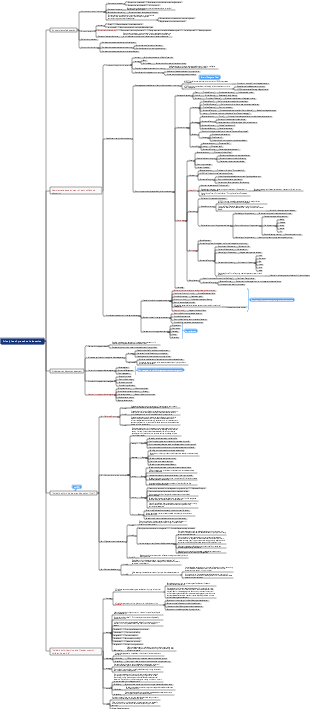
Guide to game activities
Chapter 1 Overview of Children's Games
Children's Games
The connotation of children's games
Games are the favorite activities of young children and the main content of young children's life
Games are children's adaptation to growth and are in line with the characteristics of children's physical and mental development.
Games are spontaneous learning for young children
Basic characteristics of children's games
Autonomy (the most essential)
Procedural
Fiction
Replace people with things, and change situations
Pleasant
Classification of children's games
Based on cognitive development (Piager)
Practice game
First appeared
Run, jump, knock, etc.
Symbol game
The most typical
Playing house, "hospital"
Structure game
Construction
Rules game
The highest form
Sports games, intelligence games, music games
Classification by children's social behavior development (Paton)
Contingent behavior
Wander around without goals, just do whatever you want, climb up and down
Bystander
Watch companion games without interfering in behavior
Play alone
The game materials are different from those of the partners next to you. Focus on yourself and don’t look at others.
Parallel game
The game materials are similar to those of the next partner, but not in common activities
Joint Games
Play and talk with other partners, but not organizing around the target
Cooperative Games
Children are focusing on a common theme in the game, and they are working together
Classification according to the educational role of the game
Creative Game
Character Game
Playing roles in life based on imitation and imagination
Performance Game
Roles in the work
Structure game
Rules game
Sports Games
Music Game
Intelligence Game
Functions of children's games
Factors influencing children's games
Game environment and materials
Game materials
Provide enough game materials for children
Provide game materials according to children's age characteristics
Provide game materials that match the goals and content of stage education
Try to provide game materials without fixed functions
Provide more game materials of moderate familiarity and moderate complexity
Put game materials in visible locations
The formula "Foot and eye-catching, nothing can be seen"
Chapter 2: Features and guidance of the game
Teacher guidance in children's games
Teachers’ intervention in children’s games
Role positioning of teacher intervention
Supportive roles
Bystander, stage manager, co-player, game leader
Non-supportive roles
No participants, directors
The timing of intervention
When children have difficulty playing games
Don't know how to play
When necessary game order is threatened
Reaffirm order
When a child loses interest in playing or is ready to give up
When difficulties occur in game content development or skills development
Guidance on various game activities in kindergarten
Character game guidance
Small class
(Type) Single game, parallel game
(Theme) Single theme
(Guide method) Guidance as a player
(Cultivate Ability) Pay attention to the cultivation of rule awareness and gradually learn to be independent
Middle class
Joint Games
Theme is unstable
Observe the causes of disputes and choose the right time to intervene
Game reviews, master communication skills and specifications, and solve simple problems in the game
Large class
Cooperative Games
New theme
Observe the intention of the game, provide opportunities and help to play the game
Encourage children to create little things in games, and let children learn from each other through comments
Guide to building a game
Small class
(Material selection) Material selection is blind and simple
(Construction Plan and Topic) No Theme Construction Plan
(Construction ability) Try to construct simple objects independently
Middle class
"Overall"
Have a constructive theme, easy to change
Ability to design and construct solutions
Large class
Be able to cooperate to select a variety of materials
Can continuously generate new themes based on the needs of the game situation
Details and characteristics of objects