MindMap Gallery The Great Gatsby
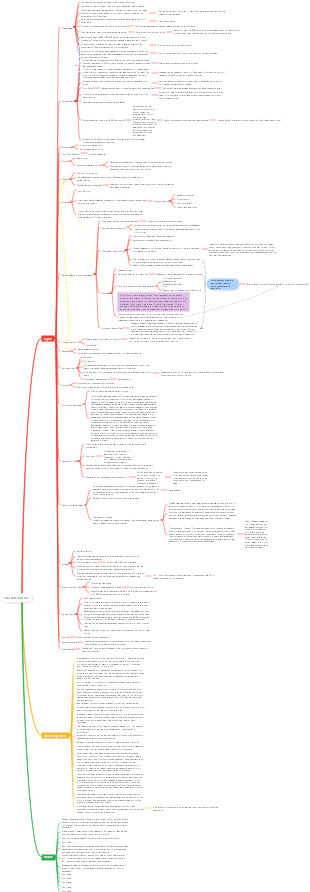
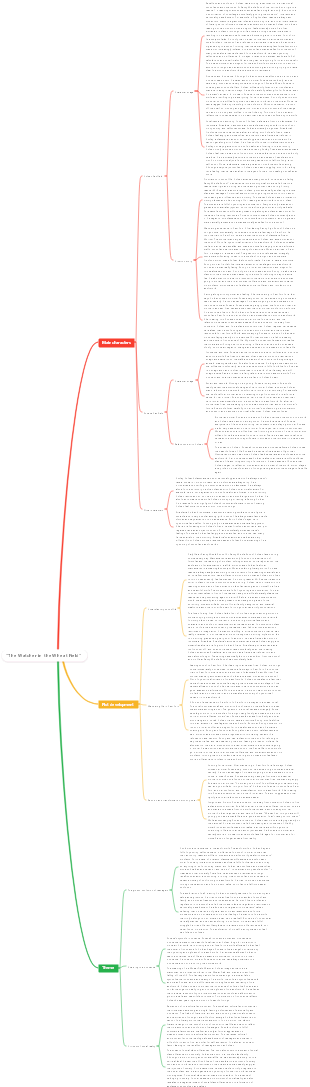
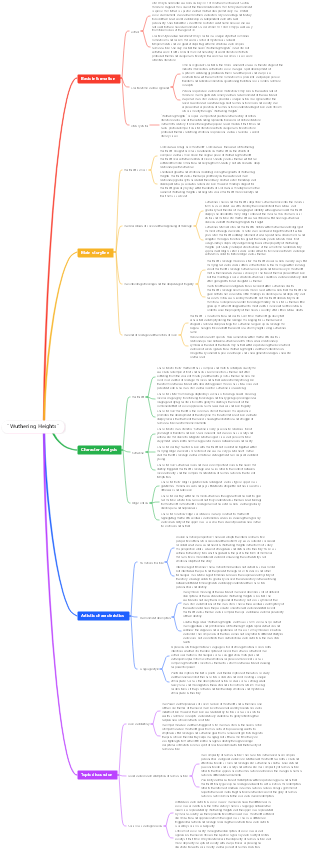
This is a mind map about "The Great Gatsby", which mainly includes: plot, artistic characteristics, theme, and core characters. The novel is set in the United States in the 1920s, an era full of economic prosperity and social change, known as the "Jazz Age". The story mainly describes how a young man from the bottom of society, named Gatsby, struggles for life in an era of material richness and spiritual hustle and a love story that cannot be realized between him and Daisy. The novel explores themes such as depravity, idealism, unwillingness to change, social unrest, and indulgence, vividly depicts a portrait of the awakening American dream and the "roaring jazz era".
Edited at 2025-02-20 19:08:46This template shows the structure and function of the reproductive system in the form of a mind map. It introduces the various components of the internal and external genitals, and sorts out the knowledge clearly to help you become familiar with the key points of knowledge.
This is a mind map about the interpretation and summary of the relationship field e-book, Main content: Overview of the essence interpretation and overview of the relationship field e-book. "Relationship field" refers to the complex interpersonal network in which an individual influences others through specific behaviors and attitudes.
This is a mind map about accounting books and accounting records. The main contents include: the focus of this chapter, reflecting the business results process of the enterprise, the loan and credit accounting method, and the original book of the person.
This template shows the structure and function of the reproductive system in the form of a mind map. It introduces the various components of the internal and external genitals, and sorts out the knowledge clearly to help you become familiar with the key points of knowledge.
This is a mind map about the interpretation and summary of the relationship field e-book, Main content: Overview of the essence interpretation and overview of the relationship field e-book. "Relationship field" refers to the complex interpersonal network in which an individual influences others through specific behaviors and attitudes.
This is a mind map about accounting books and accounting records. The main contents include: the focus of this chapter, reflecting the business results process of the enterprise, the loan and credit accounting method, and the original book of the person.
"The Great Gatsby"
Core characters
Jay Gatsby
Characteristic traits
Perseverance and affection: She is determined to pursue Daisy at all costs, and she holds a luxurious party to try to attract her attention in order to meet Daisy again.
Mysterious romance: He is born in poverty but full of mystery. His wealth is unknown. His life is luxurious and full of dreams, such as his luxurious villas, grand parties, etc.
Naive ideal: firmly believe that through wealth and status, you can win back Daisy's love, have naive fantasies about love and dreams, and are unaware of the cruelty of reality and the complexity of human nature.
Characters' destiny
From a poor boy to a rich gentleman: by accumulating wealth through his own efforts and opportunities, he transformed from a poor North Dakota boy into a mysterious rich man on the West Egg of Long Island.
The end of the love tragedy: After reuniting with Daisy, although he briefly relives his old love, he eventually becomes a scapegoat for Daisy because of her selfishness and cowardice. He was shot dead by Wilson, and his dream was also shattered.
Daisy Buchanan
Characteristic traits
Beautiful and charming: With outstanding appearance and charming voice, it is the focus of everyone's eyes, attracting the pursuit of many men such as Gatsby and Tom.
Selfish vanity: She pursues material enjoyment extremely, cares about wealth and social status. Her behavior is mostly for her own interests and shows uncertainty in love and marriage.
Indifference and cowardice: Facing problems in love and life, lack of courage and responsibility, dare not face one's heart, hesitation between Gatsby and Tom, which ultimately leads to Gatsby's tragedy.
Character experience
First Love with Gatsby: When he was young, he fell in love with Gatsby, but because of Gatsby's poverty, he followed his parents' arrangements to marry Tom, a wealthy and socially renowned.
Married Life and Reunion: The marriage with Tom after marriage was not happy, and Tom's cheating made her feel painful. Under Gatsby's deliberate arrangement, the two met again and their old love rekindled.
The tragedy: After Gatsby took the blame for her, she did not have the courage to stand up and take responsibility and leave with Tom, which indirectly led to Gatsby's death.
Nick Caraway
Characteristic traits
Kindness and integrity: Upholding one's own moral code, expressing sympathy for Gatsby's experience, and being dissatisfied with the selfish behavior of Daisy and Tom, it plays a certain moral judgment role in the story.
Rational calm: As the narrator of the story, he observes and records everything happening around him from an objective and rational perspective, and has profound thoughts on human nature and social phenomena.
Character experience
Come to the East: Come to New York from the Midwest to study bond business, rent a house on Long Island West Egg, and become neighbors with Gatsby, thus getting involved in the lives of Gatsby and Daisy.
Witnessing the Tragedy: Witnessing the love story between Gatsby and Daisy, as well as the social reality and human weaknesses hidden behind it, after Gatsby's death, he became suspicious of the so-called "American Dream".
Tom Buchanan
Characteristic traits
Arrogant and arrogant: From a wealthy family, he has huge wealth and a high social status, so he has a high opinion of himself, disdain for others, and shows a sense of superiority everywhere in his words and deeds.
Selfish and cold: he is not loyal to his feelings, maintains an improper relationship with his mistress Myrtle, and in the emotional entanglement between Gatsby and Daisy, he uses any means to destroy their feelings in order to safeguard his interests and dignity.
Character experience
Marriage Life: After marrying Daisy, she did not cherish this marriage and continued to indulge her desires. After her relationship with Myrtle was discovered by Daisy, it triggered family conflicts.
Destroy Gatsby's relationship with Daisy: After discovering Daisy's relationship with Gatsby, he used his wealth and social relationship to expose Gatsby's improper source of wealth and tried to break them up, which indirectly led to the tragedy.
Plot context
Nick's arrival and Gatsby's first impression
Nick came to the East: Nick came to New York from the Midwest of the United States and rented a house on Long Island West Egg, which was adjacent to the luxurious residential area of East Egg. Nick began to contact people from different classes.
Gatsby's Mysterious Party: Nick often sees luxurious parties hosted by his neighbor Gatsby. The party is full of guests and is very lively, but Gatsby himself rarely shows up, which aroused Nick's curiosity about him.
Gatsby's Reunion with Daisy
Gatsby's plan: Gatsby reunites with Daisy through Nick arrangements. He carefully arranged his villa, trying to show his wealth and status in front of Daisy and regain his old love.
Rekind of the old love: Daisy was moved by Gatsby's enthusiasm and persistence. The two rekindled their old love and began to date frequently, immersed in the sweetness of love.
Intensification of conflicts
Tom's awareness: Tom gradually realized Daisy's relationship with Gatsby. He was hostile to Gatsby and decided to investigate Gatsby's background.
Showdown and Argument: In a hotel in New York, Tom, Daisy, Gatsby and Nick had a fierce argument. Tom reveals that Gatsby's source of wealth is inappropriate, Daisy hesitates between the two and finally chooses to return to Tom.
The tragedy happened
Car accident: Daisy drives to kill Tom’s mistress Myrtle while emotionally excited. Gatsby decided to take responsibility in order to protect Daisy.
Gatsby's death: Myrtle's husband Wilson believes that Gatsby hit and killed his wife. At Tom's hint, he came to Gatsby's villa, shot Gatsby, and then committed suicide.
Nick's reflection
The funeral was deserted: After Gatsby's death, his friends who had been partying at the party disappeared one after another. The funeral was deserted, with only Nick and Gatsby's father attending.
Suspicion of the "American Dream": After witnessing this series of tragedies, Nick developed deep suspicion of the so-called "American Dream". He saw the emptiness behind wealth and status and the ugliness of human nature, and decided to leave the east and return to the Midwest.
Theme
The American Dream
The gap between dreams and reality: Gatsby achieved wealth accumulation through his own efforts, thinking that this would enable love with Daisy and his ideal life, but reality cruelly shattered his dreams and revealed the fragility of the American Dream in the face of material-first social reality.
The solidification of social classes: The novel shows the huge gap and insurmountable gap between different social classes. Even if Gatsby, who was born in poverty, could not truly integrate into the upper class, and could not get the love and recognition he pursued, reflecting the destruction of the American dream in the face of the solidification of social classes.
Love and humanity
The illusion and fragility of love: Gatsby and Daisy's love is full of illusion. Daisy's feelings for Gatsby are based more on material and status. When facing the test of reality, her love collapses instantly, showing the fragility of love in the face of reality.
Human selfishness and greed: Daisy, Tom and others show extreme selfishness and greed when facing interests and emotions, and sacrifice others for their own interests, revealing the ugliness of human nature in the face of money and desires.
Social Criticism
Criticism of materialism: The novel depicts the material supremacy of American society in the 1920s. People pursue wealth and material enjoyment, and ignore spiritual pursuits. For example, people only care about pleasure and show-off at Gatsby's party, criticize the corrosion of human nature by this materialism.
Revealing the hypocrisy and corruption of the upper class: By describing the lives of upper class figures such as Tom and Daisy, they show their bright and beautiful nature on the surface, but in fact they are morally degraded and hypocritical and selfish, and expose the corruption and corruption of the upper class.
Artistic characteristics
Narrative technique
First-person narrative: unfolding the story from Nick's perspective allows readers to feel the emotional and psychological changes of the characters in the story more intuitively, and enhance the authenticity and credibility of the story.
Memories and reality intertwined: During the narrative process, Nick constantly recalls past experiences, combining memories with real scenes, making the timeline of the story richer and deepens readers' understanding of characters and events.
Symbol technique
Green Light: The green light at the end of Gatsby's Pier symbolizes his love and dream for Daisy, and is a symbol of his pursuit of goals and hopes, but as the story develops, the light gradually becomes illusory, suggesting that the dream is difficult to realize.
Valley of Ashes: symbolizes the depravity of society and the decay of human nature. It is a symbol of poverty and despair, which is in sharp contrast with Gatsby's luxurious villa and the luxurious life of the upper class, revealing social inequality and the gap between the rich and the poor.
Language style
Concise and vivid: The language is concise and clear, but it can vividly depict the characters' images and scenes. For example, the description of Gatsby's party, a few words can make readers feel the excitement and luxury of the party.
Poetic: The concise language contains poetry, such as the description of natural scenery, which makes the novel full of artistic appeal and enhances the aesthetic value of the work.