 Wondershare EdrawMind
MindMap Gallery Madame Bovary
- 101
Madame Bovary
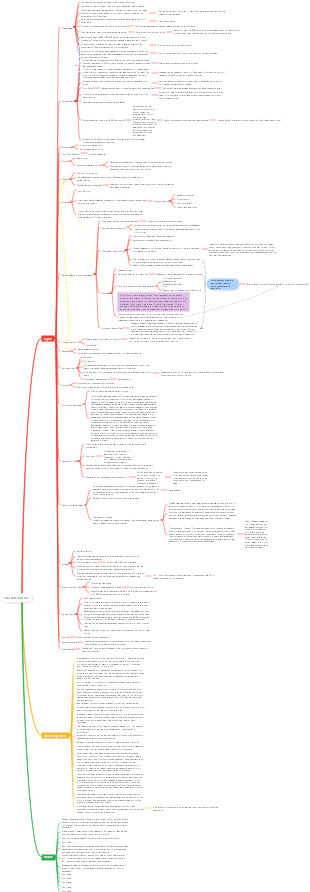
This is a mind map about "Madame Bovary", which mainly includes: artistic characteristics, theme ideas, plot development, core characters, and basic information of the work. The novel tells the story of Emma, a farmer who has received an aristocratic education. Emma looked down on her husband Bao Farley, who was a rural doctor, and dreamed of legendary love. However, her two affair not only did not bring her happiness, but made her the target of usury exploitation. In the end, she accumulated debts and was desperate, so she had to commit suicide by taking poison.
Edited at 2025-02-21 20:09:16
- Reproductive system
This template shows the structure and function of the reproductive system in the form of a mind map. It introduces the various components of the internal and external genitals, and sorts out the knowledge clearly to help you become familiar with the key points of knowledge.
- Interpretation and summary of relationship field e-book
This is a mind map about the interpretation and summary of the relationship field e-book, Main content: Overview of the essence interpretation and overview of the relationship field e-book. "Relationship field" refers to the complex interpersonal network in which an individual influences others through specific behaviors and attitudes.
- Accounting books and accounting records
This is a mind map about accounting books and accounting records. The main contents include: the focus of this chapter, reflecting the business results process of the enterprise, the loan and credit accounting method, and the original book of the person.
Madame Bovary
- Reproductive system
This template shows the structure and function of the reproductive system in the form of a mind map. It introduces the various components of the internal and external genitals, and sorts out the knowledge clearly to help you become familiar with the key points of knowledge.
- Interpretation and summary of relationship field e-book
This is a mind map about the interpretation and summary of the relationship field e-book, Main content: Overview of the essence interpretation and overview of the relationship field e-book. "Relationship field" refers to the complex interpersonal network in which an individual influences others through specific behaviors and attitudes.
- Accounting books and accounting records
This is a mind map about accounting books and accounting records. The main contents include: the focus of this chapter, reflecting the business results process of the enterprise, the loan and credit accounting method, and the original book of the person.
- Recommended to you
- Outline



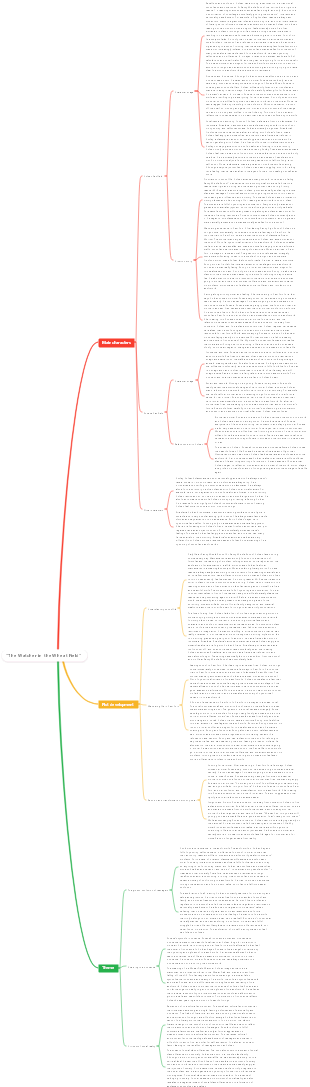
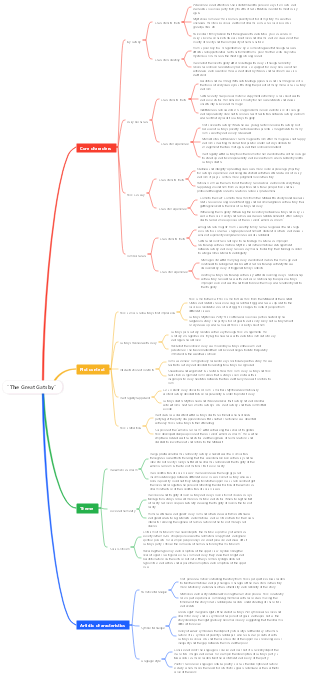
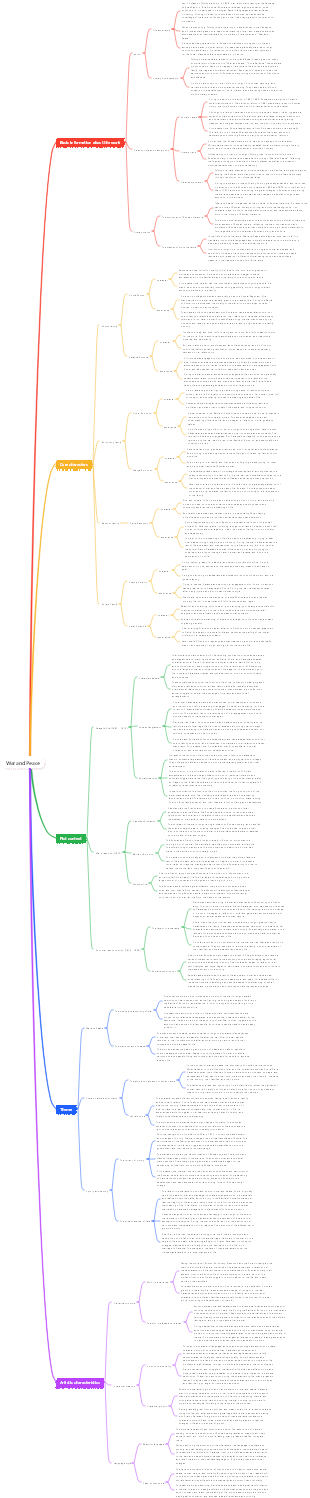
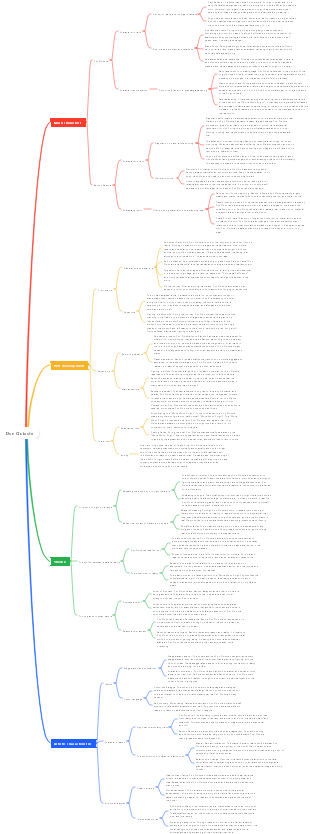
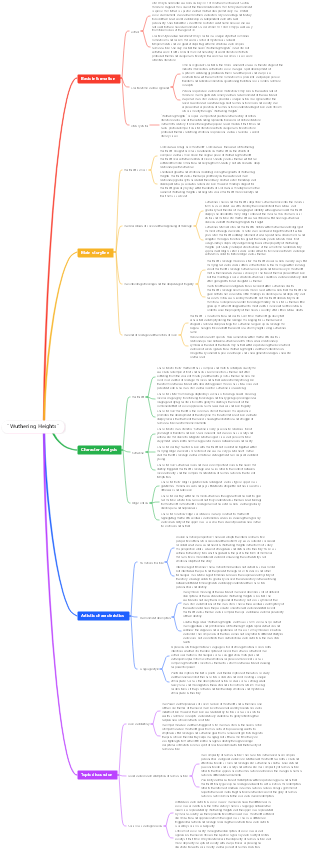
Madame Bovary
Basic information about the work
author
Life experience
Gustav Flaubert was born in 1821 in a family of doctors in Rouen, France. His father was the director of surgery at the Municipal Hospital of Rouen and his mother was a judge's family. This family environment provided him with a good educational foundation and opportunities to reach different social classes.
While studying law in Paris in his early years, Flaubert encountered neurological diseases, which forced him to give up his legal study and devote himself to literary creation. He has traveled to many places, his rich travel experience broadened his horizons and accumulated material for his creations.
Flaubert was unmarried throughout his life, lived a relatively secluded life, focusing on literary creation. He maintained close contacts with many famous writers and thinkers at that time, such as George Sand and Turgenev. Their ideological exchange had an important impact on Flaubert's creation.
Creative style and achievements
Flaubert pursues the purity and perfection of art, paying attention to the carving of details and the tempering of language. He believed that literary works should be objective and real reflections, opposing romantic exaggeration and lyricism, and set a precedent for "naturalist literature".
In addition to the masterpiece "Madame Bovary", his "Emotional Education" uses the protagonist's emotional experience as a clue to show the vast picture of French society in the 19th century; "Boval and Peculius" satirizes human stupidity and ignorance through the portrayal of two pedantic pedantics. These works reflect Flaubert's profound thoughts and unique artistic style, and had a profound impact on later literary creations.
Creative background
Social change and thoughts
In the mid-19th century, France was in the July dynasty and the Second Empire. Capitalism developed rapidly, and the industrial revolution brought economic prosperity, but also exacerbated social inequality and the gap between the rich and the poor.
The bourgeoisie gradually rose and became the dominant force in society. They pursue material enjoyment and monetary interests, and the social atmosphere became increasingly utilitarian and degenerate. At the same time, the romantic trend gradually declined and the realist trend emerged. Writers began to pay attention to social reality and expose the shortcomings of society.
Flaubert's personal experience and thoughts
Flaubert lives in such a social environment and has a deep understanding of the hypocrisy and depravity of society. His family background exposed him to the lives of the aristocratic and bourgeoisie, and his travel experiences and interactions with all walks of life made him understand the sufferings of the lower classes.
Through the work "Madame Bovary", he integrated his observations and thinking about social reality into it. Using Emma's tragic fate as the starting point, he criticized various social problems at that time, and expressed his profound insight into human nature and his expectations for social change.
Literary status
Classic work of French literature
"Madame Bovary" is recognized as a classic work in the history of French literature. It not only caused a sensation at that time, but also has been widely read and studied in later generations. With its real social description, profound ideological connotation and exquisite artistic skills, this work has become one of the representative works of French realist literature.
It had an important influence on the development of French literature and laid the foundation for the rise of literary schools such as naturalism and symbolism. Many French writers drew inspiration from Flaubert's creation.
Important contributions to world literature
In the field of world literature, Madame Bovary also has an important position. It is translated into multiple languages and is widely spread around the world, and is loved and praised by readers from all over the world.
Flaubert's creative concepts and artistic techniques have had a profound impact on the development of world literature. His works have added a brilliant pearl to the treasure house of world literature and have become a classic work in the history of world literature.
Core characters
Emma Bovary
Characteristic traits
Romantic fantasy
The abbey's educational experience had a profound impact on Emma's character, and in the abbey she was exposed to a large number of romantic novels that depicted love, adventure and luxury life, which filled her with unrealistic fantasies about real life.
She longs to meet a handsome, rich, romantic lover and live a passionate and poetic life like in the novel. This fantasy runs through her life and becomes her motivation for pursuing love and happiness, but also leads to her disconnection from real life.
Vanity and selfishness
Emma is extremely eager to be recognized and praised by others. She pursues material enjoyment and believes that having beautiful clothes, jewelry and a luxurious living environment is a symbol of happiness.
In order to satisfy her vanity, she betrayed her husband and had a tryst with her lover. At the same time, she kept buying goods from businessmen and squandering money, completely neglecting family and moral responsibilities. Her selfish behavior eventually led to the breakdown of the family and her own destruction.
Brave rebellious
In the social context at that time, women had a low status and were bound by traditional marriage and moral concepts. Emma dared to break through these constraints and boldly pursue her love and freedom, showing a certain degree of courage and rebellious spirit.
However, her rebellion lacks rationality and thinking, and she just blindly pursues her desires without considering the consequences, which eventually led to her being unable to extricate herself.
Characters' destiny
Marriage disappointment
Emma married Charles Baufari. At first she was full of expectations for marriage, hoping to find the romantic love she longed for in Charles.
But after marriage, she found that Charles was a mediocre and dull person who could not meet her spiritual needs and her life became dull and boring, which made her extremely disappointed with her marriage, and her inner dissatisfaction and loss gradually accumulated.
Tragedy of extramarital affair
The encounter with Rodolph ignited the passion in Emma's heart. Under Rodolph's pursuit, she fell into a passionate love. For this relationship, she did not hesitate to violate morality and ethics, and frequently had a tryst with Rodolph, and even planned to elope with him.
However, Rodolph is just a person who plays with feelings. When he gets tired of Emma, he abandons her without hesitation, which brings a huge blow to Emma. Later, she met Leon again and fell into a whirlpool of love. In order to be with Leon, she kept squandering money and fell into a debt crisis.
Despair and destruction
The pressure on debt is getting stronger and stronger. Emma asks for help from lovers Leon and Rodolph, but is rejected and she falls into a desperate situation.
At the end of her life, she chose to take poison and commit suicide, ending her young life. Her tragic fate was not only a personal tragedy, but also a tragedy of society at that time, reflecting the society's suppression and distortion of human nature.
Charles Baufari
Characteristic traits
Honest and honest
Shire is kind and honest, sincere to others, and has no scheming. He is full of responsibility for his wife and family, and works hard, hoping to bring happiness to his family.
His honesty and honesty makes him often lack the initiative and decisiveness when facing problems in life and is easily influenced by others.
Mediocre
In his career, as a doctor, Charles had mediocre medical skills and had no outstanding achievements. His diagnosis and treatment methods are outdated, unable to meet the needs of patients, and his reputation is not high in the local area.
In life, he lacks romance and interest, cannot understand Emma's inner world, and cannot meet her spiritual needs, which is also one of the important reasons for the breakdown of their marriage.
Deep affectionate and persistent
Charles loved Emma deeply, and even after discovering her infidelity, he still chose to forgive her, and his feelings for her never changed.
After Emma's death, he was heartbroken and could not bear the pain of losing his lover, and eventually died of depression. His affectionate persistence made him a tragic character.
Rodolph Brownge
Characteristic traits
Romantic and affectionate
Rodolph is handsome and elegant, and is good at using sweet words and romantic means to attract women.
He is a veteran in love and enjoys playing with female emotions. For him, love is just a game, and he constantly pursues new stimulation and pleasure.
Selfish and cold
Rodolph only cares about his own desires and interests. When Emma makes more demands on him, such as hoping to elope with him, he refuses without hesitation. He is unwilling to give up his freedom and interests for Emma.
When Emma was in trouble, he did not give any help, showing his selfish and cruel nature.
Leon Dupuy
Characteristic traits
Young and romantic
Leon is full of romantic feelings and full of beautiful fantasies about love. When he first met Emma, he was shy and had a good impression of Emma.
As his relationship with Emma deepened, he gradually fell into emotional entanglement. He pursued romantic love and luxurious life with Emma, and enjoyed the sweetness of love.
Cowardly and hesitate
When facing emotional and social moral pressure with Emma, Leon is often hesitant and lacks courage and responsibility.
When Emma was in a debt crisis and asked him for help, he did not give substantial help, but chose to escape, and his cowardice and hesitation eventually led to Emma's tragic ending.
Plot development
Early marriage (Emma and Shire)
Meet and get married
While Emma was recovering from her father's farm, Charles went to treat as a doctor, and the two met because of this.
Charles was attracted by Emma's beauty and unique temperament and pursued her. Emma didn't have much affection for Shire at first, but under her father's persuasion, she agreed to Shire's proposal. Soon after, the two had a simple wedding and Emma began her married life.
Married life
After marriage, Emma discovered that Charles was a mediocre and boring person. He did not know how to be romance and could not satisfy Emma's yearning for a better life.
Their lives are dull, and they repeat trivial housework and monotonous social activities every day, which is far from the romantic love and luxurious life that Emma imagines in the monastery, and she gradually develops dissatisfaction and loss in her heart.
Emotional cheating (romance with Rodolph and Leon)
A relationship with Rodolph
acquaintance
Emma and Rodolph met at an agricultural exhibition. Rodolph was attracted by Emma's beauty and temperament and decided to pursue her.
He used his sweet words and romantic methods to gradually win Emma's heart, and the two began to have frequent contact.
Passionate love
Under Rodolph's pursuit, Emma fell into a passionate love. They often meet in the woods in the suburbs and enjoy the sweetness of love.
In order to be with Rodolph, Emma did not hesitate to violate moral ethics and deceive her husband. At the same time, in order to meet Rodolph's requirements, she kept shopping for goods from merchants Lele, buying luxury goods to dress herself up, and squandering money.
betray
As time went by, Rodolph's passion for Emma faded and he began to get tired of the relationship.
Before planning a trip with Emma, he wrote a letter to abandon her. After receiving the letter, Emma was deeply hit and fell ill, and her life fell into despair.
Reunion and love with Leon
Reunion
After Emma recovered from illness, she met Leon again in Rouen. At this time, Leon had lost his youth and became more mature and confident.
The two recalled the wonderful times in the past, their old love rekindled and began to date frequently.
Passion and indulgence
In order to have a tryst with Leon, Emma often uses the excuse to study piano in Rouen. She and Leon enjoy romantic time in Rouen's cafes, theaters and other places.
With Leon's company, she became more addicted to romantic love and luxurious life, constantly shopping for goods from Lele, and her debts became more and more. She gradually fell into a state of inextricable power.
Tragic Ending (Emma's Fall and Death)
Debt crisis
In order to satisfy his desire, Emma kept shopping for goods from merchant Lele and fell into the usury trap.
Lele takes advantage of Emma's vanity and greed to continuously increase the price of items and increase her debt. As debts continue to accumulate, Emma is ultimately unable to repay and faces huge economic pressure.
Despair and suicide
Emma asks lovers Leon and Rodolph for help, hoping they can help her repay the debt, but both of them turn her down.
At the end of her life, Emma felt desperate. She thought she had lost everything and life had no meaning. In extreme pain, she swallowed arsenic and ended her young life.
The Death of Charles
When Charles learned about Emma's betrayal and debt, he was heartbroken and could not accept this cruel reality.
His spirit was greatly hit, his body gradually weakened, and he died of depression soon after. Their daughter Beatrice was sent to a schief mill to work and lived a miserable life.
Theme
The destruction of love and marriage
Romantic love fantasy and reality
Emma is full of fantasy about romantic love, and the romantic novels she read in the monastery gave her an idealized vision of love.
However, her marriage was unremarkable and Charles was unable to meet her romantic needs, which made her disappointed in the marriage. In order to pursue the love in her heart, she kept seeking extramarital affairs, but eventually ended in tragedy, which revealed the fragility of ideal love in the face of reality, and love often cannot escape the shackles of reality.
The bondage and helplessness of marriage
Emma's marriage became a constraint on her pursuit of freedom and happiness. In the social context at that time, women's marriages were often arranged by families and society, and they did not have much autonomy.
Emma was unable to realize her self-worth in marriage, her emotions and desires were suppressed, and she tried to find freedom and happiness through extramarital affair, but eventually fell into deeper pain, which reflected the oppression and restraint of the social marriage system at that time on women.
Criticism of social reality
Hypocrisy and depravity of capitalist society
The novel depicts various ills of French society in the 19th century, such as the corruption of the aristocrats, the greed of the bourgeoisie, and the profit-seeking of the merchants.
The nobles were elegant and noble on the surface, but in fact they lived a decadent and depraved life. They pursue material enjoyment and moral degradation; the bourgeoisie used any means to pursue profits and were profit-oriented; the merchant Lele used Emma's vanity and greed to exploit and oppress her, which all revealed the hypocrisy and depravity of capitalist society.
The value of money first
Emma's tragedy is closely related to money. In order to pursue material enjoyment, she kept shopping for goods from businessmen Lele and fell into a debt crisis.
In this process, money became her tool for pursuing happiness, but it also became the root of her destruction. This reflects the distortion and poisoning of human nature by the social values of money supremacy at that time. In order to pursue money and material enjoyment, people sacrificed their morality and dignity at all costs.
Human weaknesses and struggles
Vanity and Greed
Emma's vanity and greed make her constantly pursue material and emotional satisfaction. She pursues beautiful clothes, jewelry and luxurious living environments, while also longing for recognition and praise from others.
In order to satisfy her desires, she betrayed her husband, squandered money, ignored family and moral responsibilities, and eventually lost herself and fell into a desperate situation. This shows the weakness of human nature. Vanity and greed often make people lose their minds and go to destruction.
The conflict between morality and desire
Emma violated moral ethics in her pursuit of love and desire. Her extramarital affair with Rodolph and Leon put her in a moral dilemma.
Her heart is full of struggle and pain. On the one hand, she longs for love and freedom, and on the other hand, she is condemned by morality. This conflict reflects the difficult choice between human nature between morality and desire. When people face desire, they often need to make a choice between morality and desire, and this choice is often painful.
Artistic characteristics
Narrative structure
Linear narrative
Taking Emma's life experience as the main line, the story is unfolded in chronological order, from her marriage, cheating to her final death, the plot development is clear.
This linear narrative method allows readers to clearly understand Emma's fate trajectory, follow her experiences to feel her joys, sorrows, and joys, and enhance the coherence and readability of the story.
The plot is ups and downs
By setting up a series of conflicts, such as the marriage conflict between Emma and Shire, emotional entanglement with their lover, debt crisis, etc., the plot is full of tension.
These contradictions and conflicts continue to promote the development of the plot, attract readers' interest in reading, and keep readers nervous and curious during the reading process, wanting to know how Emma's fate will develop.
Character creation
Delicate psychological description
Flaubert deeply portrays the inner world of the characters through delicate psychological descriptions, such as Emma's psychological changes in the pursuit of love, from expectation, excitement to disappointment and despair.
He uses inner monologue, memories, dreams and other techniques to show the character's inner thoughts and emotions fluctuations, making the character's image more full and three-dimensional, and readers can have an in-depth understanding of the character's personality and behavioral motivation.
Contrasting
Compare Emma's romantic fantasy with Charle's mediocre reality, Rodolph's romantic selfishness and Leon's cowardly and hesitant.
These contrasts highlight the character characteristics of the characters, making the characters more distinct, and at the same time enhance the artistic effect of the works, allowing readers to feel the differences and contradictions between the characters more deeply.
Language style
Precise and concise
Flaubert strives for excellence in language, pursues "one word theory", and expresses rich connotations in the most accurate and concise language. When describing Emma's psychological activities, he does not pile up words in length, but instead hits the key points accurately. For example, when Emma is looking forward to having a tryst with Rodolph, it may be just a simple sentence, "Her heart is like being held by an invisible hand, full of excitement and tension about to come to the appointment", which fully portrays Emma's complex and anxious mood, without any unnecessary embellishment, but allows readers to deeply feel her emotions.
The same is true in environmental description, depicting the streets of Rouen, "on both sides of the narrow street, houses are closely arranged, and the old stone roads are shining with dim light in the sunlight." In just a few words, it outlines a city scene full of life but slightly dull, creating an appropriate atmosphere for the development of the story.
Objective and calm
When narrating stories and describing characters, the author maintains an objective and calm attitude, does not directly express his emotions and evaluations, allowing readers to feel and think on their own, and enhance the authenticity and credibility of the work. When describing Emma's extramarital affair, Flaubert did not stand on the moral high ground to criticize it, but just truthfully showed Emma's behavior and inner struggle.
Rodolph's romantic and selfishness is only presented through his words and deeds and attitudes towards Emma, allowing readers to judge his character by themselves. This objective narrative method allows readers to understand the characters and stories more comprehensively and deeply, avoids the interference of the author's subjective emotions, and makes the work more convincing.
Poetry
Although Flaubert opposes the exaggerated lyricism of romanticism, his writing still contains a subtle poetic meaning. When describing the natural scenery, "the wheat in the fields sways gently in the breeze, like a golden ocean ripples", giving the ordinary field scenery a beautiful artistic conception, making readers feel as if they are there.
This poetic expression is also reflected in the description of the characters' emotions. Emma's desire for love is not a straightforward cry in the author's writing, but through delicate and poetic words, such as "her soul longs for the light of love in the darkness, like the dry land longs for sweet rain", which embodies abstract emotions, so that readers can better understand the emotional world deep in the characters' hearts.
Symbols and metaphors
Emma's clothing symbol
Emma's clothing changes in different periods have profound symbolic significance. When she fell in love with Rodolph, she would carefully select gorgeous clothes, which symbolize her pursuit of romantic love and her yearning for a better life.
As the debt crisis intensified, her clothing gradually became worn, which symbolized the gradual decline of her life and her dreams gradually shattered. From pursuing romantic luxury to being defeated by real life, clothing became an external symbol of her change in her destiny.
The image metaphor of the pharmacist Hao Mai
The character of pharmacist Hao Mai was a symbol of bourgeois utilitarian and hypocrisy in the society at that time. He is knowledgeable on the surface, keen on various social activities, actively participates in local affairs, and gives people an image of enthusiastic public welfare.
But in fact, everything he did was to satisfy his vanity and gain benefits. His pursuit of science was just to show off himself, and his help to others was also for utilitarian purposes. His existence metaphorized the hypocritical nature of the bourgeoisie at that time under the banner of progress and public welfare, but in fact he pursued the false nature of personal self-interest.
Illusion
A satire of social phenomena
Flaubert's description of social phenomena, such as the scene of an agricultural exhibition, is ostensibly showing agricultural achievements and rural development, but in fact it is full of vanity and hypocrisy. The nobles showed off their wealth and status at the exhibition, and the farmers deliberately disguised themselves in order to cater to the nobles. Through this description, the author satirized the vanity and utilitarian style of society at that time.
The description of the doctor industry is also full of irony. As a doctor, Charle has mediocre medical skills but thinks he is skilled in medical skills. His diagnosis and treatment methods are outdated and backward, but they cannot be improved. This satirized the conservative and backwardness of the medical industry at that time and the blind confidence of practitioners.
A satirical character
The author uses his words and deeds to sarcastically sarcastic and selfishness to Rodolph’s romanticism and selfishness. He was flirtatious and sweet when he pursued Emma, but when Emma made more demands on him, he abandoned her without hesitation. This contrast between before and after satirized his hypocrisy and selfishness.
He also satirized Leon's cowardice and hesitation. In his relationship with Emma, he enjoyed the sweetness of love and was afraid of the moral pressure of society. When Emma was in trouble, he chose to escape. His behavior satirized those who were hesitant and lacked responsibility in the face of love and morality.