 Wondershare EdrawMind
MindMap Gallery War and Peace
- 135
War and Peace
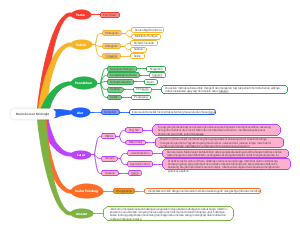
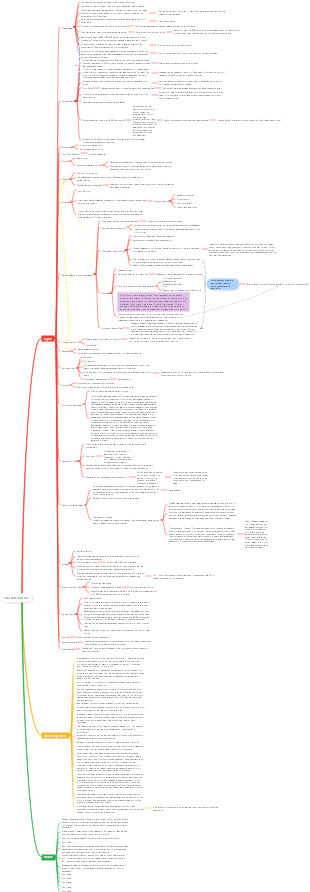
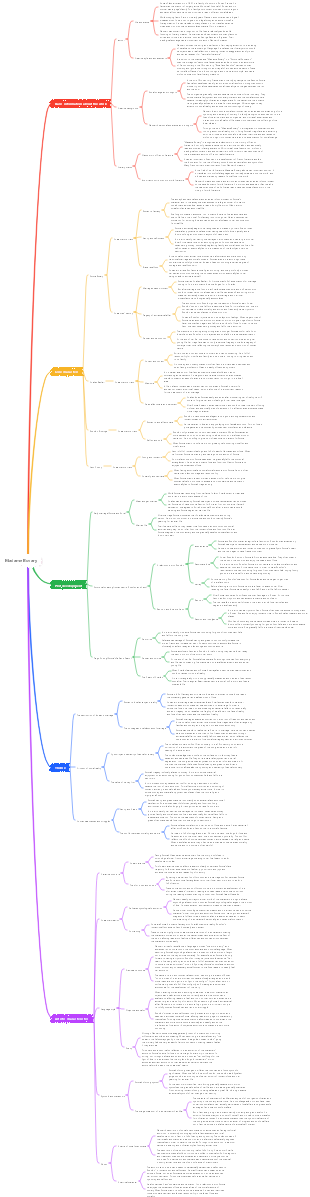
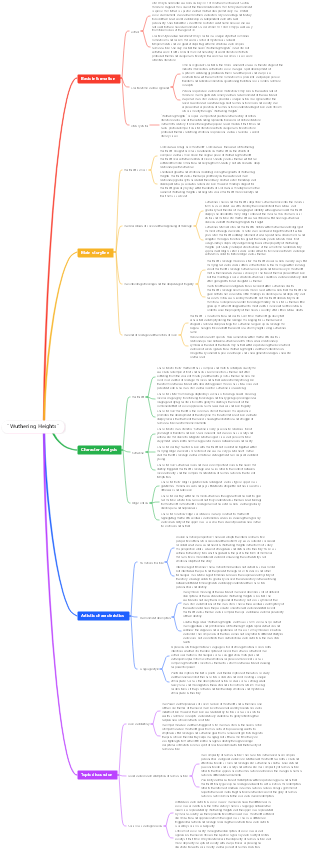
This is a mind map about "War and Peace", which mainly includes: artistic characteristics, themes, plot context, core characters, and basic information of the work. Through the comparison between war and peace, the novel shows the disasters and pain brought to mankind by war, and also expresses people's yearning and pursuit of a peaceful life.
Edited at 2025-02-21 20:11:12
- Reproductive system
This template shows the structure and function of the reproductive system in the form of a mind map. It introduces the various components of the internal and external genitals, and sorts out the knowledge clearly to help you become familiar with the key points of knowledge.
- Interpretation and summary of relationship field e-book
This is a mind map about the interpretation and summary of the relationship field e-book, Main content: Overview of the essence interpretation and overview of the relationship field e-book. "Relationship field" refers to the complex interpersonal network in which an individual influences others through specific behaviors and attitudes.
- Accounting books and accounting records
This is a mind map about accounting books and accounting records. The main contents include: the focus of this chapter, reflecting the business results process of the enterprise, the loan and credit accounting method, and the original book of the person.
War and Peace
- Reproductive system
This template shows the structure and function of the reproductive system in the form of a mind map. It introduces the various components of the internal and external genitals, and sorts out the knowledge clearly to help you become familiar with the key points of knowledge.
- Interpretation and summary of relationship field e-book
This is a mind map about the interpretation and summary of the relationship field e-book, Main content: Overview of the essence interpretation and overview of the relationship field e-book. "Relationship field" refers to the complex interpersonal network in which an individual influences others through specific behaviors and attitudes.
- Accounting books and accounting records
This is a mind map about accounting books and accounting records. The main contents include: the focus of this chapter, reflecting the business results process of the enterprise, the loan and credit accounting method, and the original book of the person.
- Recommended to you
- Outline



War and Peace
Basic information about the work
author
Life experience
Leo Nikolaevich Tolstoy was born in 1828 in an aristocratic family at the Yasnaya Polyna Manor in Tula Province, Russia, and received a good education since childhood. In his early years, he studied Eastern languages and law at Kazan University. Although he had not completed his studies, he had extensive knowledge of literature, philosophy and other fields, laying a solid foundation for his creation.
When he was young, Tolstoy joined the army. His experiences in the Caucasus and Crimean wars gave him a deep understanding of war, and these experiences also became important materials for his creation of war scenes in "War and Peace".
He has been paying attention to Russian social issues throughout his life and actively participated in social reform. His ideas have gradually matured through continuous exploration. His reflection on the life of aristocratic and sympathy for the lower-class people are permeated in his works.
Literary Achievements
Tolstoy's creative career lasted for more than 60 years, leaving behind many immortal works. In addition to "War and Peace", "Anna Karenina" uses delicate brushstrokes to depict the tragedy of aristocratic life and love, and explores family, marriage and social moral issues; "Resurrection" deeply criticizes the darkness and corruption of Russian society through the stories of Nekhludov and Maslova.
His works are known for their profound insight into human nature, grand narrative structure and vivid character shaping. They have had a profound impact on the development of world literature and are recognized as one of the world's literary masters.
Creation time and background
Social Change
During the period of creation in 1861-1869, Russia was in a period of drastic social transformation. The serfdom reform in 1861 was a major event in Russian history, marking Russia's transition from feudal serfdom to capitalism.
Although the reform liberated productivity to a certain extent, it also triggered a series of social contradictions. The aristocratic class faced changes in economic and social status, farmers still faced poverty and exploitation after gaining freedom, and the gap between the rich and the poor in society further widened.
At the same time, Russia faces pressure from European powers internationally. The failure in the Crimean War exposed Russia's military and economic backwardness, prompting Russia to carry out modernization reforms.
Literary trend
At that time, the Russian literary world was at its heyday of critical realism. Writers paid attention to social reality, revealed social problems through literary works, and criticized the darkness and injustice of society.
Influenced by this trend of thought, Tolstoy tried to show the full picture of Russian society in the war and peace period through "War and Peace", reflecting the lives and thoughts of people of different classes, as well as the impact of historical development on personal destiny.
Creative motivation
Tolstoy originally planned to write novels about the Decline, a progressive group among the Russian aristocracy who tried to overthrow the Tsarist autocracy through revolution, but ultimately failed.
During the creation process, Tolstoy's vision gradually expanded, and he turned his attention to the Russian history between 1805 and 1820, with the Patriotic War of 1812 as the core, showing the great changes in Russian society during the war and peace period, as well as the changes in people's thoughts and emotions in this process.
Literary status
The monument of Russian literature
"War and Peace" is regarded as the pinnacle of Russian literature. It presents the vast picture of Russian society with its grand historical background, rich characters and profound ideological connotations, and has become a classic work in the history of Russian literature.
The works comprehensively depict the political, economic, cultural, military and other aspects of Russian society, reflecting the main contradictions and problems of Russian society at that time, and providing precious materials for future generations to understand Russian history and culture.
The classics of world literature
In the field of world literature, War and Peace also plays an important role. It is translated into multiple languages and is widely spread around the world, and is loved and praised by readers from all over the world.
Its profound insight into human nature, thinking about war and peace, and depiction of love and friendship transcends the limitations of time and space, resonates with readers of different cultural backgrounds, and becomes a treasure in the treasure house of world literature.
Core characters
Rostov family
Nikola Rostov
character
Passionate, cheerful, full of vitality, full of love for life, with a strong sense of justice and compassion. He loves his motherland and is eager to make achievements on the battlefield and bring glory to the country and family.
At the same time, he also had the impulse and recklessness of young people. He was in debt due to momentary impulse during gambling, which brought certain economic pressure to the family.
experience
Give up his college studies and resolutely joined the Hussar Regiment. After many battles in the war, he gradually grew into a brave soldier. During the Battle of Austerlitz, he witnessed the cruelty of the war with his own eyes, but also inspired his patriotic enthusiasm.
They have a childhood sweetheart with Sonia and have a deep relationship, but due to family interests and social status, their relationship has experienced many twists and turns. Later, he met Princess Maria during the war, was moved by her kindness and tenacity, and eventually married her and jointly operated the family industry.
Natasha Rostova
character
Innocence, lively and cute, full of vitality and curiosity, and full of beautiful vision for the world. She is emotional, passionate and unrestrained, and treats love sincerely and persistently.
But she is also prone to impulsiveness, lacks life experience, and is difficult to control herself when facing temptation, which leads her to experience many setbacks in her relationship.
experience
At first she was engaged to Duke Andre and was immersed in the happiness of love. However, at a dance, she was bewildered by Anatoly's sweet words and almost elopes with him, an act that led to the severance of her engagement with Andre and also caused her to fall into deep self-blame and pain.
During the war, she experienced family changes and life hardships, and gradually became mature and strong. She actively participated in the rescue of the wounded and showed a kind and brave side. Later, she married Pierre, lived a happy life, and became a gentle and virtuous wife and mother.
Borkonsky family
Andre Borkonski
character
He is brave and good at fighting, has a strong sense of responsibility and mission, and is full of loyalty to the country and the nation. He is smart, wise, full of thought, and constantly pursues the meaning and value of life.
However, he was arrogant and sometimes seemed a little withdrawn and indifferent, and was often critical of the people and things around him.
experience
He participated in the Battle of Austerlitz and showed his heroic performance in the battle, but unfortunately injured. This experience gave him a new understanding of war and life, and he began to reflect on his life goals and values.
His wife died during childbirth, which brought him a huge blow. Later, he met Natasha at a dance and was attracted by her innocence and enthusiasm. The two fell in love and got engaged. But Natasha's betrayal hurt him deeply, and he rejoined into the war, was injured in the Battle of Borodino, and eventually died of serious injuries.
Mariya Borkonski
character
Devotional and kind, gentle and restrained, with firm belief and noble character. She is strong inside and can endure the sufferings of life and her father's strict discipline.
She is caring for her family and friends and willing to give everything for them, and is a typical traditional Russian woman.
experience
He has always taken care of his strange-tempered father and shouldered the heavy responsibility of his family. During the war, her home was occupied by the French army and she was forced to flee and experienced many hardships.
Later, she married Nicholas, and with Nicholas' help, she gradually walked out of the shadow of war and lived a happy life. She and Nicholas supported each other and jointly operated the family industry, contributing to the rejuvenation of the family.
Bezuhof family
Pierre Bezhukov
character
Kind and sincere, full of justice, and has a strong pursuit of truth and justice. He is open-minded, curious about various new ideas and new concepts, and constantly explores the true meaning of life.
But he also has a weak and hesitant side in his personality. When facing difficulties and choices, he is often hesitant and lacks decisive action.
experience
As the illegitimate son of Count Bezuhof, he became the focus of the social circle of St. Petersburg after inheriting a huge inheritance. However, he soon fell into an unfortunate marriage with Helen, who was suffering from his infidelity and debauchery.
In order to find the meaning of life, he joined the Freemasonry, trying to seek inner peace through religion and philosophy. During the war, he experienced the test of life and death and was captured by the French army. In prison, he met the soldier Praton Karataev, and was influenced by him and his thoughts underwent a profound change. Later, he married Natasha and found the destination of his life.
Kurajin Family
Anatoly Kurakin
character
Unruly, selfish, greedy for pleasure, and have no moral bottom line. He only cares about his own desires and interests and uses any means to achieve his goal.
He is good at using his appearance and sweet words to confuse others, and is a typical playboy.
experience
Trying to seduce Natasha and destroy her engagement with Andre, his actions cause great harm to Natasha and Andre. During the war, he was amputated after being injured and lost his past romantic style.
Eventually, he married the daughter of a small Polish landlord and lived an ordinary life, but his heart was still full of emptiness and regret.
Helen Kurakina
character
Beautiful and charming, full of charm, good at using your beauty and social skills to attract the attention of others. She is selfish and vain, pursues material enjoyment and social status, and has weak moral concepts.
She has no real understanding of love and marriage, but only uses it as a means of gaining benefits.
experience
After marrying Pierre, she had an affair with Dolokhov, which caused great pain to Pierre. She deals in the social circle and becomes the darling of the social circle with her beauty and means.
Later, she fell ill due to pregnancy and was treated by a doctor, and eventually died of an overdose of drugs, ending her short and vain life.
Plot context
Peaceful Life (1805 - 1812)
Characters appear
In aristocratic social occasions in St. Petersburg, such as luxurious dance parties and elegant salons, major figures such as Pierre, Andre, and Natasha appeared one after another. Pierre first entered the social circle and was full of curiosity and confusion about everything around him; Andre returned to St. Petersburg with the fatigue of war and thoughts about life, eager to find new meanings in life in society; Natasha attracted everyone's attention with her youthful vitality and innocence.
These social occasions show the luxurious life of the nobles, who wear gorgeous clothes and talk about politics, art and fashion, and also reveal the complex interpersonal relationships and social unspoken rules between the nobles, such as the struggle for power, the exchange of interests and emotional entanglements.
Love entanglement
Andre met Natasha at a dance and was moved by her beauty and innocence, and the two soon fell in love and got engaged. However, while waiting for Andre to return, Natasha was confused by Anatoly's sweet words and almost elope with him. This behavior led to the termination of her engagement with Andre, who was deeply hurt and went to war again.
Pierre married Helen, but discovered Helen's debauchery and infidelity, and he fell into a painful marriage life. He tried to escape pain through various ways, such as participating in social activities and pursuing new ideas and beliefs, but he could not escape his inner troubles.
Nicholas and Sonia are childhood sweethearts and have a deep relationship, but due to family opposition and differences in social status, their relationship faces many tests. At the same time, Nicholas also met Princess Maria in social interactions, and a subtle emotion developed with her.
Social situations
It presents the luxurious life of the nobles, who live in luxurious palaces and manors, possess a large amount of land and wealth, and enjoy various privileges. They hold grand balls and banquets, pursuing material enjoyment and spiritual entertainment.
The corruption in the officialdom is also reflected in the works. Officials embezzle and bribe, and use any means to do so for personal interests, and political struggles are fierce. The hypocrisy and vanity of the upper class are also portrayed to the fullest. People are polite on the surface, but in fact they are full of jealousy, resentment and scheming.
In sharp contrast to the luxurious life of the nobles, the living conditions of the lower class people, who live in poverty and are exploited and oppressed by landlords and nobles. The farmers work hard but find it difficult to make a living. Their children lack education and their lives are full of suffering and helplessness.
War breaks out (1812)
Napoleon's invasion
Napoleon led the French army to invade Russia, and the clouds of war enveloped the entire Russia. The Russian people rose up to resist, and major figures such as Andrei and Nikola also rushed to the battlefield and devoted themselves to the battle to defend the motherland.
The outbreak of the war brought a huge impact on Russian society, and people's lives have undergone earth-shaking changes. The nobles had to give up their luxurious life and contribute to the war; the lower class people were threatened by the cruelty of war and hunger.
Battle of Borodino
The Russian and French forces fought fiercely in Borodino, which was the turning point of the war. The battlefield was filled with smoke and artillery fire. The soldiers fought bravely, and the blood stained the earth red. Andrei was brave in the battle, but unfortunately injured.
This battle shows the cruelty and ruthlessness of the war, the soldiers face the test of life and death, and their lives appear so fragile in the war. At the same time, it also portrays the bravery and patriotism of the Russian army. In order to defend the motherland, they sacrificed their lives at will.
Moscow fire
After the French army occupied Moscow, a fire broke out in Moscow and the entire city fell into a sea of fire. The fire lasted for several days, burning down a large number of houses and buildings and urbanizing into ruins.
The Russian people suffered great disasters, they lost their homes and loved ones, and their lives fell into despair. The Moscow fire also symbolizes the anger and resistance of the Russian people towards the invaders, who would rather burn their own city than let it fall into the hands of the enemy.
Post-war reconstruction (1812 - 1820)
The fate of the character
Pierre was captured during the war and was taken to Moscow by the French army. In prison, he met the soldier Praton Karatayev, who was deeply influenced by Karatayev's optimism, kindness and love for life, causing a profound change in his mind. He began to reflect on his life and gained a new understanding of issues such as war, peace, and human nature.
Andre died of serious injuries, and his departure brought great sorrow to Natasha and her family. Natasha has experienced hardships in the war and her character has become more mature and strong. She actively participated in the rescue of the wounded and showed a kind and brave side. Later, she married Pierre and found happiness in life.
Nicholas returned to his hometown after the war, married Maria and rebuilt his home together. They worked hard to restore the family industry, take care of their families, and live a peaceful and happy life.
Social reconstruction
After the war, Russian society began to be rebuilt. The government has taken a series of measures to restore the economy, such as encouraging agricultural production and developing industry. The nobles also began to reflect on their own lifestyles, and some began to participate in social reforms and contribute to the development of the country.
People have experienced the test of life and death in war and have a new understanding of life. They cherish peace more and yearn for a peaceful life. At the same time, war has also given people a deeper understanding of social inequality and injustice, and has promoted social progress and change.
Theme
War and Peace
The cruelty and absurdity of war
The novel shows the blood, violence and cruelty of the war through detailed depictions of war scenes, such as the fighting, wounding and death of soldiers in the Battle of Borodino, as well as the ruins of the city and the suffering of the people after the Moscow fire.
It reveals the destruction of war on life and society, countless families are broken down, relatives are separated, and people live in fear and despair. At the same time, it also pointed out the absurdity of war. War is often triggered by the ambitions and desires of a few people, but ordinary people have to pay a heavy price for it.
The preciousness of peace
The preciousness of peace is demonstrated through the characters' experiences in war and their desire for a peaceful life after the war. After the war, people returned to their hometowns one after another, working hard to rebuild their homes and pursue a peaceful life.
The work expresses the yearning and pursuit of peace, and calls on people to cherish peace and oppose war. Peace is not only a state of no war, but also a harmonious and peaceful living environment and the basis for people to achieve a happy life.
Human nature and morality
The glory and ugliness of human nature
In the context of war and peace, the complexity of human nature is shown. When faced with the difficulties of war and life, characters such as Andre, Pierre, Natasha showed the brilliance of human nature such as kindness, courage, and perseverance. They sacrifice their own interests and even their lives for the sake of the country, their families, and their justice.
The selfishness, greed and hypocrisy of the Kulajin family reflect the ugliness of human nature. Anatoly's unruly and Helen's moral corruption, they used any means to bring harm to others in order to satisfy their desires.
Moral choice
The characters make different moral choices when facing love, friendship, family and national interests. Andre finally chose war between war and love and was loyal to the country; Natasha made a wrong choice under the temptation of love, but later she realized her mistakes and tried to make up for it; Pierre experienced painful struggles in her heart when facing Helen's infidelity, and finally chose tolerance and understanding.
The work explores the standards and significance of morality. In a complex social environment, how people stick to their moral bottom line and make the right choice is a question that the work deeply thinks about.
History and destiny
The torrent of history
With the background of the Patriotic War in 1812, it shows the development and changes of history. The war changed the political landscape of Russia. The performance of the Tsarist government in the war exposed the corruption and incompetence of its rule, and triggered the people's dissatisfaction with the government and their desire for social change.
The war also promoted the transformation of Russian society. The aristocratic class suffered heavy blows in the war, and its economic strength and social status declined. The emerging bourgeoisie and intellectuals began to rise, demanding political reforms to promote Russia to modernize.
At the same time, the war inspired the national consciousness and patriotism of the Russian people, and promoted national unity and cohesion. This awakening of national consciousness has had a profound impact on Russia's future development and has become an important driving force for Russian social change.
The impermanence of fate
The fate of the characters is ups and downs in war and peace. Andrei originally had lofty ideals for war and was eager to make achievements on the battlefield and realize his own life value. But the injury in the Battle of Austerlitz made him feel the fragility of life and the cruelty of war for the first time, and he doubted the meaning of life. Afterwards, his wife died of childbirth, and her love was shattered by Natasha's betrayal, and his fate was full of ups and downs.
Natasha has gone from an innocent and fantasy girl to a trough of life due to the temptation of Anatoly, and has experienced the setbacks of love and the accusations of everyone. During the war, she suffered from the destruction of her home and the separation of her relatives. The hardships of life allowed her to grow up quickly.
After Pierre inherited the estate, he thought he could live a prosperous and happy life, but he fell into an unfortunate marriage. Captured in the war, on the verge of life and death, after getting along with Praton Karataev, his thoughts changed drastically, and he finally found the destination of his life in his marriage to Natasha. The changes in the fate of these characters show the irrespectable fate and the impermanence of life.
Artistic characteristics
Narrative structure
Multi-line narrative
Taking the stories of Rostov, Borkonsky, Bezukhov and the Kurakin family as the main line, multiple clues are intertwined. The experiences and interactions of these characters in different scenarios show all aspects of Russian society in all aspects, from the luxurious life of the aristocracy to the hard work of the civilians, from the political struggle in the officialdom to the life-and-death battle on the battlefield.
For example, when the war broke out, Andre rushed to the battlefield, Nicholas grew up in the army, Pierre experienced a change of thought in the rear, Natasha faced emotional twists and turns in the family, and the stories of characters from different families were closely linked in the context of the war, jointly promoting the development of the plot.
The plot is relaxed and relaxed
Switch between war and peace scenes, the tense war scenes are combined with soothing descriptions of daily life. During the Battle of Borodino, the intense and intense description of the war-filled smoke on the battlefield and the soldiers fighting bravely formed a sharp contrast with the relaxed scenes of the soldiers resting and talking in the camp after the war.
During peacetime, nobles held dance parties and salons, and people talked about love and exchanged ideas, and the rhythm was slowed down; when war broke out, the rhythm instantly accelerated, showing the urgency and cruelty of the war. This moderate plot arrangement makes the readers' reading experience rich and diverse, and enhances the artistic appeal of the work.
Character creation
A distinct personality
Through the characters' language, actions and psychological descriptions, create characters with distinct personalities. Natasha's enthusiasm and unrestrainedness at the dance, her laughter and agile dance posture fully demonstrated her lively and cheerful personality; Andre's calmness and decisiveness in the face of war, and his deep restraint when thinking about life problems are all reflected through his words and deeds and inner monologues.
Pierre's hesitation and struggle in the face of difficulties, as well as his kind and sincere heart, are also vividly revealed on the paper under the author's delicate description. These rich descriptions bring the characters to life, making readers feel as if they can see the every move of these characters with their own eyes and feel their joys, anger, sorrows, and happiness.
Character growth
Shows the character's growth and transformation in war and peace. Natasha went from being naive and childish in her initial innocence and childishness to making mistakes due to the temptation of Anatoly, to becoming mature and strong after experiencing hardships during the war, knowing how to care for others, and actively participating in the rescue of the wounded.
Pierre gradually grew from a confused and weak noble child to a responsible and thoughtful person after experiencing marriage failure, war baptism and dating with Praton Karataev. The growth process of these characters makes the characters more full and three-dimensional, and allows readers to feel the changes in life and the power of growth.
Language style
Beautiful language
The words are beautiful and smooth and poetic. The description of natural scenery, such as the description of Russia's vast grasslands, magnificent rivers, dense forests, etc., is full of picture feeling, making readers feel as if they are there.
When describing the emotions of the characters, the language is delicate and moving, and can deeply convey the emotional changes in the characters' hearts. For example, Andre's love for Natasha, from the initial heartbeat and admiration, to the pain and disappointment caused by betrayal, to the final inner tolerance and relief, the author uses delicate language to fully display these emotional changes.
Deep philosophical
The narrative contains profound philosophy and think about issues such as war, peace, human nature, and morality. By describing the cruelty of war, readers will think about the meaning and value of war; by showing the characters' choices in moral dilemma, they will explore the standards and bottom lines of morality.
For example, when describing Pierre's experience and ideological transformation in the war, the author deeply explored philosophical issues such as the good and evil of human nature and the meaning of life, which gave the work a profound ideological connotation and aroused readers' resonance and thinking.