MindMap Gallery Don Quixote
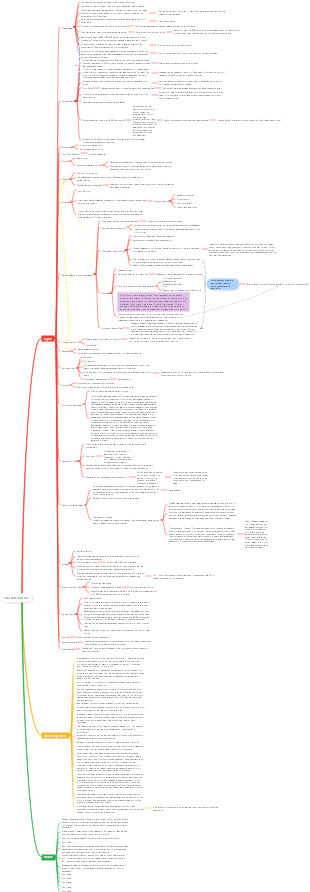
This is a mind map about "Don Quixote", which mainly includes: plot development, artistic characteristics, theme ideas, and main characters. "Don Quixote" is a novel with profound connotation and extremely high literary value. Through Don Quixote's adventure, it explores many aspects of ideals and reality, human nature and society, and shows human yearning and pursuit of a better life.
Edited at 2025-02-21 20:10:24This template shows the structure and function of the reproductive system in the form of a mind map. It introduces the various components of the internal and external genitals, and sorts out the knowledge clearly to help you become familiar with the key points of knowledge.
This is a mind map about the interpretation and summary of the relationship field e-book, Main content: Overview of the essence interpretation and overview of the relationship field e-book. "Relationship field" refers to the complex interpersonal network in which an individual influences others through specific behaviors and attitudes.
This is a mind map about accounting books and accounting records. The main contents include: the focus of this chapter, reflecting the business results process of the enterprise, the loan and credit accounting method, and the original book of the person.
This template shows the structure and function of the reproductive system in the form of a mind map. It introduces the various components of the internal and external genitals, and sorts out the knowledge clearly to help you become familiar with the key points of knowledge.
This is a mind map about the interpretation and summary of the relationship field e-book, Main content: Overview of the essence interpretation and overview of the relationship field e-book. "Relationship field" refers to the complex interpersonal network in which an individual influences others through specific behaviors and attitudes.
This is a mind map about accounting books and accounting records. The main contents include: the focus of this chapter, reflecting the business results process of the enterprise, the loan and credit accounting method, and the original book of the person.
Don Quixote
Main characters
Don Quixote
Characteristic traits
Get out of reality and indulge in fantasy
Daily Behavior: He immersed himself in the world of knight novels, and in his daily life he also demanded himself by the knight's principles. When you see the worn-out armor, you regard it as a precious knight's equipment and wipe it carefully, and imagine that you can gallop on the battlefield by wearing it.
Cognitive bias: completely confuses illusion and reality, treats ordinary hotels as luxurious castles, treats vulgar shop owners as noble lords, and seriously asks the shop owner to hold a solemn seal ceremony for him.
Kind, brave, persistent and tenacious
Kindness manifests: During the journey, as long as you see someone or something he thinks is in need of help, you will stand up without hesitation. For example, when encountering a bullied child, he will stand up and stop his evil deeds, even if he may face danger.
Brave Action: Facing seemingly powerful enemies, such as windmills and flocks, he is not afraid, and bravely launches attacks, believing that his just actions will definitely defeat everything.
Perseverance and perseverance: Although countless adventures ended in failure and his body suffered various pains, his belief in the spirit of chivalry has never wavered and he has always persistently pursued the ideal of knight in his heart.
Character transformation
From blindly fanatic to gradually awakening
Early fanaticism: In the early stage, Don Quixote believed in the content of the knight's novels, blindly imitated the knight's behavior, and regardless of others' dissuasion, he plunged into the adventure world of his fantasy.
Medium-term shake: As the adventure continues to deepen, he encounters more and more setbacks and failures, and begins to have some doubts about his behavior and beliefs, but it is still difficult to completely get rid of the influence of the Knight novels.
Later awakening: After experiencing a series of hardships, especially the failure of the duel with the "White Moon Knight", his fantasy world gradually collapsed and he began to have a new understanding of the spirit of the chivalrous. Before his death, he finally realized his ridiculous behavior in the past and returned to the real world.
Sancho Pansha
Characteristic traits
Pragmatic, kind and a little cunning
Pragmatic performance: He always pays attention to the actual interests in real life and joins Don Quixote's adventure team, largely because Don Quixote promises to give him an island to be the governor, which is a real material temptation for him. During the journey, he will always care about his food, clothing, housing and transportation to ensure that his basic living needs are met.
The essence of kindness: Although Sancho pursues material things, he is very kind inside. When he sees someone suffering, he will feel compassion and do his best to help. For example, when encountering poor villagers, he will take out his few foods to share with them.
Cunning: Sometimes he will be clever in order to achieve his own goals or avoid trouble. When facing some dangerous or embarrassing situations, he will cleverly find excuses to escape, or use some tricks to solve the problem.
Optimistic humor
Optimistic: No matter how difficult and difficult the adventure process is, Sancho always maintains an optimistic attitude. Even if he was beaten to his body, he could quickly cheer up and continue moving forward.
Humor Language: He often speaks some humorous words, adding a lot of relaxing atmosphere to the intense adventure. His humor is not only a self-deprecating, but also a gentle joke about Don Quixote's crazy behavior.
Character growth
From pursuing material to understanding ideal
Early pursuit: At the beginning, Sancho followed Don Quixote mainly to gain wealth and status. He was full of hope to become governor and live a rich life.
Transformation process: During the long adventure, he was gradually infected by Don Quixote's persistence and pursuit of ideals. He began to understand the chivalrous spirit in Don Quixote's heart, and realized that in addition to material interests, life also has higher spiritual pursuits.
Finally Growth: Later, Sancho no longer took risks just for material things, and his relationship with Don Quixote also changed from a simple employment relationship to a spiritual mutual understanding and support. He began to agree with Don Quixote's ideal and was willing to face difficulties with him for this ideal.
Plot development
First time trip
Preparation and departure
Equipment Patchwork: Don Quixote took out the rusty armor heirloom from his family. Although it was worn out, he regarded it as a treasure. After simple repairs and decorations, he regarded it as his combat equipment. He found another skinny old horse and named it "Rare to be awesome", believing that although the horse was thin, it had extraordinary courage.
Self-proclaimed: He proclaimed himself a knight, gave himself a loud name "Don Quixote de La Mancha", and fantasized about being a brave and fearless knight.
The person he liked: he imagined Altonsa Lorenzo, a farm girl he had never met in the neighboring village, as his favorite, named her "Dursineya Del Toposo", and firmly believed that she was the most beautiful and gentle woman in the world.
On the journey: After everything was ready, Don Quixote embarked on an adventure full of unknowns alone, full of passion and longing for adventure.
Adventure
The inn was awarded a title: He came to a simple inn, but mistakenly thought it was a magnificent castle. He asked the inn owner to hold a ceremony to confer a knight's title for him. In order to send him away, the owner held a confer a ceremony for him in an absurd way as he asked, and also gave him a rusted sword and a worn belt.
Fighting the Windmills: During the journey, Don Quixote saw the huge windmills standing in the fields in the distance, but regarded them as terrible giants. He rushed towards the windmill without hesitation and fought fiercely with the windmill with the spear in his hand. As a result, he was thrown out by the huge blades of the windmill and fell heavily to the ground, seriously injured, but he still firmly believed that he was fighting the evil giant.
Second trip
Recruiting servants
Persuasion process: Don Quixote found Sancho Pansha and painted a beautiful blueprint to him, promising that as long as Sancho was willing to be his servant and risked him with him, he would be appointed as the governor of an island in the future. Although Sancho was somewhat suspicious of Don Quixote's crazy behavior, he finally decided to follow him on an adventure due to his wealth and status.
Travel preparation: Sancho rode a small donkey and took his simple luggage and embarked on the adventure again with Don Quixote. He was full of hope to realize his dream of becoming a governor as soon as possible.
Main adventure
Fighting the Flock: They met a large flock of sheep on the way, but Don Quixote regarded the flock as two fighting armies. He stormed into the flock despite Sancho's dissuasion, waving his spear, trying to help one of them defeat the other. As a result, he was injured by a shepherd with a stone and was injured in many parts of his body, and was in a mess.
Rescue the servant: They saw a shepherd boy tied to a tree by his master and beaten. Don Quixote thought it was an unfair behavior, so he stepped forward to rescue the shepherd boy. He warned the shepherd's owner not to bully the child anymore, otherwise he would come back to settle the score with him. However, when Don Quixote left, the shepherd's owner punished him even more severely, which made Don Quixote's kindness do bad things.
Three trips
Keep taking risks
Encountering the "White Moon Knight": In the third adventure, Don Quixote meets a mysterious figure who calls himself "White Moon Knight". The "White Moon Knight" proposed a duel with Don Quixote, and agreed that if Don Quixote was defeated, he must give up his knighthood and return to his hometown to live in seclusion for one year.
Dueling Failed: During the duel, Don Quixote was eventually defeated by the "White Moon Knight" due to physical exhaustion and mental exhaustion. He had to abide by the agreement, end his adventures, and was forced to return home.
ending
After returning home, he died of illness: After Don Quixote returned to his hometown, he was exhausted both physically and mentally and could not get sick. In the hospital bed, he looked back on his life and finally realized how ridiculous and unrealistic his past behavior was. He had a deep understanding of the poison of knight novels. Before his death, he made a will, requiring his niece to marry someone who had read knight novels when they were married, otherwise he would not get his inheritance.
Theme
Criticism of Knight's Literature
Revealing the absurdity of knight literature
The content is ridiculous: The novel describes Don Quixote's obsession with knight novels in detail. These novels are full of absurd plots, such as the knights fighting magicians and giants, experiencing various magical adventures. Don Quixote takes these fictional content as the real world, thus committing a series of ridiculous acts.
Misleading thoughts: The chivalrous spirit promoted by knight literature, such as absolute loyalty, fearless courage, noble love, etc., is often unrealistic in real life. Don Quixote suffered greatly, and his actions not only caused harm to himself, but also caused trouble to those around him.
Reflect the impact of literature on society
Reader Misleading: Through Don Quixote's story, it reveals the poisoning of literary works that are out of reality to readers' thoughts. In the society at that time, many people were addicted to knight novels and ignored the problems in real life, which led to the social atmosphere becoming impetuous and illusory.
Social Obstacles: This unrealistic literary work hinders the development and progress of society. People pursue illusory ideals too much and ignore solving real problems, which puts society in a stagnant state.
The conflict between ideal and reality
Don Quixote's ideal pursuit
Chivalrous spirit practice: Don Quixote persistently pursues the qualities of justice, courage, loyalty and other qualities in the chivalrous spirit. He believes that he has the responsibility and obligation to maintain peace and justice in the world and help those oppressed.
Romantic love yearning: He is full of romanticism for his lover Durcinia, and regards her as a symbol of perfection, and can do whatever it takes for her.
The brutal blow of reality
Behavior hits a wall: In the real world, his behavior is ridiculed and hit everywhere. His risky behavior is seen as a madman's action, and the justice and fairness he pursues are often not realized.
The ideal is broken: His failed duel with the "White Moon Knight" symbolizes the complete shattering of his ideal. He had to face reality and admit that his behavior was absurd, which also gave him a profound reflection on his life and ideals.
Thinking about human nature
Kindness and Evil
Show of Kindness: Don Quixote and Sancho always maintain their kind nature during adventure. They are willing to help those in need, and even if their strength is limited, they will do their best.
Evil encounters: They also encounter various human ugliness, such as greed, selfishness, cruelty, etc. For example, the cruel abuse of the shepherd's owners on the shepherd's children, as well as the ridicule and deception of Don Quixote by some, all show the dark side of human nature.
Reason and madness
Don Quixote's Crazy and Perseverance: Behind Don Quixote's crazy behavior is his persistent pursuit of ideals. Although his behavior is absurd, he has firm beliefs and noble qualities in his heart.
Sancho's reason and loyalty: Sancho represents reason and reality. His loyalty to Don Quixote is not blind, but gradually understands and recognizes his spiritual world in the process of getting along. His sanity and humor also somewhat alleviated Don Quixote's madness, making their adventure even more interesting.
Artistic characteristics
Illusion
Exaggeration and comparison
Exaggerated behavior: The novel describes Don Quixote's behavior extremely exaggeratedly, such as his use of the windmill as a giant and fighting with the flock of sheep. These exaggerated behaviors form a strong contrast with reality and produce a strong ironic effect.
Character comparison: Don Quixote and Sancho's character and behavior form a sharp contrast, Don Quixote's madness and Sancho's sanity, Don Quixote's idealism and Sancho's realism, through this contrast, the satirical theme of the novel is further highlighted.
Humor language
Humorous dialogue: The novel is full of humorous language, and dialogue between characters often makes people laugh. Sancho's humorous words not only add interest to the story, but also cleverly satirize Don Quixote's crazy behavior.
Self-mockery: When facing failures and setbacks, Don Quixote will also use self-mockery to relieve embarrassment and pain. This humorous expression allows readers to feel his helplessness and sorrow in laughter.
Character creation
Significant personality traits
Don Quixote: His personality is complex and diverse, both a side that is divorced from reality and indulged in fantasy, and a side that is kind, brave, persistent and tenacious. This complex personality makes his image more three-dimensional and full.
Sancho Pansha: His personality traits such as pragmatism, kindness, cunning and optimistic humor are also very distinct, which complements Don Quixote, making readers deeply impressed him.
The construction of character relationships
Master-Servant Interaction: The master-Servant relationship between Don Quixote and Sancho is a highlight of the novel. Their interaction and communication during the adventure show the mutual influence and growth of people of different personalities.
Relationship Change: From the initial employment relationship to the later spiritual mutual understanding and support, their relationship undergoes a gradual transformation process, which enriches the character image and story content.
Structural features
Linear narrative
Clear context: Taking Don Quixote's three adventures as clues, a linear narrative structure is adopted to make the development context of the story clear and clear. Readers can follow Don Quixote's footsteps and experience his adventure step by step.
Plot advancement: This narrative structure is conducive to the gradual advancement of the plot, making the story more natural and smooth, and at the same time making it easier for readers to understand and grasp the theme of the novel.
Interspersed stories
Rich content: Many other small stories are interspersed in the main story, such as the story of the shepherd boy, the stories of other travelers in the hotel, etc. These small stories enrich the content of the novel and make the novel more vivid and interesting.
Expanding background: Through these short stories, the different levels of society and the living conditions of the characters at that time were shown, the social background of the novel was expanded, and readers had a more comprehensive understanding of the society at that time.