MindMap Gallery General steps of teaching system design
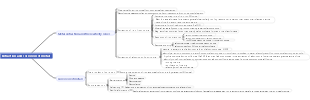
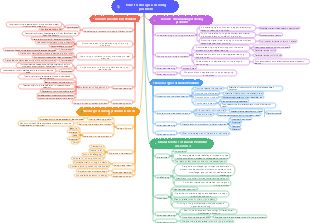
This is a mind map about the general steps of teaching system design, and its main content includes: Instructional Systems Design (ISD) is a scientific process that optimizes the teaching process using a systematic method, which usually includes five core stages: analysis, design, development, implementation, and evaluation. The following are the detailed steps and key points: 1. Analysis stage, 2. Design stage, 3. Development stage.
Edited at 2025-08-22 22:39:09Avatar 3 centers on the Sully family, showcasing the internal rift caused by the sacrifice of their eldest son, and their alliance with other tribes on Pandora against the external conflict of the Ashbringers, who adhere to the philosophy of fire and are allied with humans. It explores the grand themes of family, faith, and survival.

This article discusses the Easter eggs and homages in Zootopia 2 that you may have discovered. The main content includes: character and archetype Easter eggs, cinematic universe crossover Easter eggs, animal ecology and behavior references, symbol and metaphor Easter eggs, social satire and brand allusions, and emotional storylines and sequel foreshadowing.
[Zootopia Character Relationship Chart] The idealistic rabbit police officer Judy and the cynical fox conman Nick form a charmingly contrasting duo, rising from street hustlers to become Zootopia police officers!
Avatar 3 centers on the Sully family, showcasing the internal rift caused by the sacrifice of their eldest son, and their alliance with other tribes on Pandora against the external conflict of the Ashbringers, who adhere to the philosophy of fire and are allied with humans. It explores the grand themes of family, faith, and survival.
This article discusses the Easter eggs and homages in Zootopia 2 that you may have discovered. The main content includes: character and archetype Easter eggs, cinematic universe crossover Easter eggs, animal ecology and behavior references, symbol and metaphor Easter eggs, social satire and brand allusions, and emotional storylines and sequel foreshadowing.
[Zootopia Character Relationship Chart] The idealistic rabbit police officer Judy and the cynical fox conman Nick form a charmingly contrasting duo, rising from street hustlers to become Zootopia police officers!
General steps of teaching system design
Instructional Systems Design (ISD) is a scientific process that optimizes the teaching process using a systematic method, which usually includes five core stages: analysis, design, development, implementation, and evaluation. The following are the detailed steps and key points:
1. Analysis stage (Analysis)
Objective: Clarify teaching problems, learner characteristics and environmental conditions, and provide a basis for subsequent design. Key steps:
1. Requirements Analysis
Task: Identify the gap between teaching objectives and the current situation (such as skill gaps, knowledge blind spots).
method:
Performance analysis (such as comparing employees' current performance and job standards in corporate training).
Needs surveys (such as collecting learner or stakeholder opinions through questionnaires, interviews).
Output: Requirements analysis report (including problem definition and priority sort).
2. Learner analysis
Task: Understand the learners' cognitive, emotional and social characteristics.
method:
Cognitive characteristics: age, knowledge base, learning style (such as visual/auditative).
Emotional characteristics: motivation, interests, and cultural background (such as cross-cultural courses need to consider value differences).
Social characteristics: team collaboration ability, technical usage habits (such as online learning preference for mobile or PC).
tool:
Pre-assessment (such as pre-testing and testing basic level).
Learning style scale (such as VARK model).
Output: Learner feature analysis table (including descriptions of group portraits and individual differences).
3. Environmental Analysis
Task: Evaluate the physical and technical conditions of teaching implementation.
content:
Physical environment: classroom layout, equipment availability (such as the number of laboratory equipment).
Technical environment: online platform functions (such as LMS interactive tool support), network bandwidth.
Output: Environmental analysis list (including resource limitations and potential risks).
2. Design stage (Design)
Objective: Plan teaching objectives, content structure, teaching methods and evaluation methods. Key steps:
1. Teaching objective design
Task: Transform requirements into observable, measurable learning outcomes.
method:
Use the ABCD model to write the objectives:
A (Audience): learners (such as "high school students").
B (Behavior): Specific behavior (such as "can map cell division").
C (Condition): Condition (such as "without reference").
D (Degree): Standard (such as "accuracy rate ≥90%").
Classification objectives (such as Bloom's objective classification: memory → understanding → application → analysis → evaluation → creation).
Output: List of teaching objectives (including priority and correlation description).
2. Teaching content design
Task: Decompose knowledge into logically coherent teaching units.
method:
Structure: divide modules by topic, difficulty or skill level (such as dividing "programming basics" into three parts: variables, loops, and functions).
Media selection: Match media forms according to content type (such as animations for abstract concepts, and demonstrations for operation steps).
tool:
Concept diagram (such as using XMind to sort out knowledge associations).
Storyboards (such as planning the screen, narration and interactive links when designing micro-class scripts).
Output: Teaching content syllabus (including unit division, media type and time allocation).
3. Teaching method design
Task: Choose strategies that promote learner participation.
method:
Strategy Matching:
Complex problems: inquiry-based learning, case analysis.
Basic concepts: teaching method, direct teaching.
Interactive design:
Classroom: Group discussion, role-playing, real-time voting.
Online: Forum debate, collaborative editing of documents, virtual labs.
Output: Teaching method description table (including activity process, rules and time schedule).
4. Evaluate design
Task: Plan how to measure learning outcomes and feedback on improvements.
method:
Formative evaluation:
Class: Ask questions, observations, and quizzes.
Online: Automatic scoring questions, learning behavior data analysis (such as video viewing completion rate).
Summary evaluation:
Exams, project reports, and practical skills assessment.
tool:
Evaluation scale (such as Rubric scoring criteria).
Data analysis tools (such as Excel statistical score distribution).
Output: Evaluation plan (including tools, time points and feedback mechanism).
3. Development stage (Development)
Objective: Transform design into deliverable teaching materials and technical tools. Key steps:
1. Teaching materials development
Task: Create physical or digital resources such as textbooks, courseware, case libraries, etc.
method:
Text materials: Prepare lesson plans, student manuals, glossary (glossary).
Multimedia materials:
Video: Record micro-courses, operation demonstrations (such as using Camtasia editing).
Animation: Use Vyond to create scientific principles to visualize content.
Interactive content: H5 pages, virtual simulation experiments (such as Labster).
Output: Teaching material package (including source files and instructions for use).
2. Technical tool development
Task: Configure or develop technical systems that support teaching.
content:
Online platform: upload courses to LMS (such as Moodle), set discussion area permissions.
Customized tools: Develop learning and analysis dashboards, adaptive exercise systems.
Output: Technical tool prototype (including test account and operation guide).
3. Prototype testing
Task: Verify the availability of materials and tools in a small range.
method:
Invite 5-10 target learners to try and feedback (such as “Did this animation clearly explain the concept?”).
Record problems (such as video stuttering, navigation logic confusion).
Output: Test report (including modification suggestions and priority sorting).
IV. Implementation phase (Implementation)
Objective: Apply development results to actual teaching scenarios. Key steps:
1. Teaching delivery
Task: Organize teaching activities according to the design process.
method:
Traditional classroom:
Import: stimulate interest through questions or cases.
Main body: Promote explanation, practice, and interactive links according to lesson plans.
Summary: Review the key points and assign homework.
Online learning:
Push content: Unlock the course module by schedule.
Monitor progress: Track learning behavior through platform data (if those who are not logged in send reminders).
Output: Teaching implementation records (including classroom video and student participation data).
2. Learner support
Task: Provide personalized tutoring and resources.
method:
Instant feedback: classroom Q&A, online chat room Q&A.
Supplementary resources: Provide additional reading materials or videos for those with learning difficulties.
Output: Support records (such as tutoring record tables, resource usage statistics).
3. Process Management
Task: Ensure teaching is carried out as planned and respond to emergencies.
content:
Time control: Use the timer or platform countdown function.
Discipline maintenance: Establish online classroom rules (such as prohibiting irrelevant topics).
Output: Process management log (including adjustment records and reason description).
V. Evaluation stage (Evaluation)
Objective: Evaluate teaching effectiveness and iteratively optimize the design. Key steps:
1. Formative evaluation
Task: Collect feedback in real time and adjust teaching.
method:
Classroom observation: record students' expressions and participation.
Online analysis: View video viewing time and test error rate.
Output: Formative evaluation report (including improvement measures, such as increasing the number of cases).
2. Summary evaluation
Task: Measuring the overall teaching objectives achieved.
method:
Comparative data: pre-test and post-test scores, skill assessment pass rate.
Satisfaction survey: Student/teacher evaluations were collected through questionnaires (such as “Is the course content practical?”).
Output: Summary evaluation report (including successful experience and insufficient analysis).
3. Iterative optimization
Task: Modify design defects based on evaluation results.
method:
Updated materials: Replace outdated cases and correct error content.
Adjustment method: For example, change the teaching method to group exploration to increase participation.
Output: Improvement plan (including timetable and responsible person).
6. Key principles
Systematic: Each step is interdependent and requires overall planning (such as the analysis results directly affect the design direction).
Learner Center: Always drive design based on learner needs (such as choosing media formats based on learning style).
Iterative: Evaluation is not the end point, but the starting point of continuous optimization (such as the annual update of course cases).
Flexibility: Adjust step details based on resources, time, and technical conditions (such as rapid prototyping methods in agile design).