MindMap Gallery Cápsulas (Capsules)
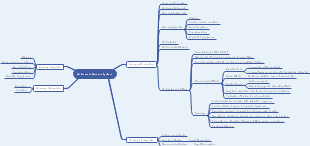
Este mapa mental, creado con EdrawMind, ofrece una visión detallada de las cápsulas como forma farmacéutica. Aborda aspectos como su introducción, tipos, ventajas y desventajas, aplicaciones, componentes, contenido, fabricación, control de calidad, envasado y almacenamiento. Cada sección se divide en subtemas específicos, proporcionando información exhaustiva sobre cada elemento. Es una herramienta valiosa para estudiantes y profesionales de la farmacia que buscan comprender las complejidades y consideraciones clave en el desarrollo y uso de cápsulas.
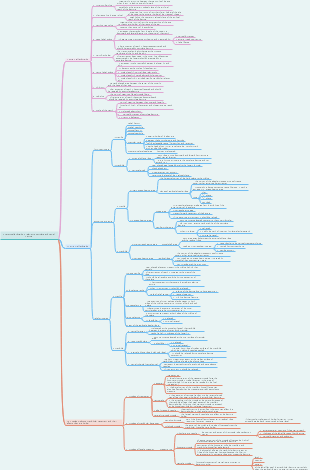
Edited at 2025-11-09 12:02:09This mind map provides a detailed overview of the pharmacotherapy for heart failure, focusing on drug categories, their mechanisms of action, and specific treatment strategies. It includes information on drugs used to manage heart failure symptoms and improve patient outcomes, such as ACE inhibitors, beta-blockers, diuretics, and newer pharmacological agents. The map also outlines treatment goals, non-pharmacological interventions, and considerations for different stages of heart failure, offering a comprehensive guide for healthcare professionals.
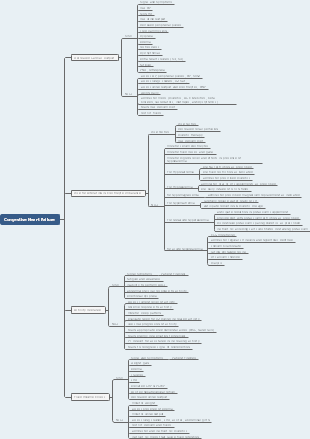
This mind map, created using EdrawMind, provides a detailed overview of anti-arrhythmic drugs. It categorizes the drugs into different classes based on their mechanisms of action, such as sodium channel blockers, beta-blockers, potassium channel blockers, and calcium channel blockers. Each category includes specific drugs, their mechanisms, clinical uses, and potential side effects. The mind map also features an overview section with an ECG waveform illustration, highlighting the effects of these drugs on heart rhythms, and an information section discussing general principles of arrhythmia treatment.
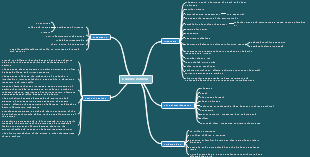
This mind map, created using EdrawMind, outlines the pharmacotherapy options for angina pectoris. It covers various classes of drugs used in treatment, including their mechanisms of action, therapeutic uses, and important considerations. The map is divided into sections such as "Angina," "Drugs," "Organic Nitrates," and "Management," providing a structured overview of how different medications alleviate symptoms and improve patient outcomes in angina pectoris.
This mind map provides a detailed overview of the pharmacotherapy for heart failure, focusing on drug categories, their mechanisms of action, and specific treatment strategies. It includes information on drugs used to manage heart failure symptoms and improve patient outcomes, such as ACE inhibitors, beta-blockers, diuretics, and newer pharmacological agents. The map also outlines treatment goals, non-pharmacological interventions, and considerations for different stages of heart failure, offering a comprehensive guide for healthcare professionals.
This mind map, created using EdrawMind, provides a detailed overview of anti-arrhythmic drugs. It categorizes the drugs into different classes based on their mechanisms of action, such as sodium channel blockers, beta-blockers, potassium channel blockers, and calcium channel blockers. Each category includes specific drugs, their mechanisms, clinical uses, and potential side effects. The mind map also features an overview section with an ECG waveform illustration, highlighting the effects of these drugs on heart rhythms, and an information section discussing general principles of arrhythmia treatment.
This mind map, created using EdrawMind, outlines the pharmacotherapy options for angina pectoris. It covers various classes of drugs used in treatment, including their mechanisms of action, therapeutic uses, and important considerations. The map is divided into sections such as "Angina," "Drugs," "Organic Nitrates," and "Management," providing a structured overview of how different medications alleviate symptoms and improve patient outcomes in angina pectoris.
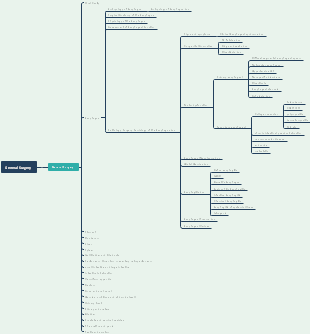
Capsules
Cachets
Introduction
Dipped in water for seconds and swallowed with lots of water to prevent the patients from tasting the powder
Cachets are molded from rice flour
2 plate-shaped rice paper filled with dry powder up to 2g
Solid dosage forms of drugs, also known as wafer capsules
Advantages
Made easily
DIsintegrate quickly in the stomach
Large doses of drug can be swallowed
Disadvantages
Easily damaged
Need to be softened first
The enclosed cannot be protected from light and moisture
Shell of cachets are fragile hence drug content can be compressed
Not suitable for filling of drugs in large scale
Cachets occur more space compared with tablets and capsule dosage forms
Introduction
Derived from the Latin "capsula" = small box
Filled with solid, semi-solid, or liquid medications
Unit doses of drugs enclosed within soluble shells of gelatin or similar materials, are intended to be swallowed whole
Types of capsules
Hard gelatin capsules
Known as hard-shell capsule
Capsule shells are made from gelatin and are clear, colourless and tasteless
Colourings and markings are added for light protection and to ease identification
May be filled with powders, granules and pellets
Properties
The base and body (longer and lesser diameter portion)
The cap (shorter and slightly larger diameter portion. The cap is designed to slide over the base portion and form a snug seal)
Soft gelatin capsules
Properties
Consists of flexible solid shell containing powders, nonaqueous liquids, solutions, emulsions, suspension or paste
Soft gelatin capsules appear swollen > they are manufactured and filled in one operation that results in the pressure of contents maintaining the capsules shape
Allow the liquid to be given as solid dosage forms > improving bioavailability of delivering a drug
Offer accurate dosage, improved stability, and overcome problems using powder
Hard vs soft gelatin capsule
Less flexible / More flexible
Oblong or cylindrical / Spherical, ovoid or cylindrical
Composed of two pieces: Cylindrical body and cap / Composed of one-piece capsule shell: Formed, filled and sealed in one operation
Generally used for solid medicaments / Usually, contents are non-aqueous dispersions or oils or solutions, gel and paste
Advantages and disadvantages
Advantages
Effectively mask the odor and taste of substances/drugs
Rapid and uniform release of medication
Can be light resistant (opaque capsules)
Can be formulated to increase oral bioavailability of poorly soluble/liquid drug
Easy to swallow (suitable shape and slippery when moistened)
Fewer excipients required
Disadvantages
Requirement of specialized manufacturing equipment
Limited choices of excipients/carriers compatible with gelatin
Potential stability problems associated with capsule-containing liquid fills
Problems regarding the homogeneity of fill weight and content may be associated with capsule formulations
Unable to divide/separate capsule into desirable individual dose
Application
Not suitable for drugs
Very soluble salts (potassium chloride, potassium bromide, ammonium chloride)
Strongly efflorescent materials - capsules tend to soften when water is lost from the drugs to capsule shells
Strongly deliquescent powder - capsules shell brittle when moisture extracted from shell into powder
Component of capsules
Gelatin
Basic properties
Non-toxic (widely used in foodstuffs)
Readily soluble in biological fluids at body temperature
Forms a good films
A solution in water undergoes a reversible phase change from a colloidal dispersion (mobile liquids) to a gel (rigid state) at temperatures only a few degrees above ambient temperature
Prepared
By hydrolysis of collagen which is the main protein constituent of connective tissues or collagen
Types
Type A produced by acid hydrolysis (manufactured mainly from skins)
Type B is produced by basic hydrolysis (manufactured mainly from bones) - typically for soft gelatin
Relevant properties
Bloom strength: Measure of gel regidity
Viscosity of gelatin solution: To control the thickness of the films or sheets
Water content
When forming the hard gelatin capsule shells, the water content of capsule is between 14%-16%. Final drying to 13% w/w of water content
Soft gelatin capsule sheet is 30-40% but a final soft capsule water content is 5-14% w/w
Water in the gelatin capsule shell helps
To ensure the mechanical properties of the capsule are sufficiently robust so that the capsule does not either crack or permanently deform
To ensure the capsule is flexible during manufacturing, following formation, the capsule are drying but not overdried, not brittle
Preservatives
Sometimes added to capsule gelatin to prevent microbial contamination during manufacture
Commonly in finished capsules, moisture levels are low enough so that capsules will not support bacterial growth
Soft gelatin capsules sometimes have antifungal agents added to prevent surface growth when stored in non-protective packages
Ex: Parabens,benzoic acid
Plasticizer
Added to increase the pliability/flexibility
Ex: Glycerol, sorbitol, propylene glycol, sucrose and acacia
Soft gelatin capsules are softer and more flexible because the contain large proportion of plasticiser (plasticiser:gelatin = 8:1)
Hard gelatin capsules are firm and rigid (plasticiser:gelatin = 4:1)
Colorants
To enhance the aesthetic (beauty) proeprties
As a means of identifying the product
Types
Soluble dyes
Mainly synthetic in origin and by using mixtures, capsules can be made in most colours
Insoluble pigments
Titanium oxide which is white and is used as opacifying agent
Iron oxides which are available as black, red and yellow
Wetting agents
Added to the gelatin solution during the preparation stage
The stainless-steel molds are lubricated prior to dipping into the gelatin solution to reduce the surface tension of the mix
Enhance the wetting of the gelatin solution on the metal pins (moulds) during the manufacturing process, thus production of the uniform thickness gelatin
Contents of capsules
Powder filling
Consists of active ingredients, diluents, additives
Most significant factor about a uniformly filled capsule is powder flow
Free-flowing excipient are used to improve flow, thus powders are homogenous and reproducibly packed into capsules
To achieve good drug release, the contents should be readily wetted and dispersed by biological fluids. Thus, the powder added with other excipients to increase drug release
Non-powder filling
Liquids
Water cannot be used as a liquid fill
Fill materials for hard gelatin capsules must be nonaqueous in nature
Usually
Oils: Vegetable oils, fatty acid esters
Water-miscible liquids: polyethylene glycols
Granules and pellets
Near to spherical as possible
Like powders, uniform filling depends on granules being free flowing, regular in shape and size
Both granules, and pellets are often formulated
Semi-solid
Mixture for filling need only be 'liquid' when filled into capsule while hot and 'solid' when inside at room temperature
Can be achieved by using thermosoftening or thixotropic materials and are liquefied by using either heat or shearing forces
Manufacturing & compounding
Manufacturing soft gelatin shells
Plate process
Oldest commercial method of manufacturing
Rotary die process
Common method use in manufacturing soft shells
Accogel machine
The ONLY machine that formulate any dry powder into soft gelatin capsule
Reciprocating die process
Operations similar to rotary die process
Filling of hard gelatin capsules
Hand operated capsule filling machine
Feton capsule filling machine
Semi-automatic capsule filling machine
For smaller batches production
Automatic capsule filling machine
Developed to fill hard gelatin capsules with powders or pallets
Punch method
For hard fill capsules
Quality control test on capsule
Weight variation test
Moisture permeation test
Content uniformity
Dissolution test
Disintegration test
Packaging/Containers
Blister packs/strip packs
Amber glass or plastic containers
Preferably with a child resistant closure for domestic use
Protection from humidity - particularly important since it will cause softening of the gelatin
Labelling
Capsules should be swallowed whole with a glass of water or other liquid
Store in cool and dry place
Storage and shelf life
Store according to manufacturers' recommendations, are generally very stable
If prepared extemporaneously, an expiry up to 3 months, consideration to each individual formulation may be given
Susceptibility to microbial contamination
Store in a cool and dry place