MindMap Gallery AT&T PESTLE Analysis
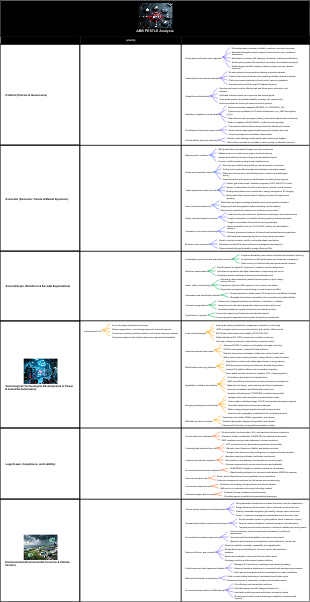
Discover the intricacies of AT&T's strategic environment through a comprehensive PESTLE analysis. This overview delves into the political landscape affecting telecommunications, including government policies and national security considerations. Explore economic factors such as market dynamics, capital intensity, and revenue sensitivity that shape AT&T's operations. Social trends like consumer behavior and digital inclusion highlight the demand for connectivity and affordable broadband. The analysis further examines the implications of remote work and lifestyle changes on service requirements. By understanding these elements, stakeholders can better navigate the evolving telecommunications landscape.
Edited at 2026-03-25 14:59:30Discover how Aeon can navigate the competitive online landscape with a strategic SWOT analysis. This comprehensive overview highlights Aeon’s strengths, such as its strong brand recognition, omnichannel capabilities, and customer loyalty programs, alongside its weaknesses, including digital maturity gaps and cost structure challenges. Opportunities for growth include enhancing e-commerce competitiveness and leveraging data-driven strategies, while threats from online-first players and market dynamics require attention. Explore how Aeon can strengthen its market position through innovation and customer-centric approaches in the ever-evolving retail environment.

Discover how Aeon effectively tailors its offerings to meet the diverse needs of family-oriented consumers through a comprehensive Segmentation, Targeting, and Positioning (STP) analysis. Our approach begins with demographic segmentation, examining family life stages, household sizes, income levels, and parent age bands to identify distinct consumer groups. Geographic segmentation highlights store catchment types and community characteristics, while psychographic segmentation delves into family values and lifestyle orientations. Behavioral segmentation focuses on shopping missions, price sensitivity, and channel preferences. Finally, needs-based segmentation reveals core family needs related to value and budget considerations. Join us as we explore these insights to enhance family shopping experiences at Aeon.
Discover the dynamics of sneaker transactions with our Kream Sneaker Consumption Scene Analysis Template. This comprehensive framework aims to visualize the purchasing and consumption journeys of sneakers, identifying key demand drivers and obstacles. It covers user behavior within Kream and external influences, targeting various sneaker categories over specific timeframes and regions. The analysis defines user segments, including collectors, resellers, sneakerheads, casual trend followers, and gift purchasers, each with unique values and KPIs. It outlines the consumption journey from awareness to resale, highlighting critical touchpoints such as search, purchase, inspection, and sharing experiences. Key performance indicators are established to measure engagement and satisfaction throughout the process. Join us in exploring the intricate world of sneaker trading!
Discover how Aeon can navigate the competitive online landscape with a strategic SWOT analysis. This comprehensive overview highlights Aeon’s strengths, such as its strong brand recognition, omnichannel capabilities, and customer loyalty programs, alongside its weaknesses, including digital maturity gaps and cost structure challenges. Opportunities for growth include enhancing e-commerce competitiveness and leveraging data-driven strategies, while threats from online-first players and market dynamics require attention. Explore how Aeon can strengthen its market position through innovation and customer-centric approaches in the ever-evolving retail environment.
Discover how Aeon effectively tailors its offerings to meet the diverse needs of family-oriented consumers through a comprehensive Segmentation, Targeting, and Positioning (STP) analysis. Our approach begins with demographic segmentation, examining family life stages, household sizes, income levels, and parent age bands to identify distinct consumer groups. Geographic segmentation highlights store catchment types and community characteristics, while psychographic segmentation delves into family values and lifestyle orientations. Behavioral segmentation focuses on shopping missions, price sensitivity, and channel preferences. Finally, needs-based segmentation reveals core family needs related to value and budget considerations. Join us as we explore these insights to enhance family shopping experiences at Aeon.
Discover the dynamics of sneaker transactions with our Kream Sneaker Consumption Scene Analysis Template. This comprehensive framework aims to visualize the purchasing and consumption journeys of sneakers, identifying key demand drivers and obstacles. It covers user behavior within Kream and external influences, targeting various sneaker categories over specific timeframes and regions. The analysis defines user segments, including collectors, resellers, sneakerheads, casual trend followers, and gift purchasers, each with unique values and KPIs. It outlines the consumption journey from awareness to resale, highlighting critical touchpoints such as search, purchase, inspection, and sharing experiences. Key performance indicators are established to measure engagement and satisfaction throughout the process. Join us in exploring the intricate world of sneaker trading!
AT&T PESTLE Analysis
Political Factors
Government telecommunications policy & oversight
National broadband strategy priorities and public investment
Spectrum policy direction (auction design, refarming incentives, spectrum sharing)
Net neutrality / open internet policy shifts influencing traffic management and pricing
Public sector relationships & lobbying
Engagement with federal agencies (FCC, DOJ, DHS) and Congress
State and local government relationships for permitting, rights-of-way, and public safety networks
Industry association influence (CTIA, USTelecom) on standards and regulation
National security & geopolitical considerations
Supply-chain restrictions affecting network vendors (e.g., trusted vendor requirements)
Government scrutiny of foreign ownership/partnerships and cross-border data flows
Support for lawful intercept and security mandates impacting network architecture
Infrastructure deployment politics
Local opposition and political pressure around siting (towers, small cells, fiber routes)
Dig once and municipal coordination policies impacting construction timelines/costs
Public-private partnerships for rural connectivity and coverage obligations
Election-cycle volatility
Regulatory priorities can shift with administrations (competition policy, neutrality, consumer protections)
Budget/agency leadership changes affecting enforcement intensity and timelines
Economic Factors
Macroeconomic conditions
Inflation driving up labor, construction, equipment, and energy costs
Interest-rate environment affecting debt servicing and capital allocation
GDP and consumer confidence influencing upgrades, churn, and ARPU
Competitive market dynamics
Price competition in wireless and broadband; promotional intensity
Bundling and convergence offers (mobile + fiber) affecting acquisition costs and retention
MVNO and cable wireless competition impacting share and margin
Capital intensity & investment cycles
High ongoing capex for fiber expansion, 5G densification, spectrum, and core upgrades
Payback periods sensitive to penetration rates and adoption of premium tiers
Trade-offs between coverage/capacity and near-term profitability
Revenue model sensitivity
Subscription revenue stability vs. pressure from discounting and device financing
Enterprise revenue dependence on IT/telecom spending cycles and contract renewals
Wholesale/roaming and interconnect pricing effects
Labor and talent economics
Wage growth and scarcity in network engineering, cybersecurity, AI/analytics
Union negotiations influencing operating costs and work rules
Productivity initiatives (automation/self-service) to offset cost pressures
Currency and global exposure (limited but relevant)
Device and network equipment priced in global markets; FX can affect procurement costs
International roaming and global enterprise services exposure to cross-border demand
Social Factors
Consumer behavior & expectations
Demand for always-on connectivity, low latency, and seamless coverage
Preference for transparent pricing and flexible plans; sensitivity to bill shock
Rising expectation for quick digital support and self-service
Digital inclusion & equity
Public pressure and policy focus on affordable broadband for low-income households
Community expectations around rural and underserved area deployment
Programs tied to subsidies requiring eligibility processes and compliance
Remote work, streaming, and lifestyle shifts
Higher baseline data usage driving need for capacity upgrades and fiber backhaul
Home broadband seen as essential utility; reliability becomes brand differentiator
Increased reliance on mobile hotspots and fixed wireless alternatives
Privacy attitudes and trust
High sensitivity to location data, advertising uses, and data sharing
Consumer expectations for breach transparency and strong account security
Reputational risk from outages, breaches, or controversial data practices
Demographic and regional differences
Urban vs. rural coverage expectations; differing economics for buildouts
Aging population needs (accessibility features, simplified support)
Multilingual support expectations in diverse markets
Workforce culture and societal expectations
DEI expectations in hiring and leadership representation
Safety expectations for field technicians and contractors
Employer brand pressure to offer flexible work for knowledge workers
Technological Factors
5G evolution and roadmap
Standalone (SA) 5G, network slicing, and ultra-reliable low-latency capabilities
Mid-band and C-band optimization; carrier aggregation and advanced MIMO
Densification via small cells; integration with fiber backhaul
Fiber network expansion & modernization
FTTH deployment scaling challenges: construction, permitting, in-building access
XGS-PON and next-gen PON upgrades for multi-gig capacity
Edge aggregation and metro network upgrades to reduce latency and congestion
Spectrum availability and utilization
Auction participation strategy vs. secondary market and sharing frameworks
Refarming legacy bands, dynamic spectrum sharing, and interference management
Regulatory technical rules impacting power limits and coverage engineering
Cloud, virtualization, and network architecture
NFV/SDN adoption for core and transport; operational automation
Open RAN evaluation and interoperability complexity
Hybrid cloud/edge compute to support enterprise use cases (IoT, private 5G)
Cybersecurity technology requirements
Zero Trust architectures, identity management, and secure access service edge (SASE)
DDoS mitigation, signaling security, and SS7/Diameter protections
Continuous monitoring and incident response tooling at carrier scale
AI and automation
Predictive maintenance, fault detection, and capacity planning
AI-driven customer support and fraud detection
Responsible AI governance to avoid bias and regulatory exposure
Device ecosystem and standards
Compatibility with handset releases, Wi-Fi standards (Wi-Fi 6/6E/7), and eSIM adoption
IoT module certification and lifecycle management
Interoperability with enterprise SD-WAN and security platforms
Legacy network transition
Copper retirement and migration to IP-based services
Decommissioning older 3G/4G components; customer device upgrade programs
Operational risks during cutovers and service migrations
Reliability and resilience engineering
Power backup, generator fuel logistics, and hardened sites for disasters
Redundancy in transport routes and diverse paths for critical services
Observability platforms for end-to-end service assurance
Legal Factors (Regulatory, Legal, and Compliance Focus)
Telecom-specific regulatory compliance (core legal driver)
FCC rules on spectrum licensing, interference, and buildout obligations
Universal service contributions and reporting requirements
Consumer protection rules (billing practices, truth-in-advertising, accessibility)
Antitrust and competition law
DOJ/FTC scrutiny of mergers, spectrum aggregation, and market conduct
State attorney general actions related to consumer harm allegations
Contracting and exclusivity arrangements reviewed for anti-competitive effects
Data privacy and data protection
Federal and state privacy laws (state-level consumer privacy regimes)
CPNI (Customer Proprietary Network Information) obligations and safeguards
Data retention, lawful disclosure processes, and cross-border transfer constraints
Cybersecurity and critical infrastructure obligations
Breach notification laws (timelines, scope, coordination with regulators)
Critical infrastructure security expectations and sector-specific guidance
Vendor risk management and security requirements in procurement contracts
Lawful intercept and surveillance compliance
CALEA obligations and technical capability requirements
Handling government requests, warrants, and transparency reporting practices
Risks of over-collection or improper disclosure leading to litigation and fines
Intellectual property (IP) and licensing
Patent licensing for wireless standards-essential patents (SEPs)
Risk of infringement claims related to networking equipment and software
Software licensing compliance for cloud, virtualization, and OSS components
Contract law and enterprise obligations
SLA commitments for enterprise and government customers
Procurement, indemnity, limitation of liability clauses and dispute resolution
Risk allocation with tower companies, fiber partners, and equipment vendors
Labor and employment law
Union agreements, wage/hour compliance, and worker classification issues
Health and safety regulations for field operations (OSHA compliance)
Employment discrimination and harassment legal exposure
Litigation and liability landscape
Consumer class actions (billing disputes, privacy claims, outage impacts)
Personal injury/property damage claims from construction and tower operations
Securities litigation risk tied to disclosures about performance and risks
Environmental Factors
Energy consumption and emissions
High power demand of radio access networks and data centers
Renewable energy procurement and carbon reduction targets
Energy efficiency upgrades (advanced cooling, smarter site power management)
Climate change and extreme weather
Increased frequency of hurricanes, wildfires, floods affecting network uptime
Resilience investments: hardened sites, redundant routing, rapid restoration teams
Insurance costs and claims affecting financial planning
Electronic waste and lifecycle management
Device trade-in and recycling programs; responsible disposal of network equipment
Decommissioning legacy infrastructure (copper, batteries) with hazardous waste rules
Circular economy practices to reduce waste and procurement costs
Environmental compliance in construction
Permitting requirements tied to wetlands, protected habitats, and cultural sites
Noise, visual impact, and EMF perception affecting approvals and community relations
Environmental impact assessments for larger builds
Supply chain sustainability
Vendor environmental standards, reporting, and audit requirements
Transportation emissions from logistics and field service fleets
Responsible sourcing of minerals for electronics components
Public expectations and ESG reporting
Investor and customer scrutiny of ESG disclosures and targets
Risk of greenwashing allegations if claims outpace measurable progress
Community engagement on sustainable infrastructure and local impacts
Key Implications for Telecom Operations (Cross-Cutting)
Regulatory + Legal → network design and compliance-by-default
Build compliance into architecture (security, intercept, privacy controls)
Maintain audit readiness for spectrum use, consumer protections, and reporting
Technology + Economic → investment prioritization
Optimize capex between 5G densification and fiber expansion based on ROI and demand
Use automation/AI to reduce opex while maintaining service quality
Social + Political → trust and license to operate
Emphasize reliability, affordability initiatives, and transparent privacy practices
Strengthen community relations for siting and buildouts
Environmental + Resilience → continuity planning
Increase network hardening, backup power, and disaster recovery capabilities
Track and reduce energy intensity per bit delivered while scaling capacity
Operational success depends on compliance-by-design, disciplined capex/opex trade-offs, proactive trust-building, and climate-ready resilience engineering.