MindMap Gallery Uber Marketing Mix Analysis
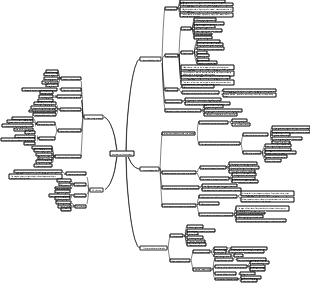
Discover how Uber strategically crafts its value proposition through a comprehensive marketing mix analysis. This overview examines Uber's core ride-hailing services and adjacent offerings, emphasizing key elements such as product varietyfrom UberX to Uber Blackand specialized options like accessible rides and Uber Eats delivery. The pricing strategy balances demand and supply, while maintaining transparency and fairness. Additionally, insights into the platform experience highlight user-friendly apps for both riders and drivers, showcasing trust and safety features, payment options, and customer support. Lastly, explore Uber's augmented services and B2B offerings that enhance user engagement and loyalty. Join us to delve into the intricacies of Uber's marketing mix!
Edited at 2026-03-26 01:20:40Discover how Aeon can navigate the competitive online landscape with a strategic SWOT analysis. This comprehensive overview highlights Aeon’s strengths, such as its strong brand recognition, omnichannel capabilities, and customer loyalty programs, alongside its weaknesses, including digital maturity gaps and cost structure challenges. Opportunities for growth include enhancing e-commerce competitiveness and leveraging data-driven strategies, while threats from online-first players and market dynamics require attention. Explore how Aeon can strengthen its market position through innovation and customer-centric approaches in the ever-evolving retail environment.

Discover how Aeon effectively tailors its offerings to meet the diverse needs of family-oriented consumers through a comprehensive Segmentation, Targeting, and Positioning (STP) analysis. Our approach begins with demographic segmentation, examining family life stages, household sizes, income levels, and parent age bands to identify distinct consumer groups. Geographic segmentation highlights store catchment types and community characteristics, while psychographic segmentation delves into family values and lifestyle orientations. Behavioral segmentation focuses on shopping missions, price sensitivity, and channel preferences. Finally, needs-based segmentation reveals core family needs related to value and budget considerations. Join us as we explore these insights to enhance family shopping experiences at Aeon.
Discover the dynamics of sneaker transactions with our Kream Sneaker Consumption Scene Analysis Template. This comprehensive framework aims to visualize the purchasing and consumption journeys of sneakers, identifying key demand drivers and obstacles. It covers user behavior within Kream and external influences, targeting various sneaker categories over specific timeframes and regions. The analysis defines user segments, including collectors, resellers, sneakerheads, casual trend followers, and gift purchasers, each with unique values and KPIs. It outlines the consumption journey from awareness to resale, highlighting critical touchpoints such as search, purchase, inspection, and sharing experiences. Key performance indicators are established to measure engagement and satisfaction throughout the process. Join us in exploring the intricate world of sneaker trading!
Discover how Aeon can navigate the competitive online landscape with a strategic SWOT analysis. This comprehensive overview highlights Aeon’s strengths, such as its strong brand recognition, omnichannel capabilities, and customer loyalty programs, alongside its weaknesses, including digital maturity gaps and cost structure challenges. Opportunities for growth include enhancing e-commerce competitiveness and leveraging data-driven strategies, while threats from online-first players and market dynamics require attention. Explore how Aeon can strengthen its market position through innovation and customer-centric approaches in the ever-evolving retail environment.
Discover how Aeon effectively tailors its offerings to meet the diverse needs of family-oriented consumers through a comprehensive Segmentation, Targeting, and Positioning (STP) analysis. Our approach begins with demographic segmentation, examining family life stages, household sizes, income levels, and parent age bands to identify distinct consumer groups. Geographic segmentation highlights store catchment types and community characteristics, while psychographic segmentation delves into family values and lifestyle orientations. Behavioral segmentation focuses on shopping missions, price sensitivity, and channel preferences. Finally, needs-based segmentation reveals core family needs related to value and budget considerations. Join us as we explore these insights to enhance family shopping experiences at Aeon.
Discover the dynamics of sneaker transactions with our Kream Sneaker Consumption Scene Analysis Template. This comprehensive framework aims to visualize the purchasing and consumption journeys of sneakers, identifying key demand drivers and obstacles. It covers user behavior within Kream and external influences, targeting various sneaker categories over specific timeframes and regions. The analysis defines user segments, including collectors, resellers, sneakerheads, casual trend followers, and gift purchasers, each with unique values and KPIs. It outlines the consumption journey from awareness to resale, highlighting critical touchpoints such as search, purchase, inspection, and sharing experiences. Key performance indicators are established to measure engagement and satisfaction throughout the process. Join us in exploring the intricate world of sneaker trading!
Uber Marketing Mix Analysis
Overview
Purpose
Examine how Uber designs and delivers value through Product, Price, Place (distribution), and Promotion decisions
Scope
Core ride-hailing business plus adjacent services influencing the overall mix
Product (Service) Mix
Core Mobility Services
On-demand Ride-Hailing
UberX
Mass-market, affordable private rides
Standard vehicle requirements; broad availability
UberXL
Larger vehicles for groups and luggage
Uber Comfort
Newer cars, more legroom; preference settings (e.g., quiet ride)
Uber Black / Premium tiers
Professional drivers, luxury vehicles, higher reliability and status signaling
Uber Taxi (where available)
Integrated traditional taxi supply via the app
Shared and Cost-Saving Options (market-dependent)
Carpool-like offerings (limited/varies by city)
Lower fare via shared routing and pickup coordination
Specialized Ride Options
Accessible rides
Wheelchair-accessible vehicles (availability varies)
Family and safety-oriented options
Car seat options (limited markets)
Safety features embedded in the service experience
Logistics and Delivery Services
Uber Eats
Restaurant marketplace and last-mile delivery
Customer features
Menu discovery, ratings, delivery tracking, scheduled orders
Merchant tools
Order management, promotions, analytics
Grocery / Convenience Delivery (market-dependent)
Partnerships with retailers; on-demand essentials
Courier / Package Delivery (market-dependent)
Point-to-point local delivery for consumers and small businesses
Platform Experience (Digital Product Layer)
Two-sided marketplace apps
Rider app
Trip planning, fare estimates, tracking, payments, support
Driver app
Demand heatmaps, earnings insights, navigation, incentives
Matching and routing algorithms
Real-time dispatch optimization
ETA accuracy and route efficiency
Trust & Safety features
Driver/rider verification
In-app emergency assistance
Ride tracking and sharing
Ratings and feedback loops
Payments and financial features
Multiple payment methods, stored cards, digital wallets
Receipts, expense reporting integrations (business use)
Customer support and issue resolution
In-app help center, refunds/adjustments, incident reporting
Brand-Adjacent and B2B Offerings
Business travel and expense solutions
Central billing, ride policies, reporting dashboards
Partnerships and integrations
Mapping, reservations, events, corporate perks
Augmented Services (Value Additions)
Reliability enhancers
Scheduled rides (where available)
Upfront pricing/route transparency (market-dependent)
Personalization
Saved places, preferences, recommendations
Loyalty/Membership bundles
Subscription-style benefits tied to rides and/or deliveries (market-dependent)
Pricing Strategy
Pricing Objectives
Balance demand and supply to reduce wait times and cancellations
Maximize marketplace liquidity and utilization
Maintain perceived fairness and transparency while enabling profitability
Segment customers by willingness to pay (tiered products)
Pricing Structure (Fare Components)
Base fare
Time and distance rates
Minimum fare thresholds
Booking/service fees
Tolls, surcharges, and regulatory fees (where applicable)
Cancellation and no-show fees (policy-driven)
Tips (optional; culturally and market dependent)
Dynamic Pricing (Surge / Demand-Based Pricing)
Triggers
High demand (events, rush hour, weather disruptions)
Low driver supply in an area
Mechanism
Price increases to encourage more driver participation and ration demand
Real-time multiplier/adjusted upfront fare (presentation varies by market)
Customer communication
Upfront fare estimates and notices during high-demand periods
Tiered Pricing and Versioning
Economy vs. premium tiers
UberX vs. Comfort/Black to capture different willingness-to-pay segments
Vehicle-size pricing
XL priced above standard due to capacity and operating costs
Service-level differentiation
Higher prices tied to shorter ETAs, better vehicles, or professional standards
Promotional and Discount Pricing
Acquisition incentives
First-ride coupons, referral credits
Retention incentives
Targeted discounts based on churn risk and usage patterns
Cross-promotion
Credits usable across mobility and delivery services (market-dependent)
Merchant-funded promotions (Eats)
Sponsored discounts and free delivery funded by restaurants/partners
Subscription / Membership Pricing (Market-Dependent)
Bundled benefits
Reduced delivery fees, partner perks, occasional ride discounts
Goal
Increase frequency, reduce churn, raise customer lifetime value
Geographic and Regulatory Price Variation
Local cost structures
Fuel/energy, labor conditions, insurance, taxes, compliance costs
Competitive context
Local ride-hailing rivals and taxis
Regulatory constraints
Fare floors/ceilings, fee disclosures, worker classification rules
Driver Earnings and Incentive Economics (Supply-Side Pricing)
Earnings model
Share of fare after platform fees (structure varies)
Incentives
Quest/bonus programs to increase supply in peak times/areas
Guarantees for new drivers in certain markets
Behavioral design
Heatmaps and incentive prompts to reposition supply
Price Transparency and Perceived Fairness
Upfront pricing (where available)
Clear total price before booking to reduce uncertainty
Comparison tools
Multiple product options shown side-by-side
Risk factors
Perceived price spikes during surges can harm trust if not well explained
Place (Platform Distribution Channels)
Primary Digital Channels (Owned)
Mobile apps
iOS app distribution via App Store
Android app distribution via Google Play
Web experiences
Browser-based ride booking in some regions
Merchant and business portals
In-app marketplace placement
Home screen modules, product tabs (Rides/Delivery), contextual suggestions
Two-Sided Marketplace Distribution
Rider acquisition and access
Individual consumers (B2C)
Corporate accounts (B2B)
Driver/ courier supply onboarding
Digital onboarding flows
Background checks and vehicle verification (market dependent)
Driver app as the operating interface
Matching distribution
Algorithmic allocation based on proximity, acceptance rates, ETAs, and demand patterns
Partner and Integration Channels
Map and mobility ecosystem integrations
Deep links from third-party apps (where available)
Travel and hospitality partnerships
Hotel/airline integrations, event venues, concierge services (market-dependent)
Payment ecosystem distribution
Wallets, cards, local payment methods enabled through partnerships
Retail and restaurant platforms (delivery)
Restaurant POS integrations and aggregator partnerships
Physical and Contextual Touchpoints
Airports and transit hubs
Designated pickup zones; geofenced pickup guidance
Events and venues
Temporary pickup points, routing optimizations
Urban hotspots
Geofencing to improve pickup accuracy and safety
Geographic Expansion Strategy
City-by-city rollout
Liquidity-first approach: ensure sufficient drivers and riders
Localization
Local language, payment methods, compliance requirements
Network effects
More riders attract more drivers; more drivers reduce ETAs and improve adoption
Channel Performance Levers
App store optimization (ASO)
Ratings, reviews, search keywords, conversion improvements
Conversion optimization
Simplified booking, clear ETAs, transparent pricing
Retention mechanisms
Notifications, personalized offers, habit formation via frequent-use scenarios
Promotion (Communications Mix)
Brand Positioning Themes
Convenience and speed (tap-a-button utility)
Reliability and availability
Safety and trust features
Choice across tiers and use cases
Paid Media
Digital advertising
Search ads for intent-based queries (e.g., ride to airport)
Social ads for acquisition and reactivation
App install campaigns
Out-of-home (OOH)
Transit ads, billboards in high-density cities
Performance marketing
ROI-driven bidding tied to installs, first rides, repeat usage
Owned Media
In-app messaging
Product discovery prompts, upsell to premium tiers, safety reminders
Email and push notifications
Receipts, promotions, reactivation nudges, service updates
Content and blogs
Safety updates, feature launches, city guides
Earned Media and PR
Press coverage
New market launches, partnerships, product innovations
Thought leadership
Urban mobility, sustainability, safety initiatives (market-dependent)
Reputation management
Crisis response for incidents, regulatory disputes, service disruptions
Sales Promotion and Incentives
Referral programs
Give/get credits to encourage viral growth
Time-bound discounts
Peak/off-peak experiments to shift demand
Bundled offers
Multi-service credits across rides and delivery
Partnerships and Co-Marketing
Events and venues
Discount codes for attendees; dedicated pickup zones
Brands and loyalty programs
Points earning/redemption (market-dependent)
Corporate programs
Employee ride benefits; commuter support initiatives (market-dependent)
Community, Safety, and Trust Communications
Safety feature education
RideCheck-like prompts, emergency button awareness, identity verification
Driver community messaging
Earnings opportunities, incentive explanations, policy updates
Local Marketing and Regulatory Messaging
City-specific campaigns
Tailored messaging by commuter needs and cultural norms
Stakeholder communications
Engagement with regulators, municipalities, and local communities
How the Mix Works Together (Key Linkages)
Product ↔ Pricing
Tiered products enable price discrimination and broader market coverage
Dynamic pricing supports reliability by balancing demand and supply
Product ↔ Place
App experience is the primary storefront, distributing multiple services in one interface
Algorithmic dispatch is the core distribution mechanism for fulfillment
Pricing ↔ Promotion
Promotions reduce perceived risk and accelerate trial; targeted discounts optimize CAC/LTV
Surge periods require clear communication to protect brand trust
Place ↔ Promotion
App-based channels enable rapid experimentation and personalized messaging at scale
Partnerships extend reach into travel, events, and retail ecosystems
Key Metrics Commonly Used (Operational Marketing KPIs)
Demand-side
App installs, activation rate, first-trip conversion
Monthly active users (MAU), trip frequency, retention cohorts
Customer lifetime value (LTV), churn rate
NPS/CSAT, complaint rate, refund rate
Supply-side
Active drivers/couriers, hours online, utilization
Acceptance and cancellation rates
Earnings per hour, incentive cost per incremental trip
Marketplace health
ETAs, pickup times, completion rate
Surge frequency, price elasticity indicators
Geographic liquidity by zone and time of day
Delivery-specific (if applicable)
Basket size, order frequency, on-time delivery rate
Merchant retention, take rate, promo spend efficiency