MindMap Gallery Medical ethics category
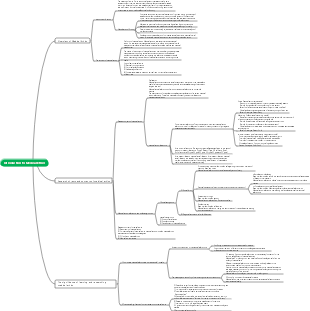
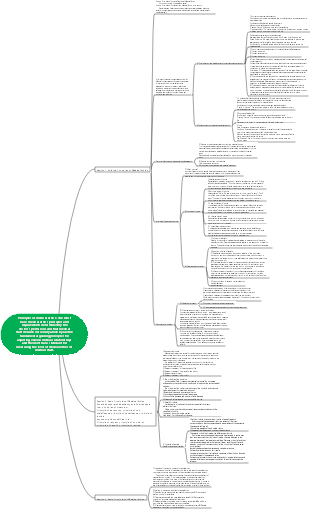
This is a mind map about the scope of medical ethics, which introduces rights and obligations, utilitarianism and morality, Reason and passion, heteronomy and self-discipline, Courage and prudence, etc.
Edited at 2024-04-21 19:33:49Discover how Aeon can navigate the competitive online landscape with a strategic SWOT analysis. This comprehensive overview highlights Aeon’s strengths, such as its strong brand recognition, omnichannel capabilities, and customer loyalty programs, alongside its weaknesses, including digital maturity gaps and cost structure challenges. Opportunities for growth include enhancing e-commerce competitiveness and leveraging data-driven strategies, while threats from online-first players and market dynamics require attention. Explore how Aeon can strengthen its market position through innovation and customer-centric approaches in the ever-evolving retail environment.

Discover how Aeon effectively tailors its offerings to meet the diverse needs of family-oriented consumers through a comprehensive Segmentation, Targeting, and Positioning (STP) analysis. Our approach begins with demographic segmentation, examining family life stages, household sizes, income levels, and parent age bands to identify distinct consumer groups. Geographic segmentation highlights store catchment types and community characteristics, while psychographic segmentation delves into family values and lifestyle orientations. Behavioral segmentation focuses on shopping missions, price sensitivity, and channel preferences. Finally, needs-based segmentation reveals core family needs related to value and budget considerations. Join us as we explore these insights to enhance family shopping experiences at Aeon.
Discover the dynamics of sneaker transactions with our Kream Sneaker Consumption Scene Analysis Template. This comprehensive framework aims to visualize the purchasing and consumption journeys of sneakers, identifying key demand drivers and obstacles. It covers user behavior within Kream and external influences, targeting various sneaker categories over specific timeframes and regions. The analysis defines user segments, including collectors, resellers, sneakerheads, casual trend followers, and gift purchasers, each with unique values and KPIs. It outlines the consumption journey from awareness to resale, highlighting critical touchpoints such as search, purchase, inspection, and sharing experiences. Key performance indicators are established to measure engagement and satisfaction throughout the process. Join us in exploring the intricate world of sneaker trading!
Discover how Aeon can navigate the competitive online landscape with a strategic SWOT analysis. This comprehensive overview highlights Aeon’s strengths, such as its strong brand recognition, omnichannel capabilities, and customer loyalty programs, alongside its weaknesses, including digital maturity gaps and cost structure challenges. Opportunities for growth include enhancing e-commerce competitiveness and leveraging data-driven strategies, while threats from online-first players and market dynamics require attention. Explore how Aeon can strengthen its market position through innovation and customer-centric approaches in the ever-evolving retail environment.
Discover how Aeon effectively tailors its offerings to meet the diverse needs of family-oriented consumers through a comprehensive Segmentation, Targeting, and Positioning (STP) analysis. Our approach begins with demographic segmentation, examining family life stages, household sizes, income levels, and parent age bands to identify distinct consumer groups. Geographic segmentation highlights store catchment types and community characteristics, while psychographic segmentation delves into family values and lifestyle orientations. Behavioral segmentation focuses on shopping missions, price sensitivity, and channel preferences. Finally, needs-based segmentation reveals core family needs related to value and budget considerations. Join us as we explore these insights to enhance family shopping experiences at Aeon.
Discover the dynamics of sneaker transactions with our Kream Sneaker Consumption Scene Analysis Template. This comprehensive framework aims to visualize the purchasing and consumption journeys of sneakers, identifying key demand drivers and obstacles. It covers user behavior within Kream and external influences, targeting various sneaker categories over specific timeframes and regions. The analysis defines user segments, including collectors, resellers, sneakerheads, casual trend followers, and gift purchasers, each with unique values and KPIs. It outlines the consumption journey from awareness to resale, highlighting critical touchpoints such as search, purchase, inspection, and sharing experiences. Key performance indicators are established to measure engagement and satisfaction throughout the process. Join us in exploring the intricate world of sneaker trading!
Medical ethics category
Rights and obligations
1. Dialectical relationship between rights and obligations Rights and obligations in medical ethics refer to the rights and obligations between doctors and patients, between individuals and medical groups, and between individuals and society within the scope of health ethics. It is based on the common goal of both doctors and patients - protecting people's physical and mental health. The two are an inseparable pair of moral categories.
2. Rights
(1) Patients’ rights
1. The right to respect for personality and dignity
2. The right to necessary and appropriate medical treatment and care
3. The right to disease awareness (the right to obtain personal condition information) Patients have the right to know and understand the nature, severity, treatment conditions and prognosis of their diseases. Doctors provide information about diseases without harming the interests of patients and without affecting the effectiveness of treatment. If the patient cannot be told for medical reasons, the patient's representative should be told.
4. The right to informed consent for diagnosis, treatment and human experimentation Patients have the right to know the effects, success rates, or possible complications and risks of doctors’ diagnosis and treatment methods (including human experiments), and diagnosis and treatment methods must be implemented with the patient’s consent.
5. Have the right to keep personal secrets
6. Have the right to be exempted from certain social responsibilities and obligations due to illness
7. Right to litigate and right to compensation
(2) Doctors’ rights
1. Right to diagnosis and treatment
2. Medical autonomy
3. Right to medical confidentiality
The protection of patient privacy is not unlimited or absolute. To adhere to medical confidentiality must meet the following ethical conditions: ① The implementation of medical confidentiality must be based on the premise of not harming the patient's own health and life interests. ②The implementation of the principle of medical confidentiality shall not harm the interests of innocent persons. ③Adhering to the principle of medical confidentiality must meet the ethical conditions of not harming social interests. ④Following the principle of medical confidentiality must not conflict with existing laws.
Maintain patient confidentiality
Keep patient confidentiality
4. Special right of intervention: Under certain circumstances, doctors need to limit the patient's autonomy in order to fulfill the doctor's obligations to the patient and be responsible for the patient's interests.
The scope of application of the special right of intervention: (1) When suicide attempts, mental illness, etc. refuse treatment, doctors can force treatment or take measures to control their behavior. (2) When conducting experimental treatments on humans, although the patient has given informed consent, doctors may use their right to intervene not to proceed with some difficult and high-risk experiments. (3) When the patient understands the diagnosis and treatment situation and prognosis, which may affect the treatment process or effect and cause adverse effects, it is a moral and legitimate behavior for the doctor to conceal the truth.
3. Obligations
(1) Doctors’ obligations: 1. Obligation of diagnosis and treatment 2. Explain the medical condition and medical confidentiality obligations 3. Doctors’ social responsibilities and obligations 4. Promote and popularize medical scientific knowledge and undertake medical consultation obligations 5. Obligation to develop medical science and technology
(2) Patient’s obligations 1. The obligation to actively cooperate with diagnosis and treatment 2. Responsibility for maintaining and restoring health 3. Obligation to comply with various hospital rules and regulations 4. Obligation to support the development of medical science
Utility and morality
1. The debate between justice and benefit in history
(1) Deontology (deontology, non-consequentialism) Advocating for valuing righteousness over profit is mainly based on the Confucian view of righteousness and benefit. The purpose of establishing morality in society lies in morality itself and in improving everyone's moral character; whether a behavior is moral or not depends on whether it follows moral principles, not on its effectiveness for social and personal interests. Whatever can make the actor's moral character perfect, regardless of whether it is reduced or not The interests of the actor or society are legitimate. It advocates that whether a person's behavior is moral or not is not the result of the behavior, but the principles on which the behavior is based.
deontological evaluation ①Positive influence - conducive to the realization of medical ethics requirements ②Limitations Deontology uses motivation rather than results as the basis for evaluating moral behavior, and is not very operable in some cases. There is no fundamental answer to where "good wishes" come from. The plurality of morals means that it is difficult to form a universal ethics. The premise of subject autonomy is that people are rational, but people in life are complex, so the moral norm system cannot be missing.
(2) Utilitarianism: utilitarianism, consequentialism
1. The connotation of utilitarianism The purpose of society establishing morality is not for morality itself, but for the existence and development of society and the promotion of personal interests; the establishment and improvement of moral norms and the decision-making, evaluation and defense of ethical behavior emphasize consequences, utility and value, that is, how to formulate and improve morality. Norms and how moral judgments are made emphasize consequences. Any behavior that brings benefits to the actor and the people related to him is a moral behavior.
2. Basic viewpoint of utilitarianism (1) When an action will lead to the smallest possible bad result or the largest possible good result, the behavior is a correct behavior, that is, whether the behavior is correct or not depends on whether the behavior enhances happiness. (2) Utility can be calculated, and through calculation we can figure out what is the greatest happiness.
3. Application of utilitarianism Since medical and health resources are limited, they must be used rationally and efficiently, and medically unsafe and useless treatments must not be provided. When formulating a medical and health plan, all benefits and needs that may be brought about by the plan that may be implemented must be considered. Evaluate the cost, that is, cost-effectiveness analysis.
4. Positive impact of utilitarianism Utilitarianism's focus on behavioral effects balances deontology's overemphasis on behavioral motivations. Although good motivation is an important prerequisite for the implementation of moral behavior, the complexity of reality reveals that there is no inevitable causal relationship between motivation and results.
(3) Dialectical unity of righteousness and benefit: equal emphasis on righteousness and benefit
2. Dialectical and unified view of justice and benefit Interest is the basis of morality; balance justice and benefit, and use justice to guide benefit. Unity of individual interests and collective interests, unity of local interests and overall interests, unity of short-term interests and long-term interests Adhere to the unification of social benefits and economic benefits, and put social benefits first.
Reason and passion: Lust: human desires and emotions Reason: the ability to distinguish right from wrong, interests and control one's own behavior
1. The debate between rationality and desire in history (1) Asceticism (2) Indulgence and irrationalism (3) The dialectical and unified view of reason and desire
2. The dialectical unity of reason and desire
(1) Desire exists objectively
(2) Emotion and reason penetrate and influence each other 1. Desire affects reason 2. Reason affects lust The generation, direction and intensity of desire are closely related to cognitive factors Reason enables people to see long-term and universal interests, restrain their passions appropriately, and correctly handle the relationship between the country, the collective, and the individual.
(3) Treat reason and desire correctly 1. To satisfy legitimate needs through legal means 2. Control your emotions rationally 3. Medical staff should cultivate noble medical ethics, medical aesthetics, and medical rationality. 4. Medical staff care about patients and understand their emotional changes and requirements.
Heteronomy and Autonomy
1. Two forces that maintain moral norms: Heteronomy (external constraints) and self-discipline (conscience) Heteronomy: Using behavioral norms to improve people’s moral quality Self-discipline: The actor internalizes external moral principles and norms into inner beliefs through self-moral education, moral evaluation, self-moral cultivation, etc. Heteronomy is external restriction, self-discipline is self-restraint Self-discipline is the foundation, heteronomy is the guarantee, and the two transform into each other
2. Self-discipline and conscience
(1) The meaning of conscience Conscience: The sense of moral responsibility and self-evaluation that people develop in the process of fulfilling their obligations to others and society. It is the unity of certain moral cognition, moral emotions and moral will in personal consciousness. Conscience is the concentrated expression of subject autonomy
(2) The role of medical ethics and conscience 1.Selection function 2. Supervisory role 3.Evaluation role
3. Heteronomy and its forms
(1) Important means and structures 1. External constraints are an important means to ensure the effectiveness of moral norms 2. The necessity of external constraints: Moral norms are not people’s innate concepts. People’s acceptance of moral norms must go through an internalization process. When moral norms have not been internalized by people into their own beliefs, without external constraints, cannot guarantee the normal operation of social order.
(2) Heteronomous form Social public opinion, customs and habits, social praise or sanctions, and the stimulation of role models
Courage and Prudence
1. Courage: Courage means courage and insight The courage of medical staff requires the courage to take risks. Dare to take risks in scientific research, dare to question authority, dare to put forward your own innovative insights, and dare to take medical risks and responsibilities for the safety and health of patients.
2. Prudence Thoroughness and prudence refer to people's careful thinking before acting and the caution and conscientiousness in the process of acting. Mainly manifested in the following three aspects: 1. Diagnosis with caution 2. Treat with caution 3. Use caution in language The role of prudence: 1. Ensure patients’ physical and mental health and life safety 2. Choose the optimal treatment plan 3. Establish a good doctor-patient relationship
3. The dialectical relationship between courage and prudence Courage and prudence complement each other and are indispensable. In medical practice, medical personnel must be careful to make accurate diagnoses and carefully prevent accidents from happening. To rescue critically ill patients, we must make prompt decisions, be fearless in the face of danger, deal with complex and changing conditions decisively, and bravely take risks.