MindMap Gallery Biochemistry Sugar Metabolism
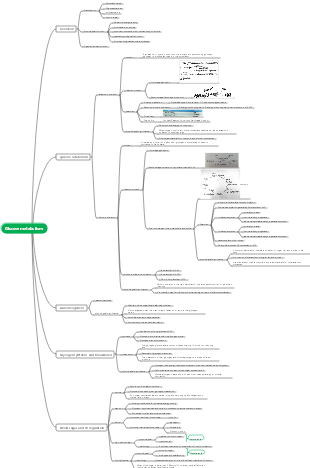
This is a mind map about biochemical sugar metabolism. The main content is anaerobic oxidation, Aerobic oxidation, glycogen synthesis and decomposition, Gluconeogenesis, etc.
Edited at 2023-12-01 15:20:00This is a mind map about bacteria, and its main contents include: overview, morphology, types, structure, reproduction, distribution, application, and expansion. The summary is comprehensive and meticulous, suitable as review materials.

This is a mind map about plant asexual reproduction, and its main contents include: concept, spore reproduction, vegetative reproduction, tissue culture, and buds. The summary is comprehensive and meticulous, suitable as review materials.
This is a mind map about the reproductive development of animals, and its main contents include: insects, frogs, birds, sexual reproduction, and asexual reproduction. The summary is comprehensive and meticulous, suitable as review materials.
This is a mind map about bacteria, and its main contents include: overview, morphology, types, structure, reproduction, distribution, application, and expansion. The summary is comprehensive and meticulous, suitable as review materials.
This is a mind map about plant asexual reproduction, and its main contents include: concept, spore reproduction, vegetative reproduction, tissue culture, and buds. The summary is comprehensive and meticulous, suitable as review materials.
This is a mind map about the reproductive development of animals, and its main contents include: insects, frogs, birds, sexual reproduction, and asexual reproduction. The summary is comprehensive and meticulous, suitable as review materials.
Glucose metabolism
anaerobic oxidation
concept
The process in which one molecule of glucose can be split into two molecules of pyruvate in the cytoplasm is called glycolysis
Glycolysis
A total of ten steps of reaction
Glu converts to G-6-P
Hexokinase (Mg ion)
feedback inhibition
G-6-P
allosteric inhibition
Long chain fatty acyl-CoA
first speed limit
G-6-P transformed into F-6-P
Conversion of F-1-P to F-1,6-P
Really enter glycolysis
Phosphofructokinase-1 (Mg ion)
Allosteric activation: (F-2,6-P),ADP,AMP,(F-1,6-P)
Allosteric inhibition: ATP, citric acid
Second speed limit (slowest)
F-1,6-P is converted into 2 molecules of glyceraldehyde 3 phosphate (dihydroxyacetone phosphate)
aldolase
The first five steps are the preparation stage
Conversion of 3-glyceraldehyde phosphate to 1,3-bisphosphoglyceric acid
Glyceraldehyde 3-phosphate dehydrogenase
2 molecules of NAD accept hydrogen
3 or 5ATP
Conversion of 1,3-bisphosphoglycerate to 3-phosphoglycerate
first substrate level phosphorylation
Phosphoglycerate kinase (Mg)
Dehydration of 2-phosphoglycerate to PEP
Conversion of PEP to pyruvate
Second substrate level phosphorylation
Pyruvate kinase (K and Mg)
allotype
Activation: F-1,6-P
Inhibit: ATP
chemical modification
Phosphorylation
protein kinase A
glucagon activation
Ca, calmodulin-dependent protein kinase
inactivate
The third speed limit
The last five steps are the release stage.
lactic acid production
lactate dehydrogenase
Need NADH
physiological significance
Provides energy quickly without using oxygen
2ATP
Aerobic oxidation
concept
The reaction process in which the body uses oxygen to completely oxidize glucose into CO2 and H2O is called aerobic oxidation of sugar.
reaction process
Glycolysis
Oxidative decarboxylation of pyruvate
Pyruvate is converted to acetyl CoA
pyruvate dehydrogenase complex
Pyruvate dehydrogenase (E1)
Dihydrolipoamide transacetylase (E2)
Dihydrolipoamide dehydrogenase (E3)
coenzyme
Thiamine pyrophosphate (TPP)
CoA, lipoic acid
FAD,NAD
TCA cycle
8 steps reaction
Features
4 dehydrogenations generate 3 molecules of NADH and 1 molecule of FADH2
2 decarboxylation generates 2 molecules of CO2
One substrate level phosphorylation generates one molecule of GTP or ATP
It is not the main link to directly release energy and generate ATP, but to provide sufficient reducing equivalents through four dehydrogenation reactions for subsequent electron transfer and oxidative phosphorylation reactions to generate a large amount of ATP.
process
Acetyl CoA and oxaloacetate condense to form citric acid
citrate synthase
Consumes a high-energy thioester bond
first speed limit
Citric acid is converted into isocitrate by aconitic acid
Oxidative decarboxylation of isocitrate to α-ketoglutarate
main regulatory site
isocitrate dehydrogenase
NAD accepts hydrogen
One molecule of CO2
second speed limit
Oxidative decarboxylation of α-ketoglutarate to succinyl CoA
Alpha-ketoglutarate dehydrogenase complex
NAD accepts hydrogen
One molecule of CO2
The third speed limit
Succinyl-CoA synthase catalyzes substrate-level phosphorylation reactions
succinyl-CoA synthetase
ADP or GDP
Dehydrogenation of succinic acid to fumaric acid
succinate dehydrogenase
TCA cycle operation indicators
Mitochondrial inner membrane (the only one in the TCA cycle)
FAD accepts hydrogen
Fumaric acid adds water to form malic acid
Dehydrogenation of malic acid to oxaloacetate
malate dehydrogenase
NAD accepts hydrogen
significance
Common pathways for decomposition of three major nutrients to produce energy
The hub of metabolism of sugar, fat and amino acids
physiological significance
The main way sugar is broken down to provide energy
Glycolysis
5 or 7ATP
Oxidative decarboxylation of pyruvate
5ATP
TCA cycle
20ATP
30 or 32ATP
Blood sugar and regulation
Blood sugar level: 3.9~6.0mmol/L
Hypoglycemia: less than 2.8mmol/L
Hyperglycemia: higher than 7mmol/L on an empty stomach
Hormone regulation
reduce
insulin
Activate phosphodiesterase
Reduce cAMP levels
Activates pyruvate dehydrogenase phosphatase
Activate pyruvate dehydrogenase complex
Inhibits hepatic gluconeogenesis
Inhibits the synthesis of PEP carboxykinase
Amino acids accelerate muscle protein synthesis and reduce gluconeogenesis raw materials
synthetic fat
rise
glucagon
hepatic glycogenolysis
Inhibit glycogen synthase
Activate glycogen phosphorylase
Inhibit glycolysis and promote gluconeogenesis
Reduce the synthesis of F-2,6-P
Inhibits intrahepatic pyruvate kinase
Promote the synthesis of PEP carboxykinase
Promote lipolysis
Glucocorticoids
Accelerate gluconeogenesis
Inhibits oxidative decarboxylation of pyruvate
fat mobilization
Adrenaline
Initiates a cAMP-dependent phosphorylation cascade in liver and muscle cells
stress state
diabetes
feature
persistent hyperglycemia and glycosuria
Cause
Partial or complete insulin deficiency, insulin resistance
type
Insulin dependence (type 1)
Non-insulin dependent (type 2)
Gestational diabetes (type 3)
Special type of diabetes (type 4)
complication
Retinopathy
Peripheral neuropathy
peripheral vascular disease
Other metabolic pathways
Uronic acid pathway
Glucose metabolism pathway with glucuronic acid as intermediate product
Generates activated glucuronic acid (UDPGA)
polyol pathway
gluconeogenesis
concept
The process of converting non-sugar compounds (lactic acid, glycerol, glycogenic amino acids, etc.) into glucose or glycogen is called gluconeogenesis
Carboxylation of pyruvate to PEP
Pyruvate changes to oxaloacetate
pyruvate carboxylase
within mitochondria
Cofactor: biotin
Consume ATP
CO2 combined with biotin
Oxaloacetate becomes PEP
PEP carboxykinase
Consume one P~P
Shuttling of oxaloacetate
Oxaloacetate cannot directly penetrate the mitochondrial membrane
malic acid shuttle
malate dehydrogenase
Accompanying the transport of NADH from mitochondria to cytoplasm
aspartate shuttle
aspartate aminotransferase
F-1,6-P is hydrolyzed to F-6-P
fructose bisphosphatase-1
G-6-P is hydrolyzed to Glu
Glucose-6-phosphatase
physiological significance
Keep blood sugar constant
Replenish or restore liver glycogen stores
Maintain acid-base balance
Exuberant ketone body metabolism (kidney)
Glycogen synthesis and breakdown
concept
Glycogen synthesis refers to the process of producing glycogen from glucose, which mainly occurs in the liver and skeletal muscle.
Glycogen synthesis
G-6-P is allosteric to G-1-P
G-1-P and UTP are converted into UDPG and pyrophosphate (rapid hydrolysis)
UDPGase
UDPG synthesizes glycogen
glycogen synthase
α-1,4-glycosidic bond
branching enzyme
α-1,6-glycosidic bond
glycogenolysis
Product: Mainly G-1-P, a small amount of Glu
glycogen phosphorylase
α-1,4-glycosidic bond
You cannot continue when there are four glucose groups left.
debranching enzyme
glucan transferase
α-1,4-glycosidic bond
Transfer 3 glucose groups to the end of a nearby sugar chain
alpha-1,6-glucosidase
α-1,6-glycosidic bond
generate glucose
The difference between liver and muscle
The liver has G-6-P enzyme, which can convert G-6-P into Glu to supplement blood sugar, but the muscles do not.
key enzyme
glycogen synthase
Phosphorylated to active form
glycogen phosphorylase
Dephosphorylated to active form
adjust
chemical modification
Key enzyme phosphorylation
Hormone regulation
glucagon
hepatic glycogenolysis
Adrenaline
muscle glycogenolysis
insulin
Glycogen synthesis
allosteric adjustment
glucose
Inhibits liver glycogen phosphorylase
Energy and Ca
muscle glycogenolysis
pentose phosphate pathway
reaction stage
oxidation stage
G-6-P to PPP
Glucose-6-phosphate dehydrogenase
NADPH regulation
Total: G-6-P is converted into 2 molecules of NADPH and 1 molecule of ribose-5-phosphate, releasing 1 molecule of CO2
group transfer stage
3 molecules of pentose phosphate are required for all group transfers
1 molecule of glyceraldehyde 3-phosphate and 2 molecules of F-6-P
physiological significance
Provide ribose phosphate
Synthetic nucleic acids
Remedy synthesis?
Provide NADPH
anabolic reaction hydrogen donor
Hydroxylation reaction
Maintain the reduced state of glutathione (GSH)
Fats and glycerophospholipids
glycerol phosphate