MindMap Gallery Medical Cell Biology Chapter 5 Cell Inner Membrane System and Vesicle Transport (2)
Medical Cell Biology Chapter 5 Cell Intimal Membrane System and Vesicle Transport (2) Mind Map, detailed introduction and comprehensive description, I hope it can help interested friends learn.
Edited at 2023-11-29 21:56:07This is a mind map about bacteria, and its main contents include: overview, morphology, types, structure, reproduction, distribution, application, and expansion. The summary is comprehensive and meticulous, suitable as review materials.

This is a mind map about plant asexual reproduction, and its main contents include: concept, spore reproduction, vegetative reproduction, tissue culture, and buds. The summary is comprehensive and meticulous, suitable as review materials.
This is a mind map about the reproductive development of animals, and its main contents include: insects, frogs, birds, sexual reproduction, and asexual reproduction. The summary is comprehensive and meticulous, suitable as review materials.
This is a mind map about bacteria, and its main contents include: overview, morphology, types, structure, reproduction, distribution, application, and expansion. The summary is comprehensive and meticulous, suitable as review materials.
This is a mind map about plant asexual reproduction, and its main contents include: concept, spore reproduction, vegetative reproduction, tissue culture, and buds. The summary is comprehensive and meticulous, suitable as review materials.
This is a mind map about the reproductive development of animals, and its main contents include: insects, frogs, birds, sexual reproduction, and asexual reproduction. The summary is comprehensive and meticulous, suitable as review materials.
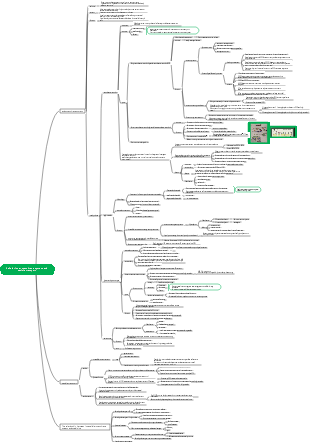
Chapter 5 Cell Inner Membrane System and Vesicle Transport
Section 2 Golgi Complex
1. Morphological structure of the Golgi complex
(1) The Golgi complex is an organelle composed of three different types of membranous vesicles
1. Flat vesicle (cisterna)
The convex surface faces the nucleus and is called the cis or formative surface.
The concave side faces the cell membrane, called the reverse or mature side
2.Vesicle
3. Large vesicles (vacuole)
(2) The Golgi complex is a polar organelle
1. Shunmian Golgi network
1 Sorting proteins and lipids from the endoplasmic reticulum
2 Carry out protein glycosylation and acylation modifications
2. Golgi intermediate membrane vesicle
Function: Carry out glycosylation modification and synthesis of polysaccharides and glycolipids.
3.Golgi Anti-Network
Function: Protein sorting and modification
(3) The Golgi complex exhibits different distribution patterns in cells of different tissues.
Nerve cells - distributed around the nucleus
Intestinal epithelial mucosa and pancreatic cells - tend to be distributed near the nucleus - pole
2. Chemical composition of the Golgi complex
(1) Lipids are the basic components of the Golgi complex membrane. The content of lipid components in the Golgi complex is between the plasma membrane and the endoplasmic reticulum, with a total content of about 45%.
(2) The Golgi complex contains a variety of enzyme protein systems
Glycosyltransferase—the most characteristic enzyme of the Golgi apparatus
oxidoreductase
Phosphatase
Phospholipases
fatty acyltransferase
casein phosphokinase
α-Glycosidase
3. Main functions of Golgi complex
(1) Transfer station for intracellular protein transport and secretion
Two different discharge forms of exported secreted proteins
Continuous secretion - refers to the secretion form in which the exported protein is discharged from the cell immediately after the formation of the secretory vesicle.
Discontinuous secretion - refers to the secretion form in which the exported protein is first stored in the secretory vesicle and then discharged outside the cell when needed.
(2) An important place for the processing and synthesis of intracellular substances
1. Processing and synthesis of glycoproteins
type
N-linked glycoprotein - the oligosaccharide chain is bound to the amino side chain of asparagine in the protein polypeptide chain: sugar chain synthesis and glycosylation modification begin in the endoplasmic reticulum and are completed in the Golgi complex.
O-linked glycoprotein-oligosaccharide chain is bound to the carboxyl side chain of serine, threonine or tyrosine in the protein polypeptide chain; mainly or completely carried out and completed in the Golgi complex.
The significance of protein glycosylation
Protects proteins from degradation by hydrolytic enzymes
Functions as a transport signal, guiding protein packaging to form transport vesicles for targeted protein transport.
Glycosylation forms a sugar coat on the surface of the cell membrane, which plays an important role in cell membrane protection, recognition, communication and other life activities.
2. Hydrolysis and processing of proteins
Certain proteins or enzymes become mature or active forms through hydrolysis
Phosphorylation modification of lysosomal acid hydrolase
Sulfation modification of proteoglycans
(3) Intracellular protein sorting and membrane vesicle directional transport
1 Lysosomal enzymes are sorted and packaged by the Golgi complex and transported to lysosomes in the form of coated vesicles
2 Secreted proteins are transported directly to the cell membrane in the form of coated vesicles or secreted and released outside the cell
3 Secretory proteins are temporarily stored in the cytoplasm in the form of secretory vesicles and are secreted and released outside the cell when necessary.
Section 3 Lysosome
1. Morphological structure and chemical composition of lysosomes
(1) Lysosome is a highly heterogeneous organelle
Form size: significant difference, the general diameter is 0.2~0.8m, the diameter of some is only 0.05m, and the largest diameter can reach several microns.
Quantity distribution: Typical animal cells contain approximately several hundred lysosomes. The number of lysosomes in different cells varies greatly.
Physiological and biochemical properties: The types of enzymes contained in each lysosome are limited; the hydrolases contained in different lysosomes are identical side by side.
(2) Common characteristics of lysosomes
They are all sac-like structures wrapped by a layer of unit membrane.
They are rich in acid hydrolase, which is the signature enzyme of lysosomes.
The lumen of the lysosomal membrane is rich in highly glycosylated transmembrane integral proteins, which prevent lysosomal enzymes from digesting and decomposing the own membrane structure.
There is a proton pump embedded in the lysosomal membrane, which can pump H* into the lysosome and maintain the acidic inner loop of the lysosome.
(3) The lysosomal membrane glycoprotein family has a high degree of homology
Lysosomal-associated membrane rotein
lysosomal integral membrane protein
The peptide chain structure of this type of protein includes
A shorter N-terminal signal peptide sequence
a highly glycosylated luminal region
a single transmembrane domain
A C-terminal cytoplasmic tail composed of about 10 amino acid residues
2. Lysosome formation and maturation process
1 Enzyme protein is synthesized and glycosylated in the endoplasmic reticulum to form a glycoprotein with mannose
2 Mannose glycoprotein is transported to the Golgi complex formation surface and is phosphorylated to form the sorting signal of lysosomal enzymes mannose-6-phosphate (M-6-P)
3 On the lumenal surface of the reverse Golgi network, it is recognized by the M-6-P receptor and wrapped to form clathrin-coated vesicles.
4. The coated vesicles shed their coats to form uncoated vesicles and combine with intracellular late endosomes to form endosomal lysosomes.
5. Under the action of the proton pump on the pre-lysosomal membrane, an acidic internal environment is formed. The lysosomal enzyme dissociates from the M-6-P receptor, dephosphorylates and matures.
3. Types of lysosomes
(1) Divided into three types according to different functional states
1. Primary lysosome
2. Secondary lysosome
Autophagic lysosome: The substrates come from various components of the cell itself, or aged, damaged and broken organelles
Heterophagic lysosome: the substrate originates from foreign substances in the cell
Phagolysosome: the substrate originates from extracellular pathogens or other larger particulate foreign matter
3. Tertiary lysosomes
Lipofuscin--aging nerve cells and cardiomyocytes
Myeloid structure--tumor cells, virus-infected cells
Siderosome-mononuclear phagocyte
(2) Divided into two major types according to different formation processes
Endosomal lysosomes are formed by the merger of transport vesicles sprouted from the Golgi complex and late endosomes formed through endocytosis (drinking).
Phagolytic lysosomes are formed by the fusion of endosomal lysosomes and substrates from both inside and outside the cell
4. Function of lysosomes
(1) The decomposition of intracellular substances by lysosomes and the removal and renewal function of aging and damaged organelles
Form heterophagolysosomes to digest foreign substances taken in through endocytosis (drinking)
The formation of autophagy lysosomes breaks down aging and damaged cells into small molecules, which are reused by cells as organelles for digestion.
(2) Digestion and decomposition of substances and cell nutritional function of lysosomes
(3) Lysosomes are a component of the body’s defense and protection functions
(4) Lysosomes participate in the regulatory function of the secretion process of certain glandular tissue cells
(5) Lysosomes play an important role in the ontogeny and development of organisms.