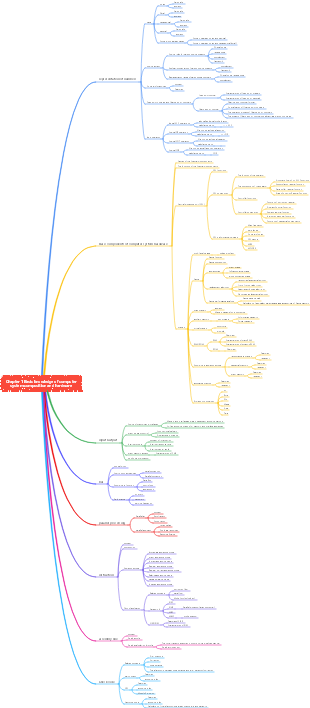
MindMap Gallery Zoology·Invertebrates·Characteristics Mind Map
About zoology·invertebrates·characteristics mind map, primitive, porous, cnidarian, flat. A summary of the characteristics of the original body cavity, segments, soft bodies, and arthropods. Some classes have specific mind maps, which can be obtained on the homepage~
Edited at 2023-11-10 00:58:30Main features
Protozoa
Main features (The simplest animal, the most complex cell)
the simplest animal, most complex cell
Simple structure
An individual is composed of single cells, There are also groups composed of several or more individuals.
Complete functions, completed by organelles
Basic structures - cell membrane, cytoplasm, nucleus
Motor organelles - flagella (euglena), cilia (paramecium), pseudopods (amoebae)
Sensory organelle-eyespot
Feeding organelles—oral groove, intraoral cavity, endopharynx
Organelles that regulate body water—collecting tubes and telescopic vesicles
Respiration and excretion - penetration of surface membrane
Digestion - food bubbles
Small in size and widely distributed
nutritional approach
photosynthetic nutrition (Plant Nutrition)
There are chromatophores in the body that can carry out photosynthesis, also called autotrophic
Euglena
Devour nutrients (animal nutrition)
Swallowing solid food particles or tiny organisms
Paramecium
Osmotic nutrition (saprophytic nutrition)
Absorb surrounding dissolved substances through body surface penetration
Plasmodium vivax
Mixed nutrition: Simultaneous inorganic and organic nutrition
breathing and excretion
breathe
gas diffusion
No respiratory organs, oxygen is taken in and eliminated through diffusion through the body surface membrane Carbon dioxide (permeation)
excretion
Metabolic waste is excreted from the body surface, and those living in fresh water rely on telescopic bubbles.
Retractable bubbles: regulate moisture
Irritability
Reproductive mode
asexual reproduction
Binary fission (most common among protozoa)
Generally, it is mitosis. During division, the cell nucleus first divides into two. The chromosomes are evenly distributed in the two daughter nuclei, and then the cytoplasm also surrounds the two nuclei respectively. Form two sub-bodies of equal size and shape
Longitudinal fissures, like Euglena Transverse cracks, like paramecium obliquely divided, as hornwort
budding
Generally, the nucleus divides first, and then the cytoplasm is divided into two equal parts. In fact, It is a kind of binary fission, but the two daughter bodies formed are of different sizes. The larger one Daughter cells are called mother cells, and small daughter cells are called bud cells.
noctiluca
polyfission (schizogeny)
During division, the nucleus divides multiple times first, and then the cytoplasm divides into many nuclei. Divide, and finally form many single-nucleated daughter bodies. Multiple fission is also called fission.
Able to form a large number of individuals in a short period of time
Commonly found in Sporozoa
cleavage
The nucleus does not divide first, but the cytoplasm directly surrounds part of the nucleus during division to form several multi-nucleated daughter bodies, which then revert to multi-nucleated new insect bodies.
Multinucleated protozoa, such as multinucleated amoebas and Fasciolopsis
sexual reproduction
Gametogenesis
The formation of a new individual through the fusion or fertilization of two gametes
zygotic reproduction
The reproductive method of ciliates, that is, two worms are temporarily attached together and exchange cytoplasm and nuclear materials, and then the worms separate and divide.
Cysts: Under adverse conditions, protozoa will secrete some substances from their body surface, which will solidify and surround themselves to form cysts. After surviving adverse environments such as dryness and freezing, when encountering a suitable environment, the cyst will rupture and return to its original living condition.
Single-cell protozoa have different motor organelles. Autotrophic heterotrophy and parasitism, among which Sarcospora whipstock belongs.
Porifera
Main features
1. Most of the bodies are asymmetrical and live in seawater and fresh water.
2. No organs and clear tissue differentiation, The body wall is composed of two layers of cells with a water groove system.
body wall
cortex
Flat cells:
Protect and regulate water flow
Pore cells:
Form small holes for water entry
middle glue layer
Amoebocytes:
Osteogenic spicule C, spongiform C, proto-C
awn cells
nerve conduction
gastric layer
collar cells:
Ingestion, digestion, excretion, respiration
With ditch system
Single ditch system, double ditch system, compound ditch system
3.
Movement-fixed life
Sensation - no nervous system (awn C)
Feeding - water flow in ditch systems, choanoflagellate C
Digestion – intracellular digestion
Circulation - intercellular osmosis
Excretion - water flow in the ditch system, choanoflagellate C, deformation C
Breathing - water flow in the ditch system, osmotic breathing
4. Reproduction and Development
Asexual reproduction: budding (morph C) and formation of bud bulbs
Sexual reproduction: hermaphroditic or dioecious
Developmental characteristics: Two-cyst larvae and embryonic reversal occur during development.
Cnidaria (Phylum Sponges)
Main features
Main characteristics of Cnidaria
body radial symmetry
With two germ layers and digestive circulatory cavity
Cell and tissue differentiation occurs
Diffuse nervous system - reticular nerves
stinging cells
Polyps and jellyfish
asexual reproduction and sexual reproduction
polymorphic
Movement - fixed life (telescopic), floating life
Sensation - Reticular Nervous System
Feeding - catching food with tentacles
Digestion - extracellular digestion, intracellular digestion
Circulation - Digestive Circulation Chamber
Excretion - Digestive cycle cavity
Breathing - Osmotic Breathing
reproduction and development
Asexual reproduction: budding (interC) and regeneration
Sexual reproduction: hermaphroditic or dioecious, cross-fertilization
body radial symmetry
Radial symmetry: There can be more than two sections through the central axis of the body dividing the body into two equal parts. is a primitive form of symmetry
Biradial symmetry: There are only two sections through the central axis of the body dividing the body into two equal parts. A form between radial symmetry and left-right symmetry
A radially symmetrical body shape can only be divided into upper and lower parts, not front, back, left and right. Adapt to fixed or floating life in water
With two germ layers and digestive circulatory cavity
two germ layers
Two germ layers appear for the first time, a true biblast animal
Ectoderm: The outer layer of the body wall (cortex) that has protective, motor, and sensory functions
Mesoglia: A gel-like substance secreted by endodermal and ectodermal cells. Have a supportive role
Endoderm: inner layer (stomach layer), with digestive and nutritional functions
Digestive circulation chamber
The cavity surrounded by endodermal and endodermal cells is the gastrula cavity in embryonic development. It has a digestive function (inside and outside the cell) and can transport nutrients to all parts of the body. It has a mouth but no anus.
Equivalent to the digestive tract of higher animals, the place where food is digested
Equivalent to the archenteron cavity during embryonic development
Digestive juice is secreted through glandular cells, and food is initially digested in the digestive cavity. It is the earliest extracellular digestion in the evolution of animals.
Porifera: central cavity with no digestive function
The digestive cavity also has a circulatory function and can transport digested nutrients to various parts of the body, so it is also called the digestive circulation cavity.
The digestive cavity has only one opening to the outside, which is formed by the original mouth in the gastrula stage. It has two functions: mouth (feeding) and anus (excretion).
Cell and tissue differentiation occurs
Cell Differentiation
Skin muscle cells, gland cells, nerve cells, etc.
tissue differentiation
Epithelial cells contain the characteristics of muscle tissue and are called epithelial cells. Epithelial tissue,muscle tissue(primitive)
germ layer
ectoderm
Integumentary muscle cells
Most, with myofibrils arranged along the long axis of the body
sensory cells
Distributed in the mouth, tentacles, base plate, many locations, small size
nerve cells
Located at the base of ectodermal cells
stinging cells
Most tentacles
between cells
Undifferentiated embryonic sex cells that can differentiate into stinging cells and germ cells
gland cells
secrete mucus
middle glue layer
Gel-like substance, acellular, elastic 'bone'
endoderm
endothelial muscle cells
With ring-shaped myofibrils and flagella, perform intracellular digestion
gland cells
Secrete digestive enzymes, extracellular digestion
sensory cells
Small number
between cells
Small number
Diffuse nervous system - reticular nerve
Made up of interconnected fibers at the base of bipolar and multipolar neurons and sensory cells
Conduction is non-directional
No sheath
No center
A diffuse reticular nervous system composed of nerve cells of various systems
No nerve center, no directionality of conduction, slow conduction speed
stinging cells
Cnidocytes are distributed in ectodermal cells, most often in tentacles
Composed of stinging needles (receiving stimulation) and stinging wires (venom)
Polyps and jellyfish
Hydra type
Cylindrical, fixed life
Jellyfish type
disk-shaped floating life
The basic structures of polyps and jellyfish are essentially the same: if you turn the jellyfish upside down, its shape will be similar to that of the polyp.
basic body shape
reproduction
asexual reproduction
budding
sexual reproduction
alternation of generations
A life history type in which asexual and sexual generations alternate
Strong regeneration ability
polymorphic
population polymorphism
A group consists of two or more bodies with different shapes, different structures, and different physiological functions, making the group a complete whole.
For example: There are two types of individuals
Reproductive body: specialized in reproduction
Polyps: specialized in nutrition
system
Movement - fixed life (telescopic), floating life
Sensation - Reticular Nervous System
Feeding - catching food with tentacles
Digestion - extracellular digestion, intracellular digestion
Circulation - Digestive Circulation Chamber
Excretion - Digestive cycle cavity
Breathing - Osmotic Breathing
reproduction and development
Asexual reproduction: budding (interC) and regeneration
Sexual reproduction: hermaphroditic or dioecious, cross-fertilization
Cnidarian Summary
gastrula fauna
Radial symmetry, diploblast, primitive digestive cavity
Germ layer limitations
lifestyle impact
Variability of two basic types of bodies
Hydra type
Jellyfish type
Reproductive capacity continues to improve
main branch of evolution
progressive features
radial symmetry
Appearance of true biblastoma body wall
Digestive cycle cavity appears (extracellular digestion)
Reticular nervous system emerges
tissue differentiation
Platyhelminthes
The body is flat and symmetrical on both sides
Three germ layers (mesoderm forms parenchyma and muscles)
The body wall is a skin-muscle sac (epidermal muscle tissue)
Incomplete digestive system, with mouth but no anus
Excretory organs are protonephric casts
Ladder nerves, with more developed sensory organs
Reproduction (asexuality and regeneration)
Movement - directional movement
Sensation - Ladder Nervous System
Feeding - pharyngeal eversion to capture prey (planarians)
Digestion – extracellular digestion
Circulation - osmosis and diffusion between cells
Excretion - protonephric ducts (flame cells, excretory ducts, excretory pores)
Breathing - Osmotic Breathing
reproduction and development
Asexual reproduction: division and regeneration
Sexual Reproduction: Hermaphroditism, cross-fertilization
protocoelomates
protocoelom
Protocoelom The cavity between the body wall and the digestive tract of an animal. The remaining part of the blastocoel during the embryonic period, which remains until the body cavity forms in the adult
Also called false body cavity, primary body cavity
Coelomembrane without mesoderm
feature
Only body wall mesoderm, no visceral mesoderm
No coelomic membrane
It develops from the blastocoel in the embryonic stage
significance
Provide space for organ development and movement in the body
Effectively transport nutrients and metabolites; effectively maintain body water balance
Coelomial fluid acts as a hydrostatic skeleton, allowing the body to move more quickly
Nematoda
1. The body is unsegmented, cylindrical, and symmetrical on both sides
2. There is a cuticle on the body surface, and the muscle layer only has the longitudinal muscle layer.
3. The body wall is a skin-muscle bursa (cuticle, epidermis and muscle layer)
4. False body cavity (original body cavity, primary body cavity)
5. Complete digestive system
6. Special structure of excretory organs
— Absence of cilia and flame cells (protonephric type):
(1) Glandular type; (2) Cast type
7. Cylindrical nervous system, underdeveloped senses
8. Reproduction
——Mostly heterogeneous and abnormally shaped; tubular reproductive system
Movement - only longitudinal muscles, body cavity fluid is hydrostatic skeleton
Sensation - ladder (barrel) nervous system
Taking food - oral and pharyngeal swallowing
Digestion - extracellular digestion (complete digestive system: mouth-pharynx-intestine-anus)
Circulation - coelomic fluid
Excretion - protonephric ducts (glandular, cast)
Respiration - osmotic respiration (free living), anaerobic respiration (parasitism)
reproduction and development
Sexual reproduction: dioecy, heterofertilization
Molting occurs during development
Annelida
real body cavity
Body segmented, symmetrical on both sides
The locomotive organs are setae or warts.
closed circulation system
Excretory system with metanephric ducts and coelomic ducts
chain nervous system
trocarid larvae
Mollusca
The body is not divided into segments and can be divided into 4 parts: head, feet, visceral mass and mantle.
Often with mantle-secreting shells (usually 1 or 2)
Feeding and digestion (with jaws or radula)
The emergence of specialized respiratory organs, gills and lungs
Excretory system metanephric type, mostly open-tube circulation
The nerve center includes four pairs of ganglia: brain, foot, side and gut.
Most are dioecious and the development process is complex: direct development (terrestrial); through trophopod larvae and fascia larvae (marine); gamma larvae (freshwater)
Locomotion - axopods, ventropods, and brachiopods
Sensation - 4 pairs of ganglia in the brain, feet, side and gut
Feeding - oral and pharyngeal swallowing, except for filter feeders, most of them have radula
Digestion - foregut-midgut-hindgut; specialized digestive glands appear
Circulation - open-tube blood circulation (the pericardial cavity is the true body cavity)
Excretion - metanephric type
Respiration - gills (aquatic), lungs (terrestrial)
reproduction and development
Sexual reproduction: dioecious, in vitro fertilization
The ontogeny is mostly indirect development (wheel larvae, facial disc larvae, and hookworm larvae)
Arthropoda
Body segmentation and appendage segmentation
The body wall is a chitin exoskeleton with molting phenomenon
Striated muscles form muscle bundles
Mixed body cavity, open tube circulatory system
Complete digestive system, with mouth and anus
Efficient and diverse respiratory organs (gills, book lungs or trachea)
The excretory organs are the jaw glands, green glands, basal glands (metanephric type) and Malpighian ducts
Still a chain nervous system with well-developed sensory organs
Dioecy, internal and external fertilization, metamorphosis or direct development