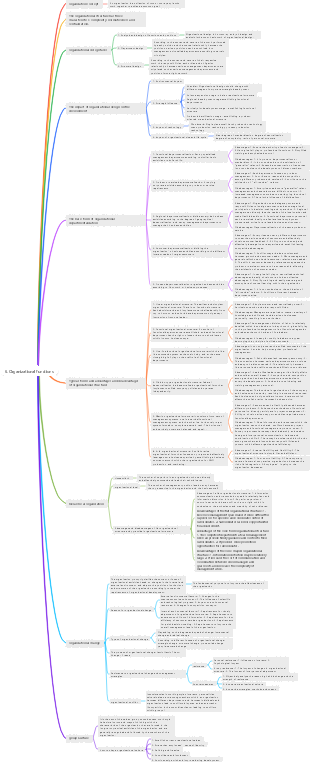
MindMap Gallery Management 4. Decision-making function
Knowledge summary of Chapter 4 of Management: Decision-making refers to the process by which managers identify and solve problems, or the process by which managers take advantage of opportunities.
Edited at 2024-03-03 17:41:49This is a mind map about bacteria, and its main contents include: overview, morphology, types, structure, reproduction, distribution, application, and expansion. The summary is comprehensive and meticulous, suitable as review materials.

This is a mind map about plant asexual reproduction, and its main contents include: concept, spore reproduction, vegetative reproduction, tissue culture, and buds. The summary is comprehensive and meticulous, suitable as review materials.
This is a mind map about the reproductive development of animals, and its main contents include: insects, frogs, birds, sexual reproduction, and asexual reproduction. The summary is comprehensive and meticulous, suitable as review materials.
This is a mind map about bacteria, and its main contents include: overview, morphology, types, structure, reproduction, distribution, application, and expansion. The summary is comprehensive and meticulous, suitable as review materials.
This is a mind map about plant asexual reproduction, and its main contents include: concept, spore reproduction, vegetative reproduction, tissue culture, and buds. The summary is comprehensive and meticulous, suitable as review materials.
This is a mind map about the reproductive development of animals, and its main contents include: insects, frogs, birds, sexual reproduction, and asexual reproduction. The summary is comprehensive and meticulous, suitable as review materials.
4. Decision-making function
Definition of decision
Decision-making refers to the process by which managers identify and solve problems, or the process by which managers take advantage of opportunities.
The main body of decision-making is the manager
The essence of decision-making is process
The purpose of decision-making is to solve problems and exploit opportunities
principles of decision making
satisfaction principle
basis for decision making
Just the right amount of information
behavioral decision theory
Simon
1. Human rationality lies between complete rationality and irrationality.
2. Decision makers are easily affected by perceptual bias when identifying and discovering problems.
3. The rationality of decision-makers’ choices is relative
4. The attitude of decision makers towards risks plays an important role
5. Decision makers often only seek satisfactory results rather than the best solution.
decision making process
1. Identify opportunities
2. Clear goals
3. Formulate a plan
4. Screening plan
5. Execution plan
6. Evaluate the effect
Classification of decisions
Classified by decision importance
Strategic Decision
Major decisions of overall and long-term importance concerning the future development direction of the organization
tactical decisions
business decisions
Divided by decision repeatability
programmed decision-making
Ability to use routine methods to solve repetitive problems and make decisions to achieve goals
unprogrammed decision-making
According to environmental factors
deterministic decision making
The conditions required for each alternative are known, and the results of each alternative can be calculated and determined. You only need to compare the pros and cons of the results to make the best choice decision.
risky decisions
Each alternative will encounter several different possible states. Most of the conditions for each alternative are known, and we can only know the probability of each possible state occurring.
Uncertain decision-making
It is difficult to obtain the probability of any possible state, and even the future state is difficult to grasp
Divided by decision-making entities
personal decision making
collective decision making
Factors influencing decisions (choices)
envirnmental factor
environmental stability
When the environment is relatively stable - decision-making is generally made by middle managers; when the environment changes drastically - decision-making is generally made by senior managers
market structure
High degree of monopoly - production-oriented, high degree of competition - market-oriented
organizational factors
group Culture
Conservative versus progressive organizational culture
The degree of informatization of the organization
The degree of informatization affects the efficiency of decision-making
nature of the decision problem
urgency of the problem
Time-sensitive decision-making (the speed of decision-making is higher than the quality of decision-making), knowledge-sensitive decision-making (the quality of decision-making is higher than the speed of decision-making)
Factors of the decision-making body
Personal attitude towards risk
Risk averse, risk neutral and risk loving
Individual ability
Ability to understand problems, obtain information, communicate, and organize
personal values
Personal values influence decisions by influencing the value component of decisions
The degree of rapport among decision-making groups
Affects the likelihood that a better plan will be adopted and affects the cost of decision-making
decision making method
Brainstorming
1-2 hours, 5-6 people
1. Everyone expresses their own suggestions and does not make any comments on other people’s suggestions.
2. It is not necessary to think carefully, the more the better
3. Encourage independent thinking and fantastic ideas
4. Can supplement and improve existing suggestions
business unit portfolio analysis
Boston Consulting Group
Two dimensions: relative competitive position and business growth rate
Thin dog business unit
Market share and business growth rate are very low
shrink or give up
Children's business unit
Low market share and high business growth rate
Invest the necessary funds or give up in time
Golden bull business unit
High market share and low business growth rate
Bring more profits to the enterprise and require less investment
Star business unit
High market share and high business growth rate
Invest necessary funds to expand production scale
Policy Guidance Matrix
Royal Dutch Shell
Analyze the current situation and characteristics of business units from the two dimensions of market prospects (horizontal) and relative competitiveness (vertical)
Volume-cost-profit analysis method (calculation questions) balance of expenditures/profit balance
Formula: total cost = total revenue. Find the output with a profit of X yuan. Total revenue - total cost = 0 total profit.