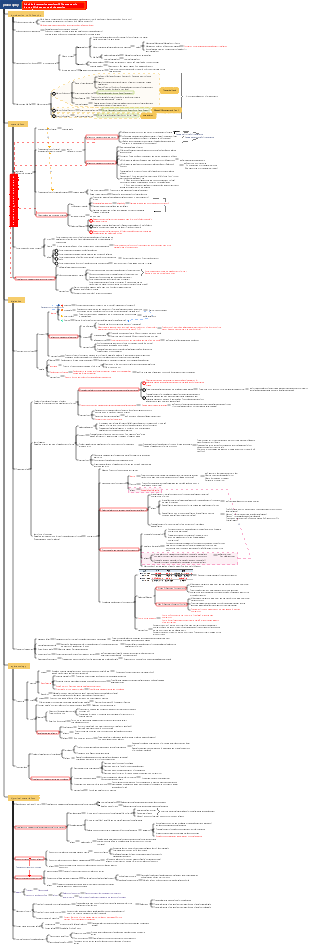
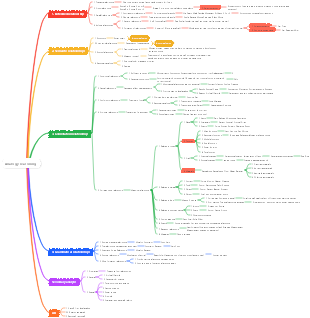
primitive society
primitive people
Yunnan Yuanmou Man (1.7 million years ago)
The earliest human beings identified so far in the territory
People from Lantian, Shaanxi (800,000 years ago)
The earliest to walk upright
People from Zhoukoudian, Beijing (700,000 years ago)
Use natural fire and save kindling
clan society
maternal line (first)
Paternal line (posterior)
Beijing Shanshan Cave Man (approximately 30,000 years old)
Polishing and drilling techniques to create bone needles and artificial fire
Hemudu Ruins (approximately 7,000 years ago)
Yangtze River Basin (South)
Grass and rice (the first to cultivate rice)
stilt house, black pottery
Banpo Ruins (approximately 5000-6000 years)
Yellow River Basin (North)
grinding tools, millet
Semi-crypt house, painted pottery
Dawenkou Site (approximately 4000 to 5000 years)
Yellow River Basin
private ownership
Mostly ground-level buildings
Sovereigns and Five Emperors
Three Emperors
The most popular sayings: Fuxi (Bagua), Nuwa, Shennong (Agriculture)
Five Emperors
"Historical Records" by Sima Qian of the Western Han Dynasty: Huangdi, Zhuanxu, Emperor Ku, Yao, and Shun
Yao's daughter Ehuang Nuying married Shun
summer
Yangcheng (Dengfeng, Henan)
About 2070 B.C.
Yu passed on to Zi Qi, the public world → the family world, the abdication system → the hereditary system
The earliest slave country
Erlitou Culture
Erlitou Site: Erlitou Village, Yanshi, Luoyang, Henan, large turquoise dragon vessel - "Chinese Dragon"
The earliest palace building foundation discovered so far in China
Summer Calendar: "Xia Xiaozheng" is formulated according to the movement cycle of the moon, also called the lunar calendar. Because there are changes in solar terms and agricultural arrangements in the calendar, it is also called the lunar calendar (lunar calendar)
business
Hao (Shangqiu, Henan) → Yin (Anyang, Henan)
About 1600 B.C.
[Battle of Mingtiao] Shang Tang √ Xia Jie, established the Shang Dynasty
Bronze: Houmuwu Ding
The largest bronze artifact discovered by archeology in my country so far
Oracle
The origin of Chinese characters
Pan Geng moved to Yin: In the middle of the Shang Dynasty, the capital was moved five times (political and natural reasons) until the capital was moved to Yin, also known as the Yin Shang
Destruction: [Battle of Makino] King Wu attacked Zhou and turned against him before the battle
Western Zhou Dynasty
Pickaxe (Xi'an)
1046 BC
[Battle of Muye] King Wu of Zhou defeated Zhou and Shang fell
politics
Enfeoffment system (the emperor - princes - ministers and officials - scholar-bureaucrats) Patriarchal system (inheritance system by the eldest son)
economy
Jingtian system: aristocratic land ownership system in the name of state ownership
Chinese people's riot: King Zhou Li was cruel and unkind, and civilians and a small number of slaves rose up to resist, which was called "Chinese people's riot" in history. King Li of Zhou fled, Duke Zhou and Duke Zhao implemented "public administration"
The first year of the Republic (841 BC) is the beginning of the precise chronology of our country’s history.
Destruction: King You of Zhou besieged the princes with beacon fire (Praise Si)
Eastern Zhou Dynasty
Spring and Autumn
770 BC-476 BC
The end of slave society
Five Hegemons of Spring and Autumn Period
Argument 1: Duke Huan of Qi, Duke Wen of Jin, King Zhuang of Chu, Duke Mu of Qin, Duke Xiang of Song
√The second statement: Duke Huan of Qi, Duke Wen of Jin, King Zhuang of Chu, King Helu of Wu, and King Goujian of Yue
allusion
Duke Huan of Qi
The first overlord in the Spring and Autumn Period (Kuiqiu League) appointed Guan Zhong to reform and expand the territory under the slogan of "respecting the king and repelling the barbarians"
Guan Bao's friendship, the battle of the long spoon, respecting the king and fighting the barbarians, the old horse knows the way, revenge with one stone
【Battle of the Long Spoon】Qilu√-Cao GUI’s Debate-One vigorous effort and then another failure
Duke Wen of Jin
[Battle of Chengpu] Jin √ Chu - retreat to three houses, the good relationship between Qin and Jin, the origin of the Cold Food Festival - Jie Zitui
Expansion ①. Stay away from three houses, one house is 30 miles away
Expansion ②. Half a catty and eight taels, half a catty = eight taels
Expansion ③. One day without seeing is like three autumns, three autumns: three quarters
King Zhuang of Chu
Become a blockbuster, conquer the Central Plains, drink from the Yellow River
Goujian
Lie down on firewood and taste the courage, the bird is hidden in the bow, the rabbit is dead and the dog is cooked
Warring States Period
475 BC-221 BC
The beginning of feudal society
Seven Heroes of the Warring States Period
Han Zhao Wei Chu Yan Qi Qin
The Fourth Prince of the Warring States Period
Wei-Xinlingjun Wei Wuji
Stealing Talisman to Save Zhao (Qin vs Zhao)
Qi-Mengchang Juntianwen
Rooster Crows and Dog Robbers (the process of escaping from being detained by Qin State)
Zhao-Pingyuanjun Zhao Sheng
He is so powerful that he is blind, he recommends himself, he stands out, he speaks with a clear tongue, he has a three-inch tongue, he is stronger than a million teachers.
Chu-Chunshenjun Huang Xie
major war
[Battle of Guiling] Qi √ Wei (Sun Bin vs. Pang Juan), besiege Wei and save Zhao
Wei defeated Zhao, Qi rescued Zhao
[Battle of Maling] Qi √ Wei (Sun Bin vs. Pang Juan), reduced the stove to lure the enemy, Pang Juan committed suicide
[Battle of Changping] Qin √ Zhao (Bai Qi vs Zhao Kuo), on paper
Zhao abandoned Lian Po and replaced Zhao Kuo
Qin Xiaogong appointed Shang Yang to carry out reforms
Moving trees to establish trust, committing suicide by doing so, and dividing the body into pieces with five horses
Economically
Abolition of the well-field system and implementation of private land ownership; emphasis on agriculture and suppression of commerce; unification of weights and measures
Expansion: degree: length, quantity: volume, scale: weight
Politically
Compile household registration and joint sitting; implement the county system
The order of Qin's destruction: Han, Zhao, Wei, Chu, Yan and Qi
Warring States Period
During the Qin Dynasty, Li Bing and his son built Dujiangyan
Invention of "Sinan"
The world's oldest guide tool
Gan De and Shi Shen's star records "Gan Shi Xing Jing"
The world's earliest astronomical work
"Huangdi Neijing"
The earliest surviving medical text
Qin
Xianyang
221 BC
Establish
230 BC-221 BC
Yingzheng destroyed the six kingdoms one after another and established the Qin Dynasty
consolidate unity
politics
The central government has a system of three ministers and nine ministers, and the local governments implement a system of prefectures and counties; the three ministers are: the prime minister, the Taiwei, and the imperial censor.
economy
Unified currency (half a tael of money), weights and measures
Thought and Culture
Unified writing (small seal script), burning books and entrapping Confucians, and the emergence of official script in the late Qin Dynasty
military
Build the Great Wall and dig the Spiritual Canal
Expansion: Dynasties that did not build the Great Wall: Tang, Yuan, Qing
perish
In 209 BC, [Dazexiang Uprising] Chen Sheng and Wu Guang
Rising up with great ambition - Chen Sheng ("Historical Records")
The first large-scale peasant uprising
207 BC, [Battle of Julu] Xiang Yu√Qin
Breaking the cauldron and sinking the boat, Liu Bang invaded Xianyang and made three chapters
Chinese
Western Han Dynasty
202 BC
-9 AD
Chang'an (Xi'an)
202 BC
Establish
203 BC, [Battle of Gaixia] Xiang Yu and Liu Bang√
Ambush on all sides, embattled on all sides, and Wujiang River.
In 202 BC, Liu Bang, the founder of the Han Dynasty, proclaimed himself emperor.
The rule of Wenjing
During the reign of Emperor Wen and Emperor Jing, they respected the Taoist-Huang Lao techniques, took corvee lightly and paid little tax, and rested with the people.
Seven Kingdoms Rebellion
The parallel system of group countries leads to
heyday
Emperor Wu of Han Dynasty Liu Che
politics
Establish "Chinese North Korea" to restrict "Outer North Korea", set up thirteen "provincial governors" to monitor local areas, and implement the order of favor
economy
Return local minting and salt and iron management rights to the central government, mint five baht coins uniformly, and centralize fiscal power in the central government
Thought
Dong Zhongshu - Deposed hundreds of schools of thought, respected only Confucianism, established Imperial College, and strengthened ideological control
Expansion: Dong Zhongshu ① Three cardinal principles and five constant principles: the king guides the ministers, the father guides the sons, and the husband guides the wife; benevolence, justice, propriety, wisdom, and trustworthiness
②Don’t peek into the garden for three years
Zhang Qian's mission to the Western Regions
Chang'an → Daqin (Mediterranean coast)
Introduced: grapes, alfalfa, pomegranates, beans, walnuts, good horses, Buddhism
Output: paper, silk, metal tools, cast iron, well-drilling technology
Protectorate of the Western Regions
In 60 BC, Emperor Xuan of the Han Dynasty established the Xinjiang Empire and began to administer Xinjiang.
Wei Qing and Huo Qubing defeated the Xiongnu
Jiuquan (Gansu), Fenglangjuxu, Shandan Racecourse
Zhaojun goes out of the fortress
In 33 BC, Emperor Yuan of the Han Dynasty married Queen Qiang of the Palace to Huhanxie Chanyu of the Xiongnu, ending more than a hundred years of war with the Xiongnu.
Wang Mang's New Deal
In 9 AD, Wang Mang proclaimed himself emperor and changed the name of the country to Xin
Eastern Han Dynasty
AD 25
-220 AD
Luoyang
25 BC
Guangwu Zhongxing
Emperor Guangwu Liu Xiu established the Eastern Han Dynasty
Ban Chao manages the Western Regions
In 91 AD, Ban Chao was appointed as the Protector of the Western Regions, stationed at Qiuci, opened up the northern route of the Western Regions, and was granted the title of Marquis of Dingyuan.
If you don't enter the tiger's den, how can you catch the tiger's cubs?
Expansion: Ban Biao - father, Ban Gu - son, Ban Chao - son, Ban Zhao - daughter
perish
[Yellow Turban Uprising]: A peasant uprising organized in the name of religion that disintegrated the rule of the Eastern Han Dynasty
Three Kingdoms and Two Jins
Southern and Northern Dynasties
Three Kingdoms
Three-thirds of the world
Wei
In 200 AD, [Battle of Guandu] Cao Cao and Yuan Shao laid the foundation for the unification of the north.
Expansion: Cao Cao: Meng De presented the sword, cooking wine and discussing heroes, the Battle of Guandu, the Battle of Chibi, Huarong Road, the uprising of the eighteen princes, killing Lu Boshe - I would rather teach me to betray the world than teach the world to betray me, Baimen Tower Receive Zhang Liao
Shu
Liu Bei
Expansion: Three friendships in Taoyuan, three heroes fighting against Lu Bu, three concessions to Xuzhou, leaping horses over Tanxi, three visits to the thatched cottage, and the White Emperor Tuogu → Zhuge Liang
Wu
In 208 AD, [Battle of Chibi] Sun and Liu allied forces √ Cao Cao, the Three Kingdoms were formed.
Two Jin Dynasties
brief unification
Western Jin Dynasty
Luoyang
AD 265
Sima Yan deposed the Wei Emperor and achieved short-term unification
Eastern Jin Dynasty
Jiankang
AD 317
Sima Rui ascended the throne
AD 383, [Battle of Feishui] Former Qin Fu Jian vs Eastern Jin
The wind roars, the cranes chirp, the grass and trees are all soldiers, and the whip cuts off the flow
The Northern and Southern Dynasties stood side by side
Reforms of Emperor Xiaowen of the Northern Wei Dynasty - moving the capital to Luoyang and Sinicization policy
Sui
Chang'an
AD 581
Emperor Wen of Sui Dynasty Yang Jian
The rule of Emperor Kaihuang, a strip of water (Yangtze River)
Emperor Yang of Sui Dynasty Yang Guang
Create imperial examination
The Jinshi Section was established, and the imperial examination system was formally formed.
Sui Dynasty Grand Canal
The world's longest man-made canal
It starts from Zhuoqun in the north and reaches Hangzhou in the south, connecting five rivers.
(Haihe River, Yellow River, Huaihe River, Yangtze River, Qiantang River)
Expansion: Three major projects in ancient China:
Great Wall, Karez, Grand Canal of Sui Dynasty
Tang
Chang'an
AD 618
【Xuanwu Gate Change】
In 626 AD, Qin King Li Shimin killed Prince Li Jiancheng and Qi King Li Yuanji.
Kaiyuan prosperous age
Tang Xuanzong and Li Longji became the most powerful country in the world at that time
【Anshi Rebellion】
An Lushan and Shi Siming launched a rebellion against the Tang Dynasty
The turning point of the Tang Dynasty from prosperity to decline
perish
[Huangchao Uprising], accelerating destruction
Expansion: Huang Chao: I love to write about chrysanthemums. The fragrance reaches Chang'an and fills the city with golden armor. If I were the Qing Emperor in another year, I would repay the peach blossoms.
Related systems
imperial examination system
Emperor Wen of the Sui Dynasty-subject examination
Emperor Yang of Sui Dynasty-formally established the Jinshi Department
Emperor Taizong of the Tang Dynasty-increased examination subjects
Wu Zetian-Martial Arts and Palace Examinations
Northern Song Dynasty - name-blinding system
Heyday-Tang and Song Dynasties
Ming and Qing Dynasties-Eight-legged essays to recruit scholars
Abolished in 1905 by the Qing Dynasty
The Three Provinces and Six Ministries system: began in the Sui Dynasty, was perfected in the Tang Dynasty, and lasted until the end of the Qing Dynasty
three provinces
Shangshu Province: the highest administrative body
Zhongshu Province: decision-making body
Phnom Penh Province: Deliberative Body
six parts
Ministry of Personnel: Assessment, appointment and removal of officials below fourth grade
Ministry of household affairs: finance, treasury
Ministry of Rites: Tribute, Sacrifice, Ceremony
Ministry of War: Military
Department of Criminal Justice: Judicial Affairs, Audit Affairs
Ministry of Industry: Engineering Construction
Five Dynasties and Ten Kingdoms
Song
Northern Song Dynasty
Bianjing (Kaifeng)
AD 960
【Chenqiaoyi Mutiny】
Song Taizu Zhao Kuangyin established the Northern Song Dynasty
Release military power over a glass of wine
Consolidate politics and remove Shi Shouxin and others from military power
Alliance of Chanyuan
In 1005 AD, Song Zhenzong agreed that there would be no more large-scale wars with the Liao Dynasty for more than a hundred years.
Qingli New Deal
In 1043 AD, Fan Zhongyan: Clarified the administration of officials, enriched the country and strengthened the army, and strictly enforced the rule of law
Expansion: Mei Yaochen & Fan Zhongyan - Lingwu Fu - Die with Ning Ming, live without silence
Wang Anshi's Reform/Xining's Reform
In 1069 AD (Song Shenzong), the Farmland Water Conservancy Law, the Law of Equalization of Transmission, the Law of Young Crops, the Law of Exemption from Service/The Law of Recruitment, the Law of Market Change, the Law of Equalization of Farmland Tax, the Law of Baojia and the Law of Generals were used to strengthen the army.
perish
In 1127 AD, [Jingkang Incident] the Jin Kingdom captured Emperors Hui and Qin
Southern Song Dynasty
Lin'an (Hangzhou)
1127 AD
Establish
Zhao Gou proclaimed himself emperor in Nanjing, Yingtian Prefecture (Shangqiu, Henan Province), and later made his capital Lin'an.
Yue Fei resists gold
In the early years of the Southern Song Dynasty, the Jin Dynasty attacked the Southern Song Dynasty, and the Yue family army defeated the Jin army in Yancheng.
Shaoxing Peace Conference
In 1141, the Song and Jin Dynasties formed a confrontation between the north and the south.
Wen Tianxiang resists the Yuan Dynasty
"Crossing the Lingding Ocean"-No one has ever died since ancient times, leaving a loyal heart to illuminate history
other
politics
Recruit elite soldiers, reduce real power, control money and grain, reduce the power of military envoys in feudal towns, and send civilian officials to serve as local officials; set up general magistrates to supervise prefectures, and set up transfer envoys to control local finances
economy
"Jiaozi" in the early Northern Song Dynasty
The world's earliest banknotes
During the Southern Song Dynasty, the economic center of gravity shifted from the north to the south.
Specialized agency for maritime trade: Municipal Shipping Department
Important ports: Mingzhou (Ningbo), Hangzhou, Guangzhou and Quanzhou are the largest
four great inventions
Compass, printing, gunpowder, papermaking
Expansion: Warring States Period-Sinan, Southern Song Dynasty-Turk Gun
Papermaking: invented in the Western Han Dynasty and improved by Cai Lun in the Eastern Han Dynasty
Sui and Tang Dynasties-Engraving and Printing of "Diamond Sutra"
Northern Song Dynasty-Movable Type Printing-Bi Sheng
Yuan
Dadu (Beijing)
AD 1271
In 1206, Temujin, the Great Khan of Mongolia, was honored as "Genghis Khan"
In 1271, his grandson Kublai Khan established the Yuan Dynasty and was called the founder of the Yuan Dynasty.
The provincial system was implemented (the beginning of the provincial system), and Hebei, Shandong, and Shanxi were under the jurisdiction of Zhongshu Province as the "inner areas"
The territory of the Yuan Dynasty was the largest in history.
The Xuanzheng Yuan was set up to manage Tibet, Sichuan, and Qinghai, and the Penghu Inspection Department was set up to manage Taiwan.
At this point, Tibet was officially under the direct jurisdiction of the central government
Marco Polo came to China and Huang Daopo (the ancestor of the cloth industry) improved cotton textile technology
bright
Nanjing→Beijing
AD 1368
Establish
Zhu Yuanzhang, the founder of the Ming Dynasty, led a peasant uprising and established the Ming Dynasty. Later, Zhu Di, the founder of the Ming Dynasty, moved the capital to Beijing - the Battle of Jingnan
Expansion ①: Eating mooncakes during the Mid-Autumn Festival originated from Zhu Yuanzhang
Expansion ②: Four traditional festivals: Spring Festival, Qingming Festival, Dragon Boat Festival, and Mid-Autumn Festival
Expansion ③: Five elements: metal, wood, water, fire, and earth
policy
The central government abolished the power of the prime minister and divided it into six departments, creating a cabinet system; the local government divided power into three departments (the Metropolitan Command Department - Military, the Department of Proclamation and Envoys - Civil Affairs, the Department of Punishment and Prosecution - Judiciary), and the Metropolitan Governor's Office was changed to the Fifth Military Governor's Office. , separation of the power to command troops and the power to deploy troops
Factory security agents: East Factory, West Factory, Jinyiwei
Implement eight-legged writing to recruit scholars and strengthen ideological control
Economics and Foreign Exchange
Zheng He's voyages to the West: During the Chengzu period of the Ming Dynasty, he made seven voyages to the West from 1405 to 1433, starting from Liujiagang and reaching as far as the east coast of Africa and the Red Sea coast.
Crops: Introduce sweet potatoes, corn, potatoes, tobacco, and peppers
Technology: Matteo Ricci (Italy) brought Western scientific and technological works, and Xu Guangqi’s "Taiwan Water Law" introduced European water conservancy technology
Coastal defense: Qi Jiguang fought against the Japanese, Zheng Chenggong regained Taiwan vs. the Dutch colonizers
Expansion: Qi Jiguang-The title of Marquis is not my intention, I hope the sea will be peaceful
Zhang Juzheng's "One Whip Method": Consolidate land taxes, corvées and miscellaneous taxes, convert them into silver taels, and distribute them to the acres to collect taxes.
clear
Beijing
AD 1616
Establish
In 1616 AD, the Jurchen leader Nurhachi established the "Houjin"
In 1636 AD, Huang Taiji proclaimed himself emperor in Shenyang, changed the name of the Jurchen clan to Manchuria, and changed the country's name to "Qing"
In 1644 AD, the peasant army led by Li Zicheng captured Beijing and ended the rule of the Ming Dynasty. Wu Sangui, the Ming Dynasty general stationed at Shanhaiguan, led the Qing army into the pass and defeated the peasant army. Later, the Qing army gradually unified the country and established Beijing as its capital.
consolidate development
Kangxi
Put down the rebellion of the Three Feudatories (Pingxi King - Wu Sangui, Pingnan King - Shang Kexi, Jingnan King - Geng Jingzhong); destroy the Zheng regime in Taiwan and establish the Taiwan Prefecture; defeat the Russian army entrenched in Yaksa twice, and sign the "Nepal" Treaty of Buchu
Yongzheng
politics
Implement a secret discount system and establish a military aircraft department
Marks the peak of monarchy
economy
Implement the system of "reforming native land to local residents" and abolishing the chieftain system; abolishing the head tax and implementing the system of apportioning one person to one mu
Qianlong
The Western Region was renamed Xinjiang, and General Yili was established to take charge of Xinjiang in 1762; the Golden Vase Sign strengthened the management of Tibet
The policy of emphasizing agriculture and suppressing commerce and maritime ban
During the Ming and Qing Dynasties, the policy of “emphasis on agriculture and suppression of commerce” was actively promoted
Enforced "sea ban" policy
All land belongs to the king of Zhou
Yongzheng - Divide people into acres, abolish head tax
Do not suppress mergers and Wang Anshi’s reform
Land Equalization System, Tang Dezong-Two Taxes Law (late period)
Abolish the well-field system and establish private ownership of land in legal form
Qi State - Facing the land and weakening the army
Lu State - initial tax acres, state-owned → privately owned
Changes in the land system
The formation and development of the centralized feudal system
official selection system
Qin - awarded titles based on military merit
Han Dynasty - Chaju system, levy system
Wei, Jin, Southern and Northern Dynasties-Nine Grades Zhongzheng System
Sui and Tang Dynasties to the late Qing Dynasty - imperial examination system
1. The four major ancient scripts in the world: Oracle, hieroglyphics, cuneiform and Mayan script.
2. The father of Oracle: Wang Yirong (Yantai, Shandong) in the Qing Dynasty. After his death, Liu E continued to study "Lao Can's Travels"
3. The Four Halls of Oracle Bones: Luo Zhenyu, Wang Guowei, Guo Moruo, Dong Zuobin
4. Oracle → Bronze Inscriptions (Inscriptions) → Large Seal → Small Seal (Qin) → Official Script → Cursive Script → Regular Script (Original Script) → Running Script
Official script: The watershed between ancient and modern Chinese characters, silkworm head and swallow tail, twists and turns
1. Bagua: Qian - sky, Kun - earth, Xun - wind, Zhen - thunder, Kan - water, Li - fire, Gen - mountain, Dui - Ze
2. Sheji: She-god of land, Ji-god of grain, ancestor of agriculture: Houji
Suzhou: Suzhou
Chengdu: Rongcheng, Jinguancheng
Nanjing: Jinling, Jianye, Jiankang, Jiangning, Stone City
Yangzhou: Guangling
Beijing: Dadu, Yanjing
Kaifeng: Bianjing, Bianliang, Tokyo
Hangzhou: Lin'an
Zhuge Liang: Borrowing arrows from a straw boat, Capturing Meng Huo seven times, Leaving Qishan six times, Beheading Ma Di with tears, Empty City Strategy - Sima Yi vs Zhuge Liang, Wuzhangyuan, Wooden Cows and Horses, Eight Formations, Burning Bowang Slope, Burning Xinye, Burning Red Cliff
Guan Yu: Warm wine and kill Hua Xiong, pass five passes and kill six generals, attend meetings alone, scrape bones to heal wounds, defeat Maicheng, ride thousands of miles alone
The three heroes of the early Han Dynasty: ① Zhang Liang: strategizing, children can be taught ② Xiao He: Xiao rules, Cao follows, success is Xiao He, failure is also Xiao He ③ Han Xin: humiliation under the crotch, the more the better, the country's unparalleled scholars
①【Battle of Kunyang】(Henan), Wang Mang vs Liu Xiu
②Dai Ping won more than 50 seats during the discussion.
③Buddhism became popular, and the first government-run temple - Baima Temple
Wang Zhaojun: ① There are souls in the green tombs but they still know the way, and there is nowhere to call the souls in the flat sand ② "Autumn in the Han Palace" - Ma Zhiyuan
Four beauties: Chen Yu - Xi Shi, Luo Yan - Wang Zhaojun, Guanyue - Diao Chan, Shame Flower - Yang Yuhuan
Four major folklores: The Cowherd and the Weaver Girl, The Butterfly Lovers, The Legend of the White Snake, and Meng Jiangnu Crying at the Great Wall
Four famous jade: Xinjiang Hotan jade, Shaanxi Lantian jade, Henan Nanyang Dushan jade, Liaoning Xiuyan Xiu jade
Grains: ① Rice, broomcorn millet (yellow rice), millet (millet: millet), wheat, beetroot (soybean)
②Fax, broomcorn millet, millet, wheat, bean sprouts
Six animals: horses, cattle, sheep, chickens, dogs and pigs
Yellow Emperor:
1. [Battle of Banquan] Huangdi vs. Yandi, Huangdi wins
2. As the first (original) ancestor of humanity, he guides the car and raises silk.
3. Allusion ① The dragon went to Dinghu to describe the death of the emperor
②The Xuanyuan family is the Yellow Emperor
4【.The Battle of the Deer】Huang Di and Yan Di jointly attacked Chi You, so there is a saying that we are all descendants of Yan and Huang.
 Wondershare EdrawMind